Written by: Luis Teran, Co-founder, CEO, TenantEvaluation
Key Takeaways
- Florida LCAM salaries sit well above national averages because of mandatory licensing and post-Surfside compliance demands, with a state average of $84,321 base plus bonuses.
- Compensation rises sharply with experience, credentials, and portfolio complexity. Senior CAMs with PCAM certification can earn $95,000–$160,000+, while entry-level roles typically start at $45,000–$65,000.
- High-rise and luxury communities in Miami-Dade and Palm Beach pay the highest bands, often $100,000–$160,000, reflecting the premium for specialized compliance expertise.
- Total compensation extends beyond base salary through performance bonuses, revenue share from application processing, vehicle allowances, and benefits that can add thousands of dollars each year.
- Automating lease tracking and onboarding reduces manual workload, allowing CAMs to focus on higher-value work and strengthen their case for increased compensation.
National And Florida Salary Benchmarks
BLS OEWS May 2025 data reports a median annual wage of $69,990 and a mean annual wage of $83,710 for the 311,180 wage-and-salary workers in the property, real estate, and community association manager category (SOC 11-9141). The 90th percentile sits at $139,680. ZipRecruiter’s national average of $64,104 reflects a broader mix of roles, including part-time and assistant-level positions that pull the figure below the BLS median.
Neither number reflects the Florida LCAM market accurately. Florida requires a license to manage associations with more than 10 units or budgets over $100,000. That rule creates a legal barrier to entry that most other states do not have. The FCAP/FLCAJ 2024–25 Florida CAM Salary Survey reports a Florida-specific average base salary of $84,321 plus a $4,173 average bonus, materially above the national BLS median. That figure is expected to grow another 5–7% into the 2025–26 survey cycle as Florida’s post-Surfside compliance burden intensifies demand for licensed professionals.
CAMs who still manage lease tracking and onboarding manually often cap their earning potential. CAMs managing lease tracking and onboarding manually are leaving compensation on the table. See how TenantEvaluation automates the workload that suppresses your pay ceiling.

Community Association Manager Salary By Experience
Florida CAM base salary by experience tier in 2026 follows a clear progression tied to license status, credential stack, and portfolio complexity.
| Experience Tier | Typical Florida Base Range | Credential Profile | Role Context |
|---|---|---|---|
| Entry (0–2 years) | $45,000–$65,000 | Florida LCAM license (newly issued) | Smaller associations or assistant to portfolio manager; application processing, document collection, board communication |
| Mid (3–7 years) | $65,000–$95,000 | LCAM + CMCA; working toward AMS | Portfolio of 4–6 communities or single mid-size on-site property; budgeting, vendor coordination, enforcement |
| Senior (8+ years) | $95,000–$160,000+ | AMS or PCAM | Complex portfolios, high-rise properties, or regional oversight; SIRS coordination, milestone inspections, board advisory |
Nationally, BLS OEWS data shows the 25th percentile at $50,720 and the 75th percentile at $97,910. That range understates Florida’s upper tiers because it blends all states, including those with no licensing requirement. Florida’s mandatory LCAM credential pushes the entry floor upward and expands the senior ceiling relative to the national distribution.
Salary By Portfolio Type And Asset Class
Portfolio structure and asset class move Florida CAM pay as much as experience tier does. Florida CAM base salary by role in 2026 breaks down as follows:
- On-site Community Manager (Single 200+ Unit Property): $75,000–$125,000+. Dedicated to one community. Compensation reflects depth of responsibility rather than breadth.
- Portfolio Manager (8+ Properties): $70,000–$110,000. Breadth of portfolio drives variable pay structures, including per-community fees above a base threshold.
- Regional Manager (Oversees Other CAMs): $95,000–$160,000. Supervisory layer at larger management companies.
- Division Or VP At A National Management Company: $150,000–$250,000+.
High-rise and luxury communities pay a 15–30% complexity premium over garden-style or smaller HOA portfolios. Florida CAM base salary by association size shows that communities of 600+ units or high-rise properties pay $100,000–$160,000+, while communities under 100 units typically pay $45,000–$60,000 under portfolio coverage arrangements. Management-company CAMs may also receive revenue share tied to application processing, which adds a compensation component that self-managed association employees do not receive.
The Credential-To-Pay Link: LCAM, CMCA, AMS, PCAM
Florida’s LCAM license sets the legal baseline. Florida law requires a license when a manager is compensated for managing associations with more than 10 units or budgets over $100,000. Texas, Arizona, California, and North Carolina have no equivalent floor. The license requires 16 hours of pre-licensure education and a Pearson VUE examination. Renewal every two years requires continuing education, reported as 15 hours generally, 17 hours for those serving HOAs, or up to 20 hours per biennium depending on the source.
Above the LCAM license, the CAI credential stack drives measurable pay movement:
- CMCA (Certified Manager of Community Associations): This is the entry-level CAI credential. Candidates complete one approved prerequisite course in community association management, which is waived once for two years of experience or certain state credentials, and then pass a 120-question exam. CAI describes the related coursework as the 12-hour M100 course. The credential signals foundational professional commitment and supports movement from entry to mid-tier pay bands.
- AMS (Association Management Specialist): This designation requires CMCA plus at least two years of experience and two additional M-200 level courses. It places a manager in a higher credential tier that supports the case for mid-to-senior pay.
- PCAM (Professional Community Association Manager): This designation is held by approximately 1% of CAMs nationwide and requires five years of full-time experience and a rigorous case study. CAI Foundation 2024 data shows PCAM holders earn approximately $22,140 more annually than non-credentialed peers nationally.
How CAMs Actually Get Paid
Base salary forms the foundation, and total compensation for Florida CAMs often exceeds the stated salary figure. Florida CAM bonus structures in 2025–2026 include year-end performance bonuses averaging $2,000–$8,000 statewide, sign-on bonuses in high-rise condo postings tied to SIRS-deadline assistance, and milestone-completion bonuses tied to SIRS sign-off or reserve study delivery.
Bonuses are only the visible layer. The components below separate a CAM whose offer looks competitive on paper from one whose actual annual value runs thousands higher, and they are the line items most often left out of a negotiation.
- Management-Company Revenue Share: Application processing fees generate a compliant income stream for the association or management company. CAMs at management companies often benefit from this revenue model directly or indirectly through employer profitability.
- Vehicle And Housing Allowances: These are common for on-site managers required to live on property or travel across a portfolio. On-site unit allowances appear in Florida postings as a non-cash compensation component.
- Benefits: Roughly 60% of Florida CAM employers offer health insurance. Paid time off averages 15 vacation days and 5 sick or personal days per year. Employer-paid life insurance covers approximately 23% of CAMs.
- Portfolio-Based Variable Pay: Some management companies pay a 25% management fee for every community above a base portfolio threshold. That structure can produce total targeted compensation of $75,000–$110,000 on a $50,000–$60,000 base.
Florida Metro-By-Metro Breakdown
Florida CAM base salary by metro in 2026 reflects the concentration of high-rise and luxury communities, cost of living, and demand for licensed professionals in each market:
| Metro | 2026 Base Salary Range | Market Characteristics |
|---|---|---|
| Miami-Dade (Luxury High-Rise) | $100,000–$160,000 | Highest concentration of luxury condo communities; strong demand for LCAM with high-rise and SIRS experience |
| Palm Beach / Boca Raton | $112,000–$125,000 | Affluent communities with high service expectations; premium pay for experienced CAMs |
| Fort Lauderdale / Broward | $72,000–$85,000 | Strong condo market; post-SIRS sign-on bonuses appearing in postings |
| Naples / Marco / Bonita | $73,000–$100,000 | Gated golf and luxury communities; growing demand |
Tampa Bay ranges from $60,000–$72,000, Orlando from $55,000–$70,000, and Jacksonville from $55,000–$70,000, reflecting lower cost of living and a mix of master-planned and mid-size HOA portfolios. Individual postings show how those ranges play out in practice. A Winston Towers 600 posting in Sunny Isles Beach advertised $82,000 for a 391-unit high-rise LCAM role requiring an active Florida CAM license and five years of large-association experience, with CMCA, AMS, or PCAM certifications listed as preferred qualifications. That posting illustrates how asset class and credential stack interact within a single metro.
Is Being A Community Association Manager Hard? Workload As A Compensation Argument
The administrative load a Florida CAM carries is substantial. Florida CAMs average 45 hours per week, with heavy meeting weeks running 55–60 hours. The role covers application processing, document collection and review, lease tracking, payment chasing, board communication, compliance documentation, audit trail maintenance, SIRS coordination, and website portal compliance. Florida’s 2026 document-portal rules consume 4–8 hours of CAM time per association per month.
That workload supports a strong compensation argument. The pay ceiling for Florida LCAMs is higher than national aggregators suggest because the role carries compliance risk, fiduciary duty, and operational responsibility that general property managers and volunteer board members do not. HB 913 (effective July 1, 2025) placed SIRS and milestone compliance directly on the CAM’s individual license, with DBPR fines of up to $5,000 per count for violations. That level of personal liability justifies premium compensation.
The practical question is how much of that load a CAM can shed without losing the compliance obligations that justify the premium. Automation becomes the lever that reduces manual work while preserving control, documentation, and audit trails.
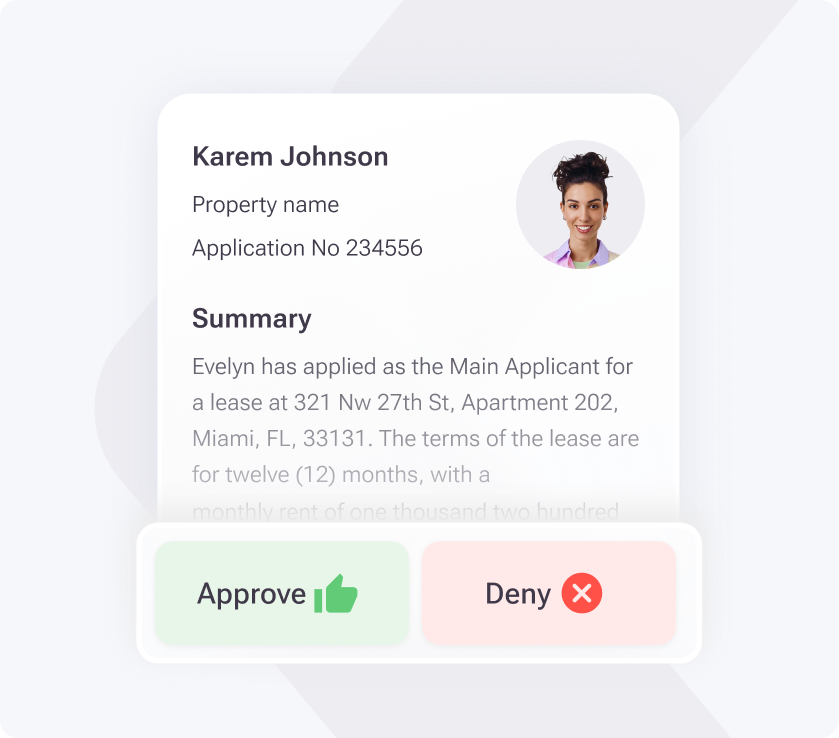
TenantEvaluation is built specifically for community associations and management companies, with FCRA compliance at the core of the platform. Serving 5,000+ communities and processing approximately 100,000 applications per year, TenantEvaluation automates the entire onboarding process, reducing processing from days to hours and allowing teams to scale without adding headcount. QuickApprove accelerates resident approvals inside one connected platform, with real-time application tracking, automated communication support, and a board-ready approval process that preserves control, compliance, and visibility. Application processing through TenantEvaluation can also become a compliant, controlled income stream for the association or management company, which strengthens the compensation argument for CAMs whose employers benefit from that revenue.

Florida LCAMs who reduce manual workload position themselves for higher pay. Watch how TenantEvaluation handles application-to-occupancy in one workflow.
Negotiation And Career-Ladder Playbook
A raise conversation or job offer evaluation lands better when backed by concrete documentation instead of general claims about being busy. The framework below applies directly to Florida CAMs benchmarking against the figures in this guide.
- Document The Administrative Burden Before Any Conversation: Quantify the number of applications processed, leases tracked, payments chased, board meetings attended, compliance documents maintained, and SIRS or milestone tasks coordinated. Then translate those hours into dollar value. The FLCAJ 2024–2025 survey reports an average community association manager salary of $84,321 statewide for 2024, which works out to roughly $40.54 per hour on a 40-hour week. The survey also notes that managers actually work at least 45 hours per week, so the real hourly figure is lower. Use whichever number is more defensible in your conversation to show what your time costs the organization.
- Frame Workload In Terms Of Risk Mitigation And Revenue Enablement: HB 913 placed compliance obligations on your individual license, which creates personal liability exposure that supports higher pay. Application processing revenue that flows to the association or management company also supports higher pay, because your work generates that income.
- Anchor Your Ask To Florida-Specific Benchmarks: Use the metro and experience-tier ranges in this guide as your reference point. A Tampa portfolio CAM with three years of experience and a CMCA has a documented salary range of $55,000–$85,000 based on 2026 Florida market postings, with a February 2026 CondoJobs.com posting for 2–5 years of experience listing $60,000–$65,000 and comparable Tampa-area roles with 3–4+ years listing $75,000–$85,000.
- Evaluate Credential ROI Before A Move: PCAM holders earn approximately $22,140 more annually than non-credentialed peers. If your current employer will not fund AMS or PCAM coursework, factor that into the total compensation comparison with competing offers.
- Reduce Manual Workload To Shift Time To Higher-Value Work: Automation of application processing, lease tracking, and payment collection through TenantEvaluation moves your hours toward board advisory, strategic planning, and compliance oversight, which are the activities that justify senior-tier pay. TenantEvaluation’s Lease Tracking connects resident onboarding, unit data, approvals, and lease documentation into one centralized, real-time, audit-ready workflow and removes spreadsheets and scattered email chains from application to occupancy.
Clarifying Roles: CAM, HOA Board Member, And Property Manager
Salary benchmarking for community association managers works best when the underlying roles are clear, because the three most commonly confused titles carry very different compensation structures.
- CAM / LCAM: A licensed professional hired to administer the affairs of a community association. This role reports to the board and carries fiduciary duty, compliance responsibility under Florida Chapter 468, and personal license exposure under HB 913. Compensation follows a professional employee or independent-contractor model.
- HOA Board Member: A volunteer elected by homeowners. This person sets policy and makes decisions but does not receive salary for the role. Salary benchmarks for CAMs do not apply to board members.
- Property Manager: A professional who typically manages rental properties under lease agreements and serves individual landlords or property owners. This role may hold CPM, ARM, or RMP credentials from IREM or NARPM instead of the Florida LCAM license. A CAM operates within a governance framework of CC&Rs, bylaws, and board-approved rules, while a property manager operates under a lease agreement and serves individual landlords.
The distinction matters for salary benchmarking because CAM salaries reflect professional licensing, compliance risk, board advisory responsibility, and Florida-specific statutory obligations. Generic property manager salaries and volunteer board roles do not include those elements, so direct comparisons understate the credential premium for Florida LCAMs.
Frequently Asked Questions
What Does A Community Association Manager Do?
A CAM oversees the day-to-day operations of an HOA, condo, or cooperative, managing budgets, coordinating maintenance, enforcing rules, processing applications, tracking leases, and serving as liaison between homeowners, boards, and vendors. In Florida, the role also includes compliance with Chapter 718 and Chapter 720 statutory requirements, SIRS and milestone inspection coordination, and document-portal maintenance under HB 1021.
How Do HOA Property Managers Get Paid?
Base salary forms the starting point, and total compensation often includes year-end performance bonuses averaging $2,000–$8,000 in Florida, sign-on bonuses tied to SIRS-deadline assistance, management-company revenue share connected to application processing, vehicle or housing allowances for on-site roles, and benefits such as health insurance, 401(k), and paid time off. Some portfolio-based structures add variable pay for every community managed above a base threshold, which produces total targeted compensation meaningfully above the stated base salary.
What Type Of Property Manager Makes The Most Money?
High-rise and luxury community managers, portfolio managers overseeing multiple complex associations, and regional or division-level managers at large management companies typically earn the most. In Florida, Miami-Dade luxury high-rise CAMs earn $100,000–$160,000 in base salary, and division or VP roles at national management companies reach $150,000–$250,000+. The PCAM credential is consistently associated with the highest pay bands, with holders earning approximately $22,140 more annually than non-credentialed peers nationally.
What Is The Difference Between A CAM And A Property Manager?
A CAM is licensed by the Florida DBPR under Chapter 468 to manage community associations and reports to a board of directors, carrying fiduciary duty and compliance responsibility. A property manager typically manages rental properties under lease agreements and serves individual landlords or property owners, holding different credentials such as CPM or RMP. The distinction matters for salary benchmarking because the CAM role carries licensing requirements, statutory compliance obligations, and board advisory responsibility that general property managers do not.
Conclusion: The Compensation Argument Florida LCAMs Need To Make
National salary averages understate what a Florida LCAM can earn in 2026. The FCAP/FLCAJ Florida-specific average of $84,321 base plus $4,173 bonus, combined with metro premiums reaching $160,000+ in Miami-Dade luxury high-rise communities, reflects a compensation market shaped by mandatory licensing, post-Surfside compliance obligations, and sustained demand that national aggregators cannot capture. The administrative workload Florida CAMs carry, now including personal license exposure under HB 913, is the strongest compensation argument available.
TenantEvaluation is built specifically for community associations and management companies, with FCRA compliance at the foundation of the platform. The system automates the entire onboarding process, reduces processing from days to hours, and allows teams to scale without adding headcount. Application processing becomes a compliant, controlled income stream. Lease tracking moves from scattered spreadsheets to a centralized, real-time, audit-ready workflow. The manual burden that suppresses CAM pay ceilings is the exact problem TenantEvaluation solves.
