Written by: Luis Teran, Co-founder, CEO, TenantEvaluation
Key Takeaways for Florida CAMs and Boards
- Community association lease management software centralizes lease records, automates document collection, and supports Florida-specific governance requirements that generic platforms cannot address.
- Florida CAMs and boards manage rental caps, board approval workflows, and strict record retention rules that require purpose-built tools.
- Manual lease processes create compliance gaps, disconnected data, and audit risks that centralized, real-time systems are designed to eliminate.
- Effective lease tracking relies on workflow standardization, automated document collection, unit-level visibility, and audit-ready records tied to the full onboarding lifecycle.
- TenantEvaluation delivers association-native lease tracking that connects screening, approvals, and documentation in one FCRA-compliant platform, so CAMs and boards work from a single source of truth. Learn more.
Key Lease Terms and Stages in Florida Communities
The lease lifecycle in a community association starts at application submission and ends at confirmed occupancy. Several review, approval, and documentation checkpoints sit between those two points. Core stages include application intake, document collection, board review and approval, lease execution, and occupancy confirmation.
Rental restrictions describe provisions in a community’s declaration or bylaws that limit how often, how long, or how many units may be leased at one time. Rental caps define the maximum proportion of units that can operate as rentals simultaneously. Expiration tracking monitors active lease end dates and flags renewals, lapses, or unauthorized holdovers. Board oversight covers the formal review and voting process that most Florida condominiums and HOAs require before a new tenant may occupy a unit.
Florida Market Shifts Driving Lease Tracking Adoption
Florida’s residential rental market has expanded across coastal and inland regions, which increases the volume of lease applications CAMs and boards handle each year. At the same time, regulatory scrutiny of community association governance has intensified through 2024 and into 2026, with more focus on documentation integrity, record retention, and enforcement of rental restrictions.
These pressures are pushing associations away from spreadsheets and email-based workflows toward centralized systems that provide real-time lease status visibility across entire portfolios. Communities managing dozens or hundreds of units can no longer absorb the administrative overhead of manual lease tracking without accepting meaningful compliance risk.
See how centralized lease tracking reduces that overhead for your communities and supports Florida governance requirements. Request a platform walkthrough.
How Lease Management Shows Up in Daily CAM Work
For a CAM, lease management functions as a daily operational responsibility, not an occasional task. CAMs confirm that incoming applications are tied to units that are not blocked by rental cap restrictions. They collect executed lease agreements before move-in, track expiration dates across the portfolio, and produce documentation on demand for board meetings or audits.
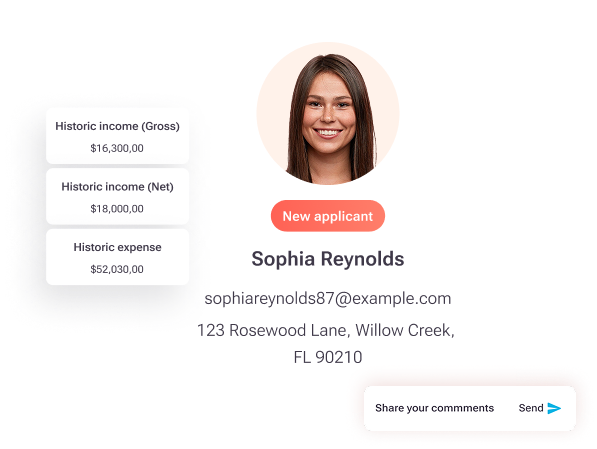
Board members need a clear picture of which units are occupied by tenants, which leases are approaching expiration, and whether any units operate outside approved rental parameters. Owners and applicants mainly experience the process through document submission and status updates. When these workflows live in separate systems, every party feels delays, confusion, and extra follow-up.
Compliance and Governance Rules Florida Associations Must Meet
Florida community associations that handle tenant screening fall under the Fair Credit Reporting Act (FCRA). This law governs permissible purpose, adverse action workflows, and the handling of consumer report data. Lease management intersects with FCRA compliance when lease approval decisions rely on background or credit screening data.
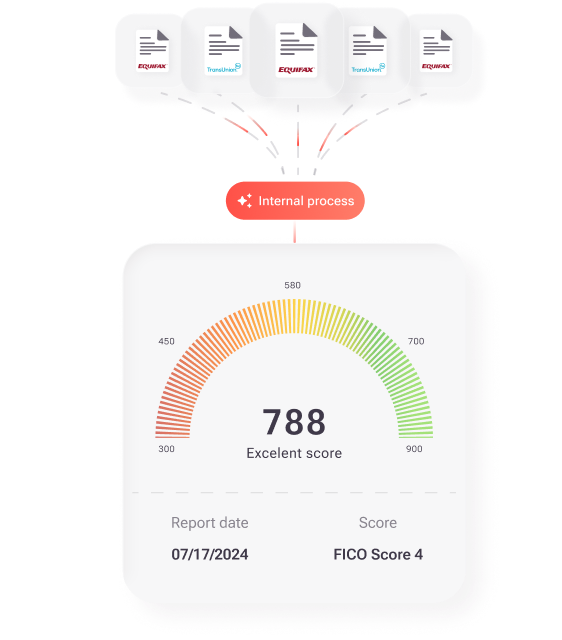
Beyond FCRA, associations must maintain audit trails that show who reviewed an application, when a lease was received, and how board approval was recorded. Record retention obligations vary by governing documents and Florida statutes. Incomplete or disorganized records create liability exposure for both the association and its management company.
TenantEvaluation is built specifically for community associations and management companies, with FCRA compliance as the foundation. As a direct reseller of TransUnion and Equifax data, TenantEvaluation operates under strict bureau rules with no gray-market data sources and provides built-in audit trails for every application.
Where Manual Lease Processes Break Down
Manual lease management produces predictable failure points that repeat across communities. Lease copies end up scattered across email inboxes, shared drives, and physical folders with no consistent naming or retrieval system. Expiration dates sit in spreadsheets that are updated inconsistently and rarely cross-referenced against occupancy records.
When a board requests documentation for an audit or dispute, staff must search across multiple systems to rebuild a complete record. Rental cap enforcement becomes especially vulnerable under these conditions. Without a centralized system that connects application status to unit-level occupancy data, a CAM may approve a lease in a unit that already sits at the community’s rental cap threshold.
The core issue is structural. Lease data often remains disconnected from the onboarding process, so every downstream workflow, including approval, occupancy confirmation, and expiration tracking, operates on incomplete information.
Four Foundations of Reliable Lease Tracking
Effective lease tracking in a community association context rests on four operational foundations that work together as one system. First, workflow standardization ensures every application follows the same intake, review, and approval sequence regardless of unit type or applicant profile. This consistency makes the rest of the process predictable and easier to manage.
Second, automated document collection captures lease agreements and supporting documents during onboarding rather than after approval. This timing prevents gaps that standardized workflows are meant to close. Third, centralized searchable history keeps all lease records, resident activity, and document trails in a single system, so the standardized data collected automatically remains accessible.
Fourth, unit-level tracking ties lease status to specific units and occupancy records instead of storing files in isolation. This connection allows the centralized history to answer occupancy and rental cap questions in real time. Communities that build around these foundations reduce administrative follow-up, improve board visibility, and maintain audit-ready records without adding staff.
How Broad HOA Management Platforms Handle Lease Tasks
Broad HOA management platforms such as AppFolio, RealPage, ManageCasa, and Buildium focus on general property management functions like accounting, maintenance requests, and communication. These tools were designed for landlord-tenant relationships in multifamily rental environments, not for the governance structures, board approval workflows, and rental restriction enforcement needs of Florida community associations.
For lease tracking, the key distinction is whether a platform connects lease documentation to the onboarding lifecycle, enforces rental cap visibility, and produces audit-ready records aligned with association governance. That distinction separates association-native tools from generic property management software that treats leases as simple documents.
Choosing Association Management Software for Lease Tracking
Evaluating association management software for lease tracking works best when you use clear criteria. Six areas matter most: compliance readiness, operational efficiency, transparency, scalability, auditability, and risk controls. Compliance readiness covers FCRA alignment, audit trails, and permissible purpose controls. Operational efficiency includes automated document collection and real-time status visibility.
Transparency focuses on board dashboards and searchable records. Scalability measures how well the system handles high application volume without extra complexity. Auditability looks at how easily organized digital records can be retrieved on demand. Risk controls include rental cap enforcement, expiration alerts, and occupancy confirmation.
Generic platforms often perform adequately on efficiency and scalability for standard rental portfolios. They usually fall short on association-specific compliance, board transparency, and rental restriction enforcement because those needs were not part of their original design. Compare TenantEvaluation’s association-native approach in a live demo and see how it stacks up against your current workflow.
Board-Ready Comparison: TenantEvaluation vs. AppFolio, ManageCasa, and RealPage
| Tool | Lease Visibility | Rental Cap & Expiration Tracking | Audit-Ready Records | Onboarding Connection |
|---|---|---|---|---|
| TenantEvaluation Lease Tracking | Centralized, real-time status (active, pending, expired, or missing) across all units | Unit-level tracking with searchable digital history, built for association rental restriction workflows | Full audit trail connected to applications, approvals, and document collection, FCRA-aligned | Directly connected to resident onboarding, approvals, and document collection inside one platform |
| AppFolio | Lease records available, not designed for association rental cap enforcement or board approval workflows | Lease expiration alerts available, rental cap enforcement not a native association-governance feature | Document storage available, audit trail depth varies, not FCRA-first for association screening | Onboarding and lease management operate as separate modules, not natively connected for association workflows |
| ManageCasa | Basic lease record storage, limited real-time status visibility across association unit portfolios | Lease expiration tracking available, rental cap enforcement not a documented native capability | Document storage available, audit trail features vary by configuration, not association-compliance-first | Application and lease workflows not natively unified for community association governance structures |
| RealPage | Lease management available for multifamily, not purpose-built for HOA or condo board oversight requirements | Expiration tracking available, association rental restriction enforcement requires customization | Reporting and document storage available, FCRA compliance approach differs from association-native design | Broad platform with separate modules, onboarding-to-lease connection requires integration configuration |
Why TenantEvaluation Provides Portfolio-Wide Lease Clarity
TenantEvaluation Lease Tracking lives inside the broader TenantEvaluation ecosystem, the same platform that handles application intake, IDVerify biometric identity verification, QuickApprove board-ready approval workflows, and FCRA-compliant screening. This architecture connects lease documentation to the onboarding record from the moment an application is submitted, rather than importing or reconciling data later.

This unified approach gives CAMs and boards a clear view of lease status across every unit in a community’s portfolio. CAMs see whether a lease is active, pending, expired, or missing without opening a spreadsheet. Boards gain an accurate operational picture of occupancy and rental activity, and audit documentation stays organized and easy to retrieve.
TenantEvaluation replaces spreadsheets and scattered email chains with one connected workflow that runs from application to occupancy. The platform serves more than 5,000 communities and processes approximately 100,000 applications annually across Florida, which demonstrates its ability to handle real-world association volume.
Founded in 2007 by property managers, board members, and software engineers with over 50 years of combined experience, TenantEvaluation has generated $150M for communities and holds a 4.8/5 Google rating. Partners include FirstService Residential, Campbell Property Management, Associa, and Castle Group. See TenantEvaluation Lease Tracking in action for your community or portfolio.
Frequently Asked Questions
How does community association lease software differ from standard property management tools?
Standard property management software focuses on landlord-tenant relationships in multifamily rental environments. These tools handle rent collection, maintenance requests, and general lease storage. Community association lease management software is purpose-built for HOA and condominium governance, where board approval is required before occupancy, rental caps limit the number of units that may be leased, and audit documentation must align with association bylaws and Florida regulatory requirements.
This distinction matters because generic platforms do not natively connect lease documentation to board approval workflows, rental cap enforcement, or FCRA-compliant screening records. Florida community associations treat those capabilities as standard operational requirements, not optional add-ons.
How does rental cap enforcement work in Florida, and how can software help?
Rental caps in Florida community associations are set through the community’s declaration or bylaws and define the maximum percentage or number of units that may be leased at a given time. Enforcing a rental cap manually requires a CAM to cross-reference active lease records against unit ownership data and application queues. This process becomes error-prone when records sit in spreadsheets and email chains.
Purpose-built lease management software supports cap enforcement by maintaining unit-level occupancy records in real time and flagging applications for units that may be approaching or at the cap threshold. Boards see a current operational picture of rental activity across the community. TenantEvaluation Lease Tracking connects unit data, occupancy records, and lease documentation inside one platform, which gives CAMs and boards the visibility needed to manage rental restrictions accurately.
What audit documentation should Florida associations keep for lease approvals?
Florida community associations should keep a complete record of each lease approval cycle. That record includes the original application, all submitted documents, the board’s review and voting record with timestamps, the executed lease agreement, and any adverse action documentation if an application was denied.
These records help the association demonstrate compliance with its governing documents, respond to disputes, and satisfy regulatory inquiries. When lease records are scattered across folders, inboxes, and spreadsheets, rebuilding a complete audit trail becomes time-consuming and often incomplete. TenantEvaluation Lease Tracking maintains searchable digital records of lease agreements, resident activity, and document trails inside one platform, with built-in audit trails connected to the full onboarding lifecycle.
Can one platform handle both resident screening and lease tracking?
One platform can handle both resident screening and lease tracking, and that approach creates a clear operational advantage. When screening and lease tracking live in separate systems, staff must manually connect an approved application to an active lease, which introduces room for error and misalignment.
TenantEvaluation connects resident onboarding, FCRA-compliant screening, board approval workflows, and lease documentation inside one platform. A lease record is created and linked to the corresponding application and approval record from the start. This structure produces an unbroken audit trail from application submission through occupancy confirmation, so CAMs avoid reconciling records across systems and boards rely on a single source of truth.
What should Florida CAMs prioritize when reviewing HOA lease tracking software?
Florida CAMs should prioritize six factors when reviewing HOA lease tracking software. First, FCRA compliance readiness, including built-in audit trails and permissible purpose controls. Second, real-time lease status visibility across all units, not just document storage. Third, a direct connection between the onboarding workflow and active lease records.
Fourth, board-accessible dashboards that deliver occupancy and approval visibility without manual reporting. Fifth, automated lease document collection during the application process instead of after approval. Sixth, scalability that supports high application volume without adding administrative headcount. Platforms built for generic rental markets often require heavy customization to meet these needs, while association-native platforms like TenantEvaluation are designed around these workflows from the start.
Key Takeaways for Florida Associations and Next Steps
Community association lease management in Florida requires more than document storage. Associations need clear, current lease information tied to onboarding, board approval, rental cap enforcement, and audit documentation, all inside one connected platform.
Generic property management platforms were not designed for these requirements. Association-native tools that connect screening, approvals, and lease tracking inside a single FCRA-compliant workflow reduce administrative burden, improve board visibility, and strengthen compliance readiness without extra complexity.
CAMs, board presidents, and regional directors managing Florida HOAs and condominiums can review their current lease management workflows against these criteria. This review highlights where manual processes, disconnected spreadsheets, or scattered email chains create operational blind spots and compliance risk.
TenantEvaluation Lease Tracking is available for review through a direct platform demonstration. Schedule a demo today to see how a centralized lease tracking workflow performs across a live community portfolio.
