Written by: Luis Teran, Co-founder, CEO, TenantEvaluation
Key Takeaways
- A condo association manager runs day-to-day operations such as maintenance, financial reporting, rule enforcement, and vendor coordination while the board makes the decisions.
- Clear boundaries define what managers can execute independently, what they can recommend, and what only the board can decide, with spending thresholds and emergency protocols usually written into management agreements.
- Florida CAMs must hold an active LCAM license, and boards have a statutory duty to verify licensing before contracting, with specific compliance obligations under Chapters 718 and 720.
- Operational blind spots such as incomplete lease records, manual fee tracking, and email-based approvals create compliance risks and slow onboarding for Florida communities.
- TenantEvaluation centralizes lease tracking, screening, and onboarding into one FCRA-compliant workflow that gives boards and managers real-time visibility and audit-ready records—see how boards and managers share one workflow.
What Property Managers Cannot Do: The Board/Manager Boundary
Clear management engagements rely on a written management agreement that spells out what the manager can do without board approval and what requires the board’s authorization, according to community association legal practitioners. The governing principle stays simple and practical: the board governs and the manager administers. The three-tier decision-rights framework below turns that principle into daily practice.
Tier 1: What The Condo Association Manager Executes Alone
- Scheduling recurring vendors such as landscaping, pool service, and janitorial
- Sending delinquency notices per the board-approved schedule
- Responding to routine homeowner inquiries
- Processing architectural requests per board-approved criteria
- Maintaining records and distributing meeting notices
- Approving emergency repairs up to the delegated per-incident threshold, with board notice within 24–48 hours
Tier 2: What The Manager Recommends And The Board Approves
- Budget adoption and amendments
- Vendor selection above the delegated spending threshold
- Covenant enforcement decisions including fines and hearings
- Capital expenditures above the delegated threshold
- Policy changes to governing documents or rules
Tier 3: What The Board Decides Alone And Never Delegates
- Assessment levels, since a community association manager has zero authority to raise HOA fees or special assessments on their own
- Rule changes and governing document amendments
- Contract approval above the board-authorized threshold
- Legal matters including authorizing litigation or settlement
- Personnel decisions including hiring or terminating the management company
A common point of confusion involves the HOA president’s authority. The HOA president chairs meetings, runs the agenda, and signs contracts and legal documents after the board authorizes them. The signature carries out a board decision rather than creating one. The president does not approve spending, waive rules, or bind the association without a board vote. The manager follows the same pattern and administers board decisions rather than making them.
Management agreements usually structure spending authority in three layers. The first is a per-incident threshold above which board approval is required. The second is an emergency carve-out that allows repairs for imminent threats to health, safety, or property with board notice within 24–48 hours. The third is an aggregate annual cap on total manager-authorized spending regardless of per-incident amounts. Vague language like “routine expenses” creates a liability gap that the board should close with an explicit resolution.
Florida community association managers have clear authority to refuse illegal directives from a board, and directors should never instruct a CAM to bypass board votes or carry out any directive that may conflict with the governing documents or state law. In Florida, that boundary is reinforced by licensing law, which defines who may manage an association at all.
Give your board and your manager one connected workflow in a single platform.
Florida Licensing Rules And Condo Vs. HOA Duties
Florida Statute 468.431 requires a Community Association Manager license issued by the Florida Department of Business and Professional Regulation (DBPR) for anyone who manages a community association with either more than 10 units or an annual budget exceeding $100,000. The license is formally an LCAM (Licensed Community Association Manager). Since July 1, 2025, Florida community association boards have a statutory duty to verify that a community association manager’s license is active before signing a management contract and may terminate the contract on written notice if the license is suspended or revoked under Florida Statutes § 718.111(3)(g)-(i). License verification is publicly available through the Florida DBPR license search.
The statutory distinction between condominiums and HOAs creates direct operational consequences for Florida CAMs. Chapter 718 governs condominiums and Chapter 720 governs HOAs, and the manager’s accountability differs under each. Condo associations with 25 or more units must also meet website requirements under Florida Statute 718.111(12)(g). Those requirements include password-protected owner access to governing documents, meeting notices, budgets, minutes, and financial reports. Condo associations of three or more habitable stories face Structural Integrity Reserve Study (SIRS) and milestone inspection coordination requirements under Florida Statute 718.501. These compliance burdens sit squarely on the manager’s operational plate.
Florida CAMs who manage age-restricted communities also handle 55+ documentation as a core duty. TenantEvaluation’s 55+ Communities Verification gives Florida condos and HOAs a standard way to handle age-restricted application requirements. The result is less manual work, more consistent documentation, and stronger internal processes. It supports documentation and consistency and does not replace legal guidance.

Operational Duties Competitors Gloss Over
Lease Tracking And Occupancy Visibility
A condo association manager stays accountable for knowing which leases are active, pending, expired, or missing. When that information lives in missing lease copies, manual expiration tracking, and disconnected spreadsheets, the manager cannot answer the question the board will eventually ask. That gap becomes compliance risk tied to incomplete records. TenantEvaluation’s Lease Tracking closes that gap by connecting resident onboarding, unit data, approvals, and lease documentation into one centralized, real-time, audit-ready workflow from application to occupancy.
Application Fee And Deposit Collection During Resident Onboarding
Chasing payment confirmations through email and phone calls drains time and attention from higher-value work. TEpayments by Zinc is a connected payment workflow inside TenantEvaluation that collects application fees and deposits during resident onboarding. Payments go directly to the Association’s designated account; TenantEvaluation never holds the funds. Each Association defines what is collected and at which stage, and the capability adapts to the property’s process rather than forcing a universal sequence.
Resident Screening And Onboarding As One Duty Among Many
TenantEvaluation is built specifically for community associations and management companies, with FCRA compliance as the foundation. IDVerify+ adds biometric identity verification inside the screening workflow. It combines government ID validation, AI-powered liveness detection, and biometric selfie-to-ID comparison to move communities from document-based review to verified physical identity confirmation.
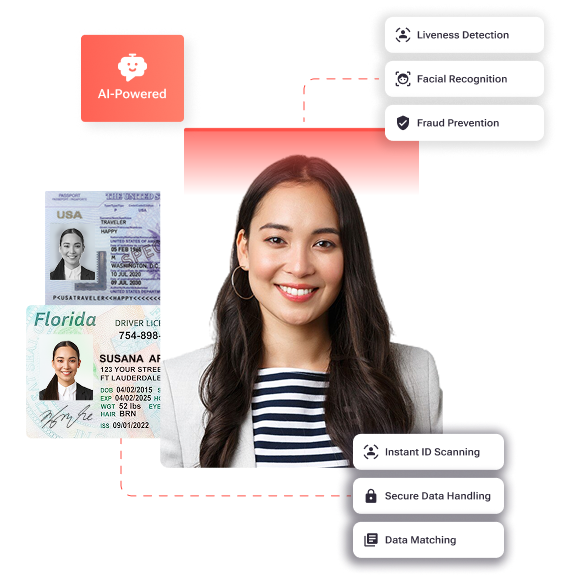
See how TenantEvaluation connects every operational duty in one platform.
When HOAs Shift From Self-Managed To Professionally Managed
The tipping point for professional management appears consistently across communities. Neighborhoods often reach it when they grow beyond 50–75 homes, when volunteers spend 10–15 hours weekly on association tasks, or when board positions go unfilled due to workload concerns. Florida’s post-Surfside condo reforms, including SIRS requirements, milestone inspections, mandatory reserve funding, and website transparency obligations, have accelerated this calculus for condominium associations.
What changes operationally at the tipping point is who executes the work. Hiring a firm moves the board from “doing” management work to a governance model of setting policy, approving budgets, and holding the management firm accountable to Key Performance Indicators. Administrative burden, compliance risk, and lost revenue from slow onboarding form the three operational costs of delayed professional management, and each cost can be measured.
Operational Red Flags In HOA And Condo Management
Operational failures in community association management follow recognizable patterns. The most consequential include:
- Incomplete Or Missing Lease Records that leave no centralized visibility into which leases are active, pending, expired, or missing, creating occupancy blind spots and audit exposure.
- Fees And Deposits Tracked In Spreadsheets where payment collection sits apart from resident onboarding and managers chase confirmations through email and phone calls.
- Approval Workflows Stuck In Email Chains with applications waiting for board review and no real-time tracking, no automated communication, and no audit trail.
- No Audit Trail For Applications that leaves incomplete records which cannot support a DBPR investigation or owner records request within the statutory 10-business-day window.
- Inconsistent Documentation Across Applicants, especially in age-restricted communities where fragmented manual processes create compliance exposure over time.
These red flags tend to cluster, so one usually signals others. Willful records denial under Florida Statute 718.111(12) carries statutory damages of $50 per day for the first 10 business days as minimum damages, plus actual damages and reasonable attorney’s fees to the prevailing owner.
Compliance, Risk, And Governance For Florida CAMs
Florida CAMs operate within a layered legal framework that creates direct compliance obligations. The DBPR reported 23,535 active community association manager licenses statewide in its most recent annual report (FY 2023-24), and each licensee is subject to discipline under Florida Statute 468.4337 for gross misconduct, gross negligence, fraudulent misrepresentation, and contracting with undisclosed financially-interested entities.
FCRA obligations apply to every screening decision. Permissible purpose controls, adverse action workflows, and secure handling of sensitive applicant data form the foundation of a defensible onboarding process. TenantEvaluation maintains a clear separation between decision-making by the association and data provision by TenantEvaluation. The platform includes built-in audit trails for every application, direct credit bureau reseller relationships with TransUnion and Equifax, and automated adverse action workflows. That FCRA-first design carries through every screening decision.
Florida law places fiduciary responsibility for the association with the board of directors, as defined in Florida Statute 720.303 for HOAs and Florida Statute 718.111 for condo associations. The management company holds only the authority the board grants under the management agreement. That boundary, documented clearly and enforced consistently, forms the structural foundation of a well-governed Florida community association.
Frequently Asked Questions
What Are The 5 Key Responsibilities Of A Condo Association Manager?
The five most operationally significant responsibilities are:
- Financial management and budget support
- Maintenance and vendor coordination
- Rule enforcement and covenant compliance
- Records and documentation management
- Resident communication and administration
Each responsibility requires the manager to execute under board direction rather than make independent policy decisions. In Florida, these duties also carry statutory compliance dimensions under Chapter 718 for condominiums and Chapter 720 for HOAs.
Does An HOA President Have More Power Than A Board Member?
The HOA president is a board member with procedural authority. The president chairs meetings, runs the agenda, and signs contracts and legal documents only after the board authorizes them. The president does not approve spending, waive rules, or bind the association without a board vote. Authority in a community association belongs to the board as a body, not to any individual director, including the president.
What Makes A Good HOA Manager?
A good HOA manager operates proactively rather than reactively. Strong managers conduct scheduled inspections, maintain preventive maintenance calendars, and plan budgets in advance. They provide consistent, structured reporting so the board always knows the state of the community, respond to board and homeowner inquiries on a defined schedule, and maintain complete audit trails for every operational decision. In Florida, holding an active LCAM license and staying current on continuing education requirements under Chapter 468 are baseline professional standards.
What Is The Difference Between A Property Manager And An Association Manager?
A community association manager serves an elected board of directors and the association as a whole, operating within a framework of governing documents, state statutes, and fiduciary standards. A property manager serves a single owner or ownership group, primarily working within landlord-tenant law and lease agreements. In Florida, the two credentials are not interchangeable. A CAM license does not authorize rental property management for outside owners, and a real estate license does not replace a CAM license for community association management.
What Are Property Managers Not Allowed To Do?
A community association manager cannot set assessment levels, adopt or amend rules, approve contracts above the board-authorized threshold, authorize litigation, or make personnel decisions including hiring or terminating the management company. Managers also cannot levy fines unilaterally, since fines, hearings, and violation determinations require a board process. In Florida, a licensed CAM has explicit authority to refuse illegal directives from a board and cannot provide legal advice or replace the role of the association’s attorney, CPA, or reserve specialist.
Conclusion: The Platform Built For Florida Condo Association Managers
The core problem for Florida CAMs and boards centers on scope ambiguity and manual operational work that creates compliance exposure and slows onboarding. A manager who cannot see which leases are active, which fees are collected, and which applications are complete cannot execute the duties the board delegated.
TenantEvaluation is the all-in-one resident screening and onboarding platform built specifically for community associations and management companies, with FCRA compliance as the foundation. The platform serves 5,000+ communities, processes approximately 100,000 applications annually, holds a 4.8/5 Google rating, has generated $150M for communities, and maintains direct credit bureau reseller relationships with TransUnion and Equifax. Built-in audit trails and a board-ready dashboard come standard.
QuickApprove is the accelerated approval workflow built for CAMs, Boards, and property management teams inside one connected platform. It moves applications from submission to decision faster, with real-time tracking, automated communication support, customized approval letters, and a personalized welcome package, while preserving control, compliance, and visibility. The table below shows how that workflow compares with manual processes and generic screening tools across the dimensions that matter most to boards.
| Attribute | TenantEvaluation | Traditional/Manual Methods | Generic Screening Tools |
|---|---|---|---|
| Application processing time | 5–10 minutes per application | 5–10 days per application | Processing times for personnel security screening applications vary by complexity and type, ranging from 7 business days for a simple reliability status request to 120 business days for a complex request, measured in days rather than minutes |
| Onboarding automation scope | End-to-end: document collection, ID verification, screening, approvals, lease tracking, and payment collection in one platform | Each step handled separately across email, spreadsheets, and paper | Generic pre-employment screening tools used by most small businesses cover only the screening stage (criminal background checks, SSN traces, employment and education verification). The subsequent onboarding steps, including welcome email, Day 1 logistics, I-9 and W-4 compliance documents via e-signature, and the 30-60-90 day plan, remain manual unless a dedicated structured onboarding platform is used. |
| Compliance foundation | FCRA-first design; direct TransUnion and Equifax reseller; built-in adverse action workflows; permissible purpose controls; automated audit trails | No built-in FCRA workflow; audit trails depend on manual recordkeeping | FCRA compliance among generic screening tools varies by vendor, and credentials such as PBSA accreditation and SOC 2 attestation are not FCRA compliance guarantees. Generic tools are typically not purpose-built for FCRA-regulated employment screening workflows. |
| Board dashboard access | Dedicated board review and voting panel with real-time application visibility, AI-generated summaries, and timestamped audit records | Traditional/manual reporting methods produce static reports distributed via email or presented in person, with no dedicated interactive dashboard for board members, who often require clear and concise summaries rather than interactive dashboards | Generic screening and compliance tools like Mitratech Board Reporter are not board management tools and are purpose-built for Chief Compliance Officers, General Counsels, and Risk Managers rather than association governance, though they may still generate board-ready dashboards and reports |
Ready to give your board and your manager one connected workflow? Start your walkthrough.
