Written by: Luis Teran, Co-founder, CEO, TenantEvaluation | Last updated: September 7, 2026
Key Takeaways
- HOA tenant screening faces specific risks from synthetic identity fraud, ghost tapping, and AI-generated fake documents that generic landlord tools miss.
- Board approval workflows, governing documents, and community access control increase liability exposure that standard screening platforms do not cover.
- A seven-step prevention framework with written criteria, biometric verification, AI document checks, independent income review, FCRA-compliant credit screening, lease tracking, and audit trails protects associations while maintaining compliance.
- Red flags such as inconsistent documents, rushed applications, mismatched employer contacts, and refusal of biometric verification signal likely fraud before approval.
- TenantEvaluation delivers all seven prevention steps in one FCRA-compliant platform built for HOAs and community associations, so explore how it works.
What Rental Fraud Looks Like In HOA Tenant Screening
Rental fraud in HOA tenant screening occurs when an applicant uses fabricated identities, forged documents, or stolen personal information to gain board approval for a unit they do not legitimately qualify for, often with no intention of paying rent.
The most common schemes targeting community associations include:
- Synthetic identity fraud: Fraudsters blend real and fabricated data to create a person who looks legitimate on paper. Synthetic identity fraud has grown 3x in rental applications since 2023, and AI can now generate a complete, internally consistent application package with fake pay stubs, employment letters with AI-answered phone numbers, and aged credit files built on real but unmonitored Social Security numbers.
- Ghost tapping: Fraudsters use a real person’s identity, often a stolen Social Security number, without their knowledge to pass a background check and produce a clean credit report.
- Fake pay stubs and income documents: Roughly 1 in 8 rental applications contains fraudulent income documentation, with fake pay stubs as the most-forged document. AI-generated document fraud jumped approximately 500% between April and December 2025, which makes convincing fakes cheap and fast to produce.
- Stolen IDs and impersonation: Modern counterfeit driver’s licenses reproduce holograms and microprint, so manual visual inspection no longer provides reliable protection. Reliable detection requires document verification against issuing-state records plus a biometric liveness check.
Why HOA Tenant Screening Faces Higher Stakes
These fraud risks intensify in HOAs and condos, where generic landlord screening tools are not designed for community associations. HOAs and condos face challenges that standard rental platforms do not address:
- Board approval workflows: Applications must pass board review, which creates delays that fraudsters exploit to rush decisions.
- Governing documents: Screening criteria must align with CC&Rs and bylaws as well as state landlord-tenant law.
- Community access control: A fraudulent occupant in a gated community threatens every resident, not just one unit.
- Higher liability exposure: HOA board members can be individually named in Fair Housing lawsuits, so inconsistent or undocumented screening decisions create serious risk.
Generic screening tools verify consistency, such as name matching bureau records and income plausibility, but they do not verify authenticity. Community associations need a specialized, compliance-first approach that confirms both identity and documentation.
The Solution: A 7-Step Framework To Prevent Rental Fraud
Step 1: Establish Written, Objective Screening Criteria
Why It Matters: Objective criteria reduce discrimination risk and provide a clear basis for adverse action. Over 50% of Fair Housing Act complaints involve disability discrimination, and inconsistent enforcement is the most common source of claims.
How To Do It: To implement this, document minimum credit scores, income ratios, and rental history requirements in the association’s governing documents, then apply them uniformly to every applicant. Written criteria protect the association twice. They prevent fraudsters from exploiting inconsistent reviewers and they defend against discrimination claims when adverse action occurs.
Step 2: Verify Identity With Biometric Checks
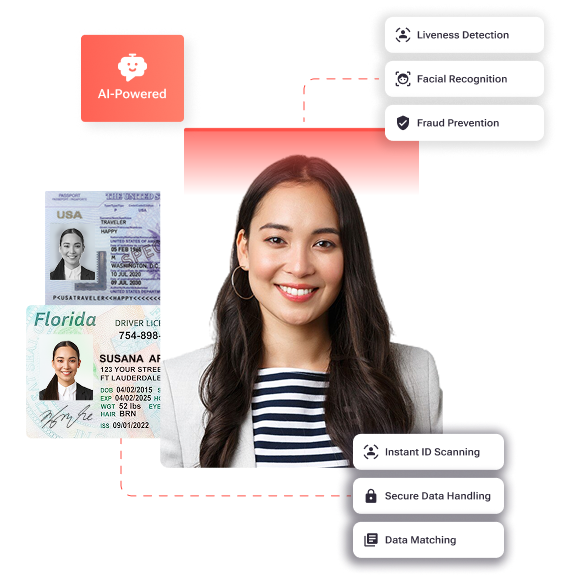
Why It Matters: Synthetic identities and ghost tapping defeat document-only review. Biometric verification confirms that the applicant is real, present, and matched to the government-issued ID before approval.
How To Do It: Use an identity verification tool that combines ID document scanning, liveness detection, and selfie-to-ID facial comparison. Require every adult occupant to complete the biometric step as part of the application. Treat refusal or repeated failure as a major risk indicator that requires additional review or denial under written criteria.
Step 3: Authenticate Documents With AI
Why It Matters: Fake pay stubs and bank statements are now cheap and convincing. Free online tools can produce a convincing fake pay stub in under a minute, and the most-forged document in rental applications remains the pay stub referenced in the 1-in-8 fraudulent income statistic.
How To Do It: Use AI-powered document authentication that checks pixel anomalies, font inconsistencies, metadata tampering, and internal math reconciliation. A fake pay stub typically fails one of three tests. The math must reconcile, so gross minus deductions must equal net to the cent. The deductions must be plausible, with standard federal, state, Social Security, and Medicare lines present. The bank record must also match, with net pay appearing as a direct deposit of the same amount on the same schedule. Automated checks catch patterns that the human eye misses.
Step 4: Independently Verify Income And Employment
Why It Matters: Employer verification letters are among the easiest documents to fabricate, often with a logo lifted from a company website and a fake HR contact whose number routes to a co-conspirator. Landlords should never use the contact information on the letter itself.
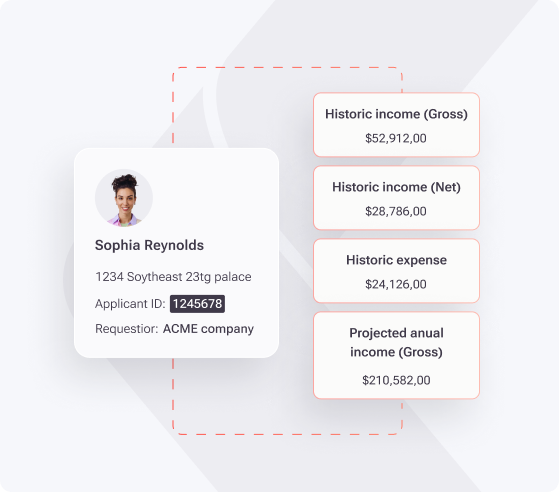
How To Do It: Start by contacting employers directly through independently sourced phone numbers from the company’s public website or corporate registry. Then cross-reference pay stubs against bank statements to confirm matching payroll deposits on the same schedule. For self-employed applicants, require prior-year tax returns with all schedules plus three months of business and personal bank statements. When additional confidence is needed, use an IRS Form 4506-C authorizing transcript access to corroborate reported tax figures through official records.
Step 5: Screen For Financial Risk With FCRA Compliance
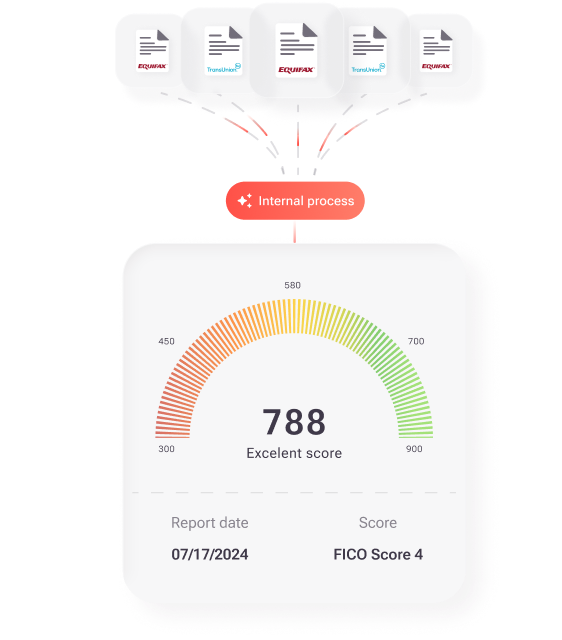
Why It Matters: Using a direct credit bureau reseller, rather than third-party scraping, improves data accuracy and supports permissible purpose. FCRA requires written authorization before pulling a consumer report and an adverse action notice when a report contributes to a denial, including the CRA’s name, address, and toll-free number, plus the applicant’s right to dispute.
How To Do It: Use a screening provider that is a direct reseller of TransUnion and Equifax data, with automated adverse action workflows built in. TenantEvaluation is a legitimate reseller of both bureaus, accessed under strict bureau rules with no gray-market or offshore data sources, which keeps the association protected from liability exposure.
Step 6: Control Community Access And Lease Documentation
Why It Matters: Fraud risk continues after approval. Unauthorized occupants, illegal subletting, and expired leases create ongoing exposure that generic tools cannot track. 67.1% of operators reported unauthorized cohabitants or illegal subletting as a fraud type.
How To Do It: Track keys and fobs, confirm that the approved applicant is the actual occupant, and maintain real-time lease visibility. TenantEvaluation’s Lease Tracking connects resident onboarding, unit data, approvals, and lease documentation into one centralized, real-time, audit-ready workflow, which replaces spreadsheets and scattered email chains from application through occupancy.
Step 7: Maintain Audit Trails And Documentation
Why It Matters: Every application decision must be defensible. A complete audit trail protects against Fair Housing liability, FCRA disputes, and board-level accountability questions. Inconsistent documentation remains the most common source of discrimination claims.
How To Do It: Document every verification attempt, every communication, and every decision with timestamps. TenantEvaluation’s platform timestamps all actions and maintains searchable digital records, which creates a full audit trail from application intake through final decision and record retention. TenantEvaluation’s platform delivers all seven steps natively, so book a walkthrough to see it in action.
How To Catch A Tenant Scammer Before Approval
Tenant screening red flags that warrant immediate further investigation include:
- Inconsistent documents: Pay stubs with misaligned decimals, rounded numbers, or YTD totals that do not reconcile with stated pay periods.
- Refusal to verify identity: Applicants who resist biometric verification or liveness checks, which strongly indicates impersonation or ghost tapping.
- Rushed applications: Pressure to skip steps or approve quickly, often exploiting board workflow delays.
- Mismatched information: Employer phone numbers that route to personal lines and prior landlords who do not own the stated property per public records.
- Identical formatting across different applicants: A sign of organized fraud rings using the same document templates.
- New personal email domains: Email addresses created within 90 days or phone numbers routing to VoIP carriers.
FCRA Compliance Requirements For HOA Tenant Screening
FCRA compliance forms the foundation of defensible screening for community associations. Key requirements include:
- Permissible purpose: Written authorization from the applicant is required before pulling any consumer report.
- Adverse action notices: When a report contributes to a denial, the association must provide the applicant with the CRA’s name, address, and toll-free number, plus notice of their right to dispute inaccurate information within 60 days.
- Compliant data sources: Direct credit bureau resellers, rather than gray-market or offshore data, to protect the association from liability exposure.
- Consistent application: The same written screening criteria applied to every applicant, since inconsistency is the most common trigger for Fair Housing complaints.
TenantEvaluation is built with FCRA compliance as the foundation. Automated adverse action workflows, strict permissible purpose controls, and built-in audit trails protect the association at every step.
Why TenantEvaluation Fits HOA Tenant Screening Fraud Prevention
Generic platforms like Buildium, AppFolio, and TurboTenant were built for landlords and treat screening as an add-on to property management software. TenantEvaluation was built exclusively for HOAs, condos, and management companies by property managers, board members, and software engineers with over 50 years of combined experience, serving 5,000+ communities and processing 100,000+ applications annually.
The platform delivers every layer of the prevention framework in one connected workflow:
- FCRA-First Design: Direct reseller of TransUnion and Equifax data, automated adverse action, and full audit trails with compliance built into the core product.
- Biometric Identity Verification: IDVerify+ confirms applicants are real, present, and matched to their government-issued ID before approval, which moves communities from document-based review to biometric-confirmed identity verification.
- Accelerated Approvals: QuickApprove moves applications from submission to decision faster with real-time application tracking, automated communication support, and a board-ready voting dashboard while preserving control, compliance, and visibility.
- Lease Lifecycle Control: Lease Tracking connects onboarding, unit data, approvals, and lease documentation into one centralized, real-time, audit-ready workflow.
- Connected Payments: TEpayments by Zinc collects application fees and deposits within the onboarding process, sending payments directly from the applicant to the association’s designated account while TenantEvaluation avoids holding funds.
Buildium and AppFolio operate as property management platforms with screening layered on top. TenantEvaluation operates as a screening and onboarding platform built for community associations, with compliance at the center of its design.
FAQ: Rental Fraud Prevention In HOA Tenant Screening
What Counts As Tenant Fraud In An HOA?
Tenant fraud in an HOA includes any deliberate misrepresentation or fabrication used to gain board approval for occupancy. Common forms include synthetic identity fraud that combines a real but unmonitored Social Security number with fabricated biographical details, ghost tapping that uses a real person’s identity without their knowledge, forged income documents such as pay stubs and bank statements, stolen or counterfeit government IDs, and unauthorized occupants or illegal subletting after move-in. Organized fraud rings may submit multiple applications using the same document templates, so identical formatting across different applicants becomes a key red flag. Financial consequences extend beyond lost rent to legal fees, damage, and eviction costs that can exceed $30,000 per incident.
How Do You Verify Income And Employment For HOA Applicants?
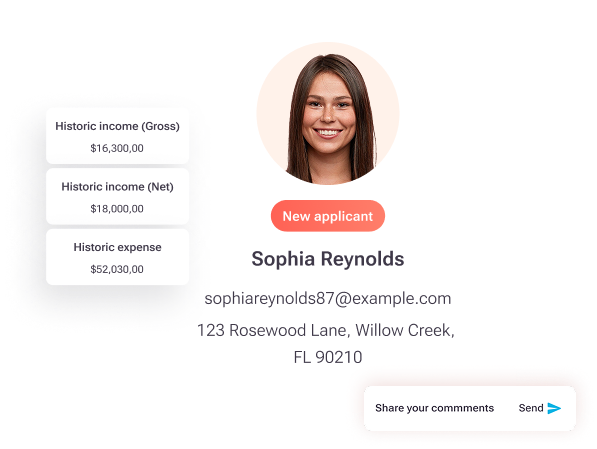
Income and employment verification for HOA applicants requires independent confirmation rather than reliance on applicant-supplied documents alone. For W-2 employees, request two to three consecutive recent pay stubs and two months of bank statements, then confirm that net pay deposits appear on the same schedule as the pay stubs indicate. Contact the employer directly through a phone number obtained from the company’s public website or corporate registry, not from the application packet or employment letter. For self-employed applicants, require the prior-year tax return with all schedules plus three months of business and personal bank statements, and consider an IRS Form 4506-C to corroborate reported figures through official records. When pay stubs and bank deposits conflict, treat the conflict as an exception that requires resolution before the application proceeds and document every verification attempt, including the date, contact method, and what was confirmed.
What Is Ghost Tapping In Rental Applications?
Ghost tapping is a rental fraud scheme in which an applicant uses a real person’s identity, typically a stolen Social Security number belonging to a child, an elderly person, or someone who does not actively monitor their credit, without that person’s knowledge or consent. Because the SSN belongs to a real individual with a legitimate credit history, ghost tapping can produce a clean credit report and pass standard background checks. Document review alone does not reveal this fraud. Biometric identity verification, especially AI-powered liveness detection and selfie-to-ID facial comparison, provides the primary defense because it confirms that the person completing the application is physically present and matches the government-issued ID submitted.
How Do You Catch A Tenant Scammer Before Approval?
Catching a tenant scammer before approval requires multiple independent checks rather than reliance on any single document or data point. Key red flags include pay stubs with math that does not reconcile, YTD totals inconsistent with stated pay periods, bank deposits that do not match net pay amounts or pay frequency, employer phone numbers that route to personal or VoIP lines, and prior landlords who do not own the stated address per public property records. Applicants who resist or refuse biometric identity verification also present significant risk. Organized fraud often appears through identical document formatting across multiple applications. AI document authentication detects pixel anomalies, font inconsistencies, and metadata tampering that manual review misses. Biometric liveness detection confirms physical presence and defeats impersonation, while independent employer contact through publicly sourced numbers defeats fabricated employment letters.
Is Biometric Identity Verification Legal For HOA Tenant Screening?
Biometric identity verification is legal for tenant screening when used within an FCRA-compliant workflow that obtains the applicant’s written authorization before running the screening report. The verification process confirms that the applicant is who they claim to be and does not make the screening decision, which remains with the board or manager applying the association’s written criteria. Biometric verification does not introduce protected-class data into the decision and does not replace credit, background, or income review steps. It functions as a separate identity confirmation layer that strengthens the overall screening process and reduces liability exposure by ensuring the person approved is the person who applied. TenantEvaluation’s IDVerify+ operates within an FCRA-compliant workflow with applicant consent, audit trails, and redacted ID copies for compliance documentation.
Conclusion: Protect Your Community With A Layered, Compliance-First System
Rental fraud in HOA tenant screening has become a present reality. Synthetic identities, ghost tapping, and AI-forged documents now target gated communities, while generic screening tools, which verify consistency but not authenticity, fail to catch them.
A layered, compliance-first framework gives boards a practical defense. Written objective criteria, biometric identity verification, AI document authentication, independent income verification, FCRA-compliant credit screening, real-time lease visibility, and complete audit trails work together when delivered in one platform built for community associations.
TenantEvaluation has processed more than 100,000 applications annually across over 5,000 communities with FCRA compliance at its core. Do not let a fraudulent applicant compromise your community’s safety or finances. See how TenantEvaluation can protect your association and book a demo today.
