
Key Takeaways for Association Leaders
- Rental application fraud affects 93.3% of property managers, driven by AI-generated documents and synthetic identities that bypass traditional screening.
- Standardize forms, verify identities with biometrics, and watch for red flags like inconsistent documents to block fraud early.
- Independently confirm income, employment, and references using public records and automation to stop falsified submissions.
- Use AI-powered tools for document authentication, biometric liveness detection, and automated workflows to improve accuracy and speed.
- TenantEvaluation’s FCRA-compliant platform with IDVerify and QuickApprove protects Florida HOAs while generating revenue, get started today.

Proven Ways Community Associations Can Prevent Rental Application Fraud
1. Standardize Rental Application Forms to Close Fraud Gaps
Consistent application forms remove opportunities for fraudsters who exploit different requirements across units or buildings. Standardized forms collect the same information every time, which makes inconsistencies and missing data easier to spot. Pre-qualification that collects basic tenant information like name, phone, and address before showings helps filter out suspicious applicants early.
Effective standardization includes mandatory fields for employment verification, rental history, and income documentation. Digital forms with built-in logic can flag incomplete submissions and request specific document types based on applicant responses. This structure reduces manual review time and ensures complete, comparable data for every application.
2. Use Layered Identity Verification for Every Applicant
Strong identity verification forms the foundation of rental fraud prevention. Verify identity by matching all application information against government-issued ID, checking for inconsistencies in spelling, dates, addresses, and visual red flags like altered edges or fonts. Traditional document review alone cannot reliably detect synthetic identities that mix real and fake information.
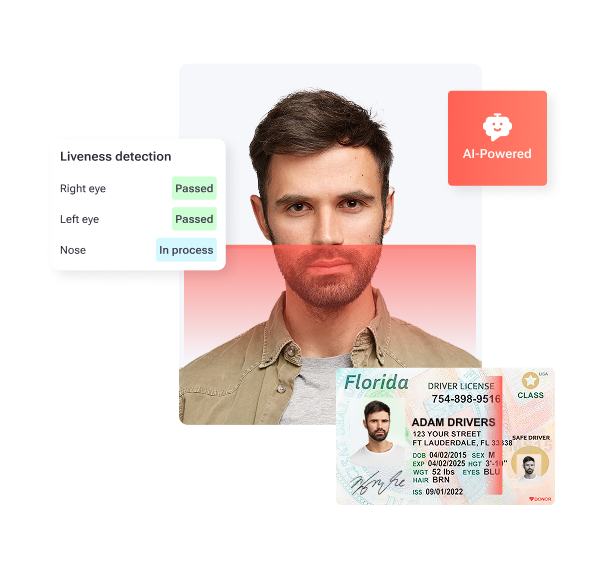
Modern identity checks work best when they include biometric confirmation. This step confirms that applicants are physically present and match their identification. IDVerify provides AI-powered liveness detection and facial biometric matching inside the screening workflow, which closes the gaps left by document-only verification.

3. Train Teams on Clear Red Flag Detection Protocols
Staff training on fraud indicators keeps suspicious applications from moving forward. Behavioral red flags include applicants who rush the process, resist verification, provide inconsistent answers, use poor grammar, give incomplete responses, or refuse contact information.
Document red flags include altered pay stubs, inconsistent formatting in bank statements, and employment letters from non-existent companies. Common red flags include fake or altered pay stubs and bank statements showing higher income, forged employment letters from non-existing jobs or inflated salaries, and use of CPNs instead of SSNs for misrepresented credit. Clear written protocols help teams apply the same standards to every application.
4. Verify Income and Employment Through Independent Sources
Direct verification with employers and financial institutions blocks many income fraud attempts. Fraudsters often submit doctored pay stubs and edited bank statements to qualify for homes they cannot afford. Independent verification uses contact information from public sources instead of phone numbers or emails listed by the applicant.
Automated income verification services streamline this process while keeping accuracy high. These tools pull employment and income data directly from payroll providers and financial institutions. This approach reduces reliance on documents that applicants can easily alter.
5. Authenticate Every Supporting Document With Technology
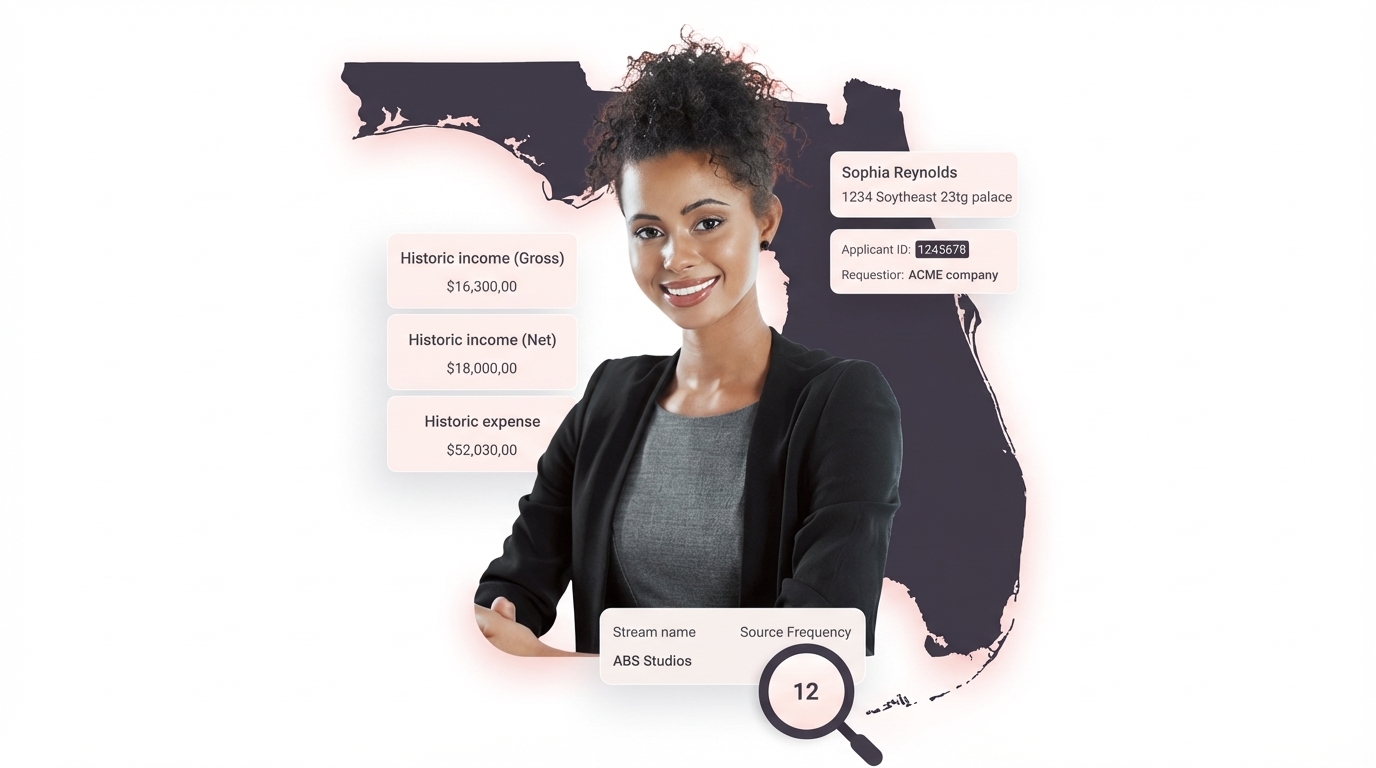
AI-assisted identity verification and document authentication identify inconsistencies in fake W-2s, bank statements, and counterfeit IDs generated by AI tools. Document authentication technology spots alterations, formatting issues, and other manipulation signs that manual review may overlook.
Effective document checks include verification of watermarks, security features, and consistent formatting. Advanced systems can detect pixel-level edits and compare documents against trusted templates to uncover fraudulent changes. Schedule a demo today to see how automated document authentication can strengthen your association’s fraud defenses.
6. Confirm References and Rental History Carefully
Confirm rental history by contacting prior landlords using independently verified contact information from public records to avoid fake references. Fraudsters frequently list friends or accomplices who pretend to be former landlords or employers.
Thorough reference checks compare provided contact information with public records and property databases. This step helps uncover fake references and ensures you speak with actual property owners or licensed managers.
7. Add Biometric Identity Verification for High-Risk Applications
Biometric verification delivers a major upgrade to traditional fraud prevention. Anti-spoofing measures in facial recognition systems increased by 37% in 2025, preventing fraud via photos or masks. Current biometric tools can detect deepfakes, photo spoofing, and other advanced impersonation attempts.
Multimodal biometric systems combining facial and fingerprint recognition provide 96% higher security than single-mode systems. These systems confirm that applicants are live, present, and match their government-issued IDs during verification.
8. Use Automated Screening Workflows for Consistent Reviews
Automation reduces human error and keeps fraud detection steps consistent across every file. Combine technology with trained leasing teams for human oversight, staff training, and slowing down approvals when red flags appear. Automated systems can route suspicious applications to manual review while quickly clearing straightforward cases.
Effective workflows include real-time checks of identity documents, income sources, and employment status. These systems process applications in minutes instead of days and often deliver higher accuracy than fully manual reviews.
9. Apply AI-Powered Fraud Detection for Complex Cases
AI-driven biometric fraud detection implementations rose by ~45% in 2025 across finance and payment systems. Artificial intelligence can uncover patterns and anomalies that human reviewers may miss, especially with synthetic identities and advanced document fraud.
AI tools review many data points at once, including document authenticity, behavior patterns, and biometric results. This combined analysis improves fraud detection accuracy and shortens decision times for your board or management team.
10. Select a Fraud Prevention Platform Built for Associations
TenantEvaluation offers a comprehensive fraud prevention platform tailored to community associations. The system brings key tools together in one FCRA-compliant environment, which removes the need for multiple vendors and scattered processes.
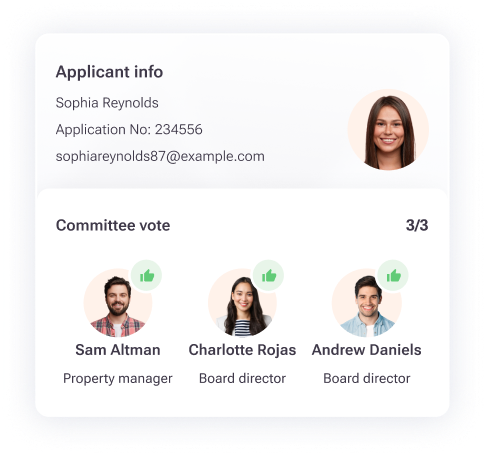
Core features include IDVerify biometric verification, automated document authentication, income verification, and QuickApprove board dashboards for clear, trackable decisions. With more than 5,000 communities served and $150M generated for communities, TenantEvaluation has a proven record of preventing fraud while creating new revenue streams.
Common Rental Application Red Flags for Boards and Managers
Early recognition of fraud indicators keeps high-risk applicants out of your community. Common fraud tactics include doctored documents like fake pay stubs and altered bank statements, fake identities with stolen SSNs, fraudulent applications with false employment and rental history, and credit report manipulation.
Key warning signs include:
- Inconsistent information across documents
- Rushed timeline or pressure to approve quickly
- Reluctance to provide verification contacts
- Offers to pay large amounts upfront without verification
- Poor grammar or formatting in official documents
- Employment or rental history that cannot be verified
What Counts as Rental Fraud for Community Associations
Rental fraud includes any deliberate misrepresentation of information used to gain housing approval. This category covers identity theft, income falsification, employment fraud, and document forgery. Synthetic identities combining real and fake data now pose a major risk that many traditional screening methods fail to catch.
Modern schemes often rely on advanced technology such as AI-generated documents and deepfake videos. These tactics require equally advanced prevention tools to protect community associations from financial losses and legal exposure.
Steps for FCRA-Compliant Tenant Screening
FCRA-compliant screening protects associations and applicants while supporting defensible decisions. FCRA file-disclosure fee cap increases to $16 effective January 1, 2026, so associations must update fee schedules and vendor settings.
Core compliance steps include establishing permissible purpose, obtaining written authorization, issuing adverse action notices, and keeping detailed audit trails. TenantEvaluation operates as a direct credit bureau reseller with built-in FCRA workflows, which helps associations meet regulatory requirements while accessing accurate data.
| Feature | TenantEvaluation | ApplyCheck/Verify | Buildium/AppFolio |
|---|---|---|---|
| Processing Time | 5-10 minutes | Days | Days |
| Biometrics/Board Tools | Yes (IDVerify) | No | Generic/No |
| Revenue Model | Sharing (Profit) | Subscription | Subscription |
| Florida HOA Focus | Yes | No | No |
Conclusion: Protect Your Community From Rental Fraud Now
Effective rental fraud prevention uses standardized procedures, advanced technology, and FCRA-compliant workflows together. The strongest programs combine biometric verification, automated document authentication, and platforms built specifically for community associations.
TenantEvaluation delivers a comprehensive fraud prevention solution and serves more than 5,000 communities with documented results. As a direct credit bureau reseller with deep Florida expertise, TenantEvaluation provides both the compliance structure and technology needed to protect your community while generating revenue.
Schedule a demo today to start fraud-proofing your community with TenantEvaluation’s platform.
Frequently Asked Questions
What is rental application fraud?
Rental application fraud occurs when an applicant intentionally misrepresents information to gain housing approval. This behavior includes identity theft, income falsification, employment fraud, document forgery, and use of synthetic identities that mix real and fake data. Many schemes now rely on AI-generated documents and deepfake videos, which makes detection difficult for traditional screening methods.
How does biometric verification stop fake IDs?
Biometric verification uses AI-powered liveness checks and facial recognition to confirm that the applicant is a real person who matches the ID. This technology detects photo spoofing, deepfakes, and other impersonation attempts that often pass basic document review. Modern systems analyze facial landmarks and require live interaction, which makes it extremely hard for fraudsters to succeed with stolen or fake IDs.
Is TenantEvaluation FCRA compliant?
Yes, TenantEvaluation is fully FCRA compliant and operates as a direct credit bureau reseller for TransUnion and Equifax. The platform includes built-in compliance workflows, automated adverse action handling, and complete audit trails. TenantEvaluation’s framework is designed for community associations, so every screening step aligns with federal rules and reduces liability risk.
How much time can automated screening save community associations?
TenantEvaluation’s automated platform can free as much as 50 hours of staff time per day from manual administrative work. The system cuts application processing from days to hours while improving accuracy compared with manual reviews. Staff can then focus on resident service and board support while the platform manages fraud checks and compliance steps.
What makes TenantEvaluation different from other screening platforms?
TenantEvaluation is built for community associations and management companies, with FCRA compliance at the core. The platform offers features such as QuickApprove board dashboards, IDVerify+ biometric verification, and revenue-sharing models that generate income for associations. Unlike generic rental screening tools, TenantEvaluation addresses the specific needs and regulations of Florida community associations with tailored workflows and compliance controls.