Written by: Luis Teran, Co-founder, CEO, TenantEvaluation | Last updated: September 2, 2026
Key Takeaways
- Identity fraud is escalating rapidly, with AI-generated fake documents and synthetic identities bypassing traditional document checks and costing communities an average of $15,000 per incident.
- KYC verification combines government ID validation, biometric liveness detection, SSN validation, and address history checks to confirm applicants are who they claim to be before screening reports are ordered.
- FCRA compliance requires written consent, proper sequencing of identity verification before background checks, and documented adverse action notices when reports contribute to rental decisions.
- Common implementation pitfalls include relying on visual document checks alone, applying inconsistent verification standards, skipping adverse action processes, and using generic tools not built for community associations.
- Property managers can strengthen their screening process with TenantEvaluation’s integrated KYC solution that embeds biometric identity confirmation into existing workflows.
The Growing Threat: Why Document Checks Fail Modern Communities
In 2024, 93% of National Multifamily Housing Council members reported experiencing rental fraud in the previous year, with each case costing an average of $15,000 to mitigate. Fraud tactics have grown significantly more sophisticated. AI tools now generate convincing pay stubs, bank statements, and identity documents that pass a quick visual inspection.
MRI Real Estate Software purchased 200 AI-generated fake IDs, some for as little as $5, and tested them against different verification methods. Optical card readers, the industry-standard system, only flagged 26% of them. That figure alone shows why visual document review no longer provides reliable control.
Synthetic identity fraud, where a fraudster combines a real Social Security number with fabricated personal details, grew 311% between Q1 2024 and Q1 2025. This surge is part of a broader trend. Deloitte’s Center for Financial Services projects that generative-AI-enabled fraud losses in the United States could climb from roughly $12.3 billion in 2023 to about $40 billion by 2027.
For community associations, a fraudulent occupant creates financial, security, and liability risk for every resident in the building. A fraudster who gains access to a condo or HOA community through a fabricated identity can cause property damage, engage in criminal activity, or sublease the unit illegally while the association carries legal exposure. KYC verification adds the defense layer that closes the gap left by document-only screening.
How KYC Verification Works in Tenant Screening
KYC (Know Your Customer) verification in tenant screening confirms a prospective renter’s true identity using official government documents and biometric or database checks before approving a lease.
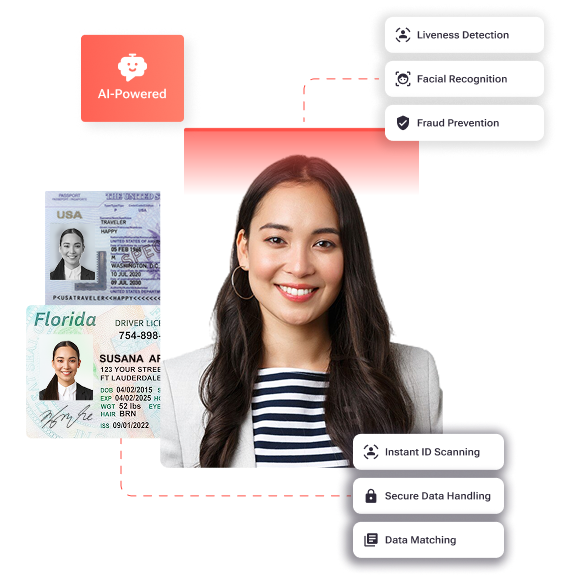
A robust KYC process for community associations combines four core components:
- Government-Issued ID Validation: Authenticate the document itself by checking its format, issuing-country rules, security features, MRZ/barcode/visual-zone consistency, and internal data consistency to flag altered or fabricated IDs. Advanced systems use image forensics to spot tampering and can cross-check data against trusted identity databases.
- Biometric Verification: Use AI-powered liveness detection and facial matching to confirm the applicant is physically present and matches the ID photo. A liveness check is the single most reliable defense against deepfake IDs and live-deepfake video. The applicant performs actions that AI struggles to fabricate in real time.
- SSN / TIN Validation: Cross-reference the Social Security Number to spot synthetic identities and confirm that credit history belongs to the actual applicant. Synthetic identities often have thin or inconsistent address histories, and identity proofing against source records, rather than the credit score alone, is what catches them.
- Address History Verification: Trace past residences to build a consistent background footprint and surface discrepancies that may indicate a fabricated identity.
TenantEvaluation’s IDVerify integrates all four components directly into the screening workflow. This approach eliminates external portals, workflow disruption, and additional logins for applicants or managers. Book a demo to see IDVerify in action and how it embeds biometric identity confirmation into your existing onboarding process.
Implementing KYC in Your Screening Process
This workflow fits community associations operating under Florida’s regulatory environment, where CAMs, boards, and property management teams share responsibility for screening decisions.
Step 1: Application Submission and Consent
The applicant submits the application online and provides clear, written consent for the screening process, including identity verification. Under the FCRA, a landlord may pull a tenant screening report only after obtaining the applicant’s written authorization; verbal permission does not satisfy the statute. Consent must be standalone and conspicuous, rather than buried in application fine print. TenantEvaluation’s platform captures this consent digitally and stores it as part of the application’s audit trail.
Step 2: Automated Identity Verification
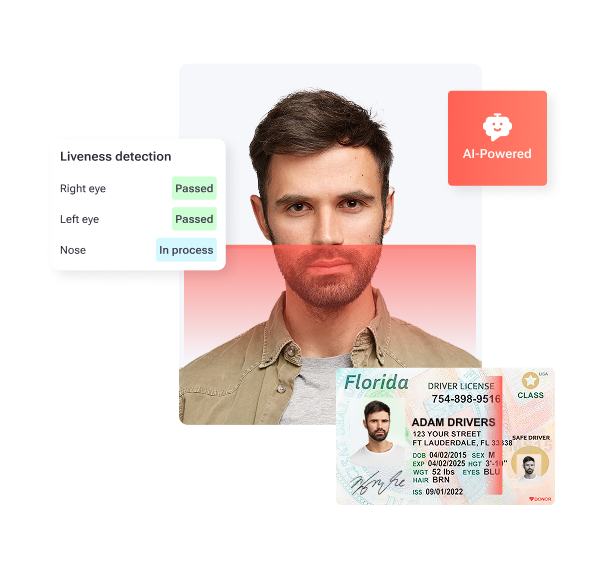
The applicant uploads a government-issued ID and completes a guided biometric selfie. The system automatically validates ID authenticity, checks for liveness, and performs a facial match. Liveness detection distinguishes real users from photos, videos, masks, or deepfake-generated media and detects injection attacks where manipulated media is fed directly into the verification pipeline. Results, including ID authenticity confirmation, liveness verification status, and biometric match result, appear directly in the screening report visible to the CAM.
Step 3: Background Check and Credit Report
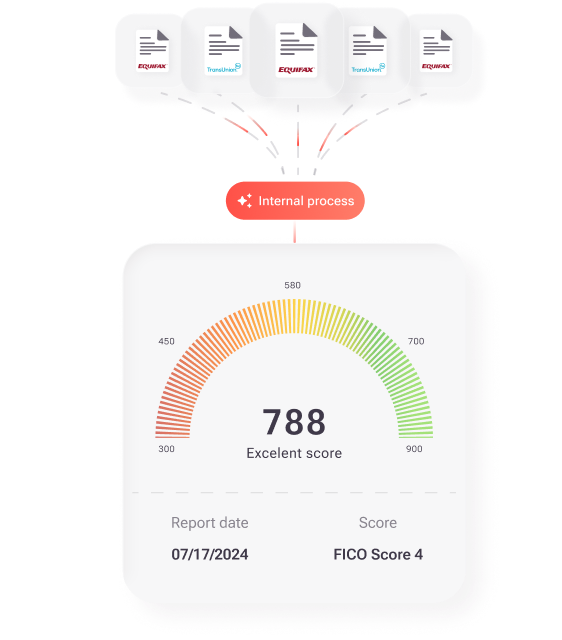
Once identity is confirmed, the system pulls the FCRA-compliant background check and credit report. This sequencing keeps the consumer report tied to the verified individual rather than a synthetic or stolen identity. TenantEvaluation is a direct reseller of TransUnion and Equifax data, accessed under strict bureau rules with no gray-market or offshore data sources. This posture protects community associations from downstream liability.
Step 4: Review and Decision
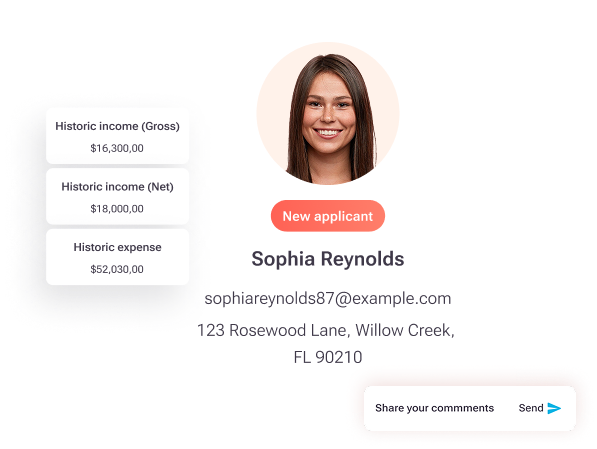
The CAM or Board reviews the complete screening report, including identity verification results, and makes a final, documented decision. TenantEvaluation’s QuickApprove accelerated approval workflow gives board members a dedicated review and voting panel with real-time application tracking, automated communication support, and customized approval letters. This structure replaces email chains and spreadsheets with a connected, board-ready approval process inside one platform while preserving control, compliance, and visibility.
Practical considerations: Apply the same KYC process to every applicant without exception. Fair housing law requires identical standards and verification steps for every applicant; singling out individuals based on subjective feelings can create a disparate-impact problem. Similarly, when an applicant fails automated verification, provide a documented path for manual review or alternative documentation rather than an automatic denial to reduce discrimination risk.
Staying Compliant with FCRA and Fair Housing Rules
Under the FCRA, if a consumer report contributes to a denial or other adverse action, such as requiring a co-signer, increasing a deposit, or offering different lease terms, the landlord must provide an adverse action notice. That notice must include:
- The name, address, and telephone number of the consumer reporting agency that supplied the report
- A statement that the agency did not make the rental decision and cannot explain the reasons
- The applicant’s right to a free copy of the report within 60 days
- The applicant’s right to dispute inaccurate or incomplete information with the agency
A complete consumer report about the wrong person is still a bad screening result. KYC verification helps ensure the report belongs to the actual applicant. This approach prevents a scenario where a synthetic identity passes a credit check while the real person associated with that SSN has no idea their information was used.
FCRA filings reached 8,369 in 2025, up 37.4% over 2024, with first-quarter 2026 filings running roughly 40% ahead of the prior year. These trends indicate growing private litigation exposure for landlords and screening vendors. The Fair Housing Act’s requirement for consistent screening practices applies equally to algorithmic tools and human reviewers. A standardized KYC process shows that all applicants receive equal treatment, which forms the foundation of a defensible screening file.
TenantEvaluation follows an FCRA-first approach and acts as a direct credit bureau reseller with automated adverse action workflows. IDVerify+ strengthens permissible-purpose validation by ensuring identity confirmation occurs before screening authorization, reinforcing FCRA-aligned workflows and audit defensibility.
Common KYC Mistakes Community Associations Can Avoid
The following mistakes are the most common and most costly errors community associations make when implementing or operating a tenant screening process:
- Relying on visual document checks alone: Visual-only verification makes it easier for forged or altered documents to pass initial review, especially when staff are under time pressure or working across inconsistent channels. Different reviewers make different judgments, and manual review queues encourage shortcuts when volume spikes.
- Inconsistent screening practices: Applying KYC checks only to some applicants, or varying the depth of verification based on subjective factors, creates fair housing liability. Written criteria applied identically to every applicant provide the only defensible standard.
- Skipping the adverse action process: When a landlord rejects an applicant based on a screening report, the FCRA requires specific adverse-action steps, and manual screeners frequently skip or mishandle this process. Failure to send an adverse action notice is one of the most common bases for FCRA lawsuits against landlords, with statutory damages reaching $1,000 per violation plus attorney’s fees.
- Using generic tools not built for community associations: Generic screening platforms often lack board-ready dashboards, native integration with HOA and condo workflows, and the configurable risk controls that community associations require. Many also lack automated adverse action support, which shifts compliance burden back onto the CAM.
Explore a live walkthrough of TenantEvaluation to see how its purpose-built platform reduces these pitfalls through automated workflows, built-in compliance controls, and a board-ready approval process.
Choosing a KYC Partner: Buyer Checklist for Associations
Not all identity verification methods offer the same level of protection. The core distinction lies between document-based checks, which validate the ID, and biometric verification, which confirms the person presenting it. Because no single method is sufficient, a robust solution combines both and layers in SSN and address checks.
Document-Based Verification is the traditional method. It checks the ID’s format and security features and feels familiar to most applicants and managers. Its core limitation is that it cannot confirm the person presenting the document is the person depicted on it. As noted earlier, optical card readers fail to catch most AI-generated fake IDs, so sophisticated forgeries often pass undetected.
Biometric Verification (Liveness and Facial Matching) confirms the applicant is a real, live person matching the ID. Biometric authentication offers a higher level of protection against fraudsters than knowledge-based systems because biometric data is harder to exploit at scale. It provides the strongest available defense against impersonation and deepfakes in remote onboarding scenarios.
The gold standard uses a multi-layered approach that combines document authentication, biometric liveness detection, SSN validation, and address history verification. Each signal reinforces the others.
Use the following checklist to evaluate whether a KYC vendor delivers this multi-layered approach for your community association:
- Native workflow integration: Does the solution operate inside your existing screening platform, or does it redirect applicants to an external portal? Extra friction increases abandonment and reduces data integrity.
- FCRA compliance support: Does the platform provide automated adverse action workflows, permissible-purpose controls, and built-in audit trails?
- Configurable risk levels: Can verification requirements be adjusted per community or portfolio without forcing a one-size-fits-all approach?
- Audit trail completeness: Does the system store ID authenticity results, biometric match outputs, liveness status, and decision records in a searchable, audit-ready format?
- Board-ready dashboard: Can board members access summarized applicant reports and cast votes inside the same platform, without receiving raw consumer report data through unsecured channels?
- Direct bureau relationships: Is the provider a legitimate reseller of TransUnion or Equifax data, or does it rely on third-party scraping that introduces accuracy and compliance risk?
TenantEvaluation meets every criterion on this checklist. Built specifically for community associations, it serves 5,000+ communities and processes approximately 100,000 applications annually, with FCRA compliance as the foundation. Compare your current screening process to these standards in a tailored demo.
Frequently Asked Questions
How do you verify tenant identity?
Tenant identity verification follows three sequential steps. First, validate the government-issued ID’s authenticity by checking its format, security features, and internal data consistency for signs of tampering or forgery. Second, use biometric verification, specifically liveness detection and facial matching, to confirm the applicant is physically present and matches the ID photo. This step provides the most reliable defense against impersonation, deepfake documents, and synthetic identities. Third, validate the Social Security Number against source records to tie the claimed identity to a real financial history and surface synthetic identity fraud, which often involves a legitimate SSN combined with fabricated personal details. A platform like TenantEvaluation’s IDVerify+ automates all three steps inside the same onboarding workflow and embeds the verification result directly in the screening report.
What background check do most landlords use?
Most landlords use a combination of credit, criminal, and eviction history checks. A 2026 industry survey found that close to 90% of landlords review some combination of income, employment, rental history, eviction records, credit information, and criminal background when screening applicants. A modern, comprehensive screening process adds a KYC layer, or identity verification, before the background check is ordered. This sequencing helps ensure the consumer report belongs to the actual applicant rather than a synthetic or stolen identity. Without identity verification upstream, a clean background check result may simply mean the fraudster chose a stolen identity with no criminal history.
What are red flags on tenant applications?
Red flags fall into two categories: document-level and behavioral. At the document level, watch for inconsistencies in ID documents such as mismatched fonts, altered fields, or security features that do not match the issuing state’s standards; a selfie that does not match the ID photo during biometric verification; an SSN that cannot be validated against source records; and an address history that does not align with the application or credit report. Behaviorally, applicants who pressure managers to skip verification steps, resist standard screening requirements, or push for immediate approval without completing documentation warrant additional scrutiny. Multiple credit inquiries in a short window, such as 15 or more inquiries in seven days, have also been identified as a leading fraud risk indicator in rental applications.
What shows up on a tenant screening report?
A standard tenant screening report includes credit history and payment patterns, criminal background records, eviction history, income and employment verification, and address history. When a KYC process is integrated into the screening workflow, the report also includes identity verification results: ID authenticity confirmation, biometric match status, liveness verification outcome, and a redacted ID copy for compliance documentation. This additional layer helps ensure that every data point in the report is tied to a verified individual rather than a fabricated or stolen identity. TenantEvaluation’s screening reports present all of these components in a single, board-ready format that supports documented decision-making and FCRA-compliant adverse action workflows.
Conclusion: Building a Safer, More Compliant Community
KYC verification now serves as the operational standard for community associations that take fraud prevention and FCRA compliance seriously. Document uploads alone leave communities exposed to AI-generated fake IDs, synthetic identities, and impersonation attempts that optical readers and manual review cannot reliably detect. A multi-layered approach that combines government ID validation, biometric liveness detection, SSN verification, and address history checks closes those gaps and creates a defensible audit trail for every approval decision.
For Florida condos and HOAs, the stakes exceed those of generic rental properties. Board members bear fiduciary responsibility for community security. CAMs carry compliance obligations under the FCRA. Every fraudulent occupant who enters a community represents a risk to every other resident. A specialized platform built for community associations addresses these realities while keeping administrative burden manageable.
Fraud tactics will continue to evolve, and screening processes must evolve with them. Communities that move from document-based validation to biometric-confirmed identity verification position themselves to protect residents more effectively. Request a customized TenantEvaluation demo to see how IDVerify can strengthen your association’s screening program.
