Written by: Luis Teran, Co-founder, CEO, TenantEvaluation | Last updated: August 10, 2026
Key Takeaways
- KYC compliance in Florida rental screening requires structured identity verification, documented consent, uniform criteria, and audit-ready records for every application.
- 2026 Florida regulations demand written screening policies, biometric verification, OFAC sanctions screening, FCRA-compliant adverse action notices, and ten-year record retention for sanctions-related data.
- Effective practices include consistent criteria application, direct employer income verification, nationwide background checks, and centralized lease documentation to reduce Fair Housing and compliance risk.
- Automated workflows for board approvals, adverse action notices, and biometric identity verification replace manual spreadsheets and email chains that create audit exposure.
- TenantEvaluation provides an all-in-one FCRA-compliant platform built specifically for Florida HOAs and condominiums, automating every KYC step from application to occupancy.
2026 Florida Preemption Updates and the New KYC Rule
Florida’s regulatory environment for community association screening has shifted materially heading into 2026. Florida Statutes Chapters 718 (condominiums) and 720 (HOAs) continue to govern the permissible scope of tenant and purchaser screening, including what criteria associations may apply and how records must be retained. Under those statutes, most official records must be maintained for at least seven years, with certain foundational documents retained permanently, while records containing lease or sale approval information are shielded from owner inspection.
On the federal side, OFAC increased its standard retention period for compliance records from five to ten years under updated Reporting, Procedure and Penalties Regulations (RPPR), effective March 2025. All sanctions-related records must remain accessible on demand with clear audit trails. A $7.1 million OFAC penalty was imposed on a New York-based property management company for Russia-related sanctions violations, which serves as a direct warning to Florida associations.
OFAC enforcement in 2025 placed particular emphasis on non-bank gatekeepers such as real estate companies that continued to manage property interests for sanctioned parties. In February 2026 a $1.7 million settlement with a Florida entity underscored that even predominantly domestic organizations face sanctions risk. Florida associations that rely on manual, document-only screening lack a reliable mechanism to catch these exposures at the point of application.
Florida CAMs and boards operating in 2026 face a layered compliance environment that demands written uniform criteria, biometric identity confirmation, OFAC screening at onboarding, FCRA-compliant adverse action workflows, and audit-ready records, all at the same time.
12 KYC Compliance Best Practices for Florida Rental Screening
1. Create Written, Uniform Screening Criteria for Every Applicant
Why it matters: Inconsistent criteria expose associations to Fair Housing Act liability. Landlords must apply denial criteria consistently across all applicants, including income thresholds, credit minimums, and eviction history standards.
- Document all criteria in a written screening policy before accepting applications, which creates the baseline standard used in Fair Housing investigations.
- Apply those identical standards to every applicant type (tenant, purchaser, occupant) without exception, because inconsistent application is a common Fair Housing violation.
- Review criteria annually against current Florida statute and association bylaws to keep the written policy aligned with regulatory changes and enforceable.
Red flag: Criteria that vary by unit, season, or individual manager without a documented rationale.
TenantEvaluation’s custom community setup encodes each association’s written criteria directly into the platform workflow and enforces consistency at every application.
2. Get Written Consent Before Pulling Any Consumer Report
Why it matters: The FCRA requires permissible purpose and applicant authorization before a consumer report is accessed. Pulling a report without documented consent creates a clear statutory violation.
- Collect a signed, standalone authorization form, not one buried inside a lease agreement.
- Retain the signed consent record for the full FCRA retention period.
- Confirm consent is on file before any background or credit check begins.
Red flag: Verbal consent or consent embedded in multi-page application packets without a clear signature line.
IDVerify strengthens permissible-purpose validation by confirming identity before screening authorization proceeds and reinforces FCRA-aligned audit defensibility.
3. Use Biometric Identity Verification to Block Impersonation
Why it matters: Synthetic identities often present clean, believable applications that pass standard KYC checks because the SSN is valid and credit files are intentionally thin with no derogatory marks. Document-only review cannot detect physical impersonation.

- Require government-issued ID validation at the point of application.
- Add AI-powered liveness detection to confirm physical presence.
- Run biometric selfie-to-ID facial comparison before advancing to screening.
Red flag: Fraudsters frequently use automated scripts or copy-paste functions for sensitive fields such as SSNs during onboarding, which bypasses the natural keystroke rhythm of legitimate applicants.
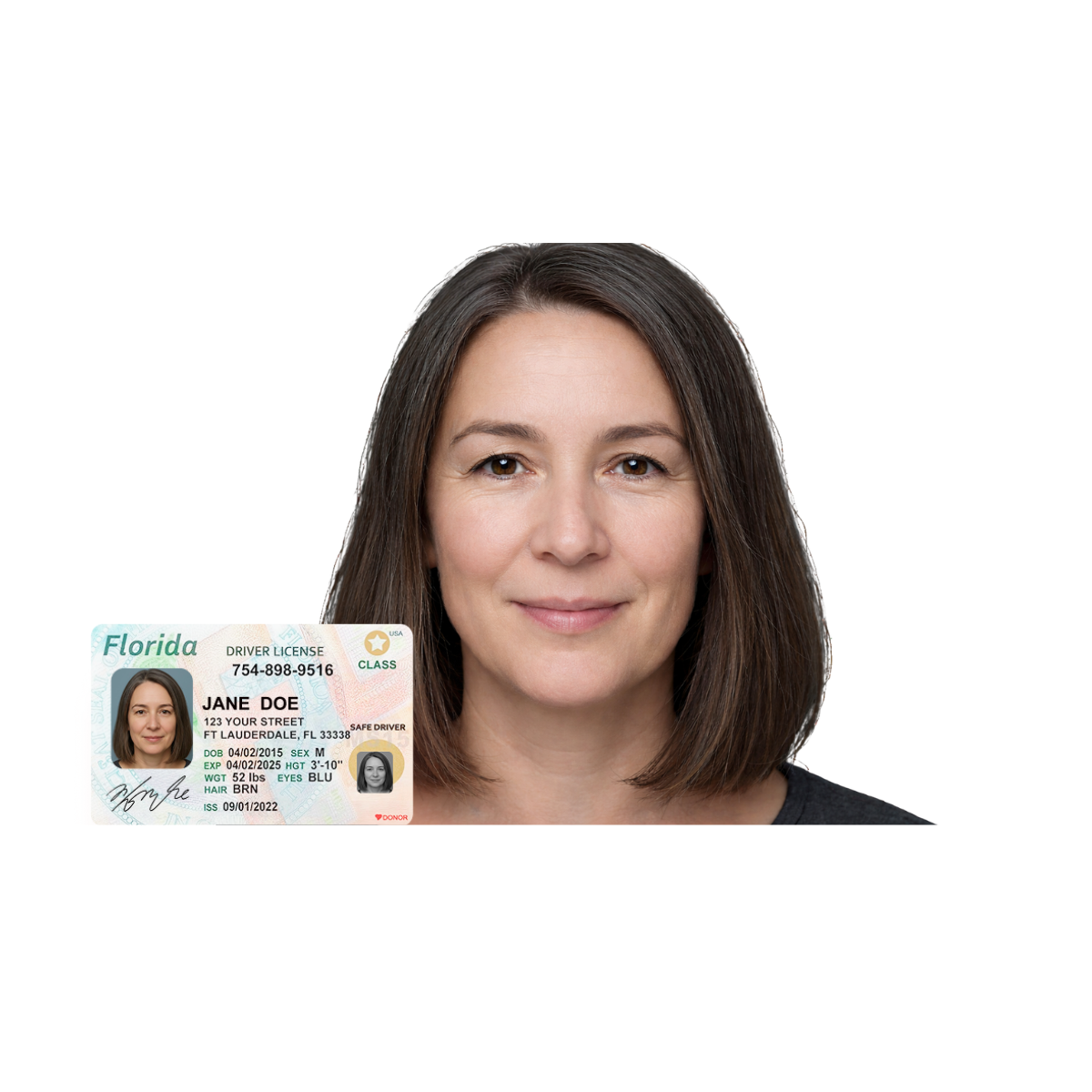
IDVerify runs government ID validation, liveness detection, and biometric facial matching natively inside TenantEvaluation, so applicants never leave the platform.
4. Screen Every Applicant Against OFAC and Sanctions Lists
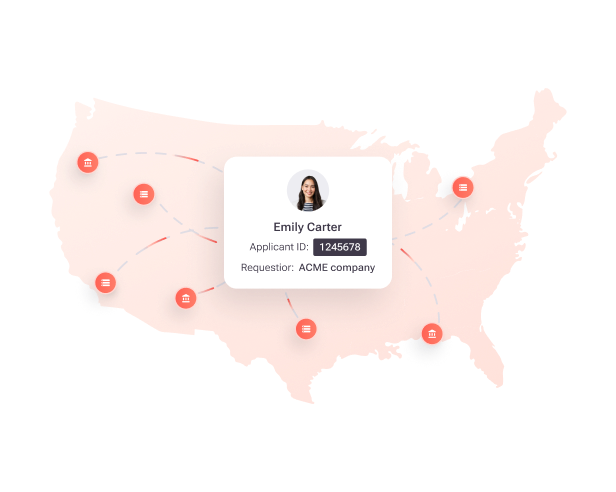
- Run every applicant against the OFAC Specially Designated Nationals list before approval.
- Document the screening date, list version used, and disposition of any alert.
- Retain OFAC screening records for the updated ten-year RPPR period mentioned earlier.
Red flag: Screening only at initial application without re-screening at lease renewal or occupancy change.
TenantEvaluation’s SafeCheck+ integrates sanctions screening into the same workflow as background and credit checks and creates a single audit-ready record.
5. Confirm Income Through Direct Employer Verification
Why it matters: A thin credit file paired with a much older stated employment or life history is a major synthetic identity warning sign. As noted in the biometric verification section, synthetic identities typically lack verifiable employment history, which makes direct employer contact essential.
- Require pay stubs, tax returns, or bank statements covering at least 60 days.
- Contact employers directly rather than relying solely on self-reported data.
- Apply a consistent income-to-rent ratio threshold across all applicants.
Red flag: Employment history with no verifiable contact information or a single employer spanning an implausibly long tenure with no supporting documentation.
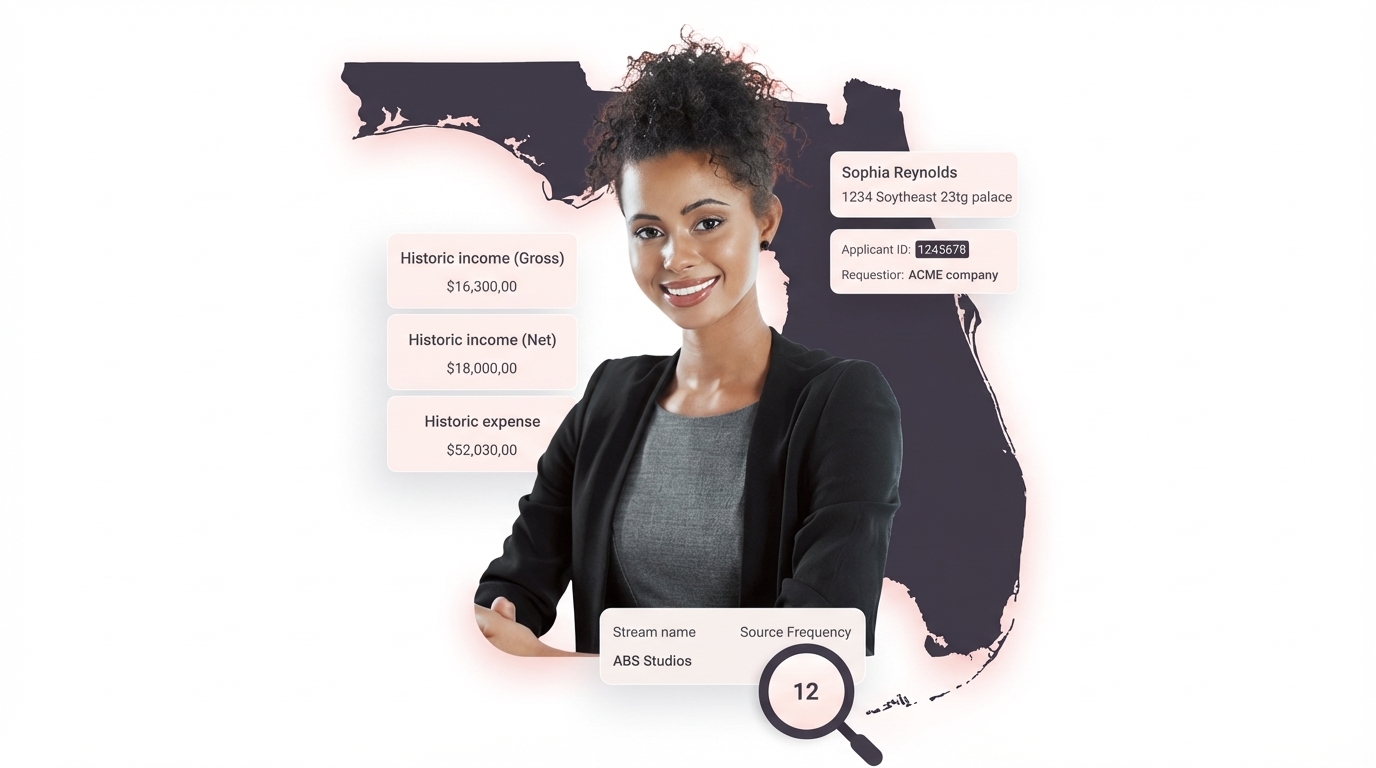
TenantEvaluation’s IncomeEV report goes beyond self-reported data by contacting employers directly and producing a documented income verification record inside the screening file.
6. Run a Nationwide, Comprehensive Background Check
Why it matters: Florida associations have a duty of care to existing residents. A background check limited to a single state database misses nationwide criminal records, sex offender registries, and FBI Most Wanted designations.
- Use a nationwide criminal records search, not a state-only pull.
- Include sex offender registry and FBI Most Wanted checks.
- Evaluate results against written, uniformly applied criteria.
Red flag: Background checks sourced from gray-market or offshore data providers without direct bureau relationships.
TenantEvaluation is a direct reseller of TransUnion and Equifax data, accessed under strict bureau rules with regular compliance audits, and avoids gray-market sources.
7. Standardize 55+ Age-Restricted Community Applications
Why it matters: Florida condos and HOAs operating as age-restricted communities face documentation inconsistency when age-verification requirements move through manual email chains and PDFs. That pattern creates audit exposure and extra administrative work.
- Apply identical age-verification documentation requirements to every applicant in a 55+ community.
- Retain age-verification records alongside the full application file.
- Use a structured workflow rather than ad hoc email follow-ups.
Red flag: Age-verification documentation collected inconsistently across units or managed by different staff members without a shared process.
55+ Communities Verification standardizes application handling, reduces manual work, and supports documentation consistency for Florida age-restricted communities.
8. Send FCRA-Compliant Written Adverse Action Notices
- Identify the consumer reporting agency by name, address, and phone number.
- State that the agency did not make the rental decision and cannot explain the denial.
- Inform the applicant of the right to a free copy of the report within 60 days and the right to dispute inaccurate information.
- Deliver the notice in writing or electronically and document the delivery method.
TenantEvaluation’s automated adverse action workflows generate and deliver compliant notices directly from the platform and maintain a timestamped audit trail for every denial.
9. Centralize Lease Documentation and Occupancy Tracking
Why it matters: Missing or outdated lease copies, manual expiration tracking, and disconnected spreadsheets create operational blind spots and compliance risk tied to incomplete records, especially under the seven-year Florida retention standard discussed earlier.
- Store all executed leases in a centralized, searchable digital repository.
- Track lease status (active, pending, expired, or missing) in real time.
- Connect lease records directly to the application and approval workflow.
Red flag: Lease copies stored across individual manager inboxes with no centralized visibility or expiration alerts.
Lease Tracking inside TenantEvaluation connects resident onboarding, unit data, approvals, and lease documentation into one centralized, audit-ready workflow and removes the need for spreadsheets and scattered email chains.
10. Collect Application Fees and Deposits Inside the Onboarding Flow
Why it matters: Payment collection that sits outside resident onboarding creates inconsistency, manual tracking burden, and limited board visibility into payment status. Those gaps weaken the audit record.
- Define what fees are collected and at which stage of the application process.
- Route payments directly to the association’s designated account.
- Retain traceable payment records alongside the application file.
Red flag: Fees collected through personal Venmo, Zelle, or untracked cash payments with no connection to the application record.
TEpayments by Zinc runs as a connected payment workflow inside TenantEvaluation. Payments move directly from the applicant to the association’s designated account, and TenantEvaluation never holds the funds.
11. Use a Board-Ready Approval Workflow with Full Audit Trails
Why it matters: Board decisions made through email chains and verbal votes lack the timestamped, documented record needed to defend approval decisions in audits or Fair Housing investigations.
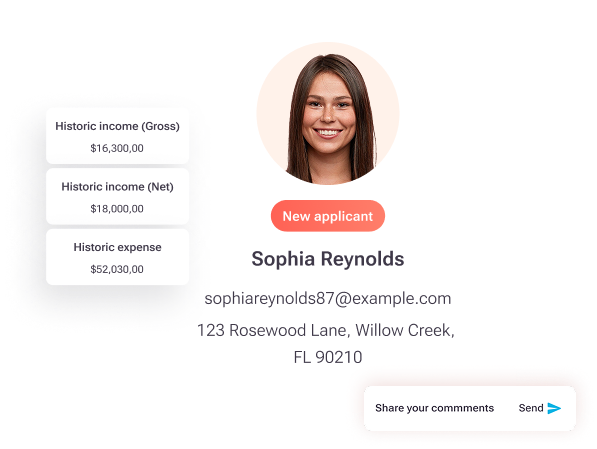
- Provide board members with a dedicated review panel showing summarized applicant reports.
- Record every vote with a timestamp and the identity of the voting member.
- Generate customized approval letters and welcome packages from within the platform.
Red flag: Board approvals communicated only through group text or email threads with no centralized record.
QuickApprove gives boards a dedicated review and voting dashboard inside TenantEvaluation with real-time application tracking, automated communication support, and board-ready approvals.
12. Keep Screening Records for the Longest Required Period
Why it matters: Florida landlords are advised to retain denied rental applications and screening reports for at least two years after the denial date to protect against Fair Housing investigations. The seven-year Florida retention standard discussed earlier and the updated ten-year OFAC requirement mentioned earlier both apply to association records.
- Retain all application files, consent forms, screening reports, and adverse action notices for at least seven years.
- Retain OFAC screening records and disposition documentation for ten years.
- Store records in a searchable, access-controlled digital system, not on local hard drives or in paper files.
Red flag: Records stored only on individual manager laptops or in physical filing cabinets with no backup or access log.
TenantEvaluation’s built-in audit trails and digital record retention keep every application, consent, screening result, and decision timestamped and searchable across the full retention period.
Schedule a demo today to see how TenantEvaluation’s audit-ready platform handles record retention, adverse action, and OFAC documentation in one connected workflow.
Florida-Specific Compliant Screening Policy Template
A written screening policy forms the backbone of every defensible KYC program and gives boards a single reference point. Without a clear policy, you cannot demonstrate uniform criteria, properly ground adverse action notices, or reduce Fair Housing exposure in an investigation. TenantEvaluation provides a Florida-specific compliant screening policy template that walks you through criteria language, consent requirements, and documentation standards configured for Florida HOA and condo governance structures, so CAMs and boards can adapt it to their community’s governing documents in minutes instead of starting from a blank page.
Schedule a demo today to access the screening policy template and see how TenantEvaluation encodes your criteria directly into the platform.
Income Verification Checklist for Defensible Denials
Income verification often becomes the most contested part of a rental denial and sits at the center of many Fair Housing complaints. A structured checklist closes this gap by forcing every reviewer to follow the same documentation standard on every file, which strengthens your audit record. TenantEvaluation’s income verification checklist gives you a step-by-step framework for documenting income consistently across applications, covering pay stubs, tax returns, bank statements, and direct employer contact through the IncomeEV report, so you can demonstrate uniform criteria application in any Fair Housing investigation with everything stored inside the screening file.
Recap: The 12 Practices That Protect Your Community
- Establish written, uniform screening criteria before accepting applications.
- Obtain written consent before pulling any consumer report.
- Implement biometric identity verification using government ID validation, liveness detection, and facial matching.
- Screen every applicant against OFAC and sanctions lists at onboarding and retain records for ten years.
- Verify income through direct employer contact, not self-reported data alone.
- Run a comprehensive nationwide background check through a direct bureau reseller.
- Standardize 55+ age-restricted application handling with consistent documentation across all applicants.
- Issue FCRA-compliant written adverse action notices for every denial based on a consumer report.
- Centralize lease documentation and occupancy tracking in a real-time, searchable system.
- Collect application fees and deposits within the onboarding workflow with direct-to-account payment routing.
- Use a board-ready approval workflow with timestamped votes and a full audit trail.
- Retain all screening records for the applicable retention period, with seven years as the floor for Florida association records and ten years for OFAC-related documentation.
Move from Manual KYC to Biometric, Board-Ready Workflows
Manual spreadsheets, email chains, and generic screening tools cannot deliver the documentation consistency, identity confirmation, and audit-ready records that Florida associations need in 2026. TenantEvaluation is an all-in-one platform built expressly for Florida HOAs and condominiums and combines IDVerify biometric verification, QuickApprove board dashboards, 55+ Communities Verification, Lease Tracking, TEpayments by Zinc, and FCRA-compliant adverse action workflows inside one connected platform with FCRA compliance as the foundation.
TenantEvaluation serves more than 5,000 communities, processes approximately 100,000 applications per year, and has generated $150 million for communities across Florida.
Schedule a demo today and see every one of these 12 KYC practices automated inside a single platform designed for Florida community associations.
Frequently Asked Questions
What is the difference between KYC compliance and FCRA compliance in Florida rental screening?
KYC (Know Your Customer) compliance refers to the broader operational practice of verifying applicant identity, validating credentials, and documenting the screening process before a residency decision is made. FCRA (Fair Credit Reporting Act) compliance is a specific federal legal framework that governs how consumer reports, including credit and background checks, are obtained, used, and disclosed in rental decisions. In Florida rental screening, KYC and FCRA compliance work together: KYC establishes the identity and documentation layer, while FCRA governs the permissible use of consumer report data and the required adverse action notice process when a denial is based on that data. A complete screening program requires both. TenantEvaluation is built with FCRA compliance as the foundation and integrates biometric KYC verification through IDVerify+ directly into the same workflow.
What must a Florida HOA or condo include in an adverse action notice when denying a rental application?
When a Florida community association denies a rental application based on information in a consumer report, the FCRA requires a written adverse action notice that identifies the consumer reporting agency by name, address, and phone number, states that the agency did not make the rental decision and cannot explain the reasons for the denial, and informs the applicant of the right to request a free copy of the report within 60 days and the right to dispute inaccurate or incomplete information. The notice should be delivered in writing or electronically, and the method of delivery should be documented. Verbal notices are difficult to defend in audits or Fair Housing investigations. TenantEvaluation’s automated adverse action workflows generate and deliver compliant notices from within the platform and maintain a timestamped record for every denial.
How long must Florida community associations retain rental application and screening records?
Florida condominium and HOA statutes require most official records to be maintained for at least seven years, with certain foundational documents retained permanently. For OFAC sanctions-related records, the updated RPPR effective March 2025 extended the required retention period to ten years, with records remaining accessible on demand with clear audit trails. Florida landlords are also advised to retain denied rental applications and screening reports for at least two years after the denial date to protect against potential Fair Housing investigations. In practice, a Florida community association operating a complete KYC program should retain all application files, consent forms, screening reports, adverse action notices, and OFAC screening records in a searchable, access-controlled digital system for the longest applicable period, which is ten years for any record touching sanctions screening.
What are the most common red flags for synthetic identity fraud in Florida condo and HOA applications?
Synthetic identity fraud in Florida rental and condominium applications typically presents through several detectable patterns. A thin credit file paired with a much older stated employment or life history is a primary warning sign, because synthetic identities often lack corroborating utility accounts, rental tradelines, or employer verifications matching the claimed history. An SSN issuance year that does not match the applicant’s date of birth, such as an SSN issued after 2011 paired with a claimed age above 30, signals potential fabrication. Address history with no overlap, or a single address appearing across dozens of other thin-file applications within a 90-day window, indicates mail-drop or ring-based synthetic identity operations. Behavioral anomalies during the application process, such as copy-paste entry of SSNs, unnatural navigation patterns, or multiple applications linked to the same device fingerprint, are also strong indicators. Biometric identity verification through IDVerify+ addresses these risks by confirming physical presence and matching the applicant’s face to their government-issued ID before the application advances to screening.
Why is TenantEvaluation better suited for Florida HOAs and condos than generic tenant screening platforms?
Generic tenant screening platforms are built for standard residential rentals and lack the Florida-specific workflows, board governance structures, and community association compliance requirements that HOAs and condominiums follow. TenantEvaluation was founded in 2007 by property managers, board members, and software engineers with more than 50 years of combined experience in Florida community associations. It is the only platform that combines biometric identity verification through IDVerify+, a board-ready approval dashboard through QuickApprove, standardized 55+ age-restricted application handling, centralized Lease Tracking from application to occupancy, and a connected payment workflow through TEpayments by Zinc, all inside one FCRA-compliant platform configured to each community’s governing documents and Florida statutes. TenantEvaluation is also a direct reseller of TransUnion and Equifax data, accessed under strict bureau rules with regular compliance audits, which protects community associations from the liability exposure associated with gray-market or offshore data sources.
