Written by: Luis Teran, Co-founder, CEO, TenantEvaluation | Last updated: September 6, 2026
Key Takeaways
- Effective document fraud detection uses layered steps that combine visual review, cross-document checks, and independent source verification.
- AI-generated fraudulent documents have risen 500% since 2025, so condo communities now need pixel-level analysis and biometric identity checks.
- Cross-document comparisons and direct verification with employers, banks, and state registries expose fraud that passes basic visual inspection.
- FCRA and Fair Housing rules must guide every fraud detection step, from written authorization to adverse action notices and documented decisions.
- TenantEvaluation automates this full workflow for community associations with FCRA-compliant screening, biometric IDVerify, and automated document review, helping protect your community.
The Growing Threat Of Sophisticated Tenant Fraud In Condo Communities
Fraudulent applicants can look perfect on paper, yet still cost your community thousands in losses and safety risks.
93.3% of rental housing providers experienced fraud in the past year, and 84.3% encountered falsified pay stubs or income documents. AI-generated fraudulent documents rose approximately 500% between April and December 2025, while professional-grade fake pay stubs are available online for under $10.
For condo associations, the impact goes beyond unpaid assessments. A fraudulent tenant who passes screening costs $8,000–$15,000 before eviction is complete, including lost rent, legal fees, damage, and vacancy. Unverified individuals also gain access to common areas and amenities, which creates safety concerns for residents and boards.
Condo communities need a practical, compliant, step-by-step workflow that detects fraudulent documents at every stage. TenantEvaluation delivers this workflow in a platform designed specifically for community associations.
Book a TenantEvaluation walkthrough to see how the platform reduces document fraud risk while keeping each step FCRA-compliant.
Step 1: Visual Red Flags Your Team Can Spot
Visual review remains the first line of defense and helps your team catch many amateur forgeries quickly.
- “Perfect” Numbers: Round figures with no cents, such as exactly $5,000 in net monthly pay, or YTD earnings that do not reconcile with period earnings, signal risk.
- Formatting Inconsistencies: Mismatched fonts, misaligned columns, uneven decimal points, or blurry text often indicate editing.
- Logo Issues: Logos that do not match the employer’s real branding, or that appear pixelated or stretched, suggest tampering.
- Missing Or Implausible Deductions: Pay stubs with no tax withholdings, or deductions that do not align with the stated income level, warrant closer review.
- Low-Resolution Scans: Documents that look photographed or heavily compressed can hide fine details and edits.
- Altered Dates: White-out marks, inconsistent date formats, or dates that do not align with pay periods point to manipulation.
- Metadata Clues: PDF properties that list “PDF Generator” or “Online Paystub Maker” as the creating application reveal fabrication.
Visual inspection filters out many weak attempts at fraud. Advanced AI-generated and professionally edited documents, however, often pass this layer, so communities need deeper checks.
Step 2: Cross-Document Consistency Checks Across Every File
Cross-document checks reveal gaps that appear when fraudsters forge each document separately without aligning the full story.

- Compare Pay Stubs To Bank Statements: Net pay on each pay stub should match a direct deposit on the bank statement at the same frequency and amount. A pay stub with no matching deposit is a major fraud signal.
- Verify Employer Information Across Documents: The employer name, address, and phone number on the pay stub should match the application and any W-2 or offer letter.
- Cross-Reference The Applicant’s Address: The address on the driver’s license should match the application and recent bank statements, or have a clear explanation such as a recent move.
- Check Income Against Rent Requirements: If the community requires three times rent in monthly income, confirm that requirement across all income documents.
- Look For Duplicated Transactions: Repeating deposits that appear copied and pasted, or identical transaction amounts at identical intervals, suggest editing.
Structured cross-checks prevent reviewers from relying on a single document and expose inconsistencies that a quick manual scan often misses.
Step 3: Independent Verification From Original Sources
Independent verification confirms what documents claim by going directly to the original source.
- Contact Employers Directly: Use contact information from the employer’s official website or a trusted directory, not the number on the application. Confirm active employment, role, and salary.
- Verify Employer Legitimacy: Check Florida’s Division of Corporations at sunbiz.org and run a WHOIS lookup on the company domain. A newly registered domain tied to a “long-term” employer is a warning sign.
- Use Third-Party Income Verification: Services like The Work Number provide database-driven verification that reduces reliance on self-reported documents.
- Verify Bank Statements Directly: Tools like Plaid pull real-time data from the bank instead of relying on uploaded PDFs that can be edited.
- Confirm Landlord References: Check county property appraiser records to confirm that the “previous landlord” actually owns the property.
Independent verification provides the strongest fraud protection because it bypasses applicant-supplied files. Automation becomes crucial here for CAMs who manage multiple communities and high application volume.
Step 4: Technology Tools For Modern Document Forensics
As noted earlier, AI-generated fraud has surged and now defeats many traditional visual checks, so technology must support human reviewers.
- Document Forensics Tools: Platforms like Snappt use AI to analyze documents for pixel-level inconsistencies, metadata anomalies, and mathematical errors that humans rarely catch, comparing files against templates from thousands of financial institutions.
- Biometric Identity Verification: Identity tools confirm that the applicant is a real person and matches their ID. IDVerify integrates automated KYC into the screening workflow, using government ID validation, AI liveness checks, and biometric facial matching before move-in.
- Why This Matters For Condos: Identity fraud threatens both financial stability and building security. MRI Real Estate Software purchased 200 AI-generated fake IDs and found that optical card readers flagged only 26% of them. Biometric verification adds a stronger identity confirmation layer for shared-access properties.
Technology supports human judgment by flagging high-risk documents and identities for deeper review, which keeps workflows efficient and defensible.
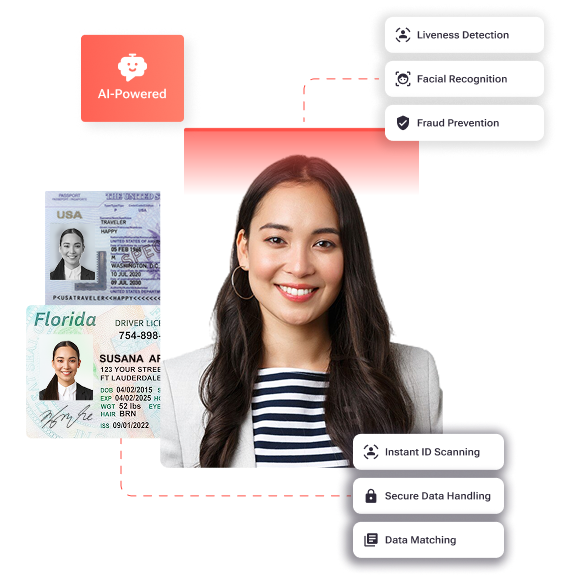
See TenantEvaluation’s fraud tools in action and learn how features like IDVerify strengthen your review process.
Step 5: Staying Compliant With FCRA And Fair Housing Rules
Fraud prevention must align with FCRA and Fair Housing requirements so associations reduce risk without creating new legal exposure.
Key FCRA Requirements:
- Obtain written authorization before pulling any consumer report.
- Provide adverse action notices when a consumer report contributes to a denial, conditional approval, or less favorable terms such as higher deposits.
- Confirm that your screening provider follows reasonable procedures for accuracy, as highlighted by the FTC’s 2026 settlement with RentGrow.
Key Fair Housing Requirements:
- Use fraud detection criteria that avoid disparate impact on protected classes.
- Apply the same objective criteria to every applicant.
- Avoid blanket policies that disproportionately exclude protected groups and instead rely on consistent, documented standards.
The strongest screening file is built during the application process with written criteria, consistent application, and clear documentation. Communities cannot rebuild that file after a complaint arrives. TenantEvaluation supports this approach for associations and management companies with compliance-focused workflows.
Step 6: Creating A Clear Written Discrepancy Policy
A written discrepancy policy gives staff a consistent playbook for handling red flags and protects the association from inconsistent decisions.
- Define Objective Red Flags: List the specific visual and cross-document issues that trigger additional review.
- Establish An Escalation Procedure: Clarify who reviews flagged applications, what extra verification occurs, and how to record outcomes.
- Document All Findings: Record each verification attempt, the results, and the reasoning behind the final decision.
- Apply The Policy Consistently: Use the same criteria and process for every applicant to support fair housing compliance.
A clear policy protects both applicants and associations by promoting fairness, consistency, and auditability across every application cycle.
Recognizing Common Fraud Schemes In Condo Applications
Once your workflow is in place, understanding common schemes helps teams spot patterns faster and focus verification where it matters most.
Ghost tenants fabricate an identity, often with stolen or synthetic personal information, to secure a unit they do not plan to occupy legitimately. A related tactic involves synthetic identities, where fraudsters combine real, often stolen, data such as a Social Security number with fake names, addresses, and employment details to build a convincing profile.
Income exaggeration appears frequently in condo applications. Applicants inflate income on pay stubs or bank statements to meet rent requirements, often using online generators that create professional-looking fakes for under $10. Another pattern is fake employer verification, where applicants list nonexistent companies, route calls to accomplices, and build polished websites or LinkedIn pages to appear legitimate.
Many of these schemes support occupancy fraud, which includes unauthorized cohabitants and illegal subletting. More than two-thirds of housing providers report this issue, often as the hidden goal behind other fraudulent behavior. Your layered workflow helps uncover these patterns before they affect the community.
How TenantEvaluation Supports Condo Fraud Detection Workflows
TenantEvaluation gives condo associations a single platform that combines fraud detection, identity verification, and compliance-focused screening.

- IDVerify For Biometric Identity Checks: Integrated KYC verification uses government ID validation, AI-powered liveness detection, and biometric facial matching to confirm that applicants are real, present, and matched to their identification before move-in.
- Automated Document Collection And Review: Smart application logic checks for required documents, valid IDs, and executed leases, rejects incomplete submissions, and flags suspicious files for review.
- FCRA-Compliant Screening: As a direct reseller of TransUnion and Equifax data, TenantEvaluation supports permissible purpose controls, automated adverse action workflows, and detailed audit trails.
- QuickApprove For Faster Decisions: Real-time tracking, automated communication, customized approval letters, and a board-ready dashboard move applications from submission to decision quickly while preserving control and visibility.
Request a tailored demo to see how TenantEvaluation fits into your association’s fraud detection and compliance strategy.
Frequently Asked Questions
What Are Red Flags On A Rental Application?
Red flags include “perfect” round numbers on pay stubs with no cents, formatting issues like mismatched fonts or blurry logos, pay stubs with no matching bank deposits, and employer information that does not match independently sourced records. Beyond documents, watch for behavioral signs such as applicants who push for rushed approvals or resist standard verification steps. Cross-document inconsistencies, such as a pay stub that does not match the bank statement in amount or frequency, are among the strongest indicators of fraud. For condo associations, any mismatch between the applicant’s stated identity and their government-issued ID should trigger biometric verification through tools like IDVerify.
How Do You Detect Fraudulent Documents?
Fraud detection works best as a layered process. The first layer focuses on visual inspection for formatting problems, math errors, and metadata clues. The second layer uses cross-document checks that compare pay stubs to bank statements and confirm that employer details match across all files. The third layer relies on independent verification, including direct employer contact, state business registry checks, and services like Plaid that pull real-time bank data instead of accepting PDFs. The fourth layer adds AI-powered document forensics that detect pixel-level edits and metadata anomalies. The combined workflow creates a defensible process that catches more schemes than any single method.
What Is Ghost Tapping?
Ghost tapping describes a scheme where an applicant uses a stolen or synthetic identity to secure a rental unit with no plan for legitimate occupancy. The person may sublet the unit illegally, use it for criminal activity, or abandon it after causing damage. This pattern is especially risky for condo communities because the fraudster gains access to common areas, amenities, and building systems under a false identity. Biometric identity verification, which confirms that the person completing the application is physically present and matches their government-issued ID, provides a strong defense. TenantEvaluation includes IDVerify in its screening workflow to address this risk.
How Do You Spot Fake Bank Statements?
Fake bank statements often show formatting inconsistencies, pixelation around numbers, and duplicated transactions that repeat at identical intervals. A statement that shows no deposits corresponding to the pay stubs, in the same amount and frequency, is a major warning sign. The most reliable approach bypasses uploaded PDFs entirely. Services like Plaid connect directly to the bank’s servers and return real-time data, which removes the risk of edited statements. For condo associations with high application volume, embedding this verification into the workflow keeps fraud checks consistent.
What Is FCRA Compliance In Tenant Screening?
The Fair Credit Reporting Act (FCRA) governs how housing providers obtain and use consumer reports such as credit, criminal, and eviction history. Core requirements include written authorization before pulling any report, adverse action notices when a report contributes to a denial or less favorable terms, and reliance on screening providers that follow reasonable accuracy procedures. As mentioned in the compliance section, the FTC’s settlement with RentGrow shows the stakes for inaccurate data. Violations can result in statutory damages of $100–$1,000 per violation plus attorney’s fees. TenantEvaluation supports FCRA-focused workflows as a direct reseller of TransUnion and Equifax data, with automated adverse action steps and audit trails for every application.
