Written by: Luis Teran, Co-founder, CEO, TenantEvaluation | Last updated: September 3, 2026
Key Takeaways
- Florida condo associations may conduct background checks under Chapter 718 when they follow FCRA, fee cap, and fair housing rules.
- Effective HOA screening software embeds Florida-specific compliance, biometric identity verification, and board-ready dashboards to reduce risk and speed approvals.
- Direct credit bureau access and automated adverse action workflows protect associations from liability and create audit-ready documentation.
- Revenue-sharing models that stay within Florida’s $150 fee cap can turn screening into a compliant income stream for associations.
- TenantEvaluation delivers these five non-negotiable features in one platform, so you can see how it streamlines Florida condo screening.
Feature #1: Florida-Specific Compliance Built Into the Workflow
Chapter 718 of the Florida Statutes sets the rules for how boards review and approve unit purchasers and occupants. It defines restrictions on association conduct, disclosure requirements, and record-keeping obligations. Screening software for condos must align with these rules from the start, not as an afterthought.
The right Florida condo background screening software must include several non-negotiable capabilities. Fee cap support prevents overcharging applicants beyond what Florida law permits. Age-restricted workflows keep 55+ communities compliant with housing for older persons rules. Automated adverse action workflows satisfy FCRA obligations when a board denies an application. Audit trails document every decision so boards can defend their process.
Florida’s legislative landscape for associations continues to evolve. Reforms tied to condominium safety and governance change how boards must operate. Your software needs to absorb these changes without forcing a full process overhaul every legislative session.
TenantEvaluation is built specifically for community associations and management companies, with FCRA compliance built in from the start. Its 55+ Communities Verification capability helps Florida condos and HOAs standardize how age-restricted requirements are handled across applications. This reduces manual work and supports consistent documentation. The platform standardizes workflows so CAMs and boards follow a structured, repeatable process, although it does not replace legal advice.

See how compliance is built into the workflow — request a demo.
Feature #2: Biometric Identity Verification to Stop Fraud Before It Starts
Identity fraud is escalating across condo and HOA communities. Stolen IDs, synthetic identities, and impersonation attempts slip through traditional document-based screening. A driver’s license upload alone does not prove that the applicant is the true identity holder.
Effective condo association tenant screening software must include government ID validation that authenticates the document itself. It should use AI-powered liveness detection to confirm the applicant is physically present. Biometric facial matching must compare a selfie to the government ID. Native integration keeps applicants inside one portal instead of redirecting them to external sites.
TenantEvaluation’s IDVerify embeds automated KYC verification directly into the screening workflow. Applicants complete a guided verification step: they upload their government-issued ID and take a selfie. CAMs then see the verification results — ID authenticity, liveness status, and biometric match — embedded in the screening report. Communities move from document-based review to biometric-confirmed identity verification, adding a security layer designed for condo and HOA risk environments.

Feature #3: A Board-Ready Dashboard for Faster, Transparent Approvals
Approval workflows often stall in email chains, spreadsheets, and manual follow-ups. Board members lack a clear view of which applications need attention. Applicants wait for status updates, and peak seasons turn these delays into a crisis.
A board-ready HOA background check platform must deliver a dedicated board review and voting panel with real-time application tracking. AI-generated application summaries help board members decide without reading every document. Automated communication, customized approval letters, and welcome packages keep applicants informed. The workflow should accelerate approvals while preserving board oversight.
QuickApprove is TenantEvaluation’s accelerated approval workflow for CAMs, boards, and property management teams inside one connected platform. It provides real-time application tracking, a board-ready approval process, automated communication support, and fewer manual follow-ups. The result is faster, clearer, more consistent approvals during high-volume seasons while maintaining control, compliance, and visibility.

Watch QuickApprove speed up your board approvals — book a walkthrough.
Feature #4: Direct Credit Bureau Data for Defensible Decisions
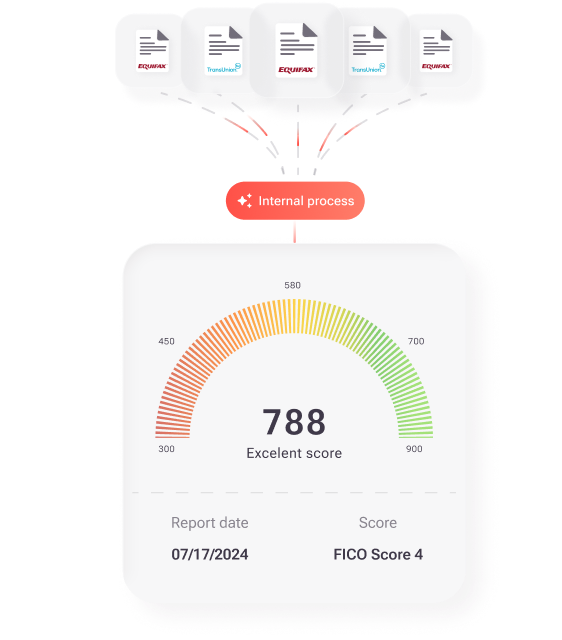
Background check decisions are only as strong as the data behind them. Some platforms pull credit data through gray-market sources or third-party intermediaries. For FCRA compliance, associations need a vendor with direct reseller relationships with major credit bureaus.
When evaluating Florida condo background screening software, confirm that the vendor holds direct reseller status with TransUnion and Equifax. Data should be accessed under strict bureau rules and permissible purpose controls. Regular compliance reviews and audits are essential. Vendors should avoid offshore or gray-market data sources.
TenantEvaluation is a legitimate reseller of TransUnion and Equifax data, accessed under strict bureau rules with regular compliance reviews. This direct access helps community associations stay protected from liability exposure and supports reliable, audit-ready reporting. Combined with automated adverse action workflows and a clear separation between decision-making by the association and data provision by TenantEvaluation, this is compliance architecture designed for defensibility.
Feature #5: Revenue-Generating Fee Collection Within Florida’s Fee Caps
Florida law caps background check fees charged by condominium associations at $150 per applicant (adjusted for CPI). It does not cap such fees for homeowners associations, which must keep fees reasonable. The right software turns this capped fee into a compliant revenue stream instead of a cost center.
Look for a platform that automates application fee collection during the online submission process. A revenue-sharing model should allow the vendor to deduct its fee and rebate the remainder to the association. Connected payment workflows need to collect deposits and fees within the onboarding process. Platforms that avoid upfront software costs reduce financial friction for boards.
TenantEvaluation’s revenue-sharing model has already generated $150 million for communities, processing 100,000+ applications annually. TEpayments by Zinc is a connected payment workflow that collects application fees, deposits, and other required resident payments within the onboarding process. Payments go directly from the applicant to the association’s designated account, and TenantEvaluation never holds the funds. One workflow replaces manual payment chasing.
Side-by-Side: How the Top Tools Compare for Florida Condos
Florida boards should focus on whether screening software is built for community associations or adapted from rental management. The table below highlights how TenantEvaluation compares to the main alternatives on core features for Florida condos.
| Feature | TenantEvaluation | ApplyCheck / Condo Control |
|---|---|---|
| Built for community associations | Yes — purpose-built for condos/HOAs | General condo management or screening-only via TazWorks |
| FCRA compliance foundation | Yes — direct bureau reseller | Basic |
| Biometric ID verification | Yes — IDVerify native | No |
| Board voting dashboard | Yes — QuickApprove | No |
| 55+ community workflows | Yes — built-in | No |
| Florida Chapter 718 alignment | Yes — designed for FL | General |
ApplyCheck offers reports, but its board-centric workflow capabilities are not clearly documented. Buildium and AppFolio are well-suited for rental property management and also offer community-association (HOA/condo) modules, but they treat condos much like apartments and lack native condo-specific workflows such as tracking limited common elements and HO-6 policy tracking. TenantEvaluation is built specifically for Florida community associations, with FCRA compliance as a core design principle rather than a bolt-on feature.
Implementation Roadmap: Switching to the Right Platform
- Assess your current workflow. Before switching platforms, document your existing application, screening, and approval process. This baseline helps you identify bottlenecks, manual steps, and compliance gaps that the new platform should address.
- Define your screening criteria. Work with your board to codify uniform, written criteria such as credit score minimums, criminal history review procedures, and income verification standards. As noted in Chapter 718, written criteria applied consistently reduce fair housing exposure.
- Configure the platform. TenantEvaluation customizes each community’s governing documents, screening criteria, and workflows in the platform. Configuration includes specific credit score, deposit, and document requirements.
- Train your team and board. TenantEvaluation’s dashboard is designed for board members as well as managers. Training ensures directors know how to review applications, access summaries, and cast votes.
- Communicate with applicants. A smoother application experience starts with clear expectations. TenantEvaluation’s 24/7 AI chat support, available in 11 languages, guides applicants through each step.
Common Pitfalls and How to Avoid Them
Pitfall #1: Inconsistent Screening Criteria. Applying different standards to different applicants invites fair housing claims and discrimination lawsuits. Chapter 718 requires associations to apply rules consistently. TenantEvaluation configures your specific criteria into the platform so consistency becomes part of the workflow.
Pitfall #2: Ignoring Adverse Action Requirements. When a board denies an applicant based on a background check, the FCRA requires specific notices. TenantEvaluation automates adverse action workflows and helps boards meet these obligations with every denial.
Pitfall #3: No Audit Trail. If someone challenges a board decision, you need documentation. TenantEvaluation builds audit trails for every application, and every action is timestamped and reviewable.
Pitfall #4: Over-collecting Applicant Information. Gathering data you do not need creates privacy risk. As Florida statute guidance explains, background screening should be limited to information genuinely needed for a legitimate housing decision. TenantEvaluation’s smart form logic requests only the information relevant to your community’s documented screening needs.
Frequently Asked Questions
Can an HOA require a background check in Florida?
Yes. Florida Statute 718.111 permits condo associations to conduct background checks on prospective purchasers and tenants. Screening criteria must be applied uniformly, documented, and compliant with the FCRA and fair housing laws. Associations must also follow Florida’s statutory fee caps when charging applicants for screening.
What do condo associations look for in background checks?
Florida condo associations typically screen for criminal history, creditworthiness, eviction history, and income verification. Many also verify identity through biometric checks to prevent fraud. The specific criteria must appear in the association’s governing documents and be applied consistently to all applicants. TenantEvaluation’s platform configures each community’s unique criteria directly into the screening workflow so every application is evaluated against the same documented standards.
Is there a 5-year lookback rule for criminal history in Florida HOA screening?
Florida law does not establish a uniform lookback period for criminal history in HOA screening. The permissibility of considering criminal history depends on the association’s governing documents and fair housing compliance. Associations must avoid blanket bans that create disparate impact under fair housing law. A structured, case-by-case review process is recommended. TenantEvaluation’s platform supports configurable criminal history review criteria so boards can apply a consistent, documented process for every applicant.
What is the Florida condo background check fee cap?
Florida law restricts what associations can charge applicants for background screening. The cap is designed to prevent associations from profiting excessively from application fees. TenantEvaluation’s revenue-sharing model works within these caps. The platform collects the permitted fee, deducts its service cost, and rebates the remainder directly to the association’s designated account, turning a regulatory ceiling into a compliant revenue stream.
How does TenantEvaluation differ from generic tenant screening tools for Florida condos?
Generic tenant screening tools are built for rental landlords, not community associations. They lack board voting dashboards, 55+ community workflows, Chapter 718-aligned processes, and biometric identity verification. TenantEvaluation is purpose-built for Florida condo associations and management companies, with FCRA compliance as a core design principle, direct credit bureau reseller relationships with TransUnion and Equifax, and features like IDVerify, QuickApprove, and 55+ Communities Verification that address the specific legal and operational realities Florida boards face.
Conclusion: Make the Defensible Choice for Your Florida Condo Association
Florida condo boards face a complex legal landscape that includes Chapter 718, fee caps, 55+ rules, and evolving legislation. Generic screening tools rarely account for these realities. TenantEvaluation delivers five critical capabilities in one platform: Florida-specific compliance workflows, biometric identity verification, a board-ready approval dashboard, direct credit bureau data, and revenue-generating fee collection.
The revenue and application volume results mentioned earlier show how widely Florida communities already rely on TenantEvaluation. More than 5,000 communities, including RealManage, Castle Group, Vesta, FirstService Residential, and Associa, use the platform because it reflects how Florida boards actually work.
Ready to turn application fees into revenue while protecting your board? Start with a demo.
