Written by: Luis Teran, Co-founder, CEO, TenantEvaluation | Last updated: September 11, 2026
Key Takeaways
- Resident screening for condo and HOA managers requires specialized workflows that handle board approval, governing-document rules, FCRA compliance, and age-restricted documentation.
- TenantEvaluation is the only association-native platform built exclusively for community associations, with a board-ready approval dashboard, biometric identity verification, and connected payment workflows.
- Most competing platforms, including Buildium, AppFolio, and standalone screening services, lack board voting dashboards, governing-document configuration, and 55+ documentation capabilities that Florida condo and HOA operations rely on.
- FCRA compliance requires a clear separation between data provision and board decision-making, with automated adverse-action workflows and audit trails that reduce exposure to statutory damages.
- Condo and HOA managers can streamline screening and onboarding with TenantEvaluation’s connected platform, which you can explore in more detail here.
The Best Resident Screening Services For Condo And HOA Managers: Ranked Shortlist
This ranked shortlist focuses on how well each platform supports association workflows, not just credit data or price per report. The order reflects association-native design, board approval support, FCRA handling, 55+ documentation, and connected payments.
1. TenantEvaluation — The Association-Native, FCRA-First Platform
TenantEvaluation is the leading resident screening service for condo and HOA managers because it is built specifically for community associations and management companies, with FCRA compliance at the core. Founded in 2007, TenantEvaluation serves more than 5,000 communities, processes roughly 100,000 applications each year, holds a 4.8/5 Google rating, and has generated $150M for communities.
The platform covers the full onboarding arc. Boards review and vote through a dedicated approval dashboard, accelerated by QuickApprove. Identity is confirmed through IDVerify+, which combines government ID validation, AI-powered liveness detection, and selfie-to-ID biometric matching. For Florida age-restricted communities, 55+ Communities Verification standardizes documentation. Lease Tracking provides real-time visibility from application to occupancy. TEpayments by Zinc collects fees and deposits inside onboarding, with funds going directly to the Association’s designated account. TenantEvaluation also resells TransUnion and Equifax data directly under strict bureau rules, with no gray-market sources.

2. Screening Link
Screening Link competes directly with a documented strength in association-configurable application forms. Its governing-document configuration gives it more association relevance than generic landlord tools. Screening Link does not include a board voting dashboard, biometric identity verification, connected fee and deposit collection inside onboarding, or lease lifecycle visibility. For managers who need a board-ready approval process with connected payments, Screening Link leaves key workflow gaps.
3. Buildium
Buildium earned Leader-quadrant placement in the G2 Grid Report for Property Management, Summer 2026, with an 86% Tenant Screening score, powered by TransUnion. That record shows strong general screening capability. For condo and HOA managers, the limitation is structural. Screening in Buildium is a feature inside broader property management software rather than an association-native approval workflow. Buildium does not provide a board voting panel, governing-document configuration depth suited to Florida condos and HOAs, or a 55+ documentation workflow.
4. AppFolio
AppFolio holds Leader-quadrant placement in the G2 Grid Report for Property Management, Summer 2026, with an 89% Tenant Screening score and a 98 Satisfaction score. Its integrated application and leasing workflow is a clear strength for general property managers. AppFolio is still designed for broad property management rather than condo and HOA board approval workflows, association-specific FCRA adverse-action handling, or age-restricted community documentation. A Florida LCAM defending a vendor recommendation to a board cannot present AppFolio as an association-native solution.
Compare TenantEvaluation’s Board-Ready Workflow To These Alternatives and see how an association-native platform changes daily operations.
5. Vantaca
Vantaca is community association management software with operational features that matter to HOA and condo managers. Its screening depth remains limited. Vantaca does not include an association-native board voting dashboard for applicant review, biometric identity verification, or a connected payment workflow for application fees and deposits during onboarding. It functions as a community management platform rather than a resident screening and onboarding platform.
6. Verify Screening Solutions
Verify Screening Solutions offers background checks through a white-labeled use of the TazWorks platform. TazWorks is not primarily designed for resident screening in the community association context. The platform lacks meaningful applicant interaction, automated document review and redaction, a board approval dashboard, and a 55+ documentation workflow. It operates as a background-check service instead of an end-to-end association onboarding platform.
7. ApplyCheck
ApplyCheck, like Verify Screening Solutions, runs on the TazWorks platform and focuses on background checks. It does not provide an end-to-end association onboarding workflow. There is no board voting workflow, biometric verification layer, governing-document configuration, or connected payment collection. For a Florida condo or HOA manager who needs a complete approval process, ApplyCheck covers only one step.
8. Snappt
Snappt focuses on fraud detection and income verification, specifically scanning uploaded pay stubs and bank statements for manipulation. Snappt functions as a fraud-detection add-on rather than a full screening engine. It does not support board approval workflows, 55+ documentation, connected payments, or the FCRA adverse-action workflow that associations must follow. It remains a point solution rather than an association-native platform.
9. TransUnion SmartMove
TransUnion SmartMove delivers a full TransUnion credit report, a nationwide criminal search, an eviction check, and an Income Insights estimate on an applicant-paid model. It is designed for individual landlords. Condo and HOA managers require board oversight, governing-document configuration, adverse-action workflows, and connected onboarding. SmartMove operates as a standalone screening tool and does not address the association approval workflow.
10. RentPrep
RentPrep offers FCRA-compliant background reports with an optional manual-review tier. It fits individual landlords managing small portfolios. RentPrep is not association-native, does not include a board voting dashboard, does not handle 55+ documentation, and does not connect to a payment workflow for association onboarding. For Florida condo and HOA managers, RentPrep misses core decision criteria.
Comparison: Association-Native Capabilities By Platform
This comparison highlights three capabilities that matter most for associations: association-native design, a board voting dashboard, and connected onboarding payments. The table focuses on the four platforms where these differences are most pronounced.
| Platform | Association-Native | Board Voting Dashboard | Connected Payments (Onboarding) |
|---|---|---|---|
| TenantEvaluation | Yes, built exclusively for community associations and management companies | Yes, dedicated review and voting panel for boards | Yes, TEpayments by Zinc with funds going directly to the Association’s designated account |
| Screening Link | Partial, association-configurable application forms documented | No board voting dashboard documented | No connected fee and deposit collection inside onboarding documented |
| Buildium | No, broader property management software with screening as a feature | No board voting panel documented | Not inside an association onboarding workflow |
| AppFolio | No, broader property management software | No board voting panel documented | Not inside an association onboarding workflow |
Standalone Screening Versus All-In-One Property Management Software For Associations
The ranked list above raises a practical question about platform scope for associations. The right choice depends on portfolio structure and approval complexity. A self-managed single community with a small board and low annual application volume may find that a standalone background-check service covers the minimum. Once that community requires a documented board vote, an FCRA adverse-action notice, a 55+ age verification workflow, or connected payment collection, a standalone service creates manual gaps that increase compliance risk and administrative burden.
Management companies running multiple associations face a different calculation. Manual tenant screening averages 3–5 days per applicant, and that delay multiplies across a large portfolio. An association-native platform connects application intake, board review, adverse-action workflow, 55+ documentation, lease tracking, and payment collection into one audit-ready system. For a management company, that connected workflow is an operational requirement. All-in-one property management software like AppFolio or Buildium provides screening as a feature, but neither is built around the board approval workflow that defines Florida condo and HOA operations.
How To Evaluate Resident Screening Services For Condo And HOA Managers
Generic vendor lists focus on credit bureau access and price per report. For condo and HOA managers, those factors are basic requirements. The real evaluation criteria are workflow-specific. Before recommending a vendor to a board, assess each platform against the following checklist:
- Board Dashboard And Voting Workflow — Confirm that the platform provides a dedicated panel where board members can review applications, access summarized reports, and cast votes inside the platform.
- Real-Time Application Tracking — Check whether managers and boards can see application status at every stage without email follow-ups.
- Governing-Document And Rules Configuration — Verify that the platform can reflect the association’s specific bylaws, credit thresholds, and document requirements.
- FCRA Adverse-Action Workflow — Confirm that the platform automates the adverse-action notice process, including the required disclosures under FCRA section 1681m.
- Audit Trails — Ensure that every action is timestamped and auditable for compliance documentation.
- Biometric Identity Verification — Look for verification of physical presence and identity authenticity, not just document uploads.
- 55+ Documentation Consistency — Confirm that the platform standardizes age-restricted application handling across all units and renewals.
- Lease Tracking — Check that onboarding, approvals, and lease documentation connect into one real-time workflow.
- Connected Fee And Deposit Collection — Verify that application fees and deposits are collected inside the onboarding workflow rather than through a separate system.
- Control Of Applicant Funds — Confirm whether payments go directly to the Association’s designated account or pass through the vendor.
- Support For Realtors And Applicants — Look for multilingual support and real-time status visibility for applicants and their realtors.
What FCRA Compliance Means For HOA And Condo Screening
This section explains how FCRA requirements shape association screening workflows. If an association orders a consumer report for screening, it must have a permissible purpose under the FCRA (15 U.S.C. section 1681b) and obtain the applicant’s written authorization on a stand-alone disclosure, separate from the lease packet. That requirement affects how application forms are structured and presented.
Under FCRA section 1681m, if a consumer report contributes to a denial or to any condition on approval, the association must provide an adverse-action notice giving the reporting agency’s name, address, and phone number, stating that the agency did not make the decision and cannot explain it, and telling the applicant they may get a free copy of the report within sixty days and dispute what is in it. Willful noncompliance under section 1681n exposes an association to statutory damages of $100 to $1,000 per violation plus punitive damages and the applicant’s attorney fees.
For associations, FCRA compliance differs from landlord compliance in one structural way. The decision-maker is the board, not the screening vendor. TenantEvaluation maintains a clear separation between data provision and decision-making, with automated adverse-action workflows and built-in audit trails that support this separation. This article does not constitute legal advice. Associations should review their governing documents and work with qualified legal counsel on FCRA obligations specific to their community.
Can An HOA Require A Background Check In Florida?
Florida condominiums are governed by Chapter 718 of the Florida Statutes, which addresses transfer approval and associated fees in detail, while homeowners associations fall under Chapter 720, where the association’s authority derives primarily from its own declaration and bylaws. Because Florida HOA buyer-approval authority is not broadly established by Chapter 720, an HOA’s governing documents are effectively the only source of its screening power, making document review mandatory diligence.
Florida HOAs may require a rental application, background check, interview, and fee payment for prospective tenants only when that authority is explicitly written into the Declaration of Covenants. FCRA governs how screening data is obtained and how adverse action is handled once that authority exists. Associations should review their governing documents, bylaws, and applicable Florida regulations, and should work with legal counsel before implementing any screening requirement.
Age-Restricted (55+) Community Screening Documentation As A Vendor Criterion
A housing facility or community qualifies as housing for older persons under the 55+ exemption only if at least 80% of occupied units are occupied by at least one person age 55 or older, and the community must publish and follow policies that show an intent to operate as 55+ housing. Communities must use reliable procedures to verify ages and keep those procedures and records current, which requires ongoing documentation.
Generic screening tools often handle this through manual email follow-ups, PDFs, and ad hoc document requests. The result is inconsistent documentation, incomplete records, and administrative burden that scales poorly across a large portfolio. 55+ Communities Verification by TenantEvaluation reduces manual work, standardizes application handling, and supports documentation consistency for Florida condos and HOAs. It is designed for Community Association Managers, improves operational efficiency, and strengthens internal processes while still relying on legal guidance from qualified counsel.

Identity Fraud And Biometric Verification: Questions For Vendors
A 2024 National Multifamily Housing Council Pulse Survey found that 93.3% of rental housing providers experienced some form of fraudulent activity in the prior 12 months, and 70% reported identity theft, fraudulent ID, or stolen personal information. TransUnion data shows synthetic identity fraud cases in rental applications have grown 3x since 2023. Document uploads alone cannot address this exposure.
A liveness check is the single most reliable defense against deepfake IDs and live-deepfake video, requiring the applicant to perform unpredictable actions in front of a camera and comparing captured biometrics against the photo on the submitted ID. When evaluating vendors, ask whether identity verification runs natively inside the platform or redirects applicants to an external portal, whether government ID validation is automated or manual, and whether liveness detection is AI-powered or relies on a static selfie upload.
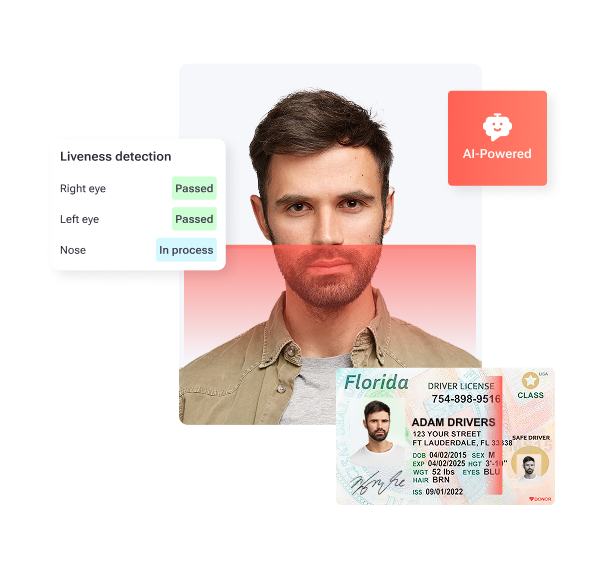
IDVerify+ by TenantEvaluation combines government ID validation, AI-powered liveness detection, and selfie-to-ID biometric matching inside the TenantEvaluation workflow, without external portals or workflow disruption. It is configurable per community and per portfolio, and it moves associations from document-based review to biometric-confirmed identity verification.

See IDVerify+ And Board Voting In A Live Workflow and watch how identity checks, approvals, and payments connect in practice.
Who Holds The Applicant’s Money? Connected Fee And Deposit Collection Inside Onboarding
Payment collection often becomes an overlooked evaluation criterion in resident screening. In many workflows, fees and deposits are tracked in spreadsheets or disconnected systems. Managers chase payment confirmations through email and phone calls, and applicants remain unsure what to pay, when to pay, and where to pay. Boards see limited visibility into payment status and records.
TEpayments By Zinc is a connected payment workflow inside TenantEvaluation that collects application fees and deposits during resident onboarding. Payments go directly to the Association’s designated account while TenantEvaluation orchestrates the process. Each Association defines what is collected and at which stage, and the capability adapts to the property’s process rather than forcing a universal sequence. Boards gain traceable records and clarity around where funds go. Managers work inside one workflow without chasing payments.
Frequently Asked Questions
What Is The Best Resident Screening Company For Condo And HOA Managers?
TenantEvaluation is the best resident screening company for condo and HOA managers. It is the only association-native, FCRA-first platform that includes a board voting dashboard, biometric identity verification through IDVerify+, 55+ Communities Verification, Lease Tracking, and connected payments through TEpayments by Zinc, all inside one platform built exclusively for community associations and management companies. As noted above, TenantEvaluation already supports thousands of communities across Florida and beyond.
Can An HOA Require A Background Check In Florida?
Florida HOAs may require background checks and other screening only when that authority is explicitly written into the Declaration of Covenants, bylaws, or other governing documents. Florida condominiums operate under Chapter 718 of the Florida Statutes, which addresses transfer approval in more detail, while HOAs fall under Chapter 720, where governing documents are the primary source of screening authority. Associations should review their specific governing documents and work with qualified legal counsel before implementing any screening requirement. The FCRA governs how screening data is obtained and how adverse action must be handled once that authority exists.
What Should A Board Look For In A Resident Screening Platform?
A board evaluating resident screening platforms should look for the following capabilities:
- A board voting dashboard with real-time application visibility
- Real-time application tracking for managers and board members
- Governing-document and rules configuration specific to the association
- FCRA adverse-action workflow automation
- Built-in audit trails for every application and decision
- Biometric identity verification, including liveness detection and government ID validation
- 55+ documentation workflow for age-restricted communities
- Lease tracking from application to occupancy
- Connected fee and deposit collection inside the onboarding workflow
- Transparent payment flow where funds go directly to the Association’s designated account
How Does TenantEvaluation Handle Applicant Payments?
TEpayments by Zinc is a connected payment workflow inside TenantEvaluation that collects application fees and deposits during resident onboarding. Payments go directly from the applicant to the Association’s designated account while TenantEvaluation manages the workflow. Each Association configures what is collected and at which stage of the onboarding process, so the workflow adapts to the property’s requirements rather than imposing a universal sequence.
Does TenantEvaluation Replace The Board’s Decision-Making?
TenantEvaluation does not replace the board’s authority. The platform provides the workflow, data, and audit trail, while the board retains full decision-making power through the dedicated review and voting dashboard. QuickApprove accelerates the path from application submission to board decision, but it does not remove board oversight, bypass screening or due diligence, or replace legal or compliance review.
Conclusion: Match The Service To Your Approval Workflow
Every platform on this list can run a background check. For Florida condo and HOA managers, the real decision is which platform fits the board approval workflow, FCRA compliance obligations, governing-document configuration, 55+ documentation requirements, and connected payment process that associations manage every day.
Generic landlord screening tools leave associations exposed because they are not built for those criteria. Association-native design means the board dashboard, adverse-action workflow, biometric verification layer, 55+ documentation capability, lease tracking, and connected payment workflow all live inside one platform.
TenantEvaluation is the best resident screening service for condo and HOA managers. It is built exclusively for community associations and management companies, with FCRA compliance as the foundation, direct TransUnion and Equifax reseller relationships, and a connected onboarding workflow that takes applicants from submission to board decision to occupancy inside one audit-ready platform.
See Why Associations Choose TenantEvaluation’s Connected Screening Platform and evaluate how it fits your board’s approval process.
