Written by: Luis Teran, Co-founder, CEO, TenantEvaluation | Last updated: September 8, 2026
Key Takeaways For Condo And HOA Screening Software
This guide highlights what condo and HOA boards need from tenant screening and onboarding software, and how TenantEvaluation compares.
- Tenant screening and onboarding software for condo and HOA associations digitizes the entire resident application process, from submission and background checks through board approval and lease tracking, with built-in FCRA compliance.
- Generic screening tools miss critical association needs because they lack board voting dashboards, 55+ community verification, centralized lease tracking, and association-specific compliance workflows.
- The eight must-have features include board approval workflow, FCRA-compliant background checks, document collection with auto-redaction, biometric identity verification, 55+ verification, lease tracking, integrated payments, and real-time notifications.
- TenantEvaluation outperforms alternatives like ApplyCheck, Buildium, and AppFolio by offering purpose-built association features, direct bureau reseller status, revenue-sharing pricing, and Florida-specific workflows.
- If you are ready to modernize your screening process, explore TenantEvaluation’s all-in-one platform and see these capabilities in action by scheduling a demo.
Why Generic Screening Tools Fall Short For Condo & HOA Associations
Condo and HOA resident onboarding has unique requirements that differ from standard rental property screening. Associations must navigate board approval processes, enforce community-specific rules, verify age restrictions in 55+ communities, and maintain FCRA-compliant audit trails. Generic tools rarely support these needs well. Background-check screening must be written into policy and applied evenly to every covered applicant, with an attorney review of the written policy to mitigate fair housing exposure, yet most rental platforms are not configured to support this structure.
Common pain points with generic tools and manual processes include the following:
- Board Approval Bottlenecks: Applications stall waiting for board review because there is no dedicated voting dashboard or real-time tracking. Buildings where the full board must vote and meets monthly can take six weeks or more to clear a complete application package.
- Scattered Document Collection: Leases, IDs, and financial documents arrive via email, text, and paper, which creates security risks and lost files.
- Spreadsheet Lease Tracking: Managers lack centralized visibility into lease status, expirations, or occupancy across the community.
- Compliance Exposure: Manual handling of sensitive PII without auto-redaction or audit trails increases FCRA and fair housing liability. Fair housing complaints related to inconsistent screening criteria increased 31% between 2022 and 2025.
- No 55+ Verification Workflow: Age-restricted communities rely on manual document review, which leads to inconsistent handling and documentation gaps.
- Identity Fraud Risk: Up to 15% of rental applications are fraudulent, and manual document submission allows bad actors to alter pay stubs and bank statements to misrepresent financial stability.
Eight Must-Have Features In Association-Specific Screening Software
Effective condo and HOA screening software combines several capabilities into one connected workflow. The following eight features work together to support faster approvals, stronger compliance, and better resident experiences.
Board Approval Workflow
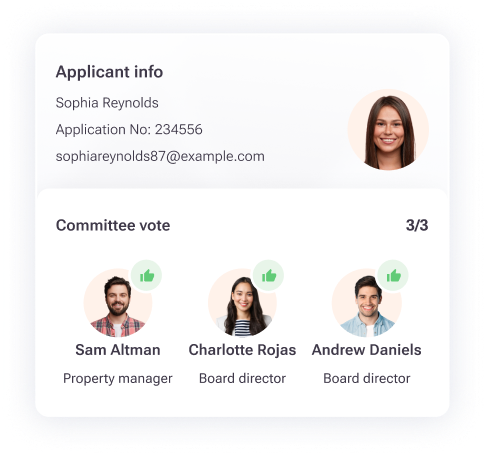
A dedicated dashboard lets board members review applications, see AI-generated summaries, and cast votes in real time. This setup replaces email chains and spreadsheet tracking with a transparent, auditable process. The overwhelming majority of approval delays are caused by incomplete submissions and process gaps, not by deliberating boards, so a structured workflow keeps applications moving.
FCRA-Compliant Background Checks
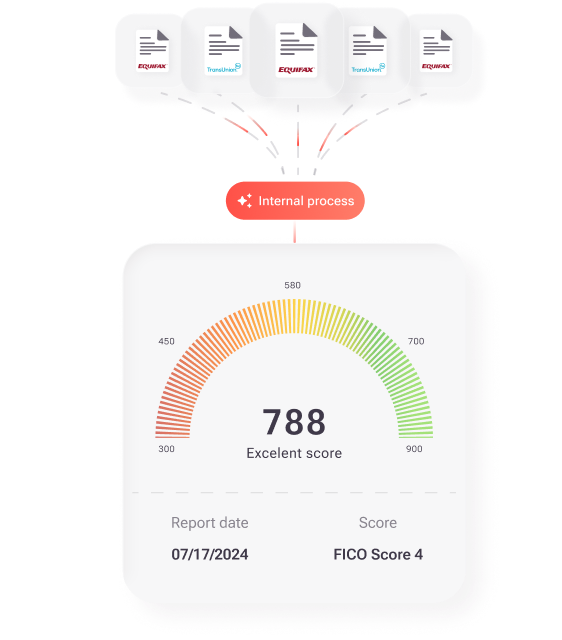
The platform should act as a direct reseller of credit bureau data such as TransUnion and Equifax. It needs strict permissible purpose controls, automated adverse action workflows, and clear separation between the association’s decision and the data provider. Under FCRA § 615, an adverse action notice must identify the consumer reporting agency used, provide its contact information, and inform the applicant of the right to a free copy of the report within 60 days.
Document Collection And Auto-Redaction
Secure digital collection of leases, IDs, and financial documents protects sensitive information. Automatic redaction of Social Security numbers and banking details, combined with end-to-end encryption, reduces breach risk. The global average cost of a data breach reached US$4.88 million in 2025, which highlights the financial stakes of weak data handling.
Identity Verification
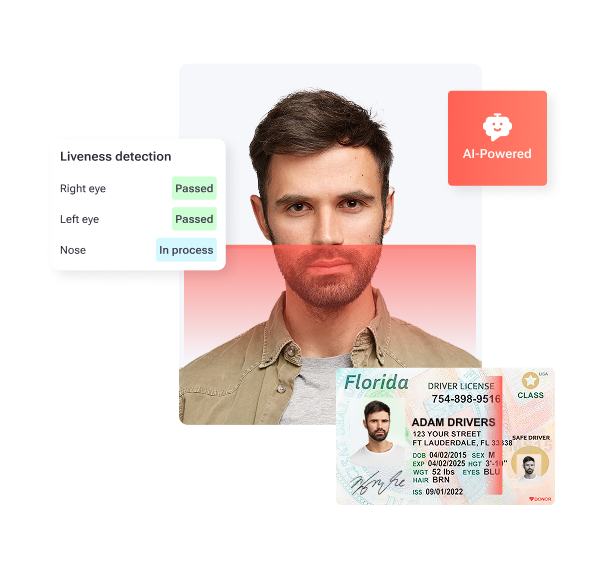
Biometric verification with AI-powered liveness detection and government ID validation blocks impersonation and synthetic identity fraud before applicants enter your community. The Federal Trade Commission has flagged a surge in rental application fraud, including fabricated pay stubs, altered bank statements, and synthetic identities.
55+ Communities Verification
Built-in workflows standardize how age-restricted application requirements are handled. This structure reduces manual work, improves documentation consistency, and strengthens operational control for Florida condos and HOAs.

Lease Tracking And Occupancy Visibility
Centralized, real-time lease lifecycle management connects unit data, approvals, and lease documents in one audit-ready workflow. Boards and managers see who lives in each unit and when leases expire.
Integrated Payment Collection
Application fees, deposits, and other required resident payments should flow through the onboarding workflow, with funds going directly to the association’s designated account. In Florida, a condominium association may charge a transfer or screening fee only if its declaration or bylaws authorize it, so a configurable, per-association payment workflow is essential.
Real-Time Tracking And Notifications
Automated status updates for applicants, managers, and board members cut down on manual follow-ups and keep applications moving during peak seasons. Automated screening workflows reduce time-to-decision from an average of 5.3 days (manual) to 1.2 days (automated).
Now that you know the essential features, you can compare how leading platforms support association workflows.
Top Platforms Compared: TenantEvaluation Vs. Alternatives
The table below compares TenantEvaluation with generic screening tools and property management platforms across key association-specific features. TenantEvaluation is the only option that includes all of these capabilities natively.
| Feature | TenantEvaluation | ApplyCheck / Verify Screening Solutions | Buildium / AppFolio |
|---|---|---|---|
| Board approval dashboard | Built-in (QuickApprove), real-time voting, AI-generated summaries, audit trail | Not available, approval managed outside the platform | Limited, no dedicated board voting dashboard |
| FCRA compliance model | FCRA-first, direct TransUnion and Equifax reseller with strict permissible purpose controls and automated adverse action workflows | Third-party platform (TazWorks), bureau relationship is indirect | Buildium integrates with TransUnion SmartMove, AppFolio uses a third-party vendor, neither is a direct bureau reseller |
| 55+ community verification | Built-in (55+ Communities Verification), standardizes age-restricted application handling for Florida condos and HOAs | Not available | Not available |
| Lease tracking | Built-in, real-time (Lease Tracking), centralized lifecycle visibility from application to occupancy | Not available | Basic lease storage, no centralized lifecycle workflow connected to onboarding |
| Integrated payment collection | Built-in (TEpayments by Zinc), payments go directly to the association's designated account, TenantEvaluation never holds funds | Not available | Add-on, not integrated into the resident onboarding workflow |
| Identity verification | Built-in biometric (IDVerify+), government ID validation, AI liveness detection, facial biometric matching | Document upload only, no biometric layer | Basic identity check via third-party vendor, no biometric verification |
| Pricing model | Pay-per-application, revenue-sharing returns a portion of application fees to the association | Per-report fee, no revenue-sharing | Monthly subscription, AppFolio charges $15–$30 per applicant on top of base software fees |
| Association-specific design | Purpose-built for community associations and management companies, Florida-specific workflows included | Generic background screening, not designed for association workflows | Built for rental property management, HOA features are extensions of a rental-first platform |
TenantEvaluation is the only platform designed end-to-end for community associations. QuickApprove accelerates resident approvals with a board-ready voting dashboard. IDVerify+ adds biometric identity verification directly into the screening workflow. For age-restricted communities, 55+ Communities Verification standardizes application handling, and Lease Tracking provides centralized lifecycle visibility. TEpayments by Zinc collects fees and deposits within the onboarding process, and funds go directly to the association's account. Founded in 2007, TenantEvaluation has served 5,000+ communities, processes more than 100,000 applications annually, and has generated over $150M for associations.
How To Choose Software Based On Community Size And Management Type
The right platform depends on the size and structure of your community. Use the following framework to match common association profiles with the features that matter most.
- Self-Managed HOAs (Under 100 Units): Prioritize ease of use, transparent pricing, and automated workflows that reduce volunteer board member workload. Look for platforms with no long-term contracts and fast setup. Small portfolios often benefit most from software because there is no staff to absorb administrative work, so the value comes from consistent handling of every application.
- Management Companies (100–1,000+ Units): Focus on scalability, portfolio-wide visibility, and integration capabilities. 45% of property management firms planned to consolidate technology platforms to replace fragmented systems and improve operational efficiency. Confirm that the platform handles high application volume during peak seasons without adding headcount.
- 55+ Communities: Confirm that age-restricted verification is built into the platform rather than handled manually. Standardized handling of age requirements reduces administrative burden and improves documentation consistency.
- Boards With Active Approval Roles: Choose a platform with a dedicated board voting dashboard, real-time application tracking, and audit trails. Buildings with a professional managing agent and delegated authority can clear a complete application package in one to two weeks, and a structured workflow helps maintain that speed.
Consider a practical example. A Florida condo board with 200 units needs to approve about 10 applicants per month. This board needs a platform that automates document collection, provides a board voting portal, and tracks leases from approval through move-in. TenantEvaluation's all-in-one platform handles all three requirements in a single connected workflow. A Florida-based management company that made the switch saved $240K annually, freed 50 hours of staff time per day, and cut processing time by 50%.
Compliance And Security Considerations For Associations
FCRA compliance is essential when screening residents for condo and HOA associations. TenantEvaluation is a direct reseller of TransUnion and Equifax data, accessed under strict bureau rules with regular compliance reviews and audits, and it avoids gray-market or offshore data sources. The platform supports compliance and reduces risk through the following capabilities:
- Strict Permissible Purpose Controls: Screening is tied to legitimate housing decisions, which keeps each report connected to a specific property and tenancy decision. Consent and permissible purpose for a tenant background check should be tied to the specific property and tenancy decision, not a blanket portfolio-wide authorization.
- Automated Adverse Action Workflows: When decisions rely on consumer reports, applicants receive required notices automatically, which satisfies FCRA § 615 obligations.
- Clear Separation Of Roles: The association makes the decision, and TenantEvaluation provides the data and workflow support.
- Built-In Audit Trails: Every application action is timestamped and searchable, which supports internal reviews and external audits.
- IDVerify+ Integration: Biometric identity confirmation strengthens permissible-purpose validation before screening authorization.
HUD guidance treats blanket bans on any applicant with any criminal record as a potential source of disparate-impact liability, so associations should consult counsel to ensure their screening criteria align with fair housing laws and their governing documents. TenantEvaluation supports compliance and reduces risk but does not replace legal guidance.
Once you confirm your compliance framework, you can focus on rolling out the software smoothly across your communities.
Implementation Tips For A Smooth Transition
Switching to new screening software can follow a structured plan that minimizes disruption for boards, managers, and applicants. The following steps support a smooth rollout:
- Start With A Pilot Community: Test the platform with one property before rolling it out across your portfolio.
- Configure Screening Criteria To Match Your Bylaws: Set credit score thresholds, income requirements, and document checklists based on your governing documents. Written screening criteria should be applied the same way to every applicant and documented so they can be produced if challenged.
- Train Staff And Board Members: Ensure CAMs and board volunteers understand the approval dashboard and voting workflow.
- Communicate With Applicants: Explain the new digital process clearly. TenantEvaluation offers 24/7 AI chat in 11 languages to support diverse applicant populations.
TenantEvaluation provides a dedicated onboarding team to guide your association through setup and configuration. The global property management software market is projected to reach US$7.6 billion by 2033, and the Housing Associations & Residential Communities segment is the fastest-growing end-user category, which makes this a strong time to invest in purpose-built association technology.
Frequently Asked Questions
What Is The Best Tenant Screening Software For HOAs?
TenantEvaluation is a leading choice for HOA and condo associations because it is purpose-built for community association workflows rather than generic rental screening. It includes a board approval dashboard through QuickApprove, FCRA-compliant background checks as a direct TransUnion and Equifax reseller, and 55+ community verification. It also offers centralized lease tracking, biometric identity verification through IDVerify+, and integrated payment collection through TEpayments by Zinc, all in one platform. Generic tools like AppFolio and Buildium focus on rental property management and extend into HOA features as add-ons, so they lack many association-specific workflows that condos and HOAs require.
How Does Board Approval Work In Tenant Screening Software?
TenantEvaluation's QuickApprove feature provides board members with a dedicated dashboard where they can review AI-generated applicant summaries, access supporting documents, and cast votes in real time. This approach replaces email chains and spreadsheet tracking with a transparent, auditable approval process built for CAMs, boards, and property management teams. QuickApprove accelerates resident approvals while keeping full board oversight and visibility throughout the decision process. Automated communication support, customized approval letters, and a personalized welcome package are included in the workflow.
Is Tenant Screening Software FCRA Compliant?
Not all tenant screening software is built with FCRA compliance as the foundation. TenantEvaluation is designed with FCRA compliance as a core requirement from the ground up. As a direct reseller of TransUnion and Equifax data, it maintains strict permissible purpose controls, automated adverse action workflows, and complete audit trails for every application. The platform also includes IDVerify+ biometric identity verification, which strengthens permissible-purpose validation by confirming applicant identity before screening authorization. Associations should consult legal counsel to ensure their screening criteria align with fair housing laws and their governing documents. TenantEvaluation supports compliance and reduces risk but does not replace legal guidance.
Can Software Handle 55+ Community Verification?
TenantEvaluation includes built-in 55+ Communities Verification that standardizes how age-restricted application requirements are handled across Florida condos and HOAs. It reduces manual work, improves documentation consistency, and strengthens operational control for community association managers and boards managing age-restricted communities. This capability serves CAMs and property management companies that currently handle 55+ requirements through fragmented manual processes such as emails, PDFs, and follow-ups, and it replaces those steps with a more structured, scalable workflow. It supports documentation and consistency while still requiring legal guidance for policy decisions.
What Is The Pricing Model For TenantEvaluation?
TenantEvaluation operates on a pay-per-application model with no upfront subscription fees. A revenue-sharing structure returns a portion of application fees directly to the association or management company, which turns the onboarding process into a compliant, controlled income stream. This structure differs from monthly subscription platforms like AppFolio and Buildium, which charge base fees plus per-applicant screening costs on top. For associations processing high application volumes, TenantEvaluation's model scales without proportional cost increases and aligns the platform's success with the association's operational outcomes.
Conclusion: Choose Software Built For Your Association
Manual resident onboarding drains time, money, and compliance peace of mind from your association. Generic screening tools often add friction because they were not designed for board approvals, 55+ verification, or lease lifecycle tracking. TenantEvaluation is built end-to-end for community associations, with FCRA compliance as a core design principle.
As noted earlier, TenantEvaluation’s track record includes more than 5,000 communities served and over 100,000 applications processed each year. The Florida management company example mentioned earlier shows the potential savings in both dollars and staff time. With a Google rating of 4.8/5 and partnerships with leading management companies including FirstService Residential, Campbell Property Management, and Associa, TenantEvaluation is a trusted choice for community associations across Florida.
Ready to streamline your resident onboarding? Get a demo tailored to your community’s needs.
