
Florida community associations face growing challenges in balancing security, compliance, and efficiency during resident screening.
This article covers seven vital factors, from legal requirements to data protection and operational ease, that HOA and condo boards need to focus on for a safe and thriving community.
If you’re a Community Association Manager (CAM) or Board Member, knowing these points can help reduce risks, simplify processes, and even create new revenue opportunities.
Why Strong Resident Screening Matters for Florida HOAs and Condos
Relying on manual or outdated screening methods poses real risks for Florida community associations. These include legal issues, security gaps, and heavy administrative workloads that can lead to financial strain and frustrated residents. It’s critical to have a thorough screening system in place to safeguard your community and maintain smooth operations.
Navigating federal and state laws while handling applications quickly is a major concern for Florida associations. Old-school paper processes often result in errors, from incomplete forms to delayed decisions, and can even risk non-compliance or data breaches.
A well-designed screening approach does more than just protect your community. It ensures you meet Florida’s unique regulations and turns a cumbersome task into an efficient process that can also bring in revenue for your association.
Meet TenantEvaluation: Your Complete Solution for Florida Associations
TenantEvaluation offers a tailored platform for Florida condominium and homeowner associations, streamlining the entire resident screening and onboarding process with digital tools and automation. Established in 2007 by experienced property managers, board directors, and software engineers, this solution tackles the specific needs of Florida communities.
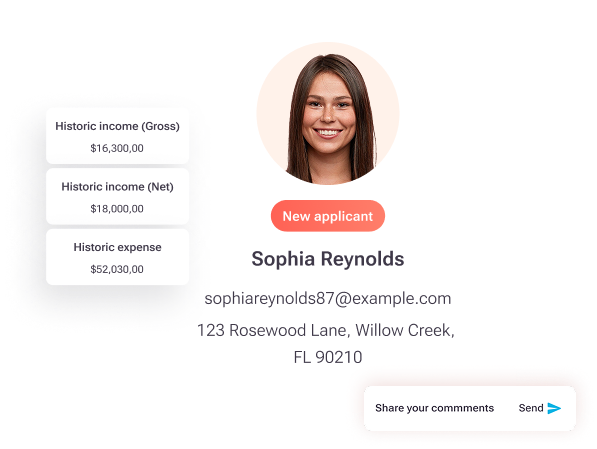
Here’s how TenantEvaluation supports your association:
- Customized for Florida regulations and your association’s bylaws, ensuring every process aligns with local rules.
- Automatically redacts sensitive details like Social Security numbers, paired with top-tier encryption and PCI Level 1 compliance for robust security.
- Provides a QuickApprove dashboard for Board Members with real-time updates, summarized reports, and a voting system, all tracked for transparency.
- Collects application fees online and shares a portion back with your association, turning screening into a revenue source, with $150M already generated for communities.
Want to enhance security and efficiency in your community? Schedule a demo now to see how TenantEvaluation can simplify applications, improve compliance, and increase revenue for your Florida association.
1. Stay Compliant with Florida Laws and Fair Housing Rules
Following federal laws like the Fair Housing Act and Florida-specific regulations is essential to avoid discrimination claims and penalties. Inconsistent screening practices can lead to legal challenges or accusations of unfair treatment. A uniform process is your strongest protection against liability.
The Fair Housing Act prevents discrimination based on race, color, religion, sex, disability, familial status, or national origin in screening. Florida associations must use clear, written criteria applied equally to all applicants. Any inconsistency can invite lawsuits or fines, even if unintended.
Standardized screening based on legal criteria cuts down on risks and ensures compliance with federal laws. This means having a repeatable system that avoids personal bias and treats every applicant the same way.
Here’s how to maintain compliance:
- Set objective standards like credit scores, income levels, and background check results for all applicants.
- Record decisions with detailed explanations tied to your criteria.
- Train board members and staff on Fair Housing laws and your policies.
- Update screening rules to match changes in Florida laws.
- Keep thorough records of all application decisions for accountability.
Florida’s regulations often change, adding new documentation or reporting needs. Using a platform that adapts to these updates automatically can help your association stay compliant without constant manual adjustments.
2. Protect Sensitive Data with Strong Security Measures
Associations handle critical personal information, including Social Security numbers and financial records. Cyberattacks targeting this data are increasing, making robust security a must to maintain trust and avoid legal consequences.
Data breaches can lead to identity theft, financial loss for residents, and lawsuits against the association. Paper systems or basic digital storage lack the protection needed against today’s threats.
Effective screening platforms need multiple security layers to guard against external attacks and internal errors. This means automatic redaction of personal details, encrypted data handling, and strict access limits.
Key security elements to look for:
- Automatic removal of personal info from documents.
- PCI Level 1 compliance for safe payment processing.
- Full encryption for data storage and transfer.
- Access rules to control who sees sensitive info.
- Detailed logs of all data access or changes.
- Secure storage with defined retention times.
Alongside tech solutions, associations should set clear data-handling policies. Staff must know how to securely manage documents, access digital files, and report potential issues to prevent breaches.
3. Use In-Depth Background Checks for a Full Applicant Picture
Screening for community associations should go beyond a simple credit report. Comprehensive checks should cover criminal history, financial records, evictions, employment status, and rental background to assess if an applicant fits your community.
Credit scores alone don’t tell the whole story. Someone with great credit might have past lease issues, while another with lower credit due to temporary setbacks could be a reliable resident with solid references.
Essential parts of a thorough screening include:
- Criminal history checks across national, local, and FBI databases, including sex offender registries.
- Financial details like credit reports, income confirmation, and debt analysis.
- Eviction records to spot past lease or property issues.
- Employment confirmation for income stability.
- Rental history from past landlords on behavior and rule adherence.
- Personal references for insights on character and reliability.
Accurate data from verified sources is critical. Self-reported information must be checked independently. Modern tools can automate much of this, reaching out to employers or landlords directly, easing the workload for your team.
All checks must align with Fair Housing rules, focusing only on relevant issues. For criminal records, consider the offense type, timing, and relevance to community safety before making decisions.
4. Boost Efficiency with Automated Screening Processes
Manual, paper-based screening eats up time and often leads to mistakes, creating stress for Community Association Managers. Collecting forms, reviewing them by hand, and coordinating via email slows down approvals, delays move-ins, and frustrates everyone involved.
Digital tools and automation can cut processing times significantly while improving accuracy. These systems don’t just speed things up; they remove unnecessary steps for smoother workflows.
Automation benefits to consider:
- Smart forms that adapt based on applicant type or situation.
- Automatic checks for valid documents and signatures.
- Routing applications to the right reviewers based on your rules.
- Instant updates on application status for all parties.
- Online fee collection to skip manual billing.
The results can be impressive. A Florida management company using TenantEvaluation saved $240,000 yearly and gained 50 hours daily by halving processing times. This freed staff to focus on resident services and growth instead of paperwork.
Automation also improves applicant experience with clear instructions, real-time updates, and 24/7 access. They can apply anytime, upload files easily, and get quick feedback, reducing delays and frustration.
5. Improve Transparency and Board Decision-Making
A lack of clarity in screening and approval processes can cause delays and distrust among Board Members. Sharing info via email often leads to confusion over current versions or reviewed applications, slowing everything down.
Board Members need secure, organized access to application details for efficient reviews and voting. Dedicated platforms built for board needs can make this possible without complexity.
Features that support clear board processes:
- Live dashboards showing application progress.
- AI summaries of key applicant details and flagged issues.
- Secure online voting with recorded decisions.
- Restricted access to only necessary, redacted data.
- Integration for reviewing during board meetings.
TenantEvaluation’s QuickApprove dashboard offers a user-friendly interface for Board Members. They can review data, see reports, and vote without needing tech skills. Every action is logged, ensuring transparency and compliance.
This setup prevents mix-ups like voting on outdated info or losing track of applications, providing a single, reliable source for all board activities.
6. Use Data Insights to Guide Community Decisions
Analyzing community-wide data can help boards make smarter choices about amenities, policies, and services. Modern screening platforms provide useful trends and resident profiles for long-term planning.
Many associations miss out by not collecting or studying this data. Knowing details like electric vehicle ownership or pet numbers can directly inform decisions on charging stations or pet rules.
Helpful data points to track:
- Resident demographics, like age or family size.
- Financial patterns, including income or renter-to-owner ratios.
- Lifestyle factors, such as pet or vehicle types.
- Market trends for rental or sale prices by unit type.
- Operational stats, like processing times or rejection reasons.
These insights shape bigger plans. For example, data showing more residents with mobility needs could prioritize accessibility upgrades. High turnover in certain units might prompt a closer look at why and how to improve retention.
Data also aids compliance by spotting potential bias in approvals or areas to tweak criteria. Regular reviews of approval patterns by demographics help keep processes fair and legal.
7. Turn Screening into a Revenue Opportunity
Resident screening can be more than an expense, it can generate income for associations through automated fees and shared revenue models. Many associations struggle with inconsistent fee collection or cover costs themselves, missing financial gains.
Modern platforms handle fee collection automatically and share profits with associations at no upfront cost. This turns a routine task into a financial benefit.
Ways to create revenue:
- Collect fees online before reviewing applications.
- Share revenue with platforms that return a portion of fees.
- Offer faster processing or detailed checks for extra fees.
- Lower per-application costs with volume discounts for larger communities.
TenantEvaluation’s model collects fees during online submissions, keeps a service cut, and returns the rest to associations. This has already brought in $150M for communities without extra effort or cost.
For associations with many applications, this income adds up. Plus, automated collection cuts out manual billing costs, saving time and money while boosting funds.
Ready to make screening a financial asset? Schedule a demo today to learn how TenantEvaluation can improve security, compliance, and revenue for your Florida association.
How TenantEvaluation Compares to Other Screening Tools for Florida HOAs
|
Feature |
TenantEvaluation (Specialized) |
Generic Background Check Vendors |
Legacy Property Management Software |
|
Target Audience Focus |
Florida Condominium & HOA Associations |
Broad Tenant Screening (various property types) |
General Property Management |
|
Compliance & Customization |
Florida-specific custom rules & compliance setup |
General FCRA compliance with varying state integration |
Compliance features with mixed robustness |
|
Data Security (PII) |
Auto-redaction, PCI Level 1, Full encryption |
Security varies, some reduce manual PII handling |
Basic security measures |
|
Board Review & Approval |
QuickApprove dashboard, digital voting, audit trails |
Review processes vary, some offer dashboards |
Approval workflows with limited customization |
This comparison shows why a platform built for Florida associations like TenantEvaluation stands out. Generic tools or broad property software might seem cheaper at first, but they often lack the focused features and compliance support HOAs need for efficiency and safety.
Evaluate any tool carefully to confirm it meets your specific screening, compliance, and administrative needs before committing.
Common Questions About Resident Screening
What Legal Risks Come with Resident Screening in Florida HOAs?
Non-compliance with the Fair Housing Act poses a major risk, potentially leading to discrimination claims and heavy fines. Inconsistent criteria application can appear biased, even unintentionally. Mishandling personal data also risks breaches and liability. Florida associations must keep up with state rules on documentation and reporting. Without proper records or consistent processes, legal and financial consequences can arise.
How Can Associations Ensure a Consistent Approval Process?
Use clear, written criteria applied equally to all applicants, focusing on measurable factors like credit or income. Digital platforms with smart forms standardize data collection and reviews. Train board members on fair housing and policies regularly. Document every decision with reasoning tied to criteria. Automated systems help by preventing skipped steps or varied standards.
What Background Info Beyond Credit and Criminal Checks Matters?
Eviction records show past lease issues. Employment verification confirms income stability directly with employers. Rental history from prior landlords highlights behavior and rule-following. Personal references offer a view of character. Together, these create a full picture of an applicant’s fit for your community, beyond just finances.
How Can Florida Associations Keep Up with Data Protection Rules?
Use platforms with automatic data redaction, full encryption, and PCI Level 1 compliance. Set policies on data retention and secure disposal. Conduct regular security checks and train staff on handling data to avoid errors. Choose tools that update compliance features as laws change. Document all practices to prove adherence during audits or challenges.
What’s the Financial Return from Automated Screening Tools?
Savings come from reduced staff time, with some associations gaining 50 hours daily. Processing can speed up by 70%, cutting costs and speeding move-ins. Revenue-sharing models turn screening into income. Avoiding risks like lawsuits or breaches adds value. Improved resident satisfaction from faster processes lowers turnover costs. Often, returns are clear within a year.
Final Thoughts: Strengthen Your Florida Community with Better Screening
These seven factors lay the groundwork for secure, efficient resident screening in Florida associations. Covering compliance, data security, thorough checks, automation, and revenue options, they offer a complete strategy far beyond basic needs.
Manual or paper processes expose associations to legal, security, and efficiency risks that modern tools can prevent. Florida HOAs and condos face unique regulatory and operational demands that require focused solutions.
TenantEvaluation addresses these needs with features built for associations. Its Florida-specific setup, strong security, detailed screening, and revenue-sharing model make screening a strategic benefit.
Associations using specialized platforms see clear gains in efficiency, cost savings, security, and income. TenantEvaluation has generated $150M for communities and handles over 100k applications yearly, proving its value across Florida.
As regulations shift and residents expect digital ease, the divide between modern and outdated methods grows. Act now to avoid costly issues down the line.
Ready to improve your screening process? Schedule a demo today to explore how TenantEvaluation can streamline applications, boost compliance, and increase revenue for your Florida association.