Written by: Luis Teran, Co-founder, CEO, TenantEvaluation
Key Takeaways
- Automated resident onboarding software replaces manual processes with a structured workflow aligned to Florida Statutes Chapters 718 and 720.
- Each onboarding stage, from application intake through lease tracking, serves a specific compliance role under Florida law and the FCRA.
- FCRA-compliant screening, biometric identity verification, and automated adverse-action workflows are core requirements for Florida community associations.
- Centralized lease tracking and audit-ready records support the 10-business-day production rule and 7-year retention obligations under §§ 718.111(12) and 720.303.
- TenantEvaluation provides this end-to-end, FCRA-first platform built for Florida community associations and CAMs.
See The Seven-Step Workflow In Action
The End-To-End Automated Resident Onboarding Workflow, Step By Step
A compliant, automated resident onboarding workflow for Florida community associations follows seven clear steps. Each step supports a specific requirement under Florida Statutes Chapters 718 and 720 or the federal Fair Credit Reporting Act (FCRA).
- Application Intake. The applicant or their realtor submits a fully online application through TenantEvaluation’s web or mobile portal. The association defines the intake criteria, and the CAM or LCAM configures the workflow. This step creates the documented record required under Chapter 718 and Chapter 720 governing-document provisions.
- Document Collection And E-Signature. The platform collects executed leases, valid IDs, and required community-specific documents with e-signature. Intelligent form logic rejects incomplete submissions automatically. This reduces manual follow-up for the CAM and ensures records are complete before review starts.
- Biometric Identity Verification. Before any consumer report is ordered, the applicant completes identity verification through IDVerify. This step confirms physical presence and identity authenticity. It establishes the permissible-purpose foundation the FCRA expects before screening authorization.
- FCRA-Compliant Screening. TenantEvaluation, a direct reseller of TransUnion and Equifax data, runs credit, criminal, eviction, and rental history checks under strict permissible-purpose controls. The applicant provides written consent before any report is pulled. The association receives the data and makes the approval decision.
- Board Review And Approval. The board uses a dedicated review and voting dashboard with real-time application status, summarized applicant reports, and timestamped audit trails. All votes are documented to satisfy Chapter 718 and Chapter 720 board voting and record-keeping rules.
- Payment Collection. TEpayments by Zinc collects application fees and required deposits within the onboarding workflow. Payments move directly from the applicant to the association’s designated account. Each association defines what is collected and at which stage, consistent with the statutory fee cap discussed below.
- Lease Tracking And Record Retention. Executed lease documents are collected and stored inside TenantEvaluation’s centralized Lease Tracking system. CAMs and boards see real-time lease status as active, pending, expired, or missing. Audit-ready digital records support Chapter 718 and Chapter 720 official-records retention obligations.
TenantEvaluation delivers this entire sequence inside one connected platform. Application intake, review, payments, and record retention stay in a single workflow instead of scattered across multiple tools.
Walk Through The Full Onboarding Flow
How Florida Statutes 718 And 720 Shape Resident Onboarding
The table below connects each onboarding step to its primary Florida statutory obligation. Florida’s records-inspection rules are among the strictest in the country. Both Chapter 718 (§ 718.111(12)) and Chapter 720 (§ 720.303(4)–(5)) require associations to produce official records within 10 business days of a written request, with a statutory presumption of willfulness, minimum damages of $50 per day, and prevailing-party attorney fees for non-compliance.
| Onboarding Step | Primary Florida Statutory Obligation | Compliance Purpose |
|---|---|---|
| Application Intake & Document Collection | § 718.303(1); § 718.116; Governing document approval authority | Approval authority must derive from the declaration, articles, or bylaws, and documents must be retained as official records. |
| Identity Verification | FCRA permissible purpose; § 718.112(2)(i) | Identity confirmation must occur before screening authorization, and the $150 per applicant fee cap applies. |
| FCRA-Compliant Screening | Fair Credit Reporting Act (15 U.S.C. § 1681 et seq.); § 718.111(12) | Written consent, adverse-action workflow, and an audit trail are required. |
| Board Approval | § 718.112(2)(c); § 720.303(2)(a) | Board meetings must be noticed at least 48 hours in advance, votes must be documented, and records retained. |
| Payment Collection | § 718.112(2)(i); § 720.303 | Application fees route to the association’s designated account, and fee caps and disclosure rules apply. |
| Lease Tracking | § 718.111(12); § 720.303(4)–(5) | Occupancy records and lease documentation count as official records subject to the 10-business-day production rule. |
| Record Retention | § 718.111(12); § 720.303(4); HB 1203 (2024) | Official records must be retained at least 7 years, SIRS reports 15 years, with audit-ready digital records expected. |
For Florida condos and HOAs managing age-restricted communities, 55+ Communities Verification sits within the application intake and document collection stage. It reduces manual work, standardizes application handling, supports documentation consistency, and strengthens internal processes. The workflow is built for Florida condos and HOAs and designed for Community Association Managers who oversee 55+ communities.
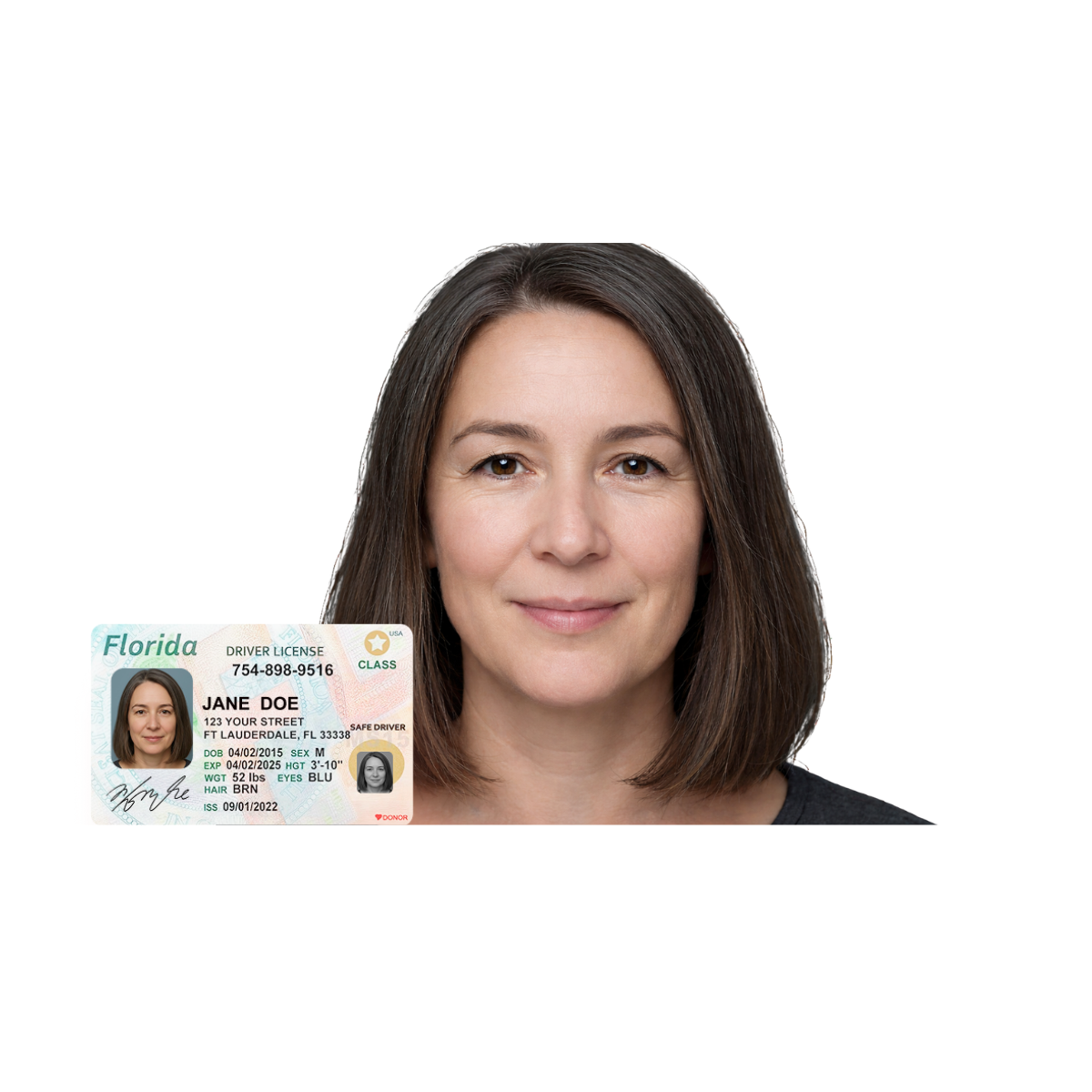
How The 5-Year Rule Interacts With HOA Records Under § 720.303, HOA official records must generally be retained for at least 7 years. The “5-year rule” commonly referenced in Florida HOA practice refers to the statute of limitations for HOA lien foreclosure actions. HOA associations have five years from lien recording to file a foreclosure lawsuit. That rule governs collection enforcement, while the 7-year rule governs document retention and inspection.
Recent Florida Condo Law Changes Affecting Onboarding The 2026 Florida regular legislative session adjourned on March 13, 2026 without enacting a new omnibus condo or HOA law. HB 657 passed the House 108-2 but died in the Senate Rules Committee. The operative compliance framework remains the 2024–2025 stack: HB 913 (2025), HB 1021 (2024), and HB 1203 (2024).
Key operational impacts for onboarding and record-keeping include three changes. First, effective January 1, 2026, condo associations with 25 or more units must post governing documents, budgets, approved minutes, and video-conference recordings to a password-protected website. Second, the SIRS completion deadline for most associations was December 31, 2025, with a simultaneous-completion exception extending to December 31, 2026 for associations also completing a milestone inspection. Third, HB 797 (2026), effective July 1, 2026, rewrote Florida’s Nonprofit Corporations Act (Chapter 617), modernizing director conflict-of-interest standards that bind community association boards under §§ 718.3027 and 720.3033. In addition, HB 803 (2026), effective July 1, 2026, amended § 720.3035 to bar HOA architectural committees from requiring a government permit before reviewing an owner’s improvement request. These changes expand the volume of official records associations must maintain and produce, so automated, audit-ready record retention becomes a practical necessity.
Review Your Statute-To-Workflow Map
FCRA-Compliant Screening Architecture As A Core Evaluation Criterion
FCRA-compliant resident screening forms the structural foundation of every Florida community association’s onboarding workflow. Under the FCRA, when a consumer report contributes to a denial, the association must issue a compliant adverse-action notice identifying the reporting agency, confirming that the association made the decision, and informing the applicant of their right to dispute the report and obtain a free copy. Failure to send a compliant adverse-action notice is one of the most frequently litigated FCRA violations.
Florida community associations should confirm that any screening provider offers the following architecture elements:
- Direct Credit Bureau Reseller Relationships. TenantEvaluation is a legitimate reseller of TransUnion and Equifax data. Data is accessed under strict bureau rules with regular compliance reviews and audits. The platform does not rely on gray-market or offshore data sources.
- Strict Permissible-Purpose Controls. Before obtaining any consumer report, the user must have a valid permissible purpose documented when the screening order is placed, and the applicant’s explicit written authorization must be obtained. TenantEvaluation enforces this at the workflow level.
- Automated Adverse-Action Workflows. The platform generates compliant pre-adverse and final adverse-action notices, including required CRA identification, a summary of consumer rights, and dispute instructions. This removes manual work from the CAM and reduces liability for the association.
- Clear Separation Between Decision-Making And Data Provision. TenantEvaluation provides the data, and the association makes the decision. This separation aligns with FCRA expectations and distinguishes TenantEvaluation from generic rental tools that blur that line.
- Built-In Audit Trails For Every Application. Every action, including consent, report pulls, board votes, and adverse-action notices, is timestamped and stored. This creates a defensible record for board meetings, DBPR inquiries, and litigation.
Generic tenant screening tools, including background-check-only platforms like ApplyCheck and Verify Screening Solutions that use the TazWorks platform, focus on basic reports rather than end-to-end community association workflows. They do not include the board dashboard, Florida-specific configuration, connected payment workflow, or integrated adverse-action automation that Florida community associations need. TenantEvaluation is built for community associations and management companies, with FCRA compliance built into the foundation.
Get Your FCRA Compliance Checklist
How Biometric Identity Verification Prevents Application Fraud In Florida Condos
Even with FCRA-compliant screening in place, the identity behind an application must be genuine. Document uploads alone no longer prevent impersonation, stolen IDs, or synthetic identity fraud. Multifamily application fraud rates have surged to 1 in 27 applications, with 15% of those cases involving entirely fabricated synthetic identities. According to McKinsey analysts, when an onboarding process lacks in-person verification or biometric screening, synthetic identity fraud risk increases significantly. Static document checks and outdated onboarding protocols cannot keep pace with AI systems that simulate blinking or facial expressions on demand.
IDVerify is TenantEvaluation’s biometric identity verification layer embedded directly into the screening workflow. It combines:
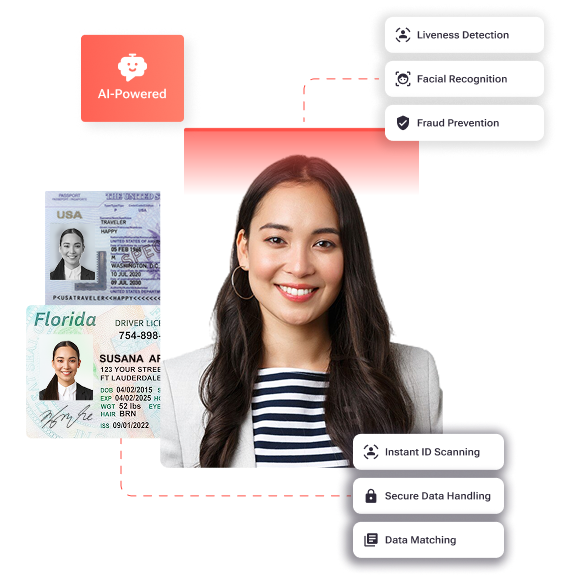
- Government-issued ID validation
- AI-powered liveness detection confirming physical presence
- Facial landmark recognition
- Biometric selfie-to-ID comparison
All verification runs inside TenantEvaluation. Applicants do not leave the workflow or manage separate logins. CAMs see verification results within the screening report, including ID authenticity, liveness status, biometric match result, and a redacted ID copy for compliance documentation.
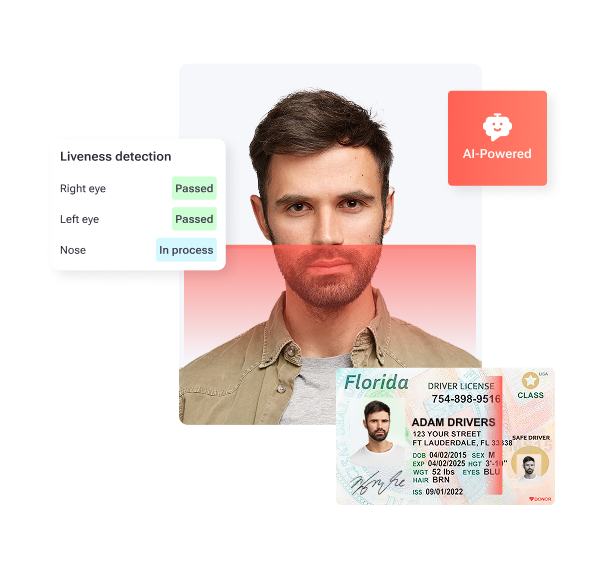
IDVerify also strengthens permissible-purpose validation by confirming identity before screening authorization. This reinforces FCRA-aligned workflows and improves audit defensibility. Biometric identity verification reaches 96% spoof detection accuracy compared with 61% for manual reviews. That gap makes manual review of biometric fraud attempts impractical at scale.
IDVerify can be enabled per condo or HOA and configured per property portfolio. Each community can match its risk profile without a rigid, one-size-fits-all rule.
Board Approval Workflow For Self-Managed And Professionally Managed Communities
The board approval workflow looks different in self-managed and professionally managed communities, and software must support both models.
In a professionally managed community, the LCAM or CAM configures the onboarding workflow, monitors application progress, triggers automated communications, and presents completed applications to the board for review and vote. The CAM serves as the operational hub, and the board acts as the decision-maker. The platform must give the CAM real-time visibility and give the board a clear, summarized view without forcing board members to navigate raw screening data.
In a self-managed community, board members manage the workflow and make the approval decision. The platform must be intuitive enough for volunteer board members to use without CAM support while still maintaining a full audit trail and FCRA-compliant structure.
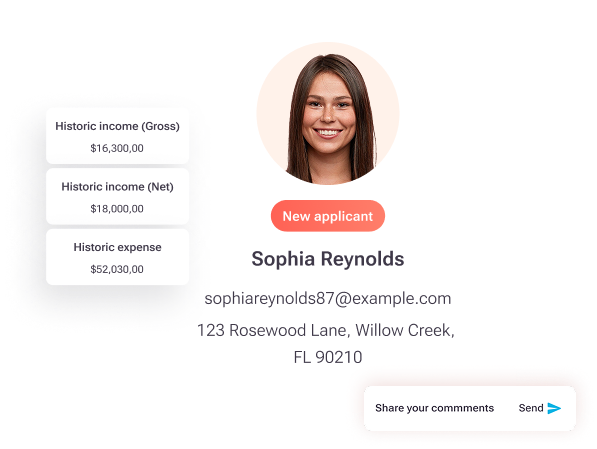
QuickApprove is TenantEvaluation’s accelerated approval workflow for CAMs, boards, and property management teams inside one connected platform. It provides real-time application tracking, reduces manual follow-ups, supports automated communication, generates customized approval letters, and includes a personalized welcome package. The dedicated board review and voting dashboard gives board members direct access to summarized applicant reports and a timestamped voting panel, replacing email chains and spreadsheets with a board-ready approval process.
Open-Meeting Rules For Application Review Florida Statutes § 720.303(2)(a) requires HOA board meetings to be open to all members and noticed at least 48 hours in advance. Executive session is limited to personnel matters and consultation with association counsel regarding pending or reasonably anticipated litigation. For condominiums, § 718.112(2)(c) applies the same open-meeting and 48-hour notice requirements. Application review must occur at a properly noticed, open board meeting, and all votes must be documented in the minutes. TenantEvaluation’s board dashboard supports this requirement by generating timestamped, audit-ready records of every review and vote.
Explore Board Approval Workflows
Connected Payment Collection Inside Onboarding
Keeping payment collection separate from resident onboarding creates a manual chasing problem that consumes CAM time and frustrates applicants. Managers chase payment confirmations by email and phone. Fees and deposits live in spreadsheets. Applicants feel unsure what to pay, when to pay, and where to pay, and boards lack visibility into payment status.
TEpayments by Zinc is a connected payment workflow inside TenantEvaluation that collects application fees and deposits during resident onboarding. Payments go directly from the applicant to the association’s designated account, and TenantEvaluation never holds the funds. Each association defines what is collected and at which stage, and the capability adapts to the property’s process rather than forcing a single sequence.
Under § 718.112(2)(i), Florida condominium associations may charge an application or transfer fee of no more than $150 per applicant, adjusted every five years for CPI. TEpayments by Zinc routes fees consistent with each association’s governing documents and applicable statutory caps. Boards receive traceable payment records and clear visibility into where funds go.
See How TEpayments Handles Fees
Lease Tracking And Record Retention From Application To Occupancy
Lease management across many Florida community associations remains fragmented and heavily manual. Lease copies go missing or become outdated, expiration tracking happens in spreadsheets, and there is no centralized lease visibility or direct link between applications and active leases. These gaps create operational blind spots, slow teams, and increase compliance risk tied to incomplete records.
TenantEvaluation’s Lease Tracking provides centralized, real-time lease visibility and lifecycle control for CAMs, boards, property management companies, and community operations teams. It connects resident onboarding, unit data, approvals, and lease documentation into one streamlined workflow. This reduces manual follow-ups, spreadsheets, and scattered email chains. Inside that one platform, CAMs get real-time lease status, automated lease document collection during onboarding, unit-level tracking, searchable digital history, and audit-ready records.
This structure supports the production and retention deadlines mapped in the statute-to-workflow table above. Under § 718.111(12) and § 720.303(4)–(5), official records, including lease documentation and occupancy records, must be produced within 10 business days of a written request, with statutory damages for non-compliance. Florida associations must retain official records for a minimum of 7 years. Lease Tracking keeps every lease connected, searchable, trackable, and audit-ready from application to occupancy.
Explore Lease Tracking For Your Community
Vendor Evaluation Checklist For Florida Community Associations
This checklist helps distinguish a purpose-built, FCRA-first community association platform from a generic rental or background-check tool. Use it before your next board meeting or vendor review.
Capabilities To Look For:
- Direct credit bureau reseller status with TransUnion and/or Equifax, not third-party data aggregation
- Documented FCRA permissible-purpose controls enforced at the workflow level
- Automated pre-adverse and final adverse-action notice generation
- Biometric identity verification with liveness detection, facial matching, and government ID validation embedded natively
- Florida-specific configuration for fee caps, governing-document-based approval criteria, and 55+ community workflows
- Dedicated board review and voting dashboard with timestamped audit trails
- Connected payment routing where fees and deposits go directly to the association’s designated account
- Centralized lease tracking with real-time status visibility and audit-ready digital records
- End-to-end workflow from application intake through record retention inside one platform
Questions To Ask Any Vendor:
- Are you a direct reseller of TransUnion or Equifax data, or do you use a third-party aggregator?
- How does your platform enforce FCRA permissible-purpose controls before a report is pulled?
- Does your adverse-action workflow generate compliant pre-adverse and final notices automatically?
- Is biometric identity verification embedded in the onboarding workflow, or does it redirect applicants to an external portal?
- Can your platform be configured to match our governing documents, fee caps, and Florida-specific screening criteria?
- Does your board dashboard provide timestamped, audit-ready voting records?
- Where do application fees and deposits go, to our account directly or through your platform first?
- Does your lease tracking connect to the onboarding workflow, or is it a separate module?
- What is your record-retention architecture, and how do you support the production deadlines under §§ 718.111(12) and 720.303(4)?
Platforms like ApplyCheck and Verify Screening Solutions operate as background-check tools using the TazWorks platform. They do not function as end-to-end compliance workflow platforms. They lack the board dashboard, Florida-specific configuration, connected payment routing, and integrated lease tracking that Florida community associations need. TenantEvaluation offers a more complete option for Florida community associations evaluating ApplyCheck or similar background-check-only providers.
Download The Vendor Comparison Checklist
Conclusion: The Definitive Platform For Florida Community Association Onboarding
Manual resident onboarding creates compliance risk for Florida community associations. The seven-step workflow in this guide, covering application intake, document collection and e-signature, biometric identity verification, FCRA-compliant screening, board review and approval, payment collection, and lease tracking and record retention, aligns each step with a specific obligation under Florida Statutes Chapters 718 and 720 or the federal FCRA. Gaps at any step increase audit exposure, statutory damages, or litigation risk.
TenantEvaluation delivers this entire workflow inside one connected platform. CAMs and boards get FCRA-first screening architecture, biometric identity verification, board approval workflows, connected payments, and centralized lease tracking in a single system. Florida community associations can move from manual, fragmented processes to a documented, statute-aligned onboarding program that stands up to scrutiny.
Schedule Your TenantEvaluation Strategy Session
