Written by: Luis Teran, Co-founder, CEO, TenantEvaluation
Key Takeaways
- Condo and HOA tenant background checks generate revenue through three mechanisms: applicant-paid screening fees, association-paid administrative fees, and cost avoidance from faster approvals and reduced administrative work.
- The association-paid administrative fee is the only durable revenue line because it is tied to rented units rather than application volume.
- Florida statutes do not establish universal fee caps. Fee authority comes from governing documents plus state law, and permissible payers vary by state.
- Cost avoidance through reduced vacancy loss, staff hours, and bad-debt placements usually represents the largest financial benefit of a well-run screening program.
- TenantEvaluation provides FCRA-compliant screening and payment solutions built for community associations and management companies.
Start With TenantEvaluation Today
How Condo Associations Generate Revenue From Tenant Screening
TenantEvaluation is a specialized resident screening and onboarding platform for community associations and management companies. The platform was founded in 2007 and built with FCRA compliance at the core. TenantEvaluation serves more than 5,000 communities, processes about 100,000 applications annually, and has generated $150M for communities.
Mechanism 1: Applicant-Paid Screening Fee
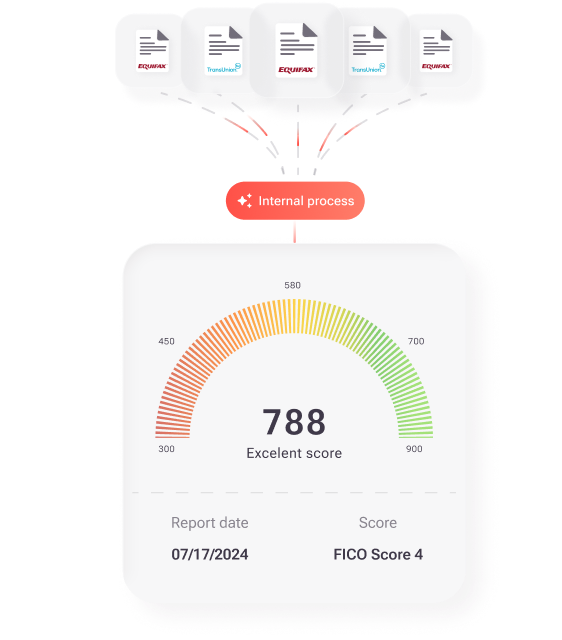
The applicant, or the owner on the applicant’s behalf, pays a screening or application fee at submission. Florida §718.116 governs condominium assessments, liability, liens, and estoppel certificates, and Florida §720.3085 governs HOA assessment liens and collection. Neither statute addresses tenant screening or application fees, and neither establishes a universal dollar cap. That means fee authority must come from governing documents plus state law. Because that authority depends on application volume and fee structure, revenue from this mechanism is variable.
Mechanism 2: Association-Paid Administrative/Compliance Fee
The association charges a separate, properly authorized administrative fee for operating a tenant-registration and screening program. That fee covers registration, documentation, and compliance administration. It does not cover the background check itself. Fee authority must be explicitly authorized by governing documents plus state law. This administrative fee is the more durable revenue line because it is predictable and tied to rented units rather than application volume.
Mechanism 3: Cost Avoidance
The association avoids costs instead of collecting a direct fee. This mechanism rests on operational efficiency rather than a line-item charge. It often represents the largest real number in the revenue equation. Cost avoidance includes vacancy loss from slow approvals, staff hours, paper and postage overhead, and bad-debt and violation costs.
Comparison Table: The Three Revenue Mechanisms
The table below summarizes how the three mechanisms differ on who pays, what authorizes the fee, and how durable the revenue is.
| Mechanism | Who Pays | Legal Basis | Durability |
|---|---|---|---|
| Applicant-paid screening fee | Applicant or owner | Governing documents + state law | Variable |
| Association-paid administrative fee | Association (via owner/tenant) | Governing documents + state law | Durable |
| Cost avoidance | No direct payer | Operational efficiency | Largest impact |
See How TEpayments Handles Association Fees
Florida HOA Background Check Fees And Statutory Caps
Florida §718.116 is the condominium assessments, liability, lien, and collection statute. Any charge tied to tenant approval or screening in a Florida condominium must be analyzed under the condominium lease-approval provisions rather than the assessment-collection text of §718.116 itself, which addresses estoppel certificate requirements and delinquent-assessment collection. The statute does not establish a universal cap on tenant screening fees, so fee authority again comes from governing documents plus state law.
Florida §720.3085 is the HOA assessment-lien and collection statute. It authorizes an association to record a claim of lien and pursue judicial foreclosure for unpaid assessments. For Florida HOA tenant approval processes, any fee authority must derive from a different Chapter 720 provision or the association’s governing documents, rather than §720.3085 itself. As with condominiums, this statute does not create a universal dollar cap on tenant screening fees.
By contrast, New York Real Property Law §238-a, enacted as part of the Housing Stability and Tenant Protection Act of 2019, caps the cumulative fee for background and credit checks at the lesser of the actual cost of those checks or $20 per prospective tenant. This example shows how caps and permissible payers vary significantly by state.
On the question of who pays:
- The applicant (prospective tenant) typically pays the screening fee.
- The owner may pay on the applicant’s behalf.
- The association may charge an administrative fee for operating the program.
- Fee authority comes from governing documents plus state law, and caps and permissible payers vary by state.
Review TEpayments For Florida Associations
Administrative Fees Versus Background Check Cost: The Math
The association may charge an administrative fee for operating the tenant-registration and screening program, separate from the background check itself. That fee must be properly authorized by governing documents and state law. Charging more than actual cost for the background check itself may violate state fee caps where they exist.
Two illustrative models show how the numbers work in practice.
- Illustrative Model 1: Applicant-Paid Model. Volume × fee × retained portion. Example: 100 applications × $100 fee × 50% rebate = $5,000 annual revenue. Illustrative only; not a guarantee.
- Illustrative Model 2: Association-Paid Administrative Model. Rented units × one-time compliance or administrative fee. Example: 200 rented units × a $50 one-time administrative fee = $10,000 in administrative fee revenue, with the $50 fee falling within the typical $50–$350 administration fee range. Illustrative only; not a guarantee.
The association-paid administrative model is the more durable revenue line because it is tied to rented units rather than application volume. With TEpayments By Zinc, application fees and deposits are collected during resident onboarding within the workflow associations already use. Payments go directly from the applicant to the association’s designated account, and TenantEvaluation never holds the funds.
Model Your Fee And Revenue Scenarios
Cost Avoidance As The Largest Real Number
Cost avoidance often delivers the largest financial benefit of a well-run tenant screening program, even though it rarely appears on a board’s revenue line. Each component can be measured.
Vacancy Loss From Slow Approvals. NARPM market data benchmarks lost rent from vacancy days at $47–$82 per unit per day, and NAA renter preference survey data shows 67% of qualified applicants accept an offer from another property if they have not received a decision within two days. TenantEvaluation’s QuickApprove accelerates resident approvals inside one connected platform. It gives CAMs, boards, and property management teams real-time application tracking, fewer manual follow-ups, and a board-ready approval process without losing control, compliance, or visibility.
Staff Hours. Automation does not just speed up individual applications. It removes the manual document collection and review that consume staff time. TenantEvaluation frees up to 50 staff hours per day through those workflows, and a NARPM 2025 technology adoption survey found that property managers using automated screening workflows process applications in 2.1 hours versus 2.3 days for manual processes.
Paper And Postage. The same automation that saves staff hours also eliminates paper applications, manual check handling, and postage overhead, which reduces per-application cost immediately.
Bad-Debt And Violation Costs. NAA annual survey data shows automated screening reduces bad tenant placement by 34% through consistent application of screening criteria, and Buildium’s property management benchmark report indicates the average cost of a bad tenant placement is $3,500–$7,800, including turnover, lost rent, and legal fees.
TenantEvaluation’s documented metrics include up to 50 staff hours freed per day and up to 70% reduction in approval time.
Compliance Guardrails That Protect Screening Revenue
A non-compliant fee structure can convert revenue into liability. The compliance framework governing condo and HOA tenant screening programs has four primary components.
- FCRA Adverse-Action Workflow. When a condo or HOA denies or conditions tenancy based on a background check, FCRA requires an adverse-action notice that includes the CRA’s contact information, a statement that the CRA did not make the decision, and notice of the right to a free copy of the report within 60 days. TenantEvaluation provides automated adverse-action workflows built into the platform.
- Uniform Written Criteria For Fair Housing. Consistent written screening criteria reduce uneven decisions and Fair Housing exposure by ensuring one written policy is applied and logged across every property and leasing team. NAA Fair Housing compliance data suggests manual screening introduces human bias in 62% of decisions, whereas automation applies criteria uniformly every time.
- Permissible Purpose. Under FCRA Section 607(a), the CRA must obtain the user’s identity, certification of permissible purpose, and certification that information will be used for no other purpose. TenantEvaluation maintains strict permissible purpose controls as a direct reseller of TransUnion and Equifax data.
- Audit Trails. TenantEvaluation provides built-in audit trails for every application, with automated adverse-action workflows and strict permissible purpose controls.
FTC RentGrow Enforcement Action (July 2026). On July 9, 2026, the FTC announced that RentGrow Inc. agreed to pay a $2.25 million civil penalty to settle allegations that it violated the FCRA by failing to maintain reasonable procedures to ensure maximum possible accuracy of its tenant screening reports, failing to disclose all information and sources to consumers, and failing to comply with dispute procedures. A federal court entered the stipulated order on August 12, 2026, imposing the $2.25 million civil penalty judgment and an injunction. The FTC also alleged that RentGrow violated the FTC Act by misleading consumers about dispute outcomes. In some cases, RentGrow told consumers that corrections had been reported to property managers, when in fact it had told those property managers there was no change.
See How TenantEvaluation Bakes In Compliance
What Applicants Pay And Why It Matters
Compliance guardrails protect the revenue, and the applicant experience determines whether the fee is collected smoothly. Condo and HOA tenant background check fees cover the cost of screening, including credit checks, criminal history, eviction records, and identity verification through tools such as IDVerify. The fee is typically paid at application submission. It exists to ensure that all applicants are screened consistently and that the association can make informed approval decisions. Clear disclosure of what the fee covers, when it is paid, and why it exists reduces dispute risk and supports Fair Housing compliance. With TEpayments by Zinc, required fees and deposits are collected within the onboarding process applicants already use, which removes uncertainty about what to pay, when to pay, and where to pay.

Board Decision Framework For Tenant Screening Fees
Boards need a simple checklist before adopting any condo or HOA tenant background check fee model. The questions below frame that decision.
- What do the governing documents authorize?
- What does state law cap?
- Who pays, whether applicant, owner, or association?
- Is the fee refundable?
- How is it disclosed?
- How is it recorded and audited?
Walk Through The Board Decision Checklist
Conclusion: Building A Compliant Revenue Model
Condo and HOA tenant background checks function as a cost-recovery and cost-avoidance mechanism rather than a profit center. The only durable revenue line is a properly authorized administrative fee for operating the tenant-registration and screening program. The RentGrow enforcement action described earlier is a direct reminder that a non-compliant screening program converts revenue into liability.
TenantEvaluation was built for this exact use case, and FCRA compliance is central to how the platform works. With TEpayments By Zinc, application fees and deposits are collected during resident onboarding, with payments going directly to the association’s designated account. TenantEvaluation never holds the funds. One workflow. Faster approvals. Fewer payment headaches.
Schedule A TEpayments Demo
