Written by: Luis Teran, Co-founder, CEO, TenantEvaluation
Key Takeaways
- Community association manager licensing falls into three tiers: mandatory licensing states, title-restriction states, and unregulated states.
- Mandatory licensing states require pre-license education, exams, background checks, and continuing education, with licenses usually tied to the individual manager.
- Community association managers carry fiduciary duties that include segregating association funds, maintaining accurate records, providing financial reports, and maintaining insurance and bonding.
- Managers must stay within the ministerial scope of their role and route legal interpretation and advice questions to association counsel.
- Compliance often breaks down at handoff points such as manager turnover, records requests, and screening decisions, so boards and managers need clear, documented workflows.
Community Association Manager License Requirements By State: A Three-Tier Map
The U.S. regulatory landscape for community association managers divides into three tiers: mandatory licensing states, title-restriction states, and unregulated states. No single federal framework governs the profession.
Tier 1 — Mandatory Licensing States: This tier carries the highest direct licensing risk for individual managers and boards. A board can lose compliance the moment a licensed manager leaves if no one re-verifies credentials. Florida requires a CAM license through the Department of Business and Professional Regulation (DBPR) under Florida Statutes § 468.431 for anyone managing an association with more than 10 units or a budget exceeding $100,000. Georgia regulates CAMs through the Georgia Real Estate Commission (GREC) under Title 43, Chapter 40 of the Official Code of Georgia. The state requires a 25-hour pre-license course. Illinois licenses both individual managers and management firms under the Community Association Manager Licensing and Disciplinary Act, administered by the Illinois Department of Financial and Professional Regulation (IDFPR). Virginia requires a Common Interest Community (CIC) manager license under Va. Code § 54.1-2346. As of mid-2025, seven states require a license to practice as a community association manager: Alaska, Connecticut, Florida, Georgia, Illinois, Nevada, and Virginia.
Tier 2 — Title-Restriction States: These states regulate titles and disclosures instead of creating a dedicated CAM license. California has no state license for HOA management companies or individual community association managers, and relies on disclosure requirements under the Davis-Stirling Common Interest Development Act and voluntary industry credentials such as the Certified Community Association Manager (CCAM) from the California Association of Community Managers (CACM).
Tier 3 — Unregulated States: Texas, North Carolina, and Arizona all fall into the unregulated tier, yet managers in these states still face contractual and fiduciary accountability. Texas does not license HOA management companies as a general category, and routine community association management tasks such as accounting, dues collection, vendor coordination, and running board meetings do not trigger any state licensing requirement on their own. North Carolina has no state licensing requirement for HOA management companies or the individuals performing the work. Arizona has no state license specific to community association managers, and the Arizona Department of Real Estate (ADRE) does not regulate day-to-day HOA management under a dedicated CAM framework. In these states, contract law, fiduciary duty, governing documents, and voluntary credentials fill the regulatory vacuum.
The table below highlights how requirements differ across representative states, with pre-license hours as a clear comparison point for mandatory-licensing jurisdictions.
| State | Licensing Required | Regulator | Pre-License Hours (Mandatory States Only) |
|---|---|---|---|
| Florida | Yes | DBPR | 16 |
| Georgia | Yes | GREC | 25 |
| Illinois | Yes | IDFPR | 20 |
| California | No (title restriction) | N/A | Not applicable |
| Texas | No | N/A | Not applicable |
Community Association Manager Licensing Mechanics In Mandatory States
Knowing which tier a state falls into is the starting point, and the next step is understanding what a license actually requires. In mandatory licensing states, the specific education, exam, and bonding rules determine how much time and money a manager must invest before practicing.
In Florida, candidates complete 16 hours of pre-licensure education, pass the DBPR-administered CAM exam, submit a background check, and renew biennially with continuing education covering legal updates, financial management, operations, and ethics. The 10-unit or $100,000 budget threshold triggers the licensing requirement. The exam covers Florida Statutes Chapters 718 (condominiums), 719 (cooperatives), 720 (HOAs), and 468 (the CAM licensing statute).
In Georgia, applicants must be at least 18, hold a high school diploma, complete 25 hours of GREC-approved pre-license coursework, pass the state exam, and submit a Georgia Crime Information Center report. The license attaches to the individual manager and requires affiliation with a sponsoring broker.
In Illinois, management firms must also register with the state and designate a licensed manager as the Designated Community Association Manager (DCAM). This structure extends oversight beyond the individual manager to the employing firm. Illinois requires 20 hours of pre-license education, a passing exam score, and a $300 application fee.
Virginia’s CIC manager license carries a fidelity bond requirement under Va. Code § 54.1-2346(D). The manager must maintain a blanket fidelity bond or employee dishonesty insurance policy with coverage equal to the lesser of $2 million or the highest aggregate operating and reserve balances of all managed associations in the prior fiscal year, subject to a $10,000 minimum.
Nevada requires at least 60 hours of instruction, a minimum 12 months of related experience, and a passing score of at least 75% on the state exam. Errors and omissions (E&O) insurance often sits alongside these requirements and protects the manager and association against claims of negligence.
Explore how TenantEvaluation supports licensing compliance from application to approval.
Voluntary National Credentials For Community Association Managers
National credentials help boards evaluate manager qualifications in states that lack a dedicated license. The Certified Manager of Community Associations (CMCA) credential, administered by the Community Association Managers International Certification Board (CAMICB), is the closest thing the industry has to a national standard and is accredited by the National Commission for Certifying Agencies and ANSI under ISO Standard 17024. The CMCA exam is 2.5 hours with 120 multiple-choice questions delivered through Pearson VUE, and recertification every two years requires 16 hours of continuing education plus an annual service fee.
The Association Management Specialist (AMS) designation, awarded by the Community Associations Institute (CAI), requires the CMCA, at least two CAI courses, and at least two years of experience managing association finances, administration, and facilities. The Professional Community Association Manager (PCAM) designation, CAI’s highest credential, requires the CMCA and AMS, advanced education in law, communications, operations, and asset protection, at least five years of community association management experience, and a comprehensive case study review of a selected community.
As of August 2026, approximately 1,950 active PCAMs hold CAI’s highest manager designation. According to the Foundation for Community Association Research’s compensation survey, CMCA-certified managers earn roughly 20% more on average than managers without the credential. In states without mandatory licensing, boards often treat these credentials as de facto requirements. CAI’s manager licensing and model legislation resources at caionline.org provide guidance for states considering licensing frameworks.
Community Association Manager Fiduciary Duty And Financial Obligations
Florida Statute § 468.4334 requires community association managers and management firms to act loyally, skillfully, diligently, honestly, and in good faith, with full disclosure to the association, and to account for all funds. That standard translates into specific operational duties. Managers must adhere to governing documents, segregate association funds from management-company operating funds, maintain accurate accounting records, provide financial reports to the board, and keep fidelity bonding and E&O insurance in place.
Under Florida Statute § 468.4334(3), all official records of the association must be returned within 20 business days of termination of the management contract or a written request, whichever comes first. Failure to return records creates a rebuttable presumption of willful non-compliance and triggers a statutory penalty of $1,000 per day for up to 10 business days, capped at $10,000, followed by license suspension.
Association funds must be kept separate from a management company’s operating funds in a trust or client funds accounting system that keeps each association’s money separate, produces financial statements for board meetings, and creates a clean audit trail. Commingling funds is one of the fastest ways to lose a license, a client, or both.
Insurance and bonding are legal requirements that carry the same weight as licensing. Community association management contracts and state regulations commonly require three types of coverage: errors and omissions (E&O) insurance for claims of negligence, general liability insurance, and a fidelity bond protecting the association’s funds against employee theft or embezzlement. Lenders, insurers, or the association’s governing documents often require all three before a management contract can be signed.
Florida Statute § 718.111(13) sets tiered financial reporting requirements for condominium associations based on annual revenues. Associations under $150,000 must file a report of cash receipts and expenditures. Those between $150,000 and $299,999 must file a compiled financial statement. Those between $300,000 and $499,999 must file a reviewed financial statement. Associations at $500,000 or more must file an audited financial statement prepared by a Florida-licensed CPA. All reports are due within 90 days of fiscal year-end.
See how FCRA-compliant workflows support fiduciary obligations.
Unauthorized Practice Of Law And The Community Association Manager
The Florida Supreme Court’s 1996 advisory opinion (681 So. 2d 1119) and its 2015 advisory opinion in case SC13-889 (177 So. 3d 941) draw a line between ministerial and legal tasks. Ministerial tasks such as completing a form, filling in blanks, compiling records, or performing arithmetic that requires no judgment are not the practice of law. Tasks that require interpreting statutes, administrative rules, or governing documents are the practice of law. So are giving legal advice and preparing instruments that determine substantial rights.
The following tasks fall on the attorney’s side of the line:
- Drafting amendments to a declaration of covenants, bylaws, or articles of incorporation
- Preparing or drafting association contracts, including construction, management, and cable television contracts
- Making the legal determination of who must receive a pre-lien letter from a delinquency list
- Answering questions concerning the application of law or advising that a course of action may not be authorized by law or rule
- Vote-threshold determinations that require interpretation and application of statutes and governing documents
CAMs may support the board by compiling records, calculating votes when the threshold is unambiguous, and routing legal questions to association counsel. Unlicensed practice of law in Florida is a third-degree felony under Florida Statute § 454.23 and is separately enforced by the DBPR through license discipline under FS § 468.436, with fines up to $5,000 per offense, suspension, revocation, or restriction of practice.
Records, Meetings, And Governing-Document Compliance For Community Association Managers
The unauthorized practice of law boundary defines what a manager can decide, and records and meeting obligations define what a manager must document and disclose. Both fall under the same fiduciary umbrella and both carry statutory penalties for failure.
Florida Statute § 718.111(12) requires condominium associations to provide owners access to official records within 10 business days of a written request. Missing the deadline creates a rebuttable presumption that the failure was willful and can expose the association to actual damages plus attorney’s fees. Associations must maintain official records for seven years.
Fair housing and anti-discrimination obligations apply nationwide under the Fair Housing Act. CAMs must ensure screening criteria do not discriminate based on race, color, religion, sex, national origin, familial status, or disability. FCRA compliance governs every consumer report used in the screening process and applies regardless of state licensing tier.
Who Hires The Community Association Manager And How That Affects Legal Exposure
All of these obligations, including licensing, fiduciary duty, records, and legal boundaries, ultimately sit with the board, even when a manager handles the day-to-day work. That reality makes the hiring structure a key driver of legal exposure.
The board of directors typically hires the community association manager, either directly or through a management company. The board retains fiduciary responsibility, the manager executes day-to-day operations, and the management firm provides oversight and resources. This structure shapes legal exposure at every level.
In Illinois, a “community association manager” is the specific title used for a licensed professional managing condominium associations and other common-interest communities, whereas a “property manager” often refers to someone managing rental properties under a different regulatory framework. Rental-focused property managers are not licensed to manage condo associations in Illinois.
The most common mistake Georgia boards make is assuming the CAM license belongs to the management business rather than the individual manager, which can result in an unlicensed person running association finances after manager turnover without the board noticing. The same risk applies in any mandatory-licensing state where license verification is not performed at the individual level.
How TenantEvaluation Helps CAMs Meet These Requirements
TenantEvaluation is built specifically for community associations and management companies, with FCRA compliance embedded in every screening workflow. The platform operationalizes the obligations described in this article across all three regulatory tiers.

FCRA compliance is embedded in the screening process through four mechanisms: direct credit bureau reseller relationships with TransUnion and Equifax, strict permissible purpose controls, automated adverse action workflows, and built-in audit trails for every application. The platform also maintains a clear separation between decision-making, which stays with the association, and data provision, which stays with TenantEvaluation. That separation is what protects the association from liability exposure.
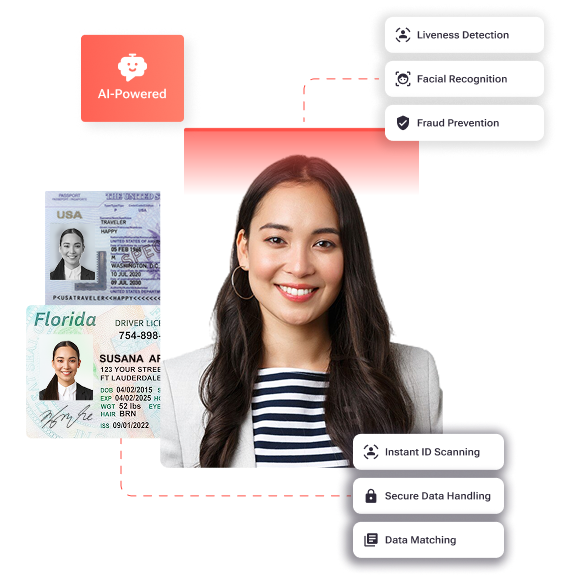
The platform’s core capabilities address the operational obligations the law creates:
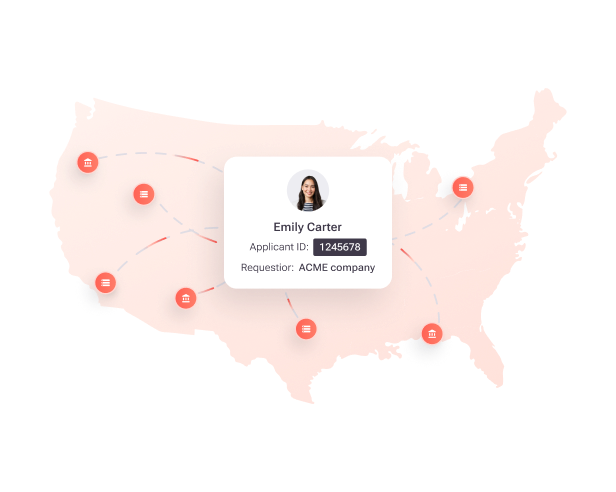
- SafeCheck+ provides FCRA-compliant background checks with audit trails, supporting the recordkeeping obligations that mandatory-licensing states and fiduciary duty require.
- IDVerify strengthens permissible-purpose validation by confirming identity through AI-powered liveness detection, government ID authentication, and biometric facial matching prior to screening authorization, reinforcing FCRA-aligned workflows and audit defensibility.
- QuickApprove accelerates resident approvals with real-time application tracking, automated communication support, customized approval letters, and a board-ready approval process while preserving control, compliance, and visibility.
- Lease Tracking provides centralized, real-time lease visibility and lifecycle control, from application to occupancy, with audit-ready digital lease records that connect resident onboarding, unit data, approvals, and lease documentation in one streamlined workflow.
- 55+ Communities Verification helps Florida condos and HOAs standardize how age-restricted requirements are handled across applications, reducing manual work and improving documentation consistency.
TenantEvaluation has processed over 100,000 applications annually across 5,000+ communities, generated $150M for communities, and holds a 4.8/5 Google rating. The revenue-sharing model is pay-per-application with no upfront fees.
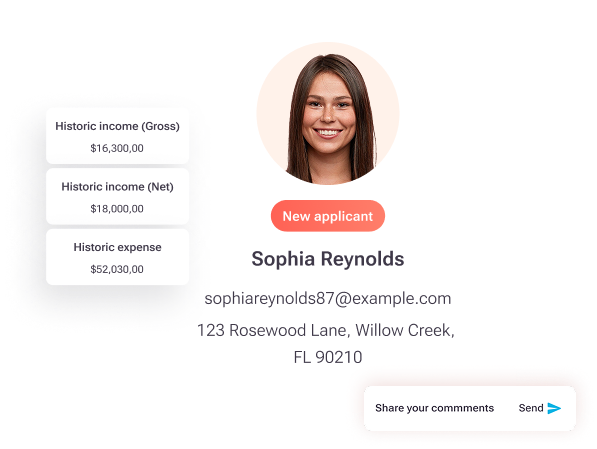
Walk through the platform’s compliance workflows to see how TenantEvaluation supports your obligations end to end.
Frequently Asked Questions
What Are The Responsibilities Of A Community Association Manager?
A community association manager handles the day-to-day operations of a community association, including financial management, vendor coordination, compliance with governing documents, owner communication, and board support. In mandatory-licensing states, the CAM is also responsible for maintaining an active license and completing required continuing education. Fiduciary duty, codified in statutes like Florida’s § 468.4334, requires the manager to act loyally, skillfully, diligently, honestly, and in good faith, with full disclosure to the association. Financial responsibilities include segregating association funds, maintaining accurate accounting records, providing financial reports to the board, and ensuring fidelity bonding and E&O insurance are in place. The CAM also supports records compliance, meeting notice requirements, and fair housing obligations, while routing legal questions to association counsel rather than interpreting statutes independently.
Who Usually Hires The Community Association Manager?
The board of directors typically hires the community association manager, either directly as an employee of the association or through a contracted management company. The board retains ultimate fiduciary responsibility for the association’s governance and finances, and the manager executes day-to-day operations under the board’s direction. In mandatory-licensing states like Florida, Georgia, and Illinois, the board should verify the individual manager’s license rather than relying only on the management company’s registration. After manager turnover, a board that fails to re-verify the assigned individual’s credentials can unknowingly operate with an unlicensed manager handling association finances.
How Does A Property Manager Differ From A Community Association Manager?
A community association manager manages the association’s governance, finances, vendor relationships, and compliance with governing documents on behalf of the board and all owners collectively. A property manager typically manages rental properties on behalf of individual landlords under a different regulatory framework that focuses on lease administration, tenant relations, and rent collection for privately owned units. In Illinois, rental-focused property managers are not licensed to manage condominium associations, and the two licenses are separate and non-interchangeable. In states like Virginia, the CIC manager license is issued by a different regulatory board than the real estate license, and holding one does not satisfy the requirements of the other. Boards should confirm that the professional they hire holds the credential specific to community association management, not just a general real estate or property management license.
What Are The Requirements To Obtain A Community Association Manager License In Georgia?
Georgia CAM license applicants must be at least 18 years old, hold a high school diploma or equivalent, complete 25 hours of GREC-approved pre-license coursework, pass the state licensing exam covering real estate fundamentals and community-association-specific material, and submit a Georgia Crime Information Center report as part of the background check. The license attaches to the individual manager and requires affiliation with a sponsoring broker, which mirrors the structure for real estate salespersons in Georgia. Boards should verify the specific manager assigned to their account through the Georgia Secretary of State’s license verification portal rather than relying solely on the company’s name.
What Is Community Association Manager Errors And Omissions Insurance?
Errors and omissions (E&O) insurance covers claims of negligence or mistakes in management duties, such as a manager who fails to provide timely notice of a board meeting, miscalculates an assessment, or misses a statutory deadline. It is a licensing-adjacent obligation in many states and is often required by lenders, insurers, or the association’s governing documents before a management contract can be signed. E&O insurance is distinct from a fidelity bond, which protects the association against employee theft or embezzlement, and from general liability insurance, which covers third-party bodily injury or property damage claims. Florida management companies are expected to carry minimum E&O coverage, and industry guidance commonly references $5 million, and must provide a certificate of insurance naming the association. In Virginia, the CIC manager license statute separately requires a blanket fidelity bond or employee dishonesty insurance policy sized to the managed associations’ aggregate balances.
What Are Community Association Manager Continuing Education Requirements?
Continuing education requirements vary by state and by credential. Florida requires biennial license renewal with CE covering legal updates and legislative changes, financial management, community association operations, and ethics. Florida SB 382 (2024) modified certain CE requirements for some licensees, but the fundamental biennial renewal obligation remains. Illinois CAM licenses operate on a two-year renewal cycle with CE covering ethics, financial management, and updates to Illinois statutes. Virginia requires certified principal or supervisory employees (CIC manager certificate holders) to complete, within the two-year certificate period immediately prior to expiration, two hours of board-approved fair housing training and two hours of board-approved Virginia common interest community law and regulation training as a condition of certificate renewal. At the national credential level, CMCA recertification requires 16 hours of continuing education every two years, and AMS and PCAM designations require renewal every three years through continuing education. Because CE requirements change through legislation, CAMs should confirm current requirements directly with their state regulatory board rather than relying on historical figures.
Conclusion: The Operational Layer Where Compliance Is Won Or Lost
Compliance breaks down at the handoff points: when a manager leaves and no one re-verifies the license, when records are requested and the statutory clock starts, and when a screening decision is made without a documented permissible purpose. Those moments turn the legal framework into an operational test.
The operational layer, including screening, records, funds handling, insurance, and audit trails, is where boards and managers either meet or miss their obligations. TenantEvaluation was designed around the compliance obligations described in this article, from permissible-purpose validation at intake through audit-ready record retention across the same 5,000+ communities referenced above.
See how TenantEvaluation closes the operational compliance gap.
