Written by: Luis Teran, Co-founder, CEO, TenantEvaluation | Last updated: September 6, 2026
Why Resident Application Fraud Demands Specialized Protection
The FBI’s Internet Crime Complaint Center logged more than 12,000 real estate fraud complaints in 2025, with reported losses above $275 million. For community associations, a single fraudulent approval can lead to unauthorized occupants, unpaid assessments, and costly legal disputes. Each case of application fraud costs an average of $15,000 to mitigate.
Resident application fraud operates across four distinct vectors that generic tools are not designed to address.
- Synthetic identities: Real SSNs blended with fabricated names and credit histories that pass traditional background checks. This type of fraud is so prevalent that it accounts for 80% of new account fraud and is projected to cause at least $23 billion in annual U.S. losses by 2030.
- Document tampering: AI-generated pay stubs, bank statements, and IDs built to survive visual inspection. MRI Real Estate Software purchased 200 AI-generated fake IDs and found that optical card readers, the industry-standard system, flagged only 26% of them.
- Impersonation: Stolen IDs used by someone who is not the document holder.
- First-party fraud: Applicants falsifying their own income, employment, or rental history.
In 2024, 93% of National Multifamily Housing Council members reported experiencing rental fraud in the previous year. Generic identity theft protection services such as Aura and LifeLock monitor consumer credit and dark web activity after the fact. These services cannot validate an applicant’s identity during the screening process or support resident-specific compliance workflows.
What To Look For In A Resident Identity Fraud Tool: 5 Must-Have Features
Effective resident identity fraud tools address the four fraud vectors above at the point of application. The five features below close gaps that generic consumer tools and basic document checks leave open.
- Document forensics: Detects altered, counterfeit, or AI-generated IDs and financial documents. Look for tools that analyze security features, metadata, and pixel-level artifacts, not just visual inspection.
- Biometric verification: AI-powered liveness detection confirms the applicant is physically present, and facial matching compares a live selfie to the government ID photo. This combination blocks impersonation and deepfake attacks.
- Native integration into the application workflow: Verification should happen inside your existing resident application platform, within the same flow your team already uses. External portals create friction, security risks, and fragmented workflows.
- FCRA compliance and permissible purpose controls: Under the FCRA, resident screening reports are consumer reports, and the housing provider must have permissible purpose, provide clear disclosure and authorization, and issue adverse action notices when a report influences a denial. The tool needs to support these obligations directly.
- Configurability per community: Different communities have different risk profiles. The tool should be enable-able per condo or HOA and adaptable to your specific screening standards.
The 7 Best Identity Fraud Prevention Tools For Resident Application Platforms
The following tools were evaluated against the five criteria above: document forensics, biometric verification, native integration, FCRA compliance, and configurability. Each tool is ranked by how well it meets those criteria for condo and HOA resident screening, with the strongest fit listed first.
1. TenantEvaluation IDVerify+ – Best Overall For Community Associations
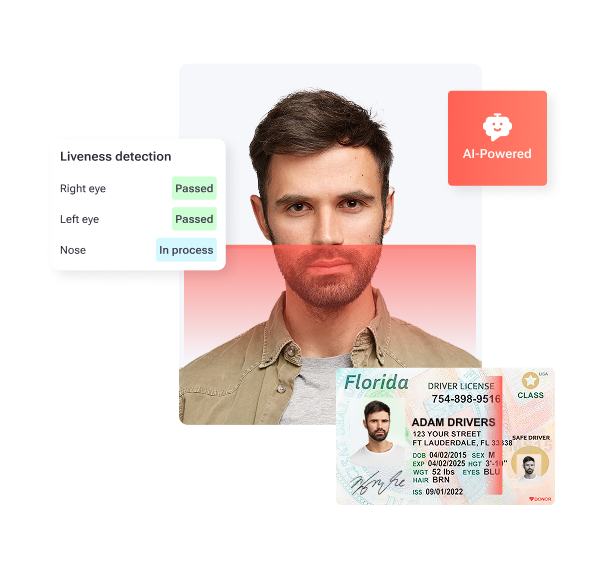
What It Is: IDVerify+ is a biometric identity verification layer embedded natively inside TenantEvaluation’s all-in-one resident screening and onboarding platform, built specifically for Florida condos, HOAs, and management companies.

Key Features:
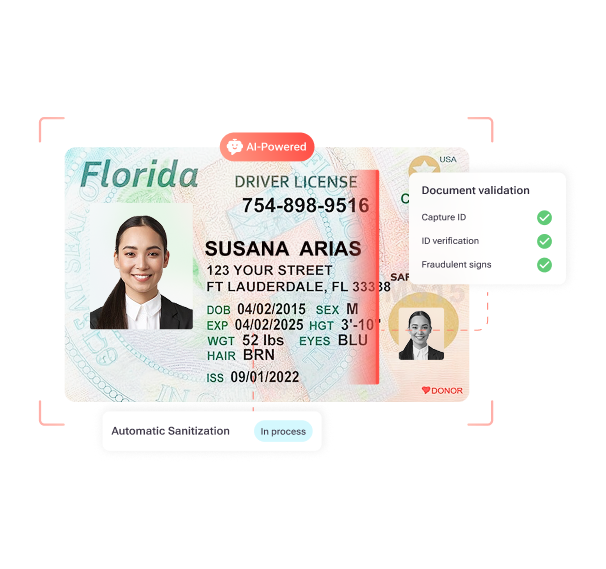
- Government-issued ID validation
- AI-powered liveness detection
- Facial landmark recognition and selfie-to-ID biometric comparison
- Runs entirely within the TenantEvaluation workflow, with no external portals or logins
Why It Ranks #1: IDVerify+ is the only tool on this list built specifically for community associations, with FCRA compliance as the foundation. It strengthens permissible-purpose validation by confirming identity before screening authorization. It can be configured per condo or HOA to match each community’s risk profile. Verification results, including ID authenticity, liveness status, biometric match, and a redacted ID copy, appear directly in the screening report for audit-ready documentation. TenantEvaluation serves thousands of communities and processes a high volume of applications each year as a direct reseller of TransUnion and Equifax data, operating under strict bureau rules with no gray-market data sources.
Best For: Condos, HOAs, and management companies that want a fraud prevention layer integrated into a complete FCRA-compliant onboarding platform.
See IDVerify+ in action with a live demo.
Compared with the tools that follow, IDVerify+ pairs biometric checks with native resident screening workflows and FCRA-first design. The remaining options trade off one or more of these elements.
2. Snappt – Best For Document Fraud Detection
What It Is: An AI-powered document fraud detection platform that analyzes pay stubs and bank statements for tampering.
Why It Ranks #2: Snappt offers strong document forensics for financial documents, but it focuses on pay stubs and bank statements rather than government ID verification and biometric checks. Because it operates as a separate screening layer, not a native part of a community association onboarding platform, it also lacks FCRA-aligned adverse action workflows designed for resident screening.
Best For: Multifamily operators primarily concerned with forged income documents.
Snappt delivers deeper income-document analysis than most tools below it on this list. It still falls short of IDVerify+ for communities that need biometric checks and integrated FCRA workflows.
3. TransUnion Resident ID – Best For Credit Bureau Data Integration
What It Is: An identity verification solution from TransUnion that integrates with tenant screening reports.
Why It Ranks #3: This tool uses powerful credit bureau data for synthetic identity detection. It does not include biometric verification or native integration into a community association’s specific onboarding workflow. It functions as a component rather than a complete solution.
Best For: Organizations already using TransUnion screening products that want to add identity checks.
TransUnion Resident ID aligns closely with Snappt in focus on a single layer of protection. It ranks lower because it lacks the document forensics depth Snappt offers and still does not match the end-to-end design of IDVerify+.
4. Socure – Best For Fintech-Style KYC At Scale
What It Is: A digital identity verification platform using AI and machine learning for KYC compliance.
Key Features: Document verification, biometric liveness, and predictive analytics across more than 200 countries.
Why It Ranks #4: Socure delivers excellent technology for financial services and fintech onboarding. It lacks rental-specific features, community association configurability, and FCRA-aligned adverse action workflows tailored to resident screening.
Best For: Financial institutions, rather than community associations.
Socure introduces strong biometrics that tools like TransUnion Resident ID do not provide. It still trails IDVerify+ because it requires custom integration and does not reflect condo and HOA workflows out of the box.
5. Persona – Best For Highly Customizable Identity Verification
What It Is: A flexible identity verification platform for various industries.
Key Features: Document and biometric verification, workflow automation, and extensive API customization.
Why It Ranks #5: Persona is powerful and customizable, but it requires significant setup and technical resources. It is not designed for the specific compliance and workflow needs of community associations and does not integrate natively with resident screening platforms.
Best For: Tech-savvy organizations with dedicated development teams.
Persona offers more customization than Socure for complex enterprises. It ranks lower because that flexibility comes with higher implementation effort and still lacks purpose-built resident screening features.
6. Alloy – Best For Banking-Grade Compliance Orchestration
What It Is: An identity decisioning platform that orchestrates KYC and KYB checks for financial institutions.
Key Features: More than 150 data sources, case management, and compliance automation.
Why It Ranks #6: Alloy targets banks and fintechs navigating AML and KYC regulations. It is excessive for community associations and lacks rental-specific screening features or FCRA-aligned resident screening workflows.
Best For: Regulated financial institutions.
Alloy provides broad compliance orchestration that exceeds the needs of most condos and HOAs. It sits below Persona because it requires even more orchestration effort for use outside banking.
7. Microblink – Best For Document Forensics Technology
What It Is: An AI-powered document fraud detection SDK that authenticates IDs in seconds.
Key Features: Detects deepfakes, synthetic identities, and document tampering at pixel level and processed 2.9 billion identities in 2025.
Why It Ranks #7: Microblink offers exceptional document forensics technology. It functions as an SDK for developers to build into their own products, not a turnkey solution for community associations. It requires technical integration and does not address FCRA compliance or resident screening workflows.
Best For: Software platforms seeking to embed document verification technology.
Microblink rounds out the list with strong underlying technology. It ranks last because it demands custom product development before a community association can use it effectively.
Comparison Table: Purpose-Built Tools Versus Generic KYC Providers
This comparison table shows how IDVerify+ and other tools stack up against generic KYC providers across the five key criteria. Use it to see at a glance which options align with resident screening needs.
| Feature | TenantEvaluation IDVerify+ | Snappt | TransUnion Resident ID | Generic KYC (Socure, Persona, Alloy) |
|---|---|---|---|---|
| Primary focus | Community association resident screening | Document fraud detection for rentals | Tenant screening identity checks | Financial services KYC compliance |
| Biometric verification | Yes (liveness + selfie-to-ID) | No | No | Yes |
| Document forensics | Yes (government ID validation) | Yes (pay stubs, bank statements) | Limited | Yes |
| Native integration into resident application workflow | Yes (inside TenantEvaluation) | No (separate screening layer) | No (add-on to TransUnion products) | No (requires custom integration) |
| FCRA-compliant design | Yes (FCRA-first, built-in adverse action) | Partial (flags, does not decide) | Yes (via TransUnion) | No (not designed for FCRA resident screening) |
| Configurable per community | Yes (enable per condo/HOA) | No | No | No |
| Best for | Condos, HOAs, management companies | Multifamily operators | TransUnion users | Fintechs, banks |
The table highlights that only TenantEvaluation IDVerify+ combines native integration, biometric checks, and FCRA-first design for community associations. These factors sit at the core of a defensible resident screening program.
Why Native Integration And FCRA Compliance Matter For Communities
Redirecting applicants to third-party verification sites increases drop-off rates. It also scatters PII across multiple systems, creating data security vulnerabilities, and breaks the audit trail that connects identity verification to the screening decision. A fraud prevention tool that operates outside the resident application workflow creates exactly the gaps that sophisticated fraudsters exploit.
Under the FCRA, failure to comply exposes housing providers to actual damages, statutory damages of $100 to $1,000 per violation, punitive damages in willful-violation cases, and attorney’s fees. The FTC’s July 2026 settlement with RentGrow, which included a $2.25 million penalty for FCRA violations, shows that screening vendors and the housing providers who use them face significant enforcement exposure when accuracy and consumer protections are weak.
IDVerify+ strengthens compliance by confirming identity before screening authorization and reinforcing permissible-purpose validation. Verification results are embedded in the screening report, creating an audit-ready record that supports FCRA-aligned workflows and defensible decisions.
Protect your community with a TenantEvaluation demo and see how this approach works in practice.
How To Choose The Right Tool For Your Community: A 5-Step Checklist
Use this checklist to apply the five criteria above to your own community and connect the tool rankings to your day-to-day reality.
- Assess your fraud risk: Review recent applications for red flags such as inconsistent documents, mismatched identities, and suspiciously clean credit files with no depth. High-risk communities need biometric verification in addition to document checks. This assessment clarifies which capabilities matter most for your next step.
- Evaluate integration with your existing onboarding: The tool should work inside your resident application platform, not alongside it. External portals create friction, security gaps, and broken audit trails. Once you confirm integration, you can focus on legal and compliance fit.
- Verify FCRA compliance: Confirm the vendor supports permissible purpose validation, adverse action workflows, and audit trails. Ask about credit bureau reseller status and data sources. After you confirm compliance, consider how the tool will feel for applicants.
- Consider the applicant experience: A verification step that takes minutes and works on mobile devices will not deter qualified applicants. Avoid tools that add significant friction to the application process. With experience addressed, you can fine-tune how the tool fits each community.
- Check configurability: Your community has unique screening standards. The tool should be adaptable to your risk profile and allow per-community settings rather than forcing a single global policy.
Common pitfalls to avoid:
- Using generic KYC tools designed for financial services that lack rental-specific features and FCRA compliance.
- Relying on document uploads alone without biometric verification, even as AI-generated forgeries improve.
- Ignoring compliance requirements until a dispute or enforcement action forces the issue.
Frequently Asked Questions
What Is The Difference Between Identity Verification And Background Checks?
Identity verification confirms that the applicant is who they claim to be, using government ID validation, liveness detection, and biometric facial matching. Background checks investigate an applicant’s history, covering credit, criminal records, evictions, and employment. Both play essential roles in resident screening, but they answer different questions. Identity verification prevents fraud at the point of entry. Background checks assess risk based on past behavior. TenantEvaluation’s platform combines both within a single FCRA-compliant workflow, so communities avoid juggling separate vendors.
Can Generic Identity Theft Protection Tools Protect My Community?
Consumer identity theft protection services like Aura and LifeLock monitor personal credit and alert subscribers to suspicious activity after the fact. They do not verify the identity of a rental applicant at the point of application. Community associations need a purpose-built tool that validates government IDs, confirms liveness, and matches biometric data inside the resident application workflow before an approval decision. Generic consumer tools lack mechanisms to perform this function and are not designed for FCRA-regulated screening environments.
What Is Synthetic Identity Fraud, And Why Is It A Threat To Condos And HOAs?
Synthetic identity fraud combines a real Social Security number, often stolen from children, the elderly, or the deceased, with fabricated name, address, and employment data to create a composite identity. Fraudsters build a credible credit history over months or years before using it to pass a resident screening. Estimated losses from synthetic identity fraud are projected to reach at least $23 billion annually in the U.S. by 2030. These identities are nearly impossible to detect with document-based screening alone because they can produce legitimate-looking credit files. Biometric verification and cross-referencing against fraud networks are required to surface them reliably.
What Makes FCRA Compliance Non-Negotiable When Selecting A Fraud Prevention Tool?
Under the FCRA, any output from an identity fraud prevention tool that influences a resident screening decision becomes part of a consumer report workflow. That status triggers specific legal obligations, including permissible purpose validation before pulling data, clear disclosure and written authorization from the applicant, and adverse action notices when a report contributes to a denial or less-favorable outcome. A fraud prevention tool that does not support these obligations, or that operates outside the screening workflow where these records are maintained, creates direct liability exposure for the community association and its management company. The RentGrow enforcement action discussed earlier illustrates the real cost of compliance gaps in screening vendor relationships.
How Does IDVerify+ Differ From Other Identity Verification Tools On This List?
IDVerify+ is the only tool on this list designed exclusively for community associations. It combines government ID validation, AI-powered liveness detection, and biometric facial matching inside the TenantEvaluation platform, eliminating external portals, separate logins, and broken audit trails. Verification results appear directly in the screening report alongside background check data, creating a single, audit-ready record. It can be enabled per condo or HOA and configured to match each community’s risk profile. Other tools on this list were built for different primary markets, such as multifamily operators, financial institutions, or software developers, and require adaptation to fit a community association’s compliance and workflow requirements.
Conclusion
Identity fraud in resident applications has become an industrialized threat that cost the real estate sector hundreds of millions of dollars in reported losses in 2025. Generic identity theft tools and document-based screening cannot reliably stop synthetic identities, AI-generated forgeries, and impersonation. Community associations now need a purpose-built fraud prevention tool that verifies identity at the point of application, integrates natively into existing workflows, and supports FCRA compliance.
TenantEvaluation IDVerify+ is the only solution on this list designed specifically for community associations, combining government ID validation, AI-powered liveness detection, and biometric facial matching inside a FCRA-first onboarding platform. It strengthens approval confidence and reduces liability exposure while adapting to each community’s risk profile.
Get a personalized demo to see how IDVerify+ can help protect your community from identity fraud.
