Written by: Luis Teran, Co-founder, CEO, TenantEvaluation | Last updated: September 6, 2026
Key Takeaways
- Identity fraud is surging in Florida condo and HOA communities, with AI-generated document fraud rising 500% in 2025 and 1 in 8 rental applications containing fraudulent income documentation.
- FTC enforcement actions against RentGrow ($2.25M) and AppFolio ($4.25M) show that FCRA compliance failures in tenant screening carry severe financial and regulatory consequences.
- Compliance-focused tenant verification embeds fraud detection within FCRA guardrails and separates fraud detection (identity confirmation) from eligibility determination (qualification assessment) to reduce liability.
- Essential features include permissible purpose controls, automated adverse action workflows, complete audit trails, and direct credit bureau data sources rather than gray-market alternatives.
See how TenantEvaluation’s compliance-first verification platform protects your community.
The Twin Crisis Facing Florida Community Associations
Florida condo and HOA communities now face a combined crisis of rising identity fraud and stricter regulatory scrutiny. Snappt’s analysis of more than 14 million rental documents estimates that roughly 1 in 8 rental applications contains fraudulent income documentation, with fake pay stubs cited as the most commonly forged document. AI-generated document fraud rose approximately 500% in 2025, so the fabricated pay stub or bank statement arriving in your inbox today may look identical to a legitimate one.
The stakes extend well beyond fraud losses. In July 2026, the FTC announced that RentGrow agreed to pay $2.25 million to settle allegations that it violated the Fair Credit Reporting Act (FCRA) by failing to use reasonable procedures to ensure maximum possible accuracy, including allowing duplicate criminal and eviction records to appear in tenant screening reports. Regulators now actively enforce FCRA compliance in tenant screening, and the consequences of non-compliance are severe.
This guide connects modern fraud detection technology with regulatory requirements and gives Community Association Managers (CAMs), Licensed Community Association Managers (LCAMs), and board members a practical framework for evaluating tenant verification systems in 2026.
Explore how compliance-first verification can strengthen your community’s screening process.
The Problem: Fraud And Compliance Risk In Community Associations
The Fraud Epidemic
Modern application fraud has moved far beyond a crudely altered pay stub. The average rental housing provider writes off nearly $1 million in bad debt due to fraudulent rental applications, according to TransUnion research. The NMHC 2024 Pulse Survey found that 93.3% of apartment operators experienced some form of fraudulent activity, with falsified or fabricated income documentation as the most common tactic.
Synthetic identities now combine fragments of real data with AI-generated pay stubs, fake rental records, and phone numbers that pass carrier lookups. These identities slip through screening workflows that were designed for a different era. Thirty-eight percent of property managers do not discover rental application fraud until after the resident has moved in, when removal requires a costly eviction process.
The Regulatory Crackdown
The FTC’s July 2026 complaint against RentGrow alleged that the company failed to disclose all information sources, including LexisNexis Accurint, used to match criminal and eviction records. This failure made it harder for consumers to dispute inaccuracies. RentGrow also allegedly misled consumers about dispute outcomes, telling some that property managers had been notified of successful disputes when RentGrow told property owners there was no change.
The AppFolio precedent reinforces this pattern. The FTC’s December 2020 settlement with AppFolio, valued at $4.25 million, alleged FCRA violations for tenant screening reports that included criminal records belonging to different individuals, eviction records older than seven years, and records with missing or incorrect disposition information.
Generic screening tools that bolt on fraud detection without FCRA guardrails create compounded risk. Inaccurate fraud signals can produce inaccurate reports, trigger adverse action violations, and expose associations to liability on two fronts at the same time.
Compliance-Focused Tenant Verification Explained
Tenant screening reports qualify as consumer reports under the FCRA, and screening companies operate as consumer reporting agencies subject to the same duties as credit bureaus. A compliance-focused tenant verification system builds fraud detection directly inside FCRA guardrails instead of treating compliance as a separate layer.
Document Authentication
Document authentication scans PDFs and images for metadata tampering, editing software artifacts, and fabricated pay stubs. For compliance, authentication must remain accurate enough to avoid false positives that could create discriminatory outcomes. A flagged legitimate document from a small-business owner or gig worker can create fair housing exposure if it triggers an automatic denial.
Biometric Verification
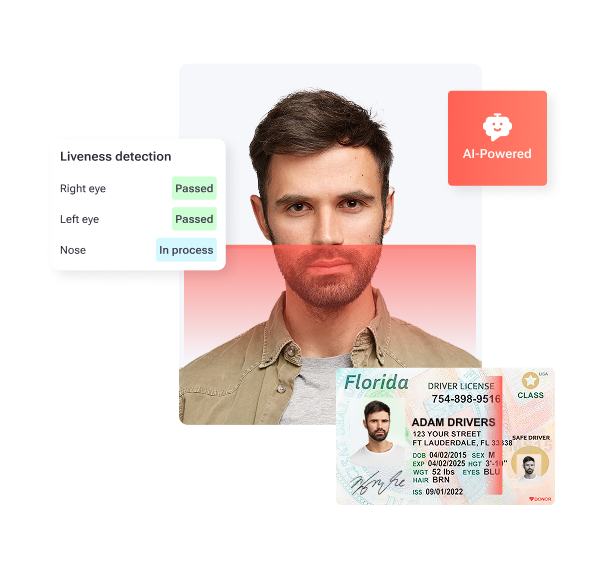
Biometric verification uses facial matching and liveness detection against government-issued IDs to block synthetic identities and impersonators. From a compliance standpoint, biometric verification strengthens permissible-purpose validation by confirming identity before screening authorization. The applicant’s identity is confirmed before any consumer report is pulled.
Automated Income Analysis
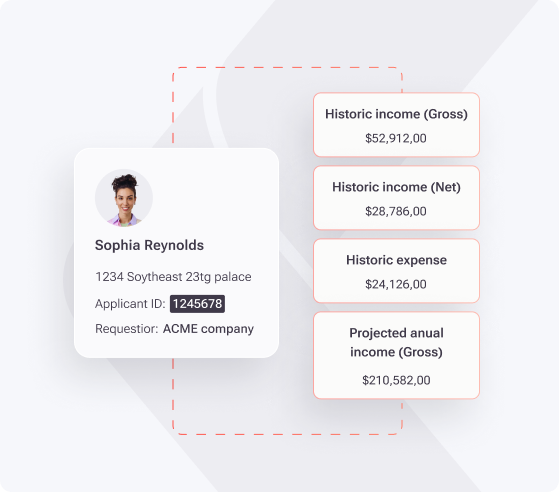
Direct-source income verification connects to payroll and bank verification feeds to confirm true financial stability and move beyond self-reported data. Because falsified pay stubs are the most common fraud tactic mentioned earlier, direct-source verification provides the strongest countermeasure against that dominant vector.
Regulatory Compliance
Built-in adverse action workflows, permissible purpose controls, and audit trails form the architecture that makes fraud detection legally defensible. Without these features, a fraud flag that influences a denial decision can trigger FCRA adverse action violations even when the underlying fraud detection is accurate.
Fraud Detection Vs. Eligibility Determination: The Critical Distinction
This distinction often gets ignored by generic screening tools and frequently creates liability for community associations.
Fraud Detection identifies whether the applicant is who they claim to be. A fraud flag signals that further verification is warranted and does not automatically disqualify the applicant.
Eligibility Determination assesses whether the applicant meets the community’s criteria, including credit score, income ratio, rental history, and criminal background.
HUD’s Office of Fair Housing and Equal Opportunity issued formal guidance on May 2, 2024, confirming that the Fair Housing Act applies in full to tenant screening that uses AI, machine-learning models, and algorithmic decision tools. Housing providers remain liable for discriminatory outcomes even when they fully outsource screening. Treating fraud alerts as automatic disqualifiers can create fair housing exposure and violate FCRA adverse action requirements. Fraud flags should route into a human review step, and only the final housing decision should trigger adverse action steps.
How Tenant Verification Systems Detect Fraud
To support that human review step, modern compliance-focused systems use a multi-layer approach rather than relying on any single signal. Document authentication catches metadata tampering and editing artifacts, while biometric verification confirms physical identity through liveness detection and facial landmark recognition. Income verification connects directly to payroll sources to bypass the document fraud vector entirely, and database checks identify inconsistencies across criminal, eviction, and credit records.
The 500% rise in AI-generated fraud noted earlier makes traditional forensic markers unreliable. A convincing fake pay stub can now be produced in under 60 seconds with correct employer information, accurate tax calculations, and metadata consistent with the claimed payroll system. This evolution makes biometric identity confirmation, rather than document review, the reliable anchor of a fraud-resistant screening workflow.
Core FCRA Compliance Requirements For Screening Systems
FCRA compliance requires reasonable procedures to ensure maximum possible accuracy, proper permissible purpose controls, adverse action workflows, source disclosures, and dispute handling. A landlord must first provide a clear, standalone disclosure that a background report will be obtained and obtain the applicant’s written authorization; burying this permission inside the lease or general application does not satisfy the requirement.
The RentGrow settlement illustrates what happens when these procedures fail. RentGrow was aware of duplicate record problems but failed to implement reasonable procedures until the FTC began investigating. The FCRA governs how data is handled, not whether the applicant is a good tenant, and that distinction applies equally to fraud detection features embedded in screening workflows.
The Compliance Guardrails: Non-Negotiable Features
A compliance-focused tenant verification system must include the following structural features:
- Permissible Purpose Controls: The FCRA requires a clear, standalone disclosure and written authorization before obtaining a consumer report. Systems must verify the requester’s legitimate reason before any data is accessed.
- Adverse Action Workflows: A compliant FCRA adverse action notice must include the name, address, and phone number of the consumer reporting agency, a statement that the CRA did not make the decision, and notice of the applicant’s right to dispute the information and to obtain a free copy of the report within 60 days. Pre-adverse action notice with a copy of the report and Summary of Rights must precede the final decision, with a reasonable waiting period.
- Audit Trails: Every action must be timestamped and documented. Audit trails are essential for defending decisions and demonstrating compliance in the event of a dispute or regulatory inquiry.
- Separation Of Decision-Making And Data Provision: The vendor provides data, and the association makes the decision. This separation is fundamental to FCRA compliance and protects associations from liability.
A practical pre-vendor checklist for CAMs and boards:
- Does the system provide a standalone FCRA disclosure and obtain written authorization?
- Does it include automated pre-adverse and adverse action workflows?
- Does it maintain complete audit trails for every application?
- Does it clearly separate data provision from decision-making?
- Does it use direct credit bureau data sources, rather than gray-market or offshore data?
- Is it designed specifically for community associations, or adapted from a generic rental tool?
- How does it distinguish fraud detection from eligibility determination?
TenantEvaluation: Compliance-First Platform For Community Associations
TenantEvaluation is built specifically for community associations and management companies, with FCRA compliance as the foundation. Serving 5,000+ communities and processing 100k+ applications annually with a 4.8/5 Google rating, TenantEvaluation delivers a unified compliance-and-fraud-detection approach that generic screening tools cannot match.
As a legitimate reseller of TransUnion and Equifax data, accessed under strict bureau rules with regular compliance reviews and audits, TenantEvaluation removes the gray-market and offshore data risks that have generated FTC enforcement actions against competitors. The platform’s structural features include strict permissible purpose controls, automated adverse action workflows, built-in audit trails, and a clear separation between data provision (TenantEvaluation) and decision-making (the association). These are not add-ons.
IDVerify+: Biometric Identity Verification
IDVerify+ is a biometric identity verification layer with native platform integration directly inside the TenantEvaluation screening workflow, so teams avoid external portals and workflow disruption. It provides multi-layer fraud prevention through government ID validation, AI-powered liveness detection, and biometric facial matching, all designed for community association risk. IDVerify+ is configurable per community, allowing each condo or HOA to adapt the verification layer to its specific risk profile. It strengthens permissible-purpose validation by confirming identity before screening authorization and reinforces FCRA-aligned workflows and audit defensibility.
QuickApprove: Accelerated Approval Workflow
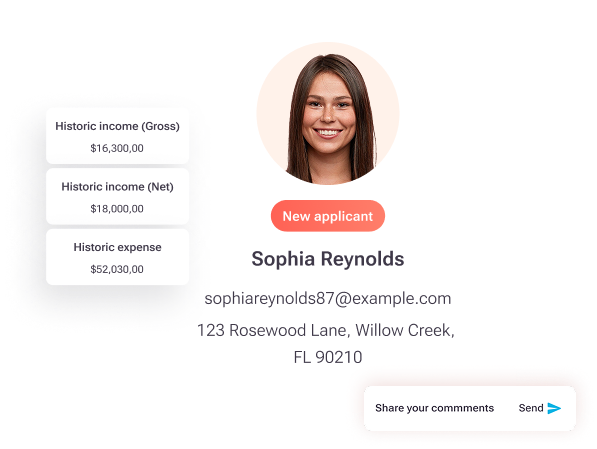
QuickApprove accelerates resident approvals for CAMs, boards, and property management teams inside one connected platform. It delivers real-time application tracking, reduces manual follow-ups, and provides a board-ready approval process with automated communication support, customized approval letters, and a personalized welcome package. Approvals become faster, clearer, more consistent, and easier to manage while maintaining control, compliance, and visibility.
Get a demo of TenantEvaluation’s compliance-first fraud detection in action.
TenantEvaluation Vs. Generic Screening Tools
The table below summarizes how TenantEvaluation’s compliance-first design compares with generic screening tools across the features that matter most for community associations.
| Feature | TenantEvaluation | Generic Screening Tools (e.g., AppFolio, Buildium) |
|---|---|---|
| Specialization | Built specifically for community associations (condos, HOAs) | Generic rentals or broad property management |
| FCRA Compliance | FCRA-first design, direct TransUnion and Equifax reseller | Varies; AppFolio settled FTC FCRA case for $4.25M in December 2020 |
| Biometric Verification | IDVerify+ native platform integration | Limited or redirects to external portals |
| Board Dashboard | Dedicated board review and voting panel with real-time visibility | Limited or no board-specific access |
| Revenue Model | Pay-per-application with revenue-sharing back to the association | Monthly subscriptions or fixed pricing |
Frequently Asked Questions
What Are The Key FCRA Compliance Requirements?
A compliant system must maintain reasonable procedures to ensure maximum possible accuracy, provide permissible purpose controls that verify the requester’s legitimate reason before any data is accessed, include pre-adverse and adverse action workflows with the required notices and waiting periods, disclose all information sources used to compile a report, and handle consumer disputes within the statutory timeframe. The RentGrow settlement mentioned earlier demonstrates the consequences of failing these obligations, including penalties for duplicate records, undisclosed data sources, and misleading dispute communications. FCRA compliance must serve as the structural foundation of a screening system, not a late-stage add-on.
How Do Tenant Verification Systems Detect Fraud?
Modern compliance-focused systems use a layered approach. Document authentication detects metadata tampering, editing software artifacts, and fabricated financial documents. Biometric verification uses liveness detection and facial matching against government-issued IDs to confirm physical identity and block synthetic identities. Automated income analysis connects directly to payroll or bank verification feeds to bypass the document fraud vector entirely. Database checks cross-reference criminal, eviction, and credit records for inconsistencies. No single layer is sufficient on its own, because AI-generated documents have removed many forensic markers that document review once relied on, making biometric identity confirmation the most reliable anchor in a modern fraud-resistant workflow.
Does AppFolio Report To Credit Bureaus?
AppFolio’s screening integrates with TransUnion for credit checks as part of its property management platform. However, AppFolio reached a $4.25 million FTC settlement in December 2020 over FCRA accuracy failures, including criminal records belonging to different individuals and eviction records older than seven years appearing in tenant screening reports. A separate private class action reached a $4.5 million settlement in 2019 after a plaintiff was denied housing due to an eviction record belonging to a different person. These cases show that integration with a credit bureau does not by itself ensure FCRA compliance. Accuracy procedures, matching logic, and dispute workflows surrounding that integration carry equal importance.
What Is The Difference Between Fraud Detection And Eligibility Determination?
Fraud detection identifies whether the applicant is who they claim to be, which is an identity question. Eligibility determination assesses whether the applicant meets the community’s criteria, such as credit score, income ratio, rental history, and criminal background, which is a qualification question. These two functions must remain structurally separate in a compliant screening workflow. A fraud alert should route the application into a human review step for further verification instead of triggering an automatic denial. Treating fraud flags as automatic disqualifiers can create fair housing exposure under HUD’s May 2024 guidance on AI-assisted screening and can violate FCRA adverse action requirements, because the denial decision and the adverse action notice it triggers must rely on accurate, permissible information reviewed by a human decision-maker.
Why Is Biometric Verification Important For HOAs And Condos?
Community associations face a specific fraud risk profile that generic rental screening tools rarely address. Synthetic identities constructed from fragments of real data, stolen IDs used by impersonators, and AI-generated identity packages that pass document review all present threats that document-based screening cannot reliably catch. Biometric verification confirms physical identity through liveness detection, which blocks video and photo spoofing, and facial landmark matching against a government-issued ID, ensuring the person submitting the application is the person named in it. For HOA and condo boards, this provides a defensible, objective identity confirmation that strengthens approval confidence and reduces liability exposure before a resident enters the community. It also reinforces FCRA-aligned workflows by confirming identity before screening authorization.
Conclusion: Unifying Fraud Detection And Compliance
Fraud is rising, and regulatory enforcement is intensifying. The July 2026 RentGrow settlement and the December 2020 AppFolio settlement are part of a sustained FTC focus on FCRA accuracy in tenant screening. Generic screening tools that treat fraud detection and compliance as separate concerns create unacceptable risk for Florida community associations operating in this environment.
Compliance-focused tenant verification systems with fraud detection unify both imperatives. Biometric identity confirmation through IDVerify+, accelerated board-ready approvals through QuickApprove, direct credit bureau reseller relationships, built-in adverse action workflows, and complete audit trails all operate inside one platform built specifically for community associations.
