Written by: Luis Teran, Co-founder, CEO, TenantEvaluation
Key Takeaways
- Community association manager certification follows a three-step ladder: Cmca first, then Ams after two years, and Pcam after five years plus a case study.
- The Cmca is a voluntary national certification administered by Camicb, while state CAM licenses are separate legal requirements in seven states including Florida and Illinois.
- Certified managers earn roughly 20% more on average, and the full credential path requires time, coursework, and renewal fees every two to three years.
- Certification signals professional standards in screening, approvals, and compliance documentation that go beyond minimum legal requirements.
The Credential Ladder: Cmca, Ams, And Pcam In Order
Community association manager certification follows a clear career sequence. Each credential builds on the one before it, and candidates move through the ladder step by step. The table below shows how the three rungs differ on the details managers ask about most: who administers each credential, what you need before you can apply, and how often you must renew.
| Credential | Administering Body | Core Prerequisite | Renewal Cycle |
|---|---|---|---|
| Cmca | Camicb | Approved pre-exam course (e.g., M-100) or qualifying experience/state license | 2 years |
| Ams | Cai | Active Cmca + 2+ years management experience + Cai coursework | 3 years |
| Pcam | Cai | Active Ams + 5+ years management experience + case study | 3 years |
Cmca — The Starting Point. The Cmca is the first credential to pursue, and Camicb administers it as an independent nonprofit accredited by the National Commission for Certifying Agencies and ANSI under ISO Standard 17024. That accreditation allows the Cmca to function as a recognized baseline. Candidates qualify through an approved pre-exam education course such as Cai’s M-100, through documented qualifying experience, or through a qualifying state license. Once earned, the Cmca unlocks eligibility for the Ams and signals foundational competency to employers and boards.
Ams — After Two Years Of Experience. The Ams requires an active Cmca, at least two years of community association management experience, and completion of Cai coursework in areas such as facilities management, communications, and financial management. Candidates submit the Ams application to Cai’s Credentialing Department with documentation of employment history and completed coursework.
Pcam — After Five Years Of Experience. The Pcam requires active Ams standing and at least five years of full-time community association management experience. Candidates also complete advanced Cai M-200 series coursework in law, communications, operations, and asset protection, then earn a passing score on a comprehensive case study of a selected community. As of August 2026, approximately 1,950 active managers hold the Pcam designation nationally. The case study is subject to panel review, and approval is not automatic.
See how a platform built for community associations supports credentialed managers.
Before managers reach the advanced Ams and Pcam levels, every candidate faces the same first hurdle: the Cmca exam itself.
How Hard Is The Cmca Certification Exam, And What Does It Cost?
The Cmca exam is 2.5 hours long, consists of 120 multiple-choice questions, and is delivered through Pearson Vue at proctored locations, with a total first-year cost around $360. Recertification occurs every two years and requires 16 hours of continuing education plus an annual service fee.
There are three recognized pathways to Cmca exam eligibility:
- Education Pathway: Complete a Camicb-approved pre-exam course, most commonly Cai’s M-100.
- Experience Pathway: Document at least two years of qualifying community association management experience, which may waive the course requirement.
- State-License Pathway: Hold a qualifying state license, such as a Florida Cam license, which Camicb recognizes as an alternative eligibility route.
The exam process itself follows a standard sequence:
- Confirm eligibility through one of the three pathways above.
- Submit a Cmca application to Camicb.
- Register for an exam appointment through Pearson Vue.
- Sit for the 2.5-hour, 120-question proctored exam.
- Receive results and, upon passing, activate the Cmca credential.
The Cmca is a proctored, knowledge-based exam that rewards structured study. It covers financial management, risk management, legal concepts, governance, and ethics. Candidates who complete an approved course and review the Camicb body of knowledge place themselves in a strong position to pass.
Do You Need A State License Or A National Certification?
A state Cam license and a national certification are separate requirements that serve different purposes. The two credentials are independent: a state license is required where the law requires it, and the Cmca is a separate professional certification that does not satisfy that legal requirement.
As of mid-2025, seven states require a license to practice as a community association manager: Alaska, Connecticut, Florida, Georgia, Illinois, Nevada, and Virginia. Each state’s licensing regime is governed by its own regulatory body and statute.
Florida illustrates the relationship clearly. Florida Statute 468.431 requires a Cam license for anyone who manages a community association with more than 10 units or an annual budget exceeding $100,000. The license is issued by the Florida Department of Business and Professional Regulation (Dbpr). The Florida Cam license sets the legal baseline. National certification such as the Cmca, Ams, or Pcam sits on top of that baseline as a professional credential. A Florida manager who holds only the Cmca lacks legal authorization to practice. A Florida manager who holds only the state license has legal authorization but has not demonstrated the national body of knowledge.
This article provides factual context only and does not constitute legal advice. Managers should confirm current requirements directly with their state regulatory body.
Cmca Versus Cam License In Practice
The Cam license provides legal authorization to practice community association management in states that require it. The Cmca functions as a voluntary professional certification that signals mastery of the national body of knowledge for community association management. The Florida Cam license sets the baseline legal requirement, while Cai designations represent higher levels of education, experience, and demonstrated expertise beyond the state license. In Illinois, the relationship differs: the Cmca examination is approved as the state licensing exam, so the national certification exam doubles as the state licensure exam there. State-by-state rules vary, and managers should verify the relationship between national certification and state licensure in their specific jurisdiction.
Is Community Association Manager Certification Worth It?
The Foundation for Community Association Research’s compensation survey found that Cmca-certified community association managers earn roughly 20% more on average than managers without the credential. Industry professionals report that Cai credentials translate into higher pay, more responsibility, and stronger career positioning.
The full credential ladder carries a real cost in time and money. The Cmca exam alone runs approximately $360 for the first year, and Ams and Pcam add coursework fees, application costs, and for the Pcam, the time investment of a comprehensive case study. That total is often larger than managers expect, which makes employer funding important. Under IRS Section 127, employers can provide up to $5,250 per year in tax-free educational assistance, covering tuition, fees, books, and supplies. Managers making a business case for that funding should check their employee handbook for professional development or tuition reimbursement policies and request pre-approval before enrolling.
Certification is an investment whose return depends on the manager’s market, portfolio, and follow-through. The payoff shows up in credibility with boards, employer preference, and long-term career trajectory when managers apply the credential in daily operations.
Entry Paths For New Community Association Managers
The most direct entry path is an entry-level role at a management company, such as administrative coordinator, assistant manager, or portfolio support, where on-the-job experience accumulates toward Cmca eligibility. In Florida, a parallel track involves completing the 16-hour Dbpr-approved pre-licensure course and passing the Florida Cam licensing exam through Pearson Vue. That path establishes the legal baseline and can also satisfy Cmca eligibility requirements.
Searches for “free” or “fully online” community association manager certification reflect a real desire to reduce cost and friction. The Cmca requires a proctored exam, a prerequisite course or documented experience, and ongoing renewal fees. Shortcuts that promise a recognized credential without these steps do not exist. Candidates who understand this early can plan a realistic budget and timeline instead of discovering gaps mid-process.
What Certification Actually Changes On The Job
A credentialed Cam is held to a higher operational standard than the legal minimum. That standard appears most clearly in three areas: resident screening, board approvals, and compliance documentation.
On screening, a certified manager applies consistent, written criteria to every applicant, obtains proper written authorization before pulling a consumer report, and follows the Fcra’s two-step adverse action process: pre-adverse notice, waiting period, and final adverse action notice when a report contributes to a denial. When an Hoa orders a credit report, criminal-history report, or eviction search from a consumer reporting agency, it needs a permissible purpose under the Fcra and written authorization from the applicant. If the report contributes to a denial, the association must send an adverse-action notice that includes the consumer reporting agency’s name, address, and phone number. A credentialed manager knows this workflow and documents it.
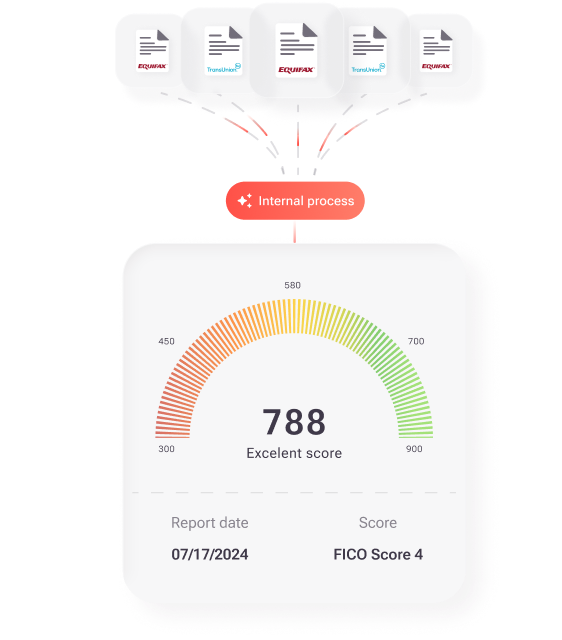
On approvals, a certified manager maintains audit-ready records. That record includes the written criteria in force on the application date, the completed application, the screening report, what was independently verified, and the final decision with the specific criterion it turned on. If this record lives in a manager’s email and that manager leaves, the association loses the ability to explain the decision. That record-keeping burden is where many credentialed managers struggle to maintain the standard they were trained to meet.
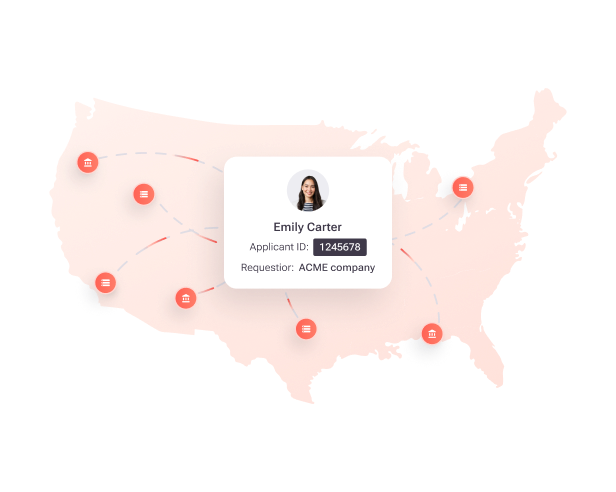
TenantEvaluation focuses on that gap. It is a platform for community associations and management companies that lets credentialed managers meet this standard in practice. Serving 5,000+ communities with roughly 100,000 applications processed annually, TenantEvaluation is an all-in-one resident screening and onboarding platform built around Fcra compliance from the ground up. It is a direct reseller of TransUnion and Equifax data, with built-in adverse action workflows, automatic redaction of sensitive information, and complete audit trails for every application.

QuickApprove, TenantEvaluation’s accelerated approval workflow, gives Cams and boards a connected, board-ready approval process. It includes real-time application tracking, automated communication support, customized approval letters, and a personalized welcome package, all without losing control, compliance, or visibility. Idverify+ adds biometric identity verification inside the screening workflow, using Ai-powered liveness detection, government Id validation, and biometric facial matching to move communities from document-based review to verified physical identity confirmation.

See how TenantEvaluation supports the operational standard your credential signals.
Ccam And State-Specific Alternatives
The California Certified Community Association Manager (Ccam) is a state-specific credential administered by the California Association of Community Managers (Cacm). It offers a focused pathway for managers practicing primarily in California, with its own education, exam, and experience requirements distinct from the Cmca-Ams-Pcam ladder. California runs a voluntary rather than mandatory licensure program, so the Ccam functions as a professional credential rather than a legal requirement.
Other states may have their own designations, registration requirements, or license regimes that sit alongside or partially overlap with national credentials. Managers operating across state lines should confirm the specific requirements of each jurisdiction with the relevant regulatory body before representing their credential status to clients or employers.
Frequently Asked Questions
How Much Does Community Association Manager Certification Cost Overall?
The Cmca’s total first-year cost runs approximately $360, including the application fee and exam, plus the cost of a prerequisite course such as the M-100. Ams and Pcam add Cai coursework fees, application costs, and for the Pcam, the time and potential travel cost of the case study process. Many employers fund some or all of these costs through professional development budgets or tuition reimbursement programs.
Is A Cam License Worth It Financially?
In states that require it, including Florida, Illinois, Nevada, and Virginia, a Cam license functions as the legal baseline for compensated practice. Beyond that legal requirement, the earnings premium noted earlier, roughly 20% for Cmca holders, forms the main financial argument for pairing licensure with national certification. Managers also gain credibility with boards and employers when they hold both.
How Do New Managers Start Without Prior Experience?
The most direct path is an entry-level role at a management company, such as administrative coordinator, assistant manager, or portfolio support, where experience accumulates toward Cmca eligibility. In Florida, completing the 16-hour Dbpr-approved pre-licensure course and passing the state Cam exam establishes the legal baseline and can satisfy Cmca eligibility requirements at the same time. Candidates should budget for the prerequisite course, exam fee, and renewal costs from the start.
How Do State Licenses And National Certifications Work Together?
Both may apply, and they serve different purposes. A state Cam license provides legal authorization to practice in states that require it. National certification such as the Cmca, Ams, or Pcam signals mastery of the national body of knowledge. Florida managers, for example, rely on the state license for legal compliance and on national certification to demonstrate professional credentialing to boards and employers.
What Are Ams And Pcam Requirements At A Glance?
The Ams requires an active Cmca, at least two years of community association management experience, and completion of Cai coursework, typically at least two to three Cai courses. The Pcam requires active Ams standing, at least five years of full-time management experience, advanced Cai M-200 coursework, and a passing score on a comprehensive case study of a selected community reviewed by a Cai panel. Both renew on a three-year cycle through continuing education.
Conclusion: Plan Your Next Credential Step
The community association manager certification ladder runs in one direction: Cmca first, Ams after the required two or more years of management experience, and Pcam after the required five or more years. State licensing follows a separate track that runs in parallel as a legal requirement in states like Florida, Illinois, Nevada, and Virginia.
The credential signals a professional standard. Meeting that standard on the job, in screening workflows, board approvals, adverse action documentation, and audit-ready records, requires the right operational platform. TenantEvaluation is built specifically for community associations and management companies and helps credentialed managers put professional standards into practice every day.
See how TenantEvaluation turns credential standards into daily workflow.
