Written by: Luis Teran, Co-founder, CEO, TenantEvaluation
Key Takeaways
- A community association management contract is a legally binding agreement governed by Florida Statutes §§718.3025 and 720.3055 that defines duties, fees, and operational rules between an association board and a management company.
- Boards should evaluate every clause by one standard: whether it protects the association or the manager, and negotiate terms that keep operational control in the association’s hands.
- Key provisions to scrutinize include term length and auto-renewal, termination rights with symmetrical notice and cure periods, complete fee structures with transparent rate cards, clear scope of services, and explicit records-ownership language.
- Florida law requires specific written elements in management contracts and requires that association records be returned within 20 business days, so strong contract language helps avoid disputes and delays.
- See how TenantEvaluation keeps board records and workflows in association hands so operational control stays with the board, even when managers change.
How To Read Community Association Management Contract Terms: A Clause-By-Clause Walkthrough
Each clause below follows a consistent three-part structure: what the clause says, what a bad version looks like, and what the board should push for. Read every clause against this framework before signing or renewing.
1. Term, Auto-Renewal, And The Declaration/Bylaws Cap
What It Says: The term clause sets how long the contract runs and whether it renews automatically.
Bad Version: A multi-year term with an evergreen auto-renewal and a narrow 60–90 day opt-out window. Missing that window by a week can lock the association in for another year regardless of board dissatisfaction.
What To Push For: Check the declaration and bylaws first, because they may cap how long the contract can run. Florida Statute §720.3055(2)(a)2 permits a management contract made by competitive bid to run up to three years. That ceiling does not create a target term. When both sides want to continue on the same terms, a short written addendum extending the term is a cleaner solution than relying on an automatic rollover.
2. Termination For Cause Vs. Without Cause, Notice, Cure Rights, And Early-Termination Fees
What It Says: The termination clause explains how either party ends the contract.
Bad Version: Termination only for cause, a vague cause definition, no cure period, a long notice period, or an early-termination fee equal to several months of fees. Some HOA management contracts impose early termination fees equal to 3–6 months of management fees. A contract with no cure period allows immediate termination for even a minor breach, which creates risk for both sides.
What To Push For: A without-cause path with symmetrical notice, a defined cure period of 10–30 days, and no steep kill fee. For Florida HOA management agreements, terminating without cause is the customary market standard. Agreements limited to termination for cause often trigger disputes over whether cause existed or was cured.
3. Fee Structure And The Extra-Charge Schedule
What It Says: The fee clause sets the base fee and every charge beyond it.
Bad Version: A low headline base fee with per-action charges buried in an attachment. Common add-on fees include extra board meeting attendance ($75–$200 per meeting), violation notice letters ($5–$15 per letter), annual meeting management ($250–$750+ per year), and setup/onboarding fees ($500–$2,000+). A Florida management fee typically ranges from $10 to $30 per unit per month, yet the base quote alone can understate total cost substantially.
What To Push For: The full rate card in writing before signing, and a total annual cost model rather than a monthly comparison. Two proposals with identical monthly fees can differ substantially once ancillary charges are accounted for.
4. Scope Of Services, Including What Is Explicitly Excluded
What It Says: The scope clause lists what the manager does.
Bad Version: A broad inclusions list paired with a long “not included” list that surprises the board later. Under Florida Statute §718.3025(3), any services or obligations not stated on the face of the contract are unenforceable. Verbal side agreements carry no legal weight.
What To Push For: Read the exclusions as carefully as the inclusions. If the board expects a service, add it in writing. If the answer to a scope question is not in the document, it is not in the agreement.
5. Records, Data, And Portal Ownership Plus Transition Obligations On Exit
What It Says: The records clause decides who owns association files, portal data, and applicant records when the relationship ends.
Bad Version: Silence on ownership, a records-handover fee, or portal access tied to the manager’s platform. Florida Statute §468.4334(4) requires a community association manager to return all association records within 20 business days after termination or a written request. A weak contract clause can still create friction around format, fees, and portal access.
What To Push For: Plain language that records belong to the association, a defined return timeline in a usable electronic format, and no fee conditioning the handover. Association records, funds, login credentials, financial information, contracts, owner ledgers, and governance documents should never be held back as leverage when a management contract ends.
6. Insurance, Indemnification, And The Limit On Indemnifying The Manager
What It Says: The indemnification clause decides who covers certain claims.
Bad Version: Broad association indemnity that covers the manager’s own negligence, plus a damages cap of a few months of fees. Some management agreements ask the association to indemnify the management company broadly, including for the company’s own negligence.
What To Push For: The association should avoid indemnifying the manager for its own negligence. A certificate of insurance does not make the association an additional insured on a vendor’s policy, because only a policy endorsement issued by the carrier actually transfers that risk. Verify coverage with association counsel before signing.
7. Board Authority, Spending Limits, And Conflict-Of-Interest Or Vendor-Rebate Disclosure
What It Says: The board authority clause confirms the manager acts as an agent and the elected board keeps final decision-making power.
Bad Version: Vague spending authority, no dollar threshold for board approval, and no disclosure of vendor rebates or referral fees. Florida Statute §718.3027 prohibits board members and officers from engaging in self-dealing harmful to the association and requires that contracts with directors or their relatives be disclosed and approved by a disinterested majority.
What To Push For: A clear dollar threshold above which board approval is required, a narrow emergency exception with prompt notification, and written conflict-of-interest and rebate disclosure. The Community Associations Institute’s professional manager code of ethics addresses both records return and conflict-of-interest disclosure. Reference it by name when negotiating these provisions.
8. Boilerplate: Governing Law, Severability, And Notices
These clauses are rarely negotiated, yet the notices clause controls how a termination notice must be delivered. A termination notice must be sent exactly as the contract specifies, including the address, the delivery method (often certified mail), and the required amount of lead time. A notice that misses those details may be ineffective.
Florida Statutory Requirements For Management Contracts
For condominium associations, Florida Statute §718.3025(1) makes a management or maintenance contract invalid and unenforceable unless it is in writing. The contract must specify six elements: the provider’s services and responsibilities, reimbursable costs, service frequency, minimum staffing levels, any developer ownership interest in the vendor while the developer controls the association, and any board member ownership interest in the contracting party.
There is no materiality threshold on the disclosure requirement. Even small or indirect interests must appear on the face of the document.
For HOAs, Florida Statute §720.3055 governs HOA contracts for goods, services, and insurance, including competitive bidding and conflict-of-interest disclosure requirements, though it expressly exempts contracts with community association managers from competitive bidding. The writing requirement still applies.
The association’s declaration and bylaws often impose their own limits on term length and scope that are more restrictive than the statutes. Boards should verify both layers, statute and governing documents, with association counsel before signing or renewing any management agreement. Nothing in this article constitutes legal advice.
Red Flags To Watch For In An HOA Management Contract
The following terms warrant close scrutiny before any board signs:
- Evergreen Auto-Renewal With A Narrow Opt-Out Window. Most Florida management contracts require 30 to 90 days written notice to terminate, and many automatically renew for another year if notice is not given within a specific window.
- Termination Only For Cause. A contract that allows exit only for cause invites a dispute over whether cause existed or was cured.
- Steep Early-Termination Fees. Fees equal to 3–6 months of management fees make switching managers operationally expensive regardless of performance.
- No Complete Rate Card. Vague scope language such as “reasonable additional fees may apply” is a red flag that signals undisclosed add-on charges.
- Records-Ownership Language Favoring The Manager. Any clause that treats association files, portal data, or applicant records as company property conflicts with Florida Statute §468.4334(4) and should be struck.
- Broad Indemnification. The association should avoid indemnifying the manager for its own negligence under any circumstances.
- No Conflict-Of-Interest Or Vendor-Rebate Disclosure. Some management companies receive 10–15% referral commissions from contractors they recommend for HOA repairs and maintenance. That relationship must be disclosed in writing.
Board Authority To Draft Or Amend A Management Contract
A board has authority to negotiate, draft, and amend a management agreement as part of its fiduciary duty to act in the association’s best interests. Association counsel should review the final draft before the board votes to approve it, rather than after execution. The terms “management contract” and “management agreement” describe the same document; the difference is terminology, not legal effect. For significant agreements or long-term commitments, legal review can identify risks, unfavorable terms, and compliance concerns before the contract is signed.
Why Boards Stay Stuck And How TenantEvaluation Helps Restore Control
Many boards tolerate a mediocre management contract because switching managers feels operationally impossible. Records are scattered, lease files are missing, approvals crawl through email chains, and payments are chased manually. The contract problem and the operational problem connect directly. A board that controls its own records, workflows, and data can actually exercise the exit rights it negotiated.
TenantEvaluation is built specifically for community associations and management companies, with FCRA compliance as the foundation. It keeps the association’s operational data, records, and workflows in the association’s own hands regardless of who manages the property. TenantEvaluation supports more than 5,000 communities processing roughly 100,000 applications per year, has generated $150M for communities, and holds a 4.8/5 Google rating.
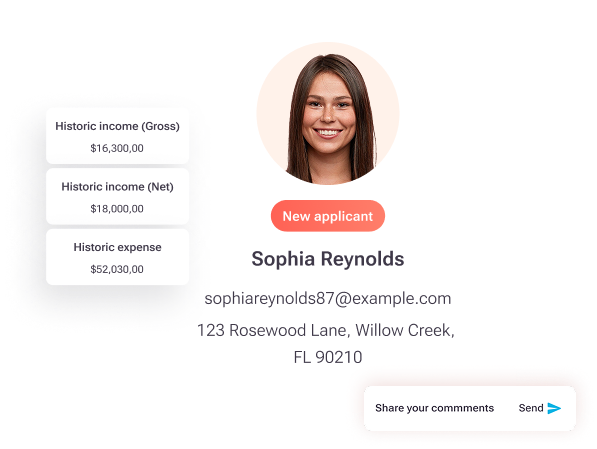
Key capabilities boards rely on:

- All-In-One 100% Online Application And Onboarding Platform digitizes and automates the application, document collection, background check, and approval process end to end.
- QuickApprove is an accelerated approval workflow for CAMs, boards, and property management teams inside one connected platform. It adds real-time application tracking, automated communication support, customized approval letters, a personalized welcome package, and a board-ready review and voting dashboard. The result is faster, clearer, and more consistent approvals without losing control, compliance, or visibility.
- IDVerify+ embeds biometric identity verification directly in the screening workflow. It combines government ID validation, AI-powered liveness detection, and biometric facial matching so communities move from document-based review to verified physical identity confirmation.
- Lease Tracking provides centralized, real-time lease visibility and lifecycle control from application to occupancy. It connects resident onboarding, unit data, approvals, and lease documentation into one audit-ready workflow that replaces spreadsheets and scattered email chains.
- 55+ Communities Verification standardizes how age-restricted requirements are handled across applications, which reduces manual work and improves documentation consistency.
- TEpayments By Zinc creates a connected payment workflow inside TenantEvaluation that collects application fees, deposits, and other required resident payments during onboarding. Payments go directly from the applicant to the association’s designated account, and TenantEvaluation never holds the funds.
TenantEvaluation is a direct reseller of TransUnion and Equifax data, with strict permissible purpose controls, automated adverse action workflows, and built-in audit trails for every application.

Schedule a demo today to see how TenantEvaluation supports the operational control your contract language establishes.
Frequently Asked Questions
Can A Board Terminate A Management Contract Without Cause?
The answer depends entirely on the termination clause. Many Florida management agreements allow termination without cause with 30–90 days’ written notice. Others limit termination to defined cause events. A contract that allows exit only for cause requires the board to prove a qualifying breach before it can separate from the manager, which invites disputes. Boards should verify the exact termination language with association counsel before sending any notice and should negotiate a without-cause path before signing the next agreement.
Who Owns Association Records And Data When The Manager Is Fired?
The association owns its records, funds, and bank accounts, and the management company only holds them. As noted in the records clause above, Florida law requires return of association records within 20 business days. The contract still sets the timeline details, the format, and any conditions for getting those records back. A weak or silent records clause can result in delays, format disputes, or fee demands that slow the transition. Boards should negotiate explicit ownership language, a defined electronic return format, and a prohibition on fee conditioning before signing.
What Should Be In The Scope Of Services?
The scope should list every service the board expects the manager to perform. That list includes how many board meetings are included per year, whether annual meeting preparation and attendance are covered, what financial reporting is included and at what frequency, who prepares the draft budget, how after-hours emergencies are handled, and who processes resale disclosures and estoppel letters. Read the exclusions list as carefully as the inclusions list. Under Florida Statute §718.3025(3), any obligation not stated on the face of the contract is unenforceable, so verbal understandings and informal expectations have no legal weight.
What Voids A Written Management Contract?
Several issues can undermine a management contract. Examples include missing required written elements under Florida law, an unwritten handshake arrangement that was never reduced to a signed document, or terms that were never stated on the face of the contract. For Florida condominium associations, a management contract that omits any of the six elements required by Florida Statute §718.3025(1), such as the frequency of services or the conflict-of-interest disclosure, renders the omitted term unenforceable. An unwritten arrangement, no matter how long it has continued, does not satisfy the statute and cannot be enforced as a compliant management contract. Boards should verify any enforceability question with association counsel.
Conclusion: Negotiate The Contract And Protect Board Control
A community association management contract decides who controls the association’s records, money, and exit. Read it clause by clause: term, termination, fees, scope, records, indemnification, and board authority. Verifying each clause against Florida law and the governing documents is part of the board’s fiduciary responsibility.
Negotiating the right contract terms creates the legal framework for control. Boards that keep their operational data, workflows, and records in the association’s own hands are the boards that can actually exercise the rights they negotiated. TenantEvaluation supports that operational control for community associations and management companies and is FCRA-compliant by design.
See how TenantEvaluation keeps your records in the board’s hands and put operational control back where it belongs.
