Written by: Luis Teran, Co-founder, CEO, TenantEvaluation
Key Takeaways
- HOA application lease tracking keeps every stage in one record, from application intake through screening, approval, lease upload, monitoring, alerts, and audits.
- Connected application and lease records prevent missed expirations, rental-cap violations, and failed audits by keeping the full history in one workflow.
- Florida HOAs typically have 15 to 30 days to approve complete lease applications, and many condos have up to 60 days under Chapter 718.
- Effective lease tracking uses automated 30/60/90-day alerts, real-time rental-cap monitoring, and centralized visibility instead of manual spreadsheets and email chains.
- TenantEvaluation connects applications, approvals, lease documentation, and payments in one FCRA-compliant platform. Explore how TenantEvaluation streamlines HOA lease tracking.
How HOA Application Lease Tracking Connects Every Step
The complete HOA application-to-lease lifecycle runs through seven connected steps. A single workflow keeps the application record and the lease record together, which reduces missed expirations, rental-cap issues, and audit gaps.
- Application Intake. The applicant or their realtor obtains the property code from the association and submits a completed online application with personal details, contact information, and required documents such as government-issued photo ID, income verification, and a signed lease or rental agreement. The CAM or LCAM receives the submission and confirms completeness before the review clock starts. Every approval timeline starts when the board receives a complete application, not when a partial packet arrives.
- Screening And Approval. The CAM coordinates FCRA-compliant screening that reviews criminal history, credit, income and employment verification, eviction and rental history, personal and landlord references, and identity confirmation. Written applicant authorization is required before any consumer report is pulled. TenantEvaluation is a legitimate reseller of TransUnion and Equifax data, with strict permissible purpose controls and automated adverse action workflows built in.
- Board Review And Decision. The board reviews summarized applicant reports, casts votes through a dedicated panel, and issues a written decision. The board focuses on approvals and policy. The CAM manages intake, screening coordination, document collection, and recordkeeping. Every action is timestamped and auditable.
- Lease Upload And Document Collection. Once approved, the executed lease is uploaded into the platform and linked to the application record. Required documents such as IDs, lease addenda, and community rules acknowledgments are collected and stored in a searchable digital history. Manual workflows often fail here because the approved application sits in one system while the lease sits in an email folder.
- Active Monitoring. The lease record receives a real-time status such as active, pending, expired, or missing and connects to unit-level occupancy data. CAMs and boards gain centralized visibility across the entire portfolio without digging through folders, inboxes, and spreadsheets.
- Expiration Alerts And Renewal Tracking. Automated alerts at 30, 60, and 90 days before lease expiration give CAMs and boards time to act before a lease lapses. Missed lease expirations can trigger automatic holdover tenancies on unfavorable terms, which weakens the association’s enforcement leverage. Tracking the notice deadline, not just the expiration date, sets the operational standard.
- Rental-Cap Enforcement And Audit Retrieval. Active rental counts are tracked in real time against the association’s governing-document cap. When an audit request arrives, the full record, including application, screening report, board decision, lease, and document trail, is available instantly instead of being assembled over days from scattered sources.
TenantEvaluation Lease Tracking delivers centralized, real-time lease visibility and lifecycle control. It connects resident onboarding, unit data, approvals, and lease documentation in one workflow from application to occupancy and replaces spreadsheets and scattered email chains.
See TenantEvaluation Lease Tracking in action.
HOA Lease Application Approval Timelines In Florida
Florida does not set one universal approval window for every HOA. Timelines appear in each association’s governing documents, bylaws, and application procedures. The typical HOA lease approval window is 15 to 30 days after the association receives a complete application, with longer timelines possible in high-demand communities. Florida’s Condominium Act gives a condo board up to 60 days to act on a complete lease or transfer application under Chapter 718, with approval deemed granted if the board fails to respond within that window.
Operational friction usually slows approvals more than statutes. Incomplete applications, missing executed leases or IDs, email-chain board review, and manual follow-ups all extend the timeline. Board review cycles at communities like PGA National in Palm Beach Gardens typically run every two to three weeks, so a late submission can delay occupancy by another two to three weeks. A structured approval workflow shortens the gap between submission and decision while preserving board oversight.
TenantEvaluation QuickApprove is the accelerated approval workflow built for CAMs, boards, and property management teams. It moves resident applications from submission to decision faster inside one connected platform, with real-time application tracking, automated communication support, reduced manual follow-ups, customized approval letters, and a personalized welcome package. It supports high-volume seasons and complex onboarding requirements while maintaining control, compliance, and visibility.
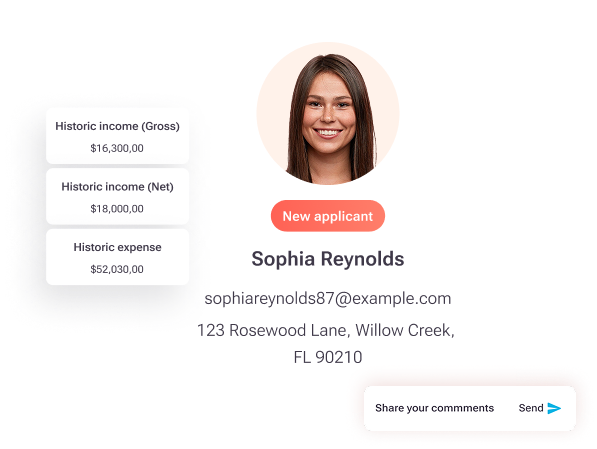
See how QuickApprove shortens your board approval cycle.
What HOA Background Checks Review
HOA and condo application screening usually reviews criminal history, credit, income and employment verification, eviction and rental history, personal and landlord references, and identity confirmation, all based on the association’s written screening criteria. A complete rental screening process covers credit history, criminal history, eviction records, identity verification, income verification, employment verification, and rental history.
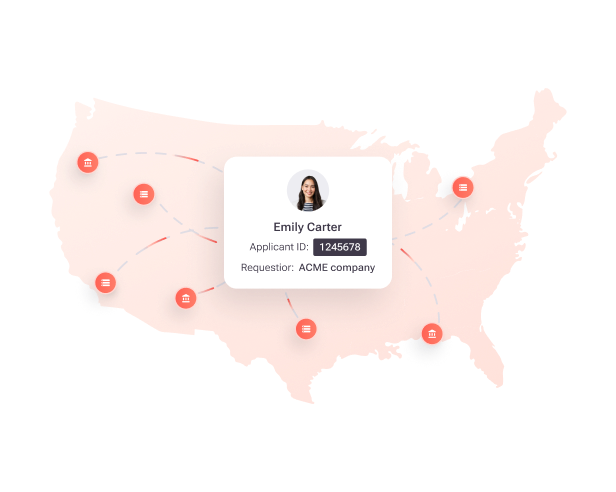
The FCRA governs every step. An HOA or condo association that orders a credit report, criminal history report, or eviction search from a consumer reporting agency must have a permissible purpose under 15 U.S.C. § 1681b and must obtain the applicant’s written authorization on a clear, standalone disclosure before pulling a screening report. If a screening report contributes to a denial or any condition on approval, an adverse action notice is required. That notice identifies the reporting agency, explains that the agency did not make the decision, and informs the applicant of the right to a free copy of the report within sixty days.
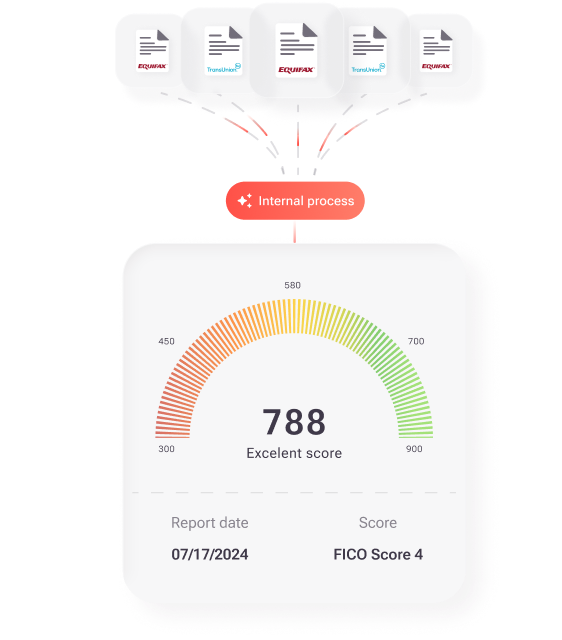
Identity fraud continues to rise in condo and HOA communities. Stolen IDs, impersonation attempts, and synthetic identities often slip past document uploads alone. TenantEvaluation IDVerify+ adds biometric identity verification directly into the screening workflow. It combines government-issued ID validation, AI-powered liveness detection, and biometric selfie-to-ID comparison, with results embedded in the screening report. TenantEvaluation’s screening suite, including SafeCheck+, IncomeEV, and IDVerify+, provides a 360° view of applicants with strict permissible purpose controls, automated adverse action workflows, and built-in audit trails for every application.

Explore TenantEvaluation’s FCRA-first screening and IDVerify+ biometric verification.
HOA Approval Requirements For Renting Your Home
Most Florida condos and HOAs require association approval before an owner rents a unit. Owners typically must submit an application, complete the association’s screening process, and receive board or association approval before occupancy, as defined by the governing documents. Florida law grants a condominium association no inherent right to approve or reject a tenant. Chapter 718 assumes the right may exist and regulates it, so the association’s approval authority only extends as far as the recorded declaration, articles, or bylaws allow.
The correct sequence for placing a tenant inside an HOA community is screening first, HOA approval second, and lease execution third. Signing a lease before HOA board approval creates a contractual obligation to a tenant who may not receive occupancy approval.
The practical sequence for owners and realtors runs as follows:
- Obtain the property code from the association.
- Complete the 100% online application via web or mobile.
- Submit required documents and the executed lease.
- Complete identity verification through IDVerify+.
- Pay required fees within the onboarding process.
- Await the board’s written decision.
Once approved, the lease should be uploaded and tracked as an active lease record with start and end dates. Email folders alone cannot provide that level of control. TenantEvaluation’s all-in-one online application platform handles the full sequence, and TEpayments by Zinc collects application fees and deposits within the onboarding process the association already uses. Payments go directly to the association’s designated account, and TenantEvaluation never holds the funds.
See how TEpayments by Zinc simplifies HOA application fees and deposits.
How To Track Lease Expirations And Monitor Rental Caps In An HOA
Manual lease expiration tracking often fails for predictable reasons such as missing or outdated lease copies, disconnected spreadsheets, limited visibility, and no direct connection between applications and active leases. Missed deadlines are rarely caused by carelessness. They happen when the system relies on memory, scattered calendars, and email threads. A single source of truth with clear ownership and automated escalation prevents those misses.
Multi-stage notification workflows with 90/60/30-day alerts before action deadlines are the documented standard for critical date tracking across lease portfolios. The renewal option notice deadline must be tracked as a separate date from lease expiration, because missing the notice window forfeits the renewal option entirely.
HOA rental-cap tracking requires real-time active rental counts measured against the governing-document cap. Florida Statutes Chapter 718 does not create a single percentage rental cap that applies to every condominium. Each condo’s rental cap appears in its recorded declaration and bylaws. Associations need clarity on what counts as a rented unit, whether the cap is measured across the entire community or by phase, and how queue priority is documented, all in real time.
TenantEvaluation Lease Tracking delivers a centralized, real-time solution. It provides real-time lease status such as active, pending, expired, or missing, unit-level tracking connected to occupancy records, searchable digital history of leases and document trails, and audit-ready digital lease records. From application to occupancy, every step stays connected so teams avoid spreadsheets, missing leases, and operational guesswork.
See TenantEvaluation Lease Tracking’s expiration alerts and rental-cap monitoring.
The Board’s Role And The CAM’s Role In Lease Tracking
Decision rights in HOA application lease tracking follow a clear split. The board owns the decision, and the CAM owns the work that produces it. That structure keeps governance and operations aligned.
The board approves or denies applications and sets rental policy. The CAM runs intake, coordinates screening, collects documents, and maintains records. The management company makes this same split work consistently across every association it serves.
Board members need to know what an application contains, how to cast a vote, and that their decision is recorded, without sorting through raw screening data or managing email chains. A board-ready dashboard provides real-time application status, summarized applicant reports, a voting panel, and timestamped, auditable actions. Best practices for HOA and condo associations include writing down the reason for every denial in the same format and keeping the disclosure, authorization, report, and adverse action notice together for each file.
TenantEvaluation’s dedicated board dashboard and QuickApprove board-ready approval process give boards direct, real-time access to application status while preserving control, compliance, and visibility. Built-in audit trails for every application, clear separation between decision-making by the association and data provision by TenantEvaluation, and searchable digital records all support audit retrieval on demand.
Explore TenantEvaluation’s board dashboard and QuickApprove workflow.
Core Capabilities Of HOA Lease Tracking Software
A complete HOA lease tracking solution must keep one accurate record, warn teams before deadlines, and prove compliance on demand. The capabilities below support those three jobs for Florida community associations.
- Centralized Records: applications, approvals, and active leases in one platform.
- Expiration Alerts At 30/60/90 Days: automated escalation before action deadlines.
- Rental-Cap Enforcement: real-time active rental counts against governing-document limits.
- Read-Only Board Dashboards: summarized applicant reports and a voting panel.
- Audit Retrieval: searchable digital history and timestamped records.
- Automated Lease Document Collection: onboarding workflows that keep lease records current.
- Unit-Level Tracking: lease data tied directly to occupancy records.
For Florida condos and HOAs that manage age-restricted communities, TenantEvaluation’s 55+ Communities Verification reduces manual work, standardizes application handling, supports documentation consistency, and improves operational efficiency. It is built specifically for Florida condos and HOAs and designed for Community Association Managers.

Generic property management software and background-check-only vendors usually cover only part of this lifecycle. TenantEvaluation combines Lease Tracking, QuickApprove, IDVerify+, 55+ Communities Verification, and TEpayments by Zinc in one ecosystem built specifically for community associations and serving more than 5,000 communities and approximately 100,000 applications per year.
Discover why Florida associations choose TenantEvaluation for HOA lease tracking.
Frequently Asked Questions (FAQ)
What Happens When A Lease Expires During A Dispute?
A lease that expires during a dispute still needs clear documentation. The association should keep the application, screening, board decision, lease, notices, and correspondence together in one record. That record shows whether the tenant remained under a holdover clause, vacated, or renewed, which supports consistent enforcement and legal review.
How Long Should An HOA Keep Lease And Application Records?
Associations generally retain lease and application records for several years after move-out, often matching or exceeding state record-retention rules and the association’s governing documents. Digital storage makes long-term retention practical, especially when records include screening reports, adverse action notices, and board decisions that may be relevant in future disputes.
How Do Associations Handle Rental Caps By Phase Or Building?
Some communities measure rental caps across the entire association, while others apply caps by phase, building, or stack. Accurate tracking requires unit-level records that tag each lease to its phase or building. Real-time counts then show how many rentals exist in each segment and where waitlist priority sits.
What Information Should A Board See During Application Review?
Boards need a concise view that supports a fair decision. That view usually includes summarized screening results, key application details, any required disclosures, and a clear approve-or-deny voting panel. Detailed raw data stays available to authorized staff, while board members focus on policy and compliance.
How Can CAMs Reduce Back-And-Forth With Applicants?
CAMs reduce back-and-forth by using a single online application that lists every required document, fee, and step. Automated reminders, status updates, and clear instructions help applicants complete files correctly the first time. That approach shortens approval timelines and lowers call and email volume.
What Audit Information Do Lenders Or Regulators Commonly Request?
Lenders, regulators, and attorneys often request proof of rental-cap compliance, copies of leases, board decisions, screening criteria, and adverse action notices. A digital system that links these items to each unit and lease allows the association to respond quickly and consistently.
How Does TenantEvaluation Support Compliance Reviews?
TenantEvaluation supports compliance reviews with timestamped actions, stored disclosures and authorizations, linked screening reports, and documented board decisions. Searchable records by unit, applicant, or date range help associations respond to legal inquiries, owner challenges, and regulatory questions without rebuilding files from email.
Review TenantEvaluation’s complete HOA application and lease tracking platform.
Conclusion: Connect Applications, Leases, And Compliance
A connected HOA application-to-lease lifecycle keeps every decision, document, and deadline in one place. That structure reduces missed expirations, rental-cap violations, and audit surprises by giving CAMs and boards a single, accurate record from application to move-out.
A clear, compliant, well-documented process depends on defined board and CAM roles, FCRA-aligned screening with automated adverse action workflows, and audit-ready lease records that are easy to retrieve. Florida’s governing-document requirements, Chapter 718 and Chapter 720 frameworks, and FCRA obligations all rely on that defensible record.
TenantEvaluation is built specifically for community associations and management companies, with FCRA compliance built into the foundation. It connects applications, approvals, lease documentation, and payments in one platform: QuickApprove for accelerated board-ready approvals, IDVerify+ for biometric identity verification, 55+ Communities Verification for age-restricted application handling, and TEpayments by Zinc for connected fee and deposit collection, all alongside Lease Tracking.
The practical next steps are straightforward. Review your current lease tracking process, identify where applications and leases disconnect, and compare that reality with a connected, digital workflow.
Connect your HOA application and lease records in one audit-ready workflow with TenantEvaluation.
