Written by: Luis Teran, Co-founder, CEO, TenantEvaluation
Key Takeaways For Florida CAMs And Boards
- A Florida CAM is a licensed professional who executes board decisions and manages day-to-day association operations under Chapter 468, Part VIII, while the board retains all decision-making authority.
- Core legal duties include enforcing governing documents, maintaining records within statutory timeframes, managing funds with fiduciary care, complying with licensing requirements, and administering FCRA-compliant screening workflows.
- CAMs cannot make or amend rules, spend beyond delegated authority, approve or deny applications, give legal opinions, or act outside the written management agreement.
- Three statutes define the manager-executes/board-decides boundary: Chapter 468 (CAM licensing), Chapter 718 (Condominiums), and Chapter 720 (HOAs).
- TenantEvaluation helps CAMs reduce operational risk and maintain audit-ready records across screening, lease tracking, and payment workflows—explore the compliance workflows.
Core Legal Duties Of A Florida Community Association Manager
Florida law and the management agreement together define the CAM’s legal duties. The following obligations apply to licensed community association managers operating under Chapter 468, Part VIII.
- Executing and enforcing governing documents. The CAM implements the bylaws, rules, and covenants the board adopts. Creating or amending those documents remains a board function.
- Maintaining association records. Florida Statute 718.111(12) requires condominium associations to make official records available within 10 working days of a written request, and Florida Statute 720.303(5)(a) imposes the same 10-business-day window on HOAs. Because the CAM is the person who actually pulls and produces those records, the manager’s filing habits determine whether the association meets the deadline or violates it.
- Managing association funds with fiduciary care. Florida Statute 468.4334 requires a CAM to discharge duties loyally, skillfully, and diligently, dealing honestly and fairly, in good faith, with care and full disclosure, and accounting for all funds.
- Complying with CAM licensing and continuing education requirements. CAM license holders must complete continuing education on a biennial basis. Required topics include legal updates, financial management, operations, and ethics.
- Handling resident applications, screening, and approval workflows. The CAM administers the application process in accordance with association policy and the Fair Credit Reporting Act (FCRA). That work includes permissible purpose controls and adverse action workflows, while the board makes the final approval or denial decision.
- Coordinating with the board on budgets, assessments, and vendor contracts. Florida condominium boards may delegate drafting the annual budget and soliciting vendor bids to the CAM, but cannot delegate the corresponding decisions: adopting the budget or selecting contractors.
- Maintaining insurance and licensing records. The CAM tracks inspection deadlines, insurance renewals, and licensing documentation on behalf of the association.
- Ensuring timely communication with owners and residents. The CAM administers board-homeowner communications and prepares meeting materials, notices, and required disclosures.
Florida Laws That Define CAM Responsibilities
Those duties do not exist in isolation. They come from three statutes that form the core legal framework for community association managers in Florida. This article does not constitute legal advice, and associations should consult qualified association counsel for guidance specific to their circumstances.
Chapter 468, Part VIII, Florida Statutes is the CAM licensing and regulatory framework. It defines what constitutes community association management, establishes the licensing requirement, and sets professional-practice standards. Section 468.4334 requires the CAM to act as the association’s agent within the scope of a written contract and to account for all funds.
Chapter 718, Florida Statutes (the Condominium Act) governs condominium associations. It establishes the board’s fiduciary duties under Section 718.111(1)(d) and the records-access obligations under Section 718.111(12). It also sets financial reporting tiers under Section 718.111(13) and prohibits kickbacks under Section 718.111(1)(a). That kickback prohibition applies to managers as well as officers and directors.
Chapter 720, Florida Statutes (the Homeowners’ Association Act) governs HOAs. Section 720.303(5) establishes the same 10-business-day records-access window described above. Section 720.303(6) governs budget preparation, and Section 720.303(1) vests fiduciary duties in the board’s officers and directors rather than in the manager.
Florida Statute 718.111(1)(a) explicitly states that nothing in the fiduciary-duty provision shall be construed as providing for or removing a requirement of a fiduciary relationship between any manager employed by the association and the unit owners. The CAM’s legal duties flow from statute and contract. The manager executes, and the board decides.
See How CAM Workflows Stay Audit-Ready with TenantEvaluation.
CAM Duties Vs. Board Duties: Where The Legal Line Sits In Florida Statute
The authority boundary between manager execution and board decision-making is the organizing principle of Florida community association law. The table below maps that line: the left column shows what the CAM carries out, and the right column shows what only the board can decide. Notice that no row places a final decision in the manager’s column.
| Manager Obligations | Board-Reserved Decisions |
|---|---|
| Day-to-day operations and administrative execution | Adopting or amending rules and governing documents |
| Executing and implementing board decisions | Setting assessments, budgets, and reserve funding levels |
| Recordkeeping and producing records on request | Approving or denying resident applications |
| Coordinating and scheduling vendors | Spending beyond delegated authority |
| Processing resident applications and administering screening | Hiring and firing the CAM or management company |
| Collecting fees and assessments per board policy | Making legal determinations or interpreting governing documents |
| Maintaining compliance documentation and audit trails | Entering contracts above the delegated spending threshold |
| Preparing meeting materials, agendas, and notices | Levying special assessments or initiating lien and foreclosure actions |
Florida community association law draws a key distinction: an association cannot delegate its responsibility to operate and maintain the condominium, but it can delegate the authority to carry out the board’s policy, meaning responsibility stays with the board while execution can be contracted out. As one Florida management firm summarizes, delegation concerns execution while liability remains with the board.
What A Community Association Manager Cannot Legally Do In Florida
The following limitations apply to Florida CAMs under Chapter 468, Part VIII, Chapters 718 and 720, and general agency law.
- Make or change association rules. A community manager generally does not have the power to create or change rules, approve or deny architectural requests, make enforcement decisions, or waive fines.
- Spend beyond delegated authority. No individual director or officer, and by extension no manager, may bind the association financially unless the board has formally delegated that authority in advance through a board vote.
- Make final approval decisions on resident applications. The CAM administers the screening and application workflow. The board approves or denies.
- Give legal opinions or interpret governing documents. Legal interpretation is a board function, carried out with association counsel.
- Conceal or withhold association records. Under Florida Statute 468.4334(3), all official records must be returned within 20 business days of termination of the management contract or a written request. Failure to do so triggers a statutory penalty of $1,000 per day for up to 10 business days. Florida HB 1203 (2024) made willful refusal to release association records a third-degree felony.
- Act outside the scope of the management agreement. Under Florida Statute 468.4334, a CAM is deemed to act as agent on behalf of the association as principal within the scope of authority authorized by a written contract. Actions outside that scope are unauthorized.
- Accept kickbacks. Florida Statute 718.111(1)(a) prohibits officers, directors, and managers from soliciting, offering to accept, or accepting a kickback. A knowing violation is a third-degree felony.
How A Property Manager Differs From A Community Association Manager
The distinction between a CAM and a property manager is both legal and operational. A Florida CAM license under Chapter 468 covers the management of condominium, homeowner, and cooperative associations of 10 or more units, while a Florida real estate license under Chapter 475 covers rental management of individual properties for their owners, and the two licenses are not interchangeable.
A community association manager serves an elected board of directors and the association as a whole, operating within a complex framework of governing documents, state statutes, and federal regulations including open meeting laws, fair housing requirements, and fiduciary standards. A property manager serves a single owner or ownership group and works primarily within landlord-tenant law and lease agreements. The CAM’s legal duties are tied to association governance and board oversight rather than to individual landlord-tenant relationships. For licensing and designation details, see TenantEvaluation’s existing resources on CAM credentials.
Who Hires And Oversees The Community Association Manager
Because the CAM serves the association rather than an individual owner, the board of directors, not the residents or the manager, hires and oversees the CAM or the management company. The CAM reports to the board and cannot override board decisions.
Florida Statute 718.111(3)(g), added by HB 913 effective July 1, 2025, imposes a statutory duty on every condominium board member and officer to ensure the community association manager or management firm is properly licensed under Chapter 468 before the association signs the management contract. The management agreement defines the scope of the CAM’s authority. The board retains the power to terminate that agreement subject to its terms and Florida law.
Where CAM Legal Responsibilities Create Operational Risk
The legal duties described above accumulate risk in specific operational workflows that CAMs run every day. The five highest-exposure areas are:
- Resident screening and FCRA compliance. The CAM administers the screening workflow, which means establishing permissible purpose, managing adverse action notices, and maintaining audit trails for every application. Errors in any of these steps create direct FCRA exposure for the association.
- Manual document handling and sensitive data exposure. Paper-based or email-based document collection creates data security risk and makes records production under the 10-business-day statutory window difficult to execute consistently.
- Approval bottlenecks and inconsistent application review. When approval workflows live in email chains and spreadsheets, inconsistency across applicants creates fair housing exposure and documentation gaps that are difficult to defend.
- Fragmented lease records and occupancy tracking. Missing or outdated lease copies, disconnected spreadsheets, and no centralized lease visibility create compliance risk tied to incomplete records and make it harder to confirm occupancy status on demand.
- Disconnected payment collection and fee tracking. When payment collection is separated from resident onboarding, managers face manual tracking burdens and boards have limited visibility into payment status. That combination creates both operational and financial exposure.
Each of these five risk areas is addressable with the right workflow design.

How TenantEvaluation Helps CAMs Meet Their Legal Responsibilities
TenantEvaluation is built specifically for community associations and management companies, with FCRA compliance designed into the core workflow. That focus matters because CAM liability accumulates in compliance-heavy operational workflows.
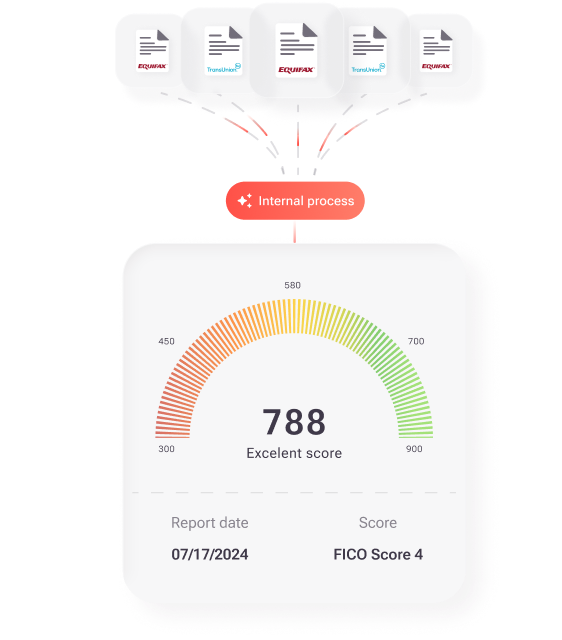
TenantEvaluation’s FCRA-first design rests on direct credit bureau reseller relationships with TransUnion and Equifax, with strict permissible purpose controls, automated adverse action workflows, built-in audit trails for every application, and a clear separation between decision-making by the association and data provision by TenantEvaluation. These elements form the structural foundation of the system rather than optional add-ons.
The platform’s capabilities map directly to the operational risk areas identified above: screening errors, manual document handling, approval bottlenecks, fragmented lease records, and disconnected payments.
- QuickApprove is an accelerated approval workflow built for CAMs, boards, and property management teams. It moves applications from submission to decision faster. Real-time application tracking, automated communication support, a board-ready approval process, customized approval letters, and a personalized welcome package keep the speed from costing control, compliance, or visibility.
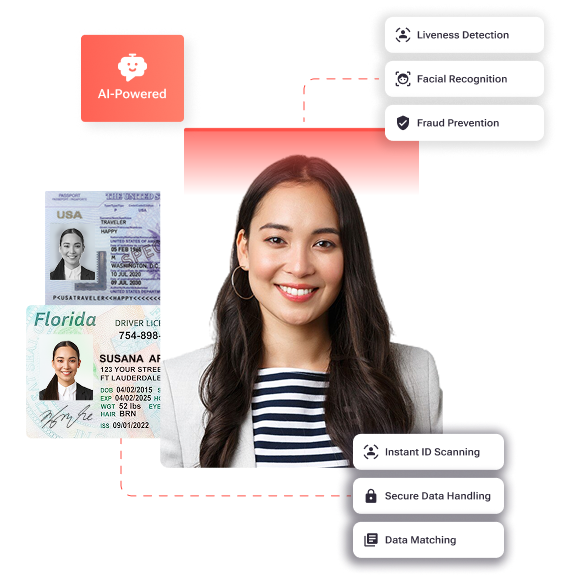
- IDVerify+ introduces biometric identity verification directly inside the TenantEvaluation workflow. Government ID validation, AI-powered liveness detection, and biometric selfie-to-ID comparison move communities from document-based review to verified physical identity confirmation.
- 55+ Communities Verification helps Florida condos and HOAs standardize how age-restricted requirements are handled across applications. This standardization reduces manual work, improves documentation consistency, and strengthens operational efficiency and internal controls.
- Lease Tracking connects resident onboarding, unit data, approvals, and lease documentation into one centralized, real-time workflow. It shows lease status at a glance, whether active, pending, expired, or missing. It also collects lease documents automatically, tracks at the unit level, and produces audit-ready digital records that replace spreadsheets and scattered email chains.
- TEpayments By Zinc is a connected payment workflow inside TenantEvaluation that collects application fees, deposits, and other required resident payments within the onboarding process. Payments go directly from the applicant to the association’s designated account, and TenantEvaluation never holds the funds. See how TEpayments By Zinc handles resident payments.
TenantEvaluation serves 5,000+ communities and processes approximately 100,000 applications per year. TenantEvaluation does not guarantee legal compliance or eliminate liability. It reduces operational risk and strengthens audit readiness across the workflows where CAM exposure is highest.
Explore TenantEvaluation’s FCRA-First Platform for Florida community associations.
Compliance, Risk, And Governance: Keeping The Authority Boundary Documented
The manager-executes and board-decides boundary only protects both parties when it is documented. Clear records establish what the board authorized, when the CAM acted, and how each decision was made. That documentation matters in DBPR complaints, fair housing investigations, and FCRA disputes.
The FCRA workflow described above, including permissible purpose, adverse action notices, and association-controlled decisions, is also the evidentiary backbone of a defensible file. Each of those requirements is only provable if the workflow leaves a record, which is why audit trails for every application step are not optional.
Data privacy and secure handling of sensitive applicant information are operational obligations. Florida association records that are protected from owner disclosure include certain personal owner information, attorney-client privileged material, and security or medical data, meaning managers must maintain permissioned access controls rather than producing records indiscriminately.
Board oversight of the CAM’s work is itself a fiduciary obligation. If a management company makes an error that costs a Florida condominium association money, the board still bears fiduciary responsibility to unit owners, and directors could face personal liability if they failed to adequately oversee the manager. Associations should consult qualified association counsel on all legal questions specific to their community.
Frequently Asked Questions
What Are The Legal Duties Of A Community Association Manager In Florida?
A Florida CAM’s legal duties cover governance execution, records and funds, licensing, screening administration, and board coordination. Each duty is detailed in the legal duties section above, with statutory citations and practical examples.
What Can A CAM Not Legally Do?
A Florida CAM cannot make rules, spend beyond delegated authority, decide applications, give legal opinions, withhold records, accept kickbacks, or act outside the management agreement. The section above explains each limit and its statutory basis.
Who Hires The CAM?
The board of directors hires the CAM or the management company and oversees their work. The CAM reports to the board and cannot override board decisions. Florida Statute 718.111(3)(g), effective July 1, 2025, requires condominium board members and officers to verify that the CAM or management firm is properly licensed under Chapter 468 before signing the management contract.
How Does A CAM Differ From A Property Manager?
A Florida CAM is licensed under Chapter 468, Part VIII and manages a community association on behalf of its board of directors, with duties tied to association governance, governing documents, and state statutes. A property manager typically holds a Florida real estate license under Chapter 475 and manages individual rental properties on behalf of a private owner, working primarily within landlord-tenant law. The two licenses are not interchangeable, and a CAM license does not authorize collecting rent or signing leases on behalf of an individual property owner.
What Florida Statutes Govern CAMs?
Three statutes form the primary legal framework: Chapter 468, Part VIII (the CAM licensing and professional-practice statute), Chapter 718 (the Condominium Act, governing condominium associations), and Chapter 720 (the Homeowners’ Association Act, governing HOAs and planned communities). CAMs operating in condominium communities are also subject to the DBPR’s Division of Florida Condominiums, Timeshares, and Mobile Homes. The Fair Credit Reporting Act governs the screening and consumer-report workflows the CAM administers on behalf of the association.
Conclusion: The Manager Executes And The Board Decides
In Florida, the legal authority boundary between the community association manager and the board of directors is clear in statute, reinforced by case law, and consequential in practice. The CAM executes by maintaining records, administering screening, coordinating vendors, collecting fees, and communicating with residents. The board decides by adopting rules, approving budgets, approving or denying applications, entering contracts, and making legal determinations. Every operational workflow the CAM runs sits inside that boundary, and the workflows where execution meets compliance, including screening, records, approvals, and payments, are where liability accumulates fastest.
Florida CAMs and boards can use this article as a foundation for evaluating their own processes, policies, and workflows. Where those workflows are manual, fragmented, or undocumented, the legal exposure is real. TenantEvaluation is built specifically for community associations and management companies, with FCRA compliance built into the workflow so those processes stay documented, auditable, and defensible.
See How TenantEvaluation Reduces CAM Operational Risk for Florida boards and managers.
