Written by: Luis Teran, Co-founder, CEO, TenantEvaluation | Last updated: September 4, 2026
Key Takeaways for Florida HOA Boards
- Manual tenant screening costs HOAs about $126,940 per year in labor and vacancy drag for a 200-unit portfolio. Automation cuts that to $52,350.
- Digital application fees become a predictable revenue stream for Florida HOAs when collected through revenue-sharing models like TenantEvaluation’s TEpayments by Zinc.
- Automated screening processes applications in 2.1 hours instead of 2.3 days, which helps HOAs keep qualified applicants who often accept competing offers within 48 hours.
- Boards keep full approval authority with dedicated voting dashboards, while automation handles data collection, verification, and routing for faster, more transparent decisions.
- HOAs can reduce compliance risk and turn screening into a profit center with TenantEvaluation’s FCRA-first platform, built-in audit trails, and adverse action workflows. See how the platform works in a live walkthrough.
The Real Cost of Manual Screening for Florida HOAs
Manual screening drains HOAs through labor hours, vacancy days, and lost qualified applicants. Each factor compounds the others and turns screening into a six-figure expense.
Leasing teams spend an average of 4.2 hours per application on manual collection, follow-up, and decision communication. At a blended staff rate of $28 per hour, that equals about $117 in labor per application before a unit is filled. Across a 200-unit portfolio with 25% annual turnover, those hours add up to a six-figure administrative drain.
Vacancy drag magnifies the problem. The average cost of a single vacancy day is $47 at median U.S. rents, and manual screening cycles often run four to seven days. In higher-rent Florida communities, vacancy can cost about $120 per unit per day.
Property managers using automated screening workflows process applications in 2.1 hours versus 2.3 days for manual processes, according to NARPM’s 2025 technology adoption survey. Properties screening applicants within 4 hours achieve 23% lower vacancy rates than those taking 48 hours or more, based on Buildium’s 2025 benchmarks across 12,000 managed properties.
The applicant patience window is short. Sixty-seven percent of qualified applicants accept another offer within two days if they have not received a decision. Slow screening delays revenue and causes the strongest applicants to sign elsewhere.
For a 200-unit portfolio, manual screening costs about $126,940 annually, compared with $52,350 for automated workflows. That creates a net savings of $74,590 per year.
See how TenantEvaluation removes this hidden cost from your portfolio.
Turning Screening Fees into a Reliable HOA Revenue Stream
Automated screening does more than cut costs. It also turns application fees into a predictable income source for Florida associations.
Application fees are a legitimate and authorized revenue source for Florida community associations. Under Florida Statutes section 718.112(2)(i), condominium associations may charge a screening fee only if the declaration or bylaws authorize it, historically capped at $100 per applicant, with spouses or a parent and dependent child counted as a single applicant.
TenantEvaluation’s revenue-sharing model converts that fee into a profit center with no upfront costs. TEpayments by Zinc, a connected payment workflow inside the TenantEvaluation platform, collects application fees, deposits, and other required resident payments within the onboarding process associations already use. Payments move directly from the applicant to the association’s designated account, while TenantEvaluation manages the workflow but never holds the funds.
The platform deducts its service fee from the collected application fee and rebates the remainder to the association. Automated fee collection removes unpaid applications and manual payment tracking, which protects both cash flow and staff time.
One Florida-based management company saved $240,000 annually after switching to TenantEvaluation. The team freed 50 hours of staff time per day and cut processing time by 50 percent. Across all clients, TenantEvaluation has generated $150 million for communities, with more than 100,000 applications processed annually.
Streamlining Board Approvals with a Central Voting Dashboard
Board approvals often create the biggest delay in the screening process. The issue usually comes from coordination gaps, not from the screening criteria themselves.
Applications stall in email chains, and boards lack a clear view of which files need attention. Managers spend hours chasing follow-ups, while applicants wait days for decisions that could arrive in hours.
QuickApprove is TenantEvaluation’s accelerated approval workflow for CAMs, boards, and property management teams inside one connected platform. The automated approval workflow follows a clear sequence:

- Applicant submits and pays online. The applicant completes the application and pays the fee through TEpayments by Zinc.
- Identity and background checks run automatically. The system verifies identity through IDVerify, which uses government ID validation, AI-powered liveness detection, and facial biometric matching, and then runs FCRA-compliant background checks.
- Documents are collected and secured. The platform auto-collects and verifies documents, and it automatically redacts sensitive information.
- Board reviews and votes online. Board members see AI-generated applicant summaries and vote through a dedicated dashboard with real-time application tracking.
- Approvals and welcome materials go out. Approval letters and personalized welcome packages are generated and sent automatically.
Boards keep final approval authority at every step. QuickApprove speeds up resident approvals while preserving control, compliance, and visibility. Automation manages data collection, verification, and routing, and human judgment delivers the final decision. This structure aligns with Fair Housing requirements for documented, consistent decision-making.
Compliance Essentials for Florida HOAs: FCRA, Fair Housing, and Automation
Florida HOAs must treat compliance as a core part of tenant screening. The FCRA and Fair Housing rules define how data is collected, used, and documented.
HUD’s April 2024 guidance states that housing providers remain liable for discriminatory outcomes even when using third-party AI screening tools. A screening criterion can create liability when it acts as a proxy for a protected characteristic, even if it does not name that characteristic directly.
Automation supports compliance by enforcing consistent rules and creating a clear record. Manual screening introduces human bias in 62% of decisions, while automation applies criteria uniformly every time. Property managers who automate screening report 45% fewer Fair Housing complaints, because consistent, documented criteria form a strong defense against discrimination claims.
TenantEvaluation is built for community associations and management companies, with FCRA compliance as its foundation. As a direct reseller of TransUnion and Equifax data, not a third-party scraper, TenantEvaluation accesses bureau data under strict rules with regular compliance reviews and audits. Every application generates a complete audit trail, and automated adverse action workflows live inside the platform.
For Florida’s age-restricted communities, 55+ Communities Verification standardizes how age-restricted requirements are handled across applications. This reduces manual work and improves documentation consistency for condos and HOAs managing HOPA-related requirements.

Explore TenantEvaluation’s FCRA-first compliance architecture in a guided session.
Overcoming Board Concerns About Automation
Board resistance to automation usually focuses on four points: control, accuracy, compliance, and cost. Each concern has a clear response.
Boards gain visibility instead of losing control. QuickApprove gives board members real-time access to application status, AI-generated applicant summaries, and a dedicated voting panel. The process becomes more transparent, and boards see more information with less administrative noise.
On compliance, documented automation outperforms ad-hoc manual processes. Property managers who document their screening criteria before automation implementation are 4.7 times less likely to face fair housing complaints than those who automate ad-hoc processes.
The Louis v. SafeRent Solutions settlement, approved November 20, 2024, required SafeRent to pay $2.275 million and stop using its tenant-screening score for housing-voucher applicants for five years, after allegations that its AI screening score discriminated against protected classes. The case shows that tools making final decisions without human review create liability. TenantEvaluation keeps humans in the decision loop at every approval point, while automation handles routing, verification, and data assembly.
On cost, TenantEvaluation’s revenue-sharing model keeps the platform cost-neutral or revenue-generating for the association. The structure avoids upfront subscription fees charged against the association’s operating budget.
Implementation Guide: 6 Steps to Automated Screening in Your HOA
A structured rollout shortens implementation time and reduces post-launch errors. Property managers who complete a formal pre-implementation workflow audit reduce implementation time by 38% and post-launch error rates by 61%.
- Assess your current process. Document your existing workflow and identify pain points. Quantify time spent on manual screening tasks, note where applications stall, and record any compliance gaps.
- Choose an HOA-specific platform. Select a solution built for community associations with board access, compliance features, and a revenue model. Generic platforms like Buildium or AppFolio lack HOA-focused board voting dashboards, revenue-sharing models, and Florida-specific compliance workflows.
- Configure community rules. Set up your screening criteria, governing document requirements, and Florida-specific compliance needs. Have a fair housing attorney review criteria before you encode them into automation rules.
- Train staff and board members. Teach CAMs and board members how to use the dashboard and voting workflow, and clarify their roles. Most successful implementations require two to three months of change management for full adoption.
- Communicate with applicants and realtors. Explain the new digital process, set clear expectations for timelines, and provide simple instructions. Properties with automated applicant communication sequences see 31% higher application completion rates than those that provide no updates after initial submission.
- Monitor and refine. Review approval metrics, applicant satisfaction, and revenue collected. Run quarterly audits of approval and denial rates across applicant profiles to identify any disparate impact patterns.
TenantEvaluation supports custom setup for Florida-specific regulations and workflows and serves more than 5,000 communities across the state with a 4.8 out of 5 Google rating.
Frequently Asked Questions
Who pays for tenant screening in an HOA?
The applicant pays the application fee, which the HOA sets within the limits of its governing documents. Under Florida law, condominium associations may charge a screening fee only if the declaration or bylaws authorize it, historically capped at $100 per applicant under Florida Statutes section 718.112(2)(i), with spouses or a parent and dependent child counted as a single applicant. Automated platforms collect this fee online at submission, which removes unpaid applications and manual tracking.
With TenantEvaluation’s revenue-sharing model through TEpayments by Zinc, the platform deducts its service fee and rebates the remainder directly to the association’s designated account. This structure turns screening into a profit center without upfront costs to the association.
What are red flags in tenant screening?
Common red flags include inconsistent or unverifiable income, eviction history with recent judgments, and criminal records relevant to housing safety. Identity discrepancies between submitted documents and verified data and negative landlord references also signal risk.
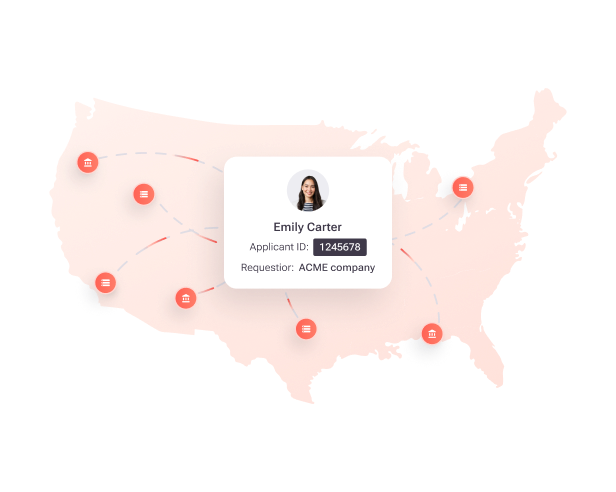
Automated screening flags these issues consistently across every applicant, while manual processes may miss them because of human error, incomplete document review, or inconsistent criteria. TenantEvaluation’s IDVerify adds a biometric layer with government ID validation, AI-powered liveness detection, and facial biometric matching, which catches identity fraud that document-only review can miss.

How does automated screening reduce vacancy days?
Automated screening reduces vacancy days by shortening approval timelines so units are filled sooner. As noted earlier, automated workflows cut processing from days to hours, and properties that deliver decisions within about four hours see meaningfully lower vacancy rates than those that take two days or more.
For a 200-unit portfolio with $1,800 average rent, reducing screening time by 1.5 days recovers about $65,700 annually in accelerated lease starts. Qualified applicants usually have a 48-hour patience window, and associations that respond within that window keep the strongest candidates instead of losing them to faster-moving communities.
Is automated screening compliant with Fair Housing law?
Automated screening complies with Fair Housing law when criteria are documented, applied consistently, and reviewed by humans before final decisions. Automation supports compliance by applying the same criteria to every applicant and removing much of the human bias present in manual decisions.
Housing providers still remain liable for discriminatory outcomes even when using third-party tools, as HUD’s April 2024 guidance confirms. Compliant automation requires attorney-reviewed criteria, human review of all approvals and denials, automated adverse action notices that meet FCRA requirements, and regular audits of approval and denial rates across applicant profiles. TenantEvaluation’s FCRA-first design, with built-in adverse action workflows, complete audit trails, and direct credit bureau reseller relationships, supports this framework at every step.
How does TenantEvaluation differ from generic screening tools like AppFolio or Buildium?
Generic property management platforms treat screening as one feature among many and do not reflect HOA-specific needs. TenantEvaluation is built exclusively for community associations and management companies.
It offers features generic tools lack, including a dedicated board voting dashboard through QuickApprove, a revenue-sharing model that turns application fees into association income, and Florida-specific compliance workflows. It also includes biometric identity verification through IDVerify+, standardized age-restricted application handling through 55+ Communities Verification, and centralized lease lifecycle tracking from application through occupancy.
The platform processes more than 100,000 applications annually across over 5,000 communities, with a compliance foundation based on direct TransUnion and Equifax reseller relationships instead of third-party data scraping.
Conclusion: Make Screening a Competitive Advantage for Your HOA
Automated tenant screening delivers three connected benefits for Florida HOAs and community associations. It increases income through fee collection and reduced vacancy drag. It streamlines approvals with board-ready dashboards that replace email chains and spreadsheets. It strengthens compliance through consistent criteria, automated adverse action, and complete audit trails.
TenantEvaluation is built for community associations and management companies, with FCRA compliance as its foundation. Unlike Buildium, AppFolio, or generic screening vendors, TenantEvaluation offers HOA-specific features inside one connected platform serving more than 5,000 communities:
- Board voting dashboards
- Revenue sharing through TEpayments by Zinc
- Biometric identity verification
- Florida-specific compliance workflows
The business case is measurable: $74,590 in net annual savings for a 200-unit portfolio, $240,000 in documented savings for one Florida management company, and $150 million generated for communities to date.
Ready to turn your screening process into a revenue generator? Book a personalized demo.
