Written by: Luis Teran, Co-founder, CEO, TenantEvaluation | Last updated: September 3, 2026
Key Takeaways
- HOA resident screening software that increases association revenue uses a revenue-share model where applicants pay fees and associations receive rebates with zero upfront cost.
- Associations can project annual screening revenue using the formula: Annual Applications × Application Fee × Rebate Percentage = Gross Annual Revenue.
- FCRA compliance requires proper disclosures, adverse action notices, and direct credit bureau relationships to protect associations from liability.
- Key platform features include automated fee collection, FCRA-compliant background checks, board dashboards, identity verification, and connected payment workflows that route funds directly to the association.
- TenantEvaluation turns screening from a cost center into a revenue stream for community associations. Learn how TenantEvaluation can help your community generate income from screening fees.
How Revenue-Share HOA Screening Software Works
The Revenue-Share Model Explained
HOA resident screening software that increases association revenue automates the applicant screening process and uses a revenue-share model. Applicants pay a fee through the platform, the vendor deducts its service fee, and the association receives the remaining portion as a rebate, which creates a new income stream with zero upfront cost.
The mechanics follow a straightforward sequence. The applicant pays the application fee online during onboarding. The platform vendor deducts its service fee. The association then receives the rebate directly to its designated account. TenantEvaluation’s connected payment workflow, TEpayments by Zinc, collects application fees and deposits during resident onboarding, with payments going directly to the association’s designated account. TenantEvaluation never holds the funds. TenantEvaluation operates on a pay-per-application model with no upfront fees or monthly subscriptions for the association, and its revenue-sharing model rebates fees back to the association.
Once you understand how the revenue-share model functions, the next step is to estimate what this income stream could mean for your budget. The following steps walk through a simple way to project annual screening revenue and related savings.
Projecting Your Association’s Screening Revenue in 5 Steps
Step 1: Estimate Annual Application Volume
Start with the number of rental and purchase applications your community processes each year. A community with higher turnover or a larger unit count generates more applications and, as a result, more potential revenue. HOA management companies managing 100 or more communities annually have a meaningful revenue opportunity, with a 100-community company seeing roughly $225,000+ in annual document revenue currently flowing to third-party processors.
Step 2: Set a Compliant Application Fee
Application fees must be authorized by the association’s governing documents. For Florida condominiums, they must comply with Chapter 718, Florida Statutes, which requires that any fee charged be expressly permitted by the declaration and bylaws and applied uniformly to all applicants. Florida condominium boards should consult legal counsel before setting or changing fee amounts to confirm consistency with the statute and governing documents.
Step 3: Determine the Vendor’s Rebate Percentage
The rebate percentage is the share of the application fee returned to the association after the vendor deducts its service cost. This figure varies by platform and contract terms. Associations should request a clear, written breakdown of the fee split before committing to any vendor.
Step 4: Calculate Gross Revenue
Use a simple formula: Annual Applications × Application Fee × Rebate Percentage = Gross Annual Revenue. As a conservative illustration, 100 applications per year with a $150 fee and a 50% rebate produce $7,500 in annual revenue. Actual figures vary based on volume, fee amount, and the rebate rate negotiated with the vendor. Larger portfolios managed by Community Association Managers (CAMs) can multiply this figure across dozens of communities.
Step 5: Factor in Administrative Savings
Screening revenue tells only part of the financial story. TenantEvaluation’s automated workflows free up to 50 hours of staff time per day and cut application processing time by up to 70%. These efficiencies translate directly into cost savings. One Florida-based management company saved $240,000 annually after switching to TenantEvaluation, achieving a $10 savings per hour per property while also eliminating the liability costs associated with handling sensitive resident information manually.
After you understand the revenue and savings potential, you must confirm that your screening program rests on a solid legal and compliance foundation. The next section outlines the core pillars that support a compliant fee-based screening model.
4 Legal and Compliance Pillars for Screening Revenue Programs
Pillar 1: FCRA Compliance Requirements
The Federal Trade Commission (FTC), which enforces the Fair Credit Reporting Act (FCRA), states that tenant background checks, including rental and eviction history, credit history, or criminal records, are consumer reports, and housing providers must comply with the FCRA when using them for housing decisions. Associations must provide a clear, standalone disclosure to the applicant before obtaining a consumer report, separate from the application and other contract language.
Pillar 2: Alignment With Florida Statutes
Florida’s Condominium Act (Chapter 718, Florida Statutes) requires that any application or administrative fee be expressly authorized by the condominium statute and the association’s declaration and bylaws, applied uniformly to all applicants, and used consistently with the statute. HOA boards should review their governing documents and consult legal counsel before implementing or modifying screening fee structures.
Pillar 3: Direct Credit Bureau Reseller Relationships
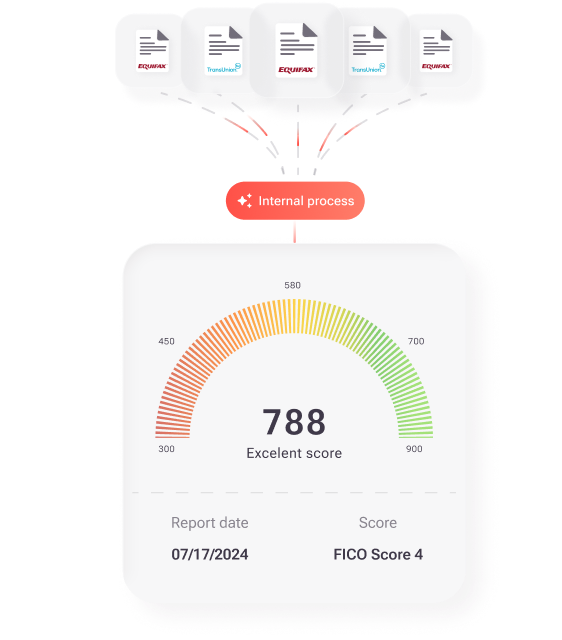
Screening vendors vary in how they access credit data. TenantEvaluation is a legitimate reseller of TransUnion and Equifax data, accessed under strict bureau rules with regular compliance reviews and audits. The platform avoids gray-market or offshore data sources. This approach protects community associations from liability exposure that can arise when vendors use unverified data pipelines.
Pillar 4: Automated Adverse Action Workflows
Under the FCRA, if a housing provider takes an adverse action, such as denying an application or requiring a larger deposit, based partly or completely on a consumer report, the provider must deliver an adverse action notice that includes the name, address, and phone number of the consumer reporting agency, a statement that the agency did not make the decision, and notice of the applicant’s right to dispute inaccurate information and obtain a free report within 60 days. TenantEvaluation automates this workflow and reduces the risk of procedural errors that expose associations to legal liability. Software supports compliance processes and works alongside legal guidance from the association’s counsel.
With the legal framework in place, you can focus on the specific product capabilities that drive revenue, compliance, and efficiency. The next section highlights the features that matter most.
6 Revenue-Driving Features to Prioritize in Screening Platforms
Feature 1: Automated Fee Collection
The platform should collect application fees within the onboarding workflow itself and remove the need for manual payment chasing. TEpayments by Zinc is a connected payment workflow integrated into TenantEvaluation that collects application fees, deposits, and other required resident payments within the onboarding process. Payments go directly from the applicant to the association’s designated account, and TenantEvaluation never holds the funds.
Feature 2: FCRA-Compliant Background Checks
The platform should source data from legitimate credit bureaus and automate adverse action notices. TenantEvaluation’s FCRA-first design includes strict permissible purpose controls, built-in audit trails, and a clear separation between decision-making, which remains with the association, and data provision, which TenantEvaluation supplies.
Feature 3: A Board Dashboard for Approvals
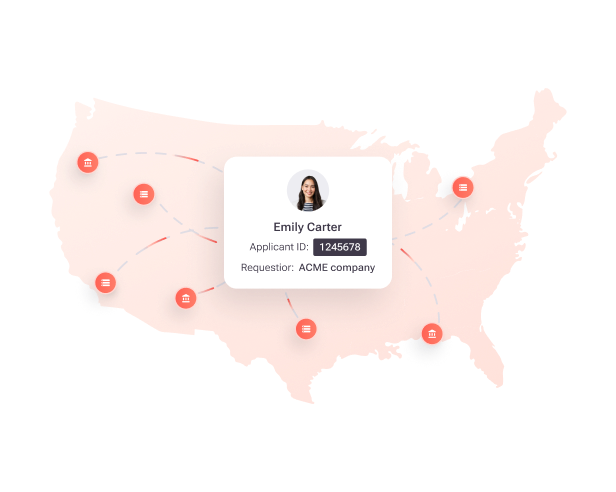
QuickApprove is TenantEvaluation’s accelerated approval workflow built for CAMs, boards, and property management teams inside one connected platform. It provides real-time application tracking, a board-ready approval process, automated communication support, customized approval letters, and a personalized welcome package. This reduces manual follow-ups while preserving control, compliance, and visibility.

Feature 4: Identity Verification
IDVerify is TenantEvaluation’s biometric identity verification layer embedded directly into the screening workflow. It uses government ID validation, AI-powered liveness detection, and biometric facial matching to move communities from document-based review to verified physical identity confirmation. Generic tenant screening tools typically lack this level of fraud-prevention capability.

Feature 5: Lease Tracking and Lifecycle Management
Lease Tracking inside TenantEvaluation connects resident onboarding, unit data, approvals, and lease documentation into one centralized, real-time workflow. It delivers real-time lease status visibility (active, pending, expired, or missing), automated lease document collection, unit-level tracking, and audit-ready digital records. This eliminates spreadsheets and scattered email chains from application to occupancy.
Feature 6: Connected Payment Workflows
Payment collection should be integrated into onboarding rather than managed through a separate system. TEpayments by Zinc adapts to each property’s process rather than forcing a universal sequence and gives boards traceable records and operational clarity around where funds go.
Schedule a demo today to explore TenantEvaluation’s full feature set for your community.
Once you understand the feature set, it helps to see how TenantEvaluation compares with other options in the market. The next section highlights the differences that affect revenue and compliance outcomes.
Comparing Top Platforms: 3 Critical Differences Between TenantEvaluation and Alternatives
The table below compares TenantEvaluation against representative alternatives across three dimensions that directly affect association revenue and compliance. Buildium and AppFolio are general property management platforms, while Screening Link represents a background-check-focused vendor. Direct feature-for-feature comparison on identical metrics is not always possible given the different scope of each product, so qualitative distinctions appear where a shared unit of measure does not apply.
| Attribute | TenantEvaluation | Buildium / AppFolio | Background-Check Vendors (e.g., Screening Link) |
|---|---|---|---|
| Revenue-Share Model | Yes, rebate returned to association, zero upfront cost | Monthly subscription pricing model | Per-report fee paid by association or applicant, no rebate |
| Built for Community Associations | Designed exclusively for HOAs, condos, and management companies, serves 5,000+ communities | General property management software without HOA or condo specialization | Generic background screening without community-association focus |
| FCRA Compliance Design | FCRA-first, direct TransUnion and Equifax reseller, automated adverse action workflows, built-in audit trails | Compliance features present, but not the primary design focus | Varies, many use third-party data aggregators rather than direct bureau reseller relationships |
These differences translate into real-world scale. TenantEvaluation has generated $150M for communities, processes 100,000+ applications annually, and holds a Google rating of 4.8/5, figures that reflect the scale and trust built over nearly two decades serving Florida community associations.
With the comparison in mind, you can now frame a clear business case for your board. The next section outlines three arguments that connect revenue, risk, and efficiency.
How to Present the Business Case to Your Board: 3 Key Arguments
Argument 1: The Direct ROI Projection
Present the board with a conservative revenue model using the formula from Step 4 above. Using that example, 100 applications per year with a $150 fee and a 50% rebate generate $7,500 annually with no upfront platform cost. Larger communities or management portfolios see proportionally higher returns. The zero-subscription model keeps the association’s net position positive from the first application processed.
Argument 2: Risk Mitigation and Compliance Assurance
Manual screening processes create FCRA exposure through missed adverse action notices, insecure handling of consumer report data, and inconsistent documentation. The FTC recommends that landlords provide adverse action notices in writing, as written notices provide proof of FCRA compliance and better enable applicants to assert their rights. TenantEvaluation automates this process and maintains built-in audit trails for every application, which reduces the board’s legal exposure. PCI Level 1 compliance and end-to-end encryption further protect the association from data breach liability.
Argument 3: Operational Efficiency Gains
A Florida-based management company that switched to TenantEvaluation freed up 50 hours of staff time per day, cut processing time by up to 70%, and saved $240,000 annually. For boards evaluating the total cost of their current process, including staff hours, paper handling, and compliance risk, the operational savings alone can justify the transition before revenue generation is even factored in. QuickApprove accelerates resident approvals inside one connected platform, designed for high-volume seasons and communities with complex onboarding requirements, while preserving control, compliance, and visibility.
Frequently Asked Questions
How much does HOA resident screening software cost?
TenantEvaluation operates on a pay-per-application model with no upfront fees or monthly subscriptions for the association. The platform’s revenue-share structure allows the association to generate income from application fees rather than incur a platform cost. This structure differs from general property management platforms like AppFolio or Buildium, which charge monthly subscription fees regardless of application volume. Associations should request a detailed fee-split breakdown from any vendor before committing.
Are HOA screening fees legal in Florida?
Florida’s Condominium Act (Chapter 718, Florida Statutes) permits condominium associations to charge application and administrative fees, provided the fee is expressly authorized by the association’s declaration and bylaws, applied uniformly to all applicants, and consistent with the statute. HOA fee authority is similarly grounded in governing documents and applicable Florida statutes. Boards should consult legal counsel before setting or modifying fee amounts to confirm alignment with their specific governing documents and current Florida law. TenantEvaluation’s platform supports compliant fee collection workflows and complements legal guidance.
What do condo associations look for in background checks?
Florida condo associations typically screen applicants across several dimensions. These include criminal history, such as nationwide and global criminal records, sex offender registry, and FBI Most Wanted databases, credit history and score, employment and income verification, rental and eviction history, and personal references. TenantEvaluation’s comprehensive screening combines SafeCheck+ and IncomeEV for background and income checks and adds biometric identity verification through IDVerify+ to confirm that the applicant is who they claim to be. This moves communities from document-based review to biometric-confirmed identity verification.
How much revenue can an HOA generate from resident screening?
Revenue depends on three variables: annual application volume, the application fee amount set by the association, and the rebate percentage offered by the screening vendor. Using the conservative model from Step 4, 100 applications per year with a $150 fee and a 50% rebate produce $7,500 in annual revenue. Communities with higher turnover, larger unit counts, or management companies overseeing multiple associations can scale this figure significantly. TenantEvaluation has generated $150M for communities across its platform, which demonstrates the cumulative revenue potential of a well-structured screening program.
Turn Screening into a Revenue Stream
Manual resident screening drains association budgets and creates compliance liability. Revenue-sharing HOA resident screening software transforms this mandatory process into a predictable, zero-upfront-cost income stream while strengthening FCRA compliance, reducing administrative burden, and giving boards the visibility and control they need to make confident decisions.
The key requirements for a successful implementation are clear. Associations need a platform built specifically for community associations, a direct credit bureau reseller relationship, automated adverse action workflows, a board-ready approval dashboard, and a connected payment workflow that keeps funds flowing directly to the association. TenantEvaluation meets every one of these requirements and has done so for 5,000+ communities processing 100,000+ applications annually since 2007.
Ready to turn your screening process into a revenue center? Book a personalized walkthrough.
