Written by: Luis Teran, Co-founder, CEO, TenantEvaluation | Last updated: September 4, 2026
Key Takeaways
- Generic landlord tools lack board approval workflows and FCRA-focused features that Florida condo associations rely on.
- The wrong screening platform can create FCRA violations, fair housing exposure, and missing audit trails.
- Purpose-built tools like TenantEvaluation add board voting dashboards, automated adverse action, and association-specific workflows.
- Florida law expects platforms to support FCRA authorization, adverse action notices, fee caps under FS 718.112, and consistent criteria.
- Explore a live TenantEvaluation demo to see how purpose-built tools support your board’s compliance process.
Why Florida Condo Boards Need Specialized Screening Platforms
Florida condo associations use a board-approval model where several directors review and vote on each applicant. A single landlord does not make the decision alone. Generic screening tools are built for one decision-maker, so they skip voting dashboards, timestamped audit trails, and structured review of AI-generated summaries.
The liability profile also looks different. A single-family landlord faces FCRA risk. A condo association faces FCRA risk, fair housing exposure for discriminatory denials, and problems when criteria are applied inconsistently across units. Florida Statute 718.112(2)(k) states that an association may charge a screening fee only when the declaration or bylaws authorize it, and the fee is capped per applicant. Associations also hold only the screening rights granted in their declaration. Their authority flows from governing documents rather than from state law alone.
Landlord-focused tools like TransUnion SmartMove and TurboTenant do not address these realities. They skip board-approval workflows, association-specific compliance features, and age-restricted community verification. For Florida condo associations, that gap creates both operational friction and legal risk.
Florida’s Legal Landscape and Required Screening Features
The FCRA requires written applicant authorization before any consumer report is pulled. It also requires an adverse action notice that names the screening agency and explains dispute rights whenever a report influences a denial, higher deposit, or co-signer requirement. Manual screening processes are where consent records disappear and adverse action notices get skipped.
Under FS 718.112, a Florida condo association may charge a screening fee only if the declaration or bylaws authorize it. The fee is capped at $150 per applicant as of 2026, with spouses or a parent with a dependent child counted as one applicant. Some sources cite a $150 cap as of 2026, and the DBPR reviews the amount periodically. Associations should confirm the current statutory limit with legal counsel. Florida law also permits no fee when a lease is renewed with the same tenant in the same unit.
For 55+ communities, age-restricted eligibility rules must apply the same way to every applicant. The platform should standardize document handling and support internal procedures while leaving legal interpretation to counsel.

Recent Florida legislation added mandatory director education, new structural reserve requirements, and updated meeting notice rules. These changes do not directly regulate screening, but they show how much weight regulators now place on documentation, audit trails, and consistent processes.
All of this translates into concrete platform needs. Associations benefit from permissible purpose controls, detailed audit trails, automated adverse action workflows, and support for 55+ verification.
The 5 Best Tenant Screening Platforms for Florida Condo Associations
| Platform | Type | Key Features | Best For |
|---|---|---|---|
| TenantEvaluation | Purpose-built association platform | Board voting dashboard, QuickApprove, IDVerify+, 55+ Communities Verification, Lease Tracking, TEpayments by Zinc, FCRA-first design, direct TransUnion & Equifax reseller | Florida condo associations of all sizes; CAMs; management companies |
| TransUnion SmartMove | Generic landlord screening tool | Pay-as-you-go ($25–$48/screen), direct TransUnion data, applicant-initiated model, downloadable adverse action template | Small associations screening a handful of applicants per year with no board workflow needs |
| TurboTenant | Generic landlord platform | Free tier, TransUnion-powered screening, applicant-paid (~$55 on free tier), listing syndication | Individual DIY landlords managing single-family rentals |
| AppFolio | Enterprise property management suite | Comprehensive accounting, maintenance, leasing, and screening modules, scalable for large portfolios, $30–$60/unit/month | Large property management firms with diverse portfolios that include some condo associations |
| Buildium | Enterprise property management suite | TransUnion-powered screening ($17–$20/screen), customizable criteria on Enhanced tier, Essential plan starts at $62/month | Property managers already using Buildium who need basic screening as an add-on |
1. TenantEvaluation: Purpose-Built Screening for Condo Boards
Type: Purpose-built association platform.
TenantEvaluation is an end-to-end platform built exclusively for community associations and management companies. It takes an FCRA-first approach and serves more than 5,000 communities, processing roughly 100,000 applications each year, with a 4.8/5 Google rating.
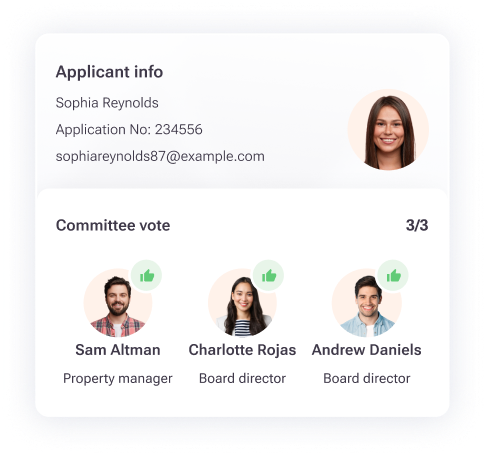
The board approval dashboard gives directors a dedicated panel to review AI-generated applicant summaries and cast votes with timestamped audit trails. QuickApprove speeds resident approvals with real-time application tracking, automated communication support, customized approval letters, and a personalized welcome package. It supports CAMs, boards, and property managers in one connected workflow while preserving board oversight and full screening.
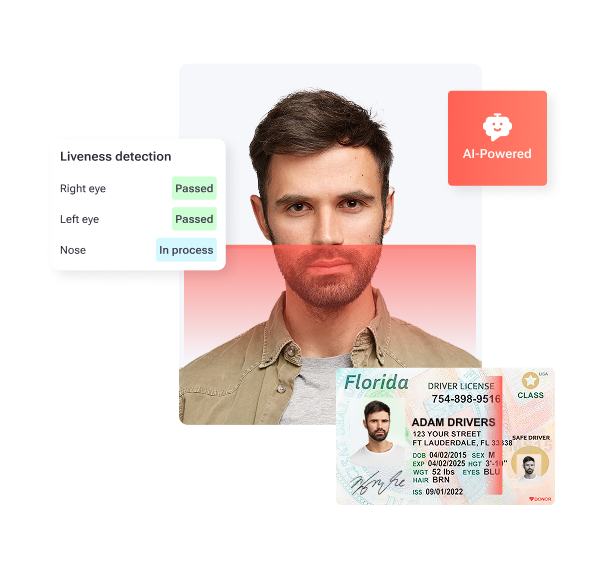
Beyond the board dashboard, TenantEvaluation layers in identity and eligibility tools. IDVerify+ provides biometric identity verification: government ID validation, AI-powered liveness detection, and facial landmark recognition. It embeds directly in the screening workflow, with no external portal redirect. 55+ Communities Verification reduces manual work, standardizes application handling, and supports documentation consistency for Florida condos and HOAs. For ongoing oversight, Lease Tracking delivers centralized, real-time lease visibility from application to occupancy. It connects onboarding, unit data, approvals, and lease documentation into one audit-ready process. To handle fees, TEpayments by Zinc collects application fees and deposits during onboarding. Payments flow directly to the association’s designated account, and TenantEvaluation never holds the funds.
TenantEvaluation acts as a direct credit bureau reseller for TransUnion and Equifax data. It enforces strict permissible purpose controls, automates adverse action workflows, and records every step in built-in audit trails. Its pay-per-application model with revenue sharing turns application processing into a compliant income stream, with no monthly subscription and no minimums.
Best for: Florida condo associations of any size, from small self-managed communities to large portfolios managed by CAMs and property management companies.
See TenantEvaluation’s board dashboard in action and confirm it fits your association’s approval process.
2. TransUnion SmartMove: Simple Landlord Tool with Association Gaps
Type: Generic landlord screening tool.
SmartMove offers pay-as-you-go pricing with no subscription: SmartCheck Basic at $25, SmartCheck Plus at $40, and SmartCheck Premium at $48 per screening. It pulls direct TransUnion data and uses an applicant-initiated model that works for occasional screenings.
SmartMove does not include a board approval workflow or voting dashboard. It lacks association-focused features such as 55+ verification, Chapter 718 support, lease tracking, and onboarding automation. Adverse action relies on a downloadable template instead of an automated workflow. For Florida condo associations that need structured board oversight and clear audit trails, TenantEvaluation’s dedicated board dashboard and automated adverse action tools cover these gaps.
Best for: Small associations screening only a few applicants per year that can operate without board voting tools or lifecycle management.
3. TurboTenant: Strong for DIY Landlords, Misaligned for Boards
Type: Generic landlord platform.
TurboTenant provides a free property management platform with unlimited properties; on the free tier the applicant pays $55 per screening, and paid plans lower the fee to $45. Screening runs on TransUnion data, and the platform syndicates listings to multiple sites.
The application form is thorough but long, which increases abandonment. TurboTenant does not include a board approval workflow, association governance features, 55+ community support, or Florida-specific compliance tools. It also lacks a board voting panel, biometric identity verification, and lease lifecycle tracking.
Best for: Individual landlords managing single-family rentals rather than condo associations with board approval requirements.
4. AppFolio: Enterprise Suite with Limited Condo Governance Focus
Type: Enterprise property management suite.
AppFolio delivers broad property management capabilities, including accounting, maintenance, leasing, and screening, in a scalable platform for large portfolios. All-in-one property management platforms typically bundle screening into a per-unit monthly fee of roughly $30 to $60.
AppFolio is optimized for multifamily rental portfolios rather than condo board governance. It does not offer dedicated board voting dashboards, and screening functions as one module among many instead of the core focus. For associations screening only a few applicants per year, the monthly subscription overhead rarely makes sense. TenantEvaluation’s board-ready approval process, FCRA-first design, and association-specific features align more closely with condo governance needs.
Best for: Large property management firms with mixed portfolios that include some condo associations.
5. Buildium: Property Management First, Association Screening Second
Type: Enterprise property management suite.
Buildium’s screening is powered by TransUnion at $17–$20 per screen, with customizable approval criteria on the Enhanced tier. The Essential plan starts at $62/month, which can feel heavy for small associations. Screening lacks association-specific features such as board voting dashboards, 55+ community verification, biometric identity verification, and lease lifecycle tracking tied to onboarding.
TenantEvaluation’s pay-per-application model with revenue sharing removes the monthly subscription burden while adding association-focused compliance features that Buildium does not provide.
Best for: Property managers already committed to Buildium for full portfolio management who only need basic screening as an add-on.
How to Choose a Screening Platform for Your Florida Condo Association
Association size and board involvement shape which platform will fit best.
- Small self-managed associations (1–10 units): Focus on cost and simplicity. Pay-per-application models avoid monthly subscription overhead. Standalone screening services that cost $25–$45 per applicant often work well for associations managing 1–10 units or screening occasionally. TenantEvaluation’s pay-per-application model with no minimums fits this profile while adding board workflow and compliance features that generic tools skip.
- Mid-size associations (11–50 units): Need board voting dashboards, audit trails, and consistent application of criteria. Purpose-built association platforms are the right category.
- Large associations and management companies (50+ units): May require enterprise features but still need board workflows and association-specific compliance. TenantEvaluation’s revenue-sharing model and large installed base make it suitable for enterprise portfolios.
When weighing budget, consider vacancy costs. A single vacant unit can lose $1,500–$3,000 per month in foregone rent, so avoiding even one week of vacancy often covers a full year of screening-tool expense. TenantEvaluation’s revenue-sharing model can turn application processing into a compliant income stream instead of a pure cost.
On compliance, FCRA alignment, adverse action automation, permissible purpose controls, and audit trails are essential. Confirm that the platform acts as a direct credit bureau reseller rather than a third-party data aggregator.
Review TenantEvaluation in a tailored demo to see how it matches your association’s size, budget, and compliance needs.
How Your Association’s Attorney Fits into Screening Decisions
Platform compliance supports your policy but never replaces it. Florida law requires associations to exercise approval rights reasonably and apply them uniformly, and arbitrary denials may not hold up. Denial grounds must connect to the declaration and withstand fair housing review.
Legal counsel should review screening criteria, approval processes, and fee structures for alignment with Florida Chapter 718, governing documents, and recent legislative changes. TenantEvaluation supplies the audit trail and documentation an attorney needs to defend the association’s decisions, while the board and counsel define the underlying policy.
Frequently Asked Questions
What is the new law for condo associations in Florida?
Recent Florida legislation introduced several significant changes for condo associations. New directors must complete a state-approved four-hour education curriculum covering milestone inspections, structural integrity reserve studies, elections, recordkeeping, financial literacy, fines, and meeting procedures, either within one year before election or within 90 days after. Associations in buildings three or more habitable stories tall must complete mandatory milestone structural inspections at 30 years of age and every 10 years thereafter, and must fund reserves based on a completed Structural Integrity Reserve Study. Unit owners can no longer vote to waive or underfund SIRS reserves for budgets adopted on or after December 31, 2024. These rules highlight the increasingly regulated environment for Florida associations. For screening specifically, FS 718.112 governs approval fees, authority requirements, and the per-applicant fee cap discussed earlier.
What tenant screening company does Zillow use?
Zillow Rental Manager uses Checkr for background checks and TransUnion for credit reports. Zillow’s screening targets individual landlords and does not include board approval workflows, association-specific compliance features, or 55+ community verification. The platform ties screening to listings, charges applicants directly, and offers a generic experience that does not match the board-driven governance model Florida condo associations follow. TransUnion SmartMove is a separate TransUnion product with similar limitations for association use.
How much can a Florida condo association charge for a background check?
Under FS 718.112, a Florida condo association may charge a screening fee only if the declaration or bylaws expressly authorize it. The $150 per-applicant cap and treatment of spouses and dependent children follow the rules described earlier in the legal landscape section. Florida law also bars any fee when a lease is renewed with the same tenant in the same unit. Associations should confirm the current statutory limit with legal counsel and verify that their governing documents authorize the fee before collecting it.
Do small self-managed Florida condo associations need a purpose-built screening platform?
Small self-managed associations often assume a generic pay-as-you-go tool will suffice. The real gap usually involves workflow rather than report cost. Missing board workflow support, audit trails, automated adverse action notices, and consistent document collection can create outsized risk. A single FCRA violation or inconsistent denial may cost far more than a purpose-built platform. TenantEvaluation’s pay-per-application model with no subscription minimums makes association-focused screening accessible without enterprise overhead.
What makes a tenant screening platform FCRA-compliant for condo associations?
FCRA compliance for condo associations depends on several capabilities. The platform must capture written applicant authorization before pulling any consumer report. It should enforce permissible purpose controls that limit who can access reports and under what conditions. Automated adverse action workflows should generate the required notice whenever a report influences a denial or conditional approval. Secure storage with audit trails must document every action taken on an application. Platforms that act as direct credit bureau resellers, rather than third-party aggregators, provide stronger data integrity and clearer compliance documentation. TenantEvaluation follows this model and treats FCRA compliance as a core design principle.
Conclusion: Choose a Platform Built for Condo Governance
Generic landlord tools like SmartMove and TurboTenant skip board workflows and association compliance features. Enterprise suites such as AppFolio and Buildium focus on broad property management and give limited attention to condo-specific governance. Report-only vendors like ApplyCheck and Verify Screening Solutions deliver raw data without onboarding automation or board dashboards.
TenantEvaluation is the only platform built exclusively for community associations. It combines FCRA-first design, direct TransUnion and Equifax reseller relationships, board approval dashboards, and biometric identity verification through IDVerify+. Florida-focused tools such as 55+ Communities Verification and accelerated approvals through QuickApprove round out the feature set. A pay-per-application model with revenue sharing supports a platform trusted by thousands of communities.
Request a customized TenantEvaluation walkthrough and see how a purpose-built platform can support your board’s next approval cycle.
