Written by: Luis Teran, Co-founder, CEO, TenantEvaluation | Last updated: September 17, 2026
Key Takeaways
- Florida law does not require HOAs to hire a management company. Self-management is a board decision unless governing documents mandate professional management.
- Before terminating a management contract, the board should complete a readiness audit of the declaration, bylaws, articles, and contract terms to avoid auto-renewal and liability problems.
- Self-management moves all statutory duties, including finances, records access, notices, covenant enforcement, and compliance calendars, directly onto volunteer directors on day one.
- Directors stay within the business judgment rule when they act in good faith and carry D&O insurance. Personal liability risk increases with self-dealing, conflicts of interest, or gross negligence.
- TenantEvaluation gives a self-managed Florida HOA the screening, approvals, lease tracking, and payment tools needed to stay compliant without a management company.
See How Self-Managed Boards Stay Compliant
Florida Law On HOA Management Companies
Chapter 720, Florida Statutes, the Florida Homeowners’ Association Act, does not mandate a management company. The chapter’s operational core, F.S. § 720.303, assigns powers and duties such as meeting notice, budget adoption, official records access, and financial reporting directly to the association and its board.
Chapter 617, Florida Statutes, the Florida Not For Profit Corporation Act, governs the corporation itself. It supplies default corporate-governance rules for directors, elections, and quorum unless HOA-specific statutes or governing documents override them.
The declaration, bylaws, and articles of incorporation may still require professional management even when the statute does not. The board should review these documents first. Attorney review of governing documents is strongly recommended before any vote on self-management.
The Pre-Termination Readiness Audit: Core Documents To Review
The readiness audit protects the association from being locked into another management term or exposed to liability on day one of self-management. Before the board votes, review each of the following items.
- Declaration – Check for any requirement to hire professional management and any language that defines management duties.
- Bylaws – Confirm whether they impose management requirements or delegate specific functions to a manager.
- Articles Of Incorporation – Look for references to management structure or mandatory management arrangements.
- Management Agreement – Review termination provisions, notice periods, and any auto-renewal clauses that extend the term.
Many Florida HOA management contracts contain auto-renewal clauses that extend the agreement for another year if notice is not given inside the contract window. Identify the renewal date and opt-out window in the executed contract before sending notice.
Termination of a Florida HOA management contract is almost always a board action unless the governing documents specify a member vote. The board vote must occur at a properly noticed meeting, with 48 hours posted under F.S. § 720.303(2). Attorney review of the management contract is recommended before notice goes out.
Under F.S. § 720.3055(2)(c), any member of a Florida HOA may move to bring a management contract to a membership vote, and a majority of members present may cancel it. When members cancel a contract this way, the association remains liable only for the reasonable value of goods and services provided up to cancellation, not for termination fees, liquidated damages, or penalties.
What Transfers To The Board On Day One
Self-management moves every statutory obligation to volunteer directors immediately. Florida law treats these as mandatory board duties, not optional administrative tasks.
- Finances And Budget: F.S. § 720.303(6) requires mailing the proposed annual budget to members at least 14 days before adoption and the adopted budget within 30 days after adoption.
- Official Records: F.S. § 720.303(5)(a) requires making official records available within 10 business days of a written request.
- Owner Notices: F.S. § 720.303(2)(a) requires posting board meeting notice at least 48 continuous hours before the meeting, and at least 14 days’ notice for annual meetings.
- Covenant Enforcement: F.S. § 720.305 caps fines at $100 per day per violation and $1,000 total per violation. It also requires at least 14 days’ written notice and a hearing before a separate fines committee.
- Vendor Contracts: The board assumes responsibility for all executory contracts and their performance.
- Insurance: Directors should confirm that master property, general liability, and fidelity bond coverage remain in force and match current risks.
- Owner Payment Collection: The board must set up a process to collect assessments, track delinquencies, and coordinate with legal counsel on collections.
Personal Liability For Florida HOA Board Members
F.S. § 720.303(1) establishes that HOA directors and officers owe an explicit fiduciary duty to the members. F.S. § 617.0830(1) requires directors to act in good faith, with the care an ordinarily prudent person would use, and in the corporation’s best interests.
F.S. § 617.0830(4) shields a director from liability for actions or failures to act when the director meets that standard. Florida courts generally avoid second-guessing board decisions when the director acted in good faith, on an informed basis, and reasonably believed the action served the association. In Sonny Boy, L.L.C. v. Asnani, 879 So. 2d 25 (Fla. 5th DCA 2004), the court held that directors are not personally liable for decisions made as directors absent fraud, self-dealing, or betrayal of trust.
The business judgment rule does not protect boards that act outside their authority, ignore governing documents, or engage in self-dealing. It does not cover fraud, criminal conduct, bad faith, ultra vires action, willful statutory violations, or gross negligence.
Florida does not require D&O insurance by statute. F.S. § 720.303(2) mandates master property, general liability, and fidelity bond coverage, but not D&O. D&O coverage should be in place before the board votes to self-manage. Statutory immunities protect outcomes, while D&O pays defense costs during litigation. D&O is a claims-made policy, which means it responds to lawsuits received during the policy year.
The Florida Compliance Calendar A Self-Managed Board Inherits
This compliance calendar shows the recurring legal deadlines that move to the board on day one. Each item is a separate statutory obligation with its own timing and consequences.
- 90-Day Board Education Certification: Under F.S. § 720.3033(1), every board member elected or appointed on or after July 1, 2024 must complete a 4-hour DBPR-approved certification course within 90 days or be automatically suspended. Directors in associations with fewer than 2,500 parcels must complete at least 4 hours of continuing education annually, while directors in larger associations must complete at least 8 hours.
- 10-Business-Day Official Records Access: Under F.S. § 720.303(5)(a), the association must make official records available to a parcel owner within 10 business days after receiving a written request. HB 1203 (2024) adds criminal penalties for knowingly destroying or concealing accounting records with harmful intent.
- Meeting Notice Requirements: Under F.S. § 720.303(2)(a), board meeting notice must be posted at least 48 continuous hours before the meeting, and annual meetings require at least 14 days’ mailed or electronic notice. Meetings that levy special assessments or change rules affecting parcel use also require 14 days’ notice.
- Budget And Reserve Obligations: Under F.S. § 720.303(6), the proposed annual budget must be mailed to members at least 14 days before adoption, and the adopted budget must be mailed within 30 days after adoption. Members holding a majority of voting interests may reject an adopted budget by petition within 21 days.
- Financial Reporting: Under F.S. § 720.303(7), financial reporting requirements scale with annual revenue and must be completed within 90 days of fiscal year end.
- Website Posting Mandate: Beginning January 1, 2025, a Florida HOA with 100 or more parcels must post specified official records on a website or mobile application under F.S. § 720.303(4)(b).
How A Florida HOA Can Fire Its Management Company
Florida HOAs can terminate management contracts, and most agreements allow termination without cause on 30, 60, or 90 days’ written notice. The most common range is 60 to 90 days. The details that control a smooth exit sit in the contract and the statutes.
- Auto-Renewal Windows: Many contracts contain auto-renewal clauses that extend the term for another year if notice is not given inside the contract window. The board should identify the renewal date and opt-out window before sending notice.
- Records Transfer: Under F.S. § 468.4334(3), a CAM and management firm must return all official records of the association within 20 business days of termination or a written request, whichever comes first. Failure creates a rebuttable presumption of willful non-compliance and triggers a statutory penalty of $1,000 per day for up to 10 business days, plus potential license suspension.
- Records-Transfer Fees: Florida statutes do not authorize a management firm to charge the association for records the association already owns under F.S. § 720.303(5). Some contracts attempt to impose large “transition” or “records-transfer” fees. Boards should refuse these charges and document the issue for a DBPR complaint.
- Owner Payments Mid-Transition: The board should confirm that bank accounts are titled in the association’s name, update authorized signers, and notify the lockbox and payment processor.
- Member Cancellation Right: F.S. § 720.3055(2)(c) allows any member to move to bring a management contract to a membership vote, and a majority of members present may cancel it. In that case, the association owes only the reasonable value of goods and services already provided.
What To Outsource Vs. What To Run On A Platform
A self-managed board can keep control while still relying on professionals and software. The key decision is which functions stay with experts and which run on a purpose-built platform instead of spreadsheets.
Functions To Outsource To Licensed Professionals
- CPA – Handles taxes, audits, and tiered financial reporting under F.S. § 720.303(7).
- Attorney – Answers legal questions, interprets governing documents, and reviews contracts before signature.
Functions To Insource On A Platform
- Resident screening and onboarding
- Biometric identity verification
- Accelerated approvals
- Lease tracking
- Application fee and deposit collection
The insourced functions above work best on a platform designed for associations. TenantEvaluation is built specifically for community associations and management companies, with FCRA compliance as a core design requirement. Trusted by more than 5,000 communities and processing about 100,000 applications annually with a 4.8/5 Google rating, TenantEvaluation gives a self-managed Florida HOA the operational backbone that remains after the management company leaves.
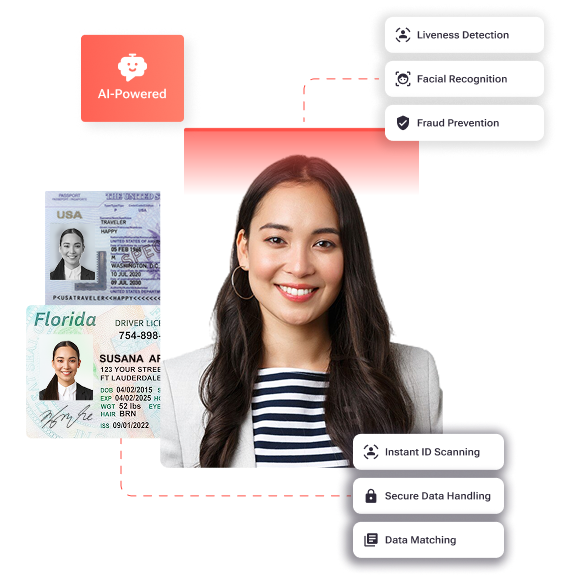
Key capabilities for a self-managed board include the following tools.

- All-In-One 100% Online Application Platform – Replaces paper applications and manual document collection so volunteer boards are not reviewing submissions by hand.
- QuickApprove – An accelerated approval workflow built for CAMs, boards, and property management teams inside one connected system. It includes real-time application tracking, automated communication, a board-ready review and voting dashboard, customized approval letters, and a personalized welcome package. The result is a faster, more consistent approval process the board can manage without losing control or visibility.
- IDVerify+ – Biometric identity verification with government ID validation, AI-powered liveness detection, and biometric selfie-to-ID comparison for verified occupants.
- 55+ Communities Verification – Reduces manual work, standardizes application handling, and supports documentation consistency for Florida condos and HOAs that manage age-restricted requirements.
- Lease Tracking – Provides one place to see every lease from application to occupancy. Because resident onboarding, unit data, approvals, and lease documents live in the same system, the board stops chasing follow-ups across spreadsheets and email threads and gains audit-ready digital lease records.
- TEpayments By Zinc – A connected payment workflow inside TenantEvaluation that collects application fees and deposits during onboarding. Payments go directly to the association’s designated account, and TenantEvaluation never holds the funds.
A Realistic Transition Sequence For Self-Managed HOAs
The following sequence reflects the standard 30–90 day Florida management transition timeline. It walks a board from the termination vote to the first fully self-managed meeting.
- Days 0–7: Hold the board vote at a properly noticed meeting. Send termination notice and a records demand by certified mail. Start bank signer changes by adding new signers before removing old ones. Notify the lockbox, payment processor, and insurance broker.
- Days 7–30: Complete records turnover, which must occur within 20 business days under F.S. § 468.4334(3). Identify vendor contracts and re-paper them as needed. Review onsite staff status.
- Days 30–60: Onboard the TenantEvaluation platform for screening, approvals, lease tracking, and payments. Complete software and portal handoff. Finalize the estoppel workflow and cross-check the owner roster.
- Days 60–90: Reconcile fees, process any security deposit refunds, and complete a physical inspection. Sign off only after confirming that all records have been delivered. Send an owner update explaining the new processes.
Florida HOA boards should confirm that bank accounts are titled in the association’s name, since co-mingled accounts have appeared in several major fraud cases. TenantEvaluation then handles screening, approvals, lease tracking, and payments during and after the transition, replacing the operational functions the management company previously ran.
What Florida HOA Records Must Be Available To Owners?
Under F.S. § 720.303(5)(a), the association must make official records available to a parcel owner within 10 business days after receiving a written request. Failure to meet the 10-day deadline creates a rebuttable presumption of willful non-compliance and can expose the association to damages and attorney’s fees.
Official records include the declaration, bylaws, rules, articles of incorporation, all contracts, meeting minutes, financial records, insurance policies, association correspondence, and documents submitted by members. Most records must be maintained for at least 7 years, with limited exemptions for personnel files, medical records, and certain attorney-client communications.
In Pecchia v. Wayside Estates HOA, 388 So.3d 1136 (Fla. 5th DCA 2024), the court held that F.S. § 720.303(5) requires strict compliance with the 10-business-day response window. Substantial compliance arguments no longer protect late responses.
How The “5 Year Rule” Shows Up In Florida HOAs
The phrase “5 year rule” does not appear as a defined term in Florida Statutes Chapter 720 or Chapter 617. Boards often hear it used loosely, and it can refer to several different concepts.
- Board Certification Validity: HOA board education certificates are valid for 4 years under F.S. § 720.3033(1)(c).
- Records Retention: Florida HOA official records must generally be maintained for at least 7 years under F.S. § 720.303(5).
- Statute Of Limitations: Different civil claims carry different limitation periods, and Chapter 720 does not create a single, uniform “5 year rule” for HOA disputes. The applicable period depends on the type of claim and should be confirmed with association counsel.
- Developer Transition: Florida HOA governing documents may specify a 5-year developer turnover period. The statute works differently. F.S. § 720.307 sets turnover triggers based on parcel-conveyance percentages, such as three months after 90 percent of parcels are conveyed. Any 5-year term comes from the documents, not from the statute.
Boards should ask association counsel to interpret any specific “5 year” reference that appears in their governing documents or contracts.
Frequently Asked Questions
Can You Have An HOA Without A Management Company?
Yes. Florida law does not require an HOA to hire a management company. A community that self-manages places all statutory duties under Chapters 720 and 617 directly on the board, including meeting notice, budget adoption, records access, financial reporting, and covenant enforcement.
What Is The New Law In Florida For HOA?
HB 1203 (2024) and HB 1021 (2024) introduced mandatory board education, website posting requirements for associations with 100 or more parcels, criminal penalties for records destruction and kickbacks, and revised fining procedures. Directors elected or appointed on or after July 1, 2024 must complete a 4-hour DBPR-approved certification course within 90 days. HB 913 (2025) focuses on condominiums under Chapter 718 and expands DBPR investigative authority over board-education violations.
Does Every HOA Need A Management Company?
No. Neither Chapter 720 nor Chapter 617 requires a management company. Governing documents can still impose management requirements that go beyond the statute. The board should review the declaration, bylaws, and articles of incorporation before deciding that self-management is allowed for their association.
Can You Get Rid Of A Management Company?
Yes. Termination almost always occurs through a board vote unless the governing documents require a member vote. The board should review the management agreement for termination provisions, notice periods, and auto-renewal clauses before sending notice. Under F.S. § 468.4334(3), the management firm must return all official records within 20 business days of termination. Florida statutes do not authorize records-transfer fees for records the association already owns.
Do HOA Board Members Get Sued?
Yes. Directors can face personal liability for breaches of fiduciary duty that involve self-dealing, conflicts of interest, or gross negligence. The business judgment rule under F.S. § 617.0830 protects good-faith decisions made on an informed basis, but statutory immunities protect outcomes rather than cash flow during litigation. D&O insurance should be in place before a board votes to self-manage because it pays defense costs while those defenses play out.
Conclusion
Florida law does not require your HOA to hire a management company, yet self-management moves every statutory duty to volunteer directors on day one. Before the board votes to terminate, the association should complete a readiness audit, map its compliance calendar, confirm D&O coverage, and select a platform for operational functions that cannot live in spreadsheets.
TenantEvaluation is built for community associations and management companies, with FCRA compliance at the core. Resident screening, biometric identity verification through IDVerify+, accelerated approvals through QuickApprove, centralized lease tracking, and connected payment collection through TEpayments By Zinc all sit inside one connected platform. Self-management becomes a practical operational choice when the right platform is in place before the management company steps away.
