Written by: Luis Teran, Co-founder, CEO, TenantEvaluation
Key Takeaways for Florida 55+ Community Compliance
- HOPA requires 55+ communities to keep at least 80% of occupied units with one resident aged 55 or older, supported by senior-focused policies and reliable age verification.
- Florida CAMs should follow a clear seven-step process that covers biennial surveys, supporting documents, 80/20 calculations, and HUD-ready records.
- Under-55 spouses can usually live with qualifying residents, while minors are generally limited to short visits of about 15 to 30 days per year.
- No valid loopholes exist. Communities that fail verification risk losing HOPA exemption and facing HUD enforcement actions.
- CAMs can streamline 55+ verification with TenantEvaluation’s automated platform by booking a personalized demo.
How the 80/20 Rule Works in 55+ Communities
The Housing for Older Persons Act (HOPA) of 1995 creates a specific exemption from Fair Housing Act familial status protections for qualifying age-restricted communities. Under HOPA, a housing community qualifies for exemption by meeting three criteria: at least 80% of occupied units must be occupied by at least one resident aged 55 or older, the community must have policies, programs, or amenities intended for older adults, and reliable procedures for age verification must be in place.
The 80/20 rule sits at the center of HOPA compliance. At least 80% of a qualifying 55+ community’s occupied residential units must be inhabited by at least one person aged 55 or older, which keeps the primary population focused on older adults. This calculation excludes vacant units. Communities must monitor occupancy on an ongoing basis to preserve exemption status.

For Florida communities specifically, understanding how state law interacts with these federal requirements is critical. Florida’s implementation of HOPA aligns with federal rules while adding state condominium and HOA statutes. Florida community association laws governing condominiums and homeowners associations interact with federal HOPA requirements for 55+ communities, particularly age-verification documentation, resident surveys, and published policies and procedures. Community Association Managers must understand both federal HOPA standards and Florida’s regulatory framework to maintain full compliance.
CAMs can confirm that their community meets HOPA requirements by using structured tools and digital workflows. Explore TenantEvaluation’s compliance solutions and see the compliance workflow in a live demo.
Seven Practical Steps to Verify 55+ Condo Compliance in Florida
Florida CAMs and HOA boards protect HOPA status by following a consistent seven-step verification process.
1. Review Governing Documents: Examine your community’s declaration, bylaws, and rules to confirm age-restriction language aligns with HOPA requirements and Florida statutes. This review creates the legal foundation for every verification procedure you use.
2. Conduct Resident Survey: Distribute mandatory age verification surveys to all occupied units at least once every two years, and request each household to complete and return the survey form. These surveys supply the core data for your age roster.
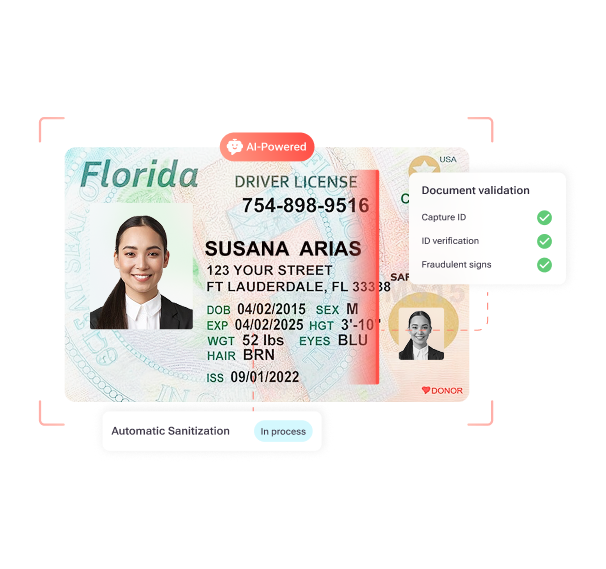
3. Collect Supporting Documentation: Require residents to submit proof of age documents such as driver’s licenses, passports, birth certificates, or signed affidavits. These records verify survey responses and create a documentary trail that can withstand HUD review.
4. Calculate 80/20 Compliance: Calculate whether your community meets the 80% threshold established by HOPA, excluding vacant units from the calculation. Use your age roster and occupancy records to confirm that the community still qualifies as 55+ housing.
5. Document for HUD: Collect, organize, and maintain age verification documentation in audit-ready condition to protect exemption status. Store surveys, affidavits, and calculation worksheets in a central, easily accessible system.
6. Annual Recertification: Run annual compliance calculations and track occupancy changes throughout the year. This ongoing monitoring helps you catch potential issues early, before they threaten HOPA status.
7. Integrate into Applications: Require age verification as part of the standard application process for all new buyers and renters prior to move-in. This integration keeps your age roster current and reduces last-minute approval problems.
| Verification Step | Required Documentation | Frequency |
|---|---|---|
| Initial Survey | Verification surveys and affidavits | Biennial |
| New Resident Screening | Proof of age | Per Application |
| Compliance Calculation | Occupancy records, age roster | Annual |
CAMs can reduce manual effort by automating these steps with TenantEvaluation’s 55+ Communities Verification. See how automated surveys and age calculations work in a live demo.

Under-55 Residents and Guests in Florida 55+ Condos
HOPA allows limited exceptions to the 55+ age requirement in specific situations. HOPA permits limited exceptions such as allowing a spouse or partner under 55 to live with a 55+ resident. These exceptions help preserve household stability without changing the senior focus of the community.
Florida 55+ communities often add more detailed rules for younger residents and visitors. Most Florida 55+ communities permit younger spouses under 55 to reside with a qualifying resident who is 55 or older, though some impose a minimum age such as 40 or 45 on non-qualifying spouses. Most Florida 55+ communities prohibit minors under age 18 or 19 from permanent residency but allow visits for limited periods, typically 15 to 30 days per year. CAMs should confirm that these limits appear clearly in governing documents and resident communications.
Why Loopholes Do Not Exist for 55+ Communities
No legitimate loopholes exist for HOPA compliance requirements. A housing community that fails to maintain HOPA qualification thresholds, such as the 80% occupancy rule or age-verification procedures, loses its senior housing exemption and becomes subject to familial status discrimination claims. Communities that try to bypass verification or relax documentation standards expose themselves to significant legal risk.
HUD’s Office of Fair Housing and Equal Opportunity (FHEO) investigates fair housing complaints involving age-restricted communities. Title VIII of the Civil Rights Act of 1968 requires HUD to complete investigations of each Title VIII fair housing complaint within 100 days of the date it was filed unless it is impracticable to do so. Documentation gaps, inconsistent verification procedures, or failure to maintain the 80/20 threshold can trigger enforcement actions and substantial penalties.
Common compliance challenges include manual survey processes, inconsistent application handling, and fraud risks from weak identity verification. These vulnerabilities highlight the need for structured documentation systems and strong identity checks to protect community exemption status.
Communities can reduce these risks by using tools that combine age verification, document tracking, and identity validation. Learn how IDVerify prevents identity fraud in 55+ applications.

Digital Application Workflows for Florida 55+ Communities
Integrating verification requirements into resident onboarding workflows keeps compliance consistent across every application. Florida 55+ condos and HOAs gain predictable processes that cut manual work, improve documentation quality, and support smoother board decisions.
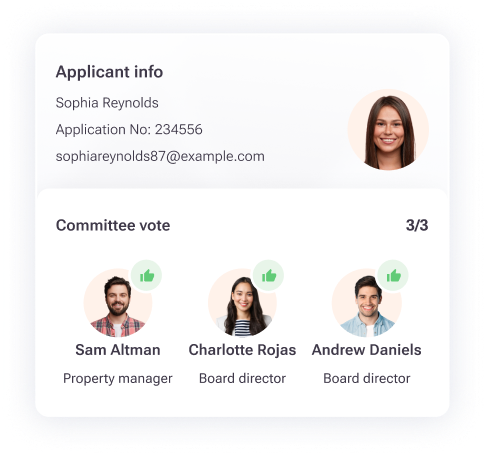
TenantEvaluation’s 55+ Communities Verification offers an all-in-one platform tailored to Florida condos and HOAs. This solution reduces manual tasks, standardizes application handling, and supports consistent documentation. It is designed for Community Association Managers who want stronger internal controls and faster approvals. The platform includes custom rules, intelligent forms, and the QuickApprove dashboard built on an FCRA foundation, serving more than 5,000 communities and processing over 100,000 applications each year.
Unlike competitors such as ApplyCheck or Verify Screening Solutions, TenantEvaluation provides end-to-end automation with a specialized board dashboard that fits 55+ workflows. The platform also integrates biometric identity verification through IDVerify to prevent fraud and confirm applicant identity before boards issue approval decisions. The following comparison shows how automation shortens processing time and improves audit readiness compared to manual methods.
| Process Element | Manual Method | TenantEvaluation |
|---|---|---|
| Application Processing Time | Several days | 5-10 minutes |
| Document Collection | Email/PDF exchanges | Automated digital upload |
| Age Verification | Manual review | Integrated compliance checks |
| Audit Trail | Paper files | Digital documentation |
CAMs ready to modernize their workflows can start with a guided implementation. Request a walkthrough of TenantEvaluation’s 55+ verification process.
Conclusion: Keeping Florida 55+ Communities Confidently Compliant
Maintaining HOPA compliance depends on structured verification procedures, complete documentation, and regular monitoring of the 80/20 rule. Florida CAMs and HOA boards need age verification workflows that fit naturally into resident onboarding while limiting audit exposure.
TenantEvaluation serves as a specialized Florida platform for 55+ community verification, having generated $150M for communities with a 4.8/5 Google rating. The platform’s focus on Florida condos and HOAs, combined with comprehensive compliance tools and board-specific dashboards, gives CAMs practical support for managing age-restricted housing.
Effective next steps include auditing current verification processes, adopting digital standardization tools, and putting consistent documentation procedures in place. Communities that strengthen their verification workflows now position themselves for long-term compliance and smoother operations.
CAMs can see these workflows in action with a tailored product tour. Schedule a TenantEvaluation demo for your 55+ community.
Frequently Asked Questions
What documents prove 55+ status in Florida communities?
Communities must collect reliable proof of age from residents using methods such as surveys and affidavits. They must also maintain copies of verification documents in audit-ready condition to protect HOPA exemption status.
How often must Florida 55+ communities recertify age compliance?
HOPA requires biennial age verification surveys distributed to all occupied units at least once every two years. Communities should also run annual compliance calculations and include age verification in every new resident application to maintain continuous compliance.
Are there Florida-specific differences in 55+ community requirements?
Florida applies HOPA requirements through state condominium and HOA statutes, so communities must align federal age-restriction standards with Florida community association laws. This alignment includes specific documentation expectations and integration with Florida’s regulatory framework for community associations.
What are the rules for children visiting 55+ communities?
Most Florida 55+ communities prohibit permanent residency for minors under 18 or 19 but allow visits for limited periods, typically 15 to 30 days per year. Exact visitor policies vary by community and should appear clearly in governing documents.
What tools help automate 55+ application verification?
TenantEvaluation’s 55+ Communities Verification offers automation for Florida condos and HOAs, including digital document collection, automated compliance checks, biometric identity verification, and board-specific approval dashboards designed for age-restricted community workflows.
