Written by: Luis Teran, Co-founder, CEO, TenantEvaluation
Key Takeaways for Florida CAMs and Boards
- Florida HOAs and condominium associations face governance, compliance, and fraud challenges that generic landlord screening tools do not address.
- FCRA compliance, board voting dashboards, 55+ age-verification workflows, and biometric identity verification are now core requirements for defensible tenant screening.
- Biometric verification, standardized 55+ processes, centralized lease tracking, and revenue-sharing models define emerging best practices for 2026.
- TenantEvaluation leads this comparison with direct credit bureau access, QuickApprove board dashboards, native IDVerify biometrics, and Florida-specific CAM capabilities.
- See how TenantEvaluation addresses these challenges at TenantEvaluation.
Why Tenant Screening Has Become More Complex for Florida HOAs and CAMs
Florida Community Association Managers now operate in an environment that generic landlord tools cannot support well. High application volumes, coordination with realtors and unit owners, 55+ eligibility documentation, and board approval cycles all add pressure. When teams rely on email chains, spreadsheets, and manual document review, they end up with fragmented lease records, incomplete submissions, and approval bottlenecks that slow onboarding and increase liability.
The fraud dimension has grown substantially and now affects everyday operations. Snappt’s 2026 Multifamily Fraud Report found that 5.1% of the 1.46 million rental applications analyzed contained edited or fabricated documents, totaling 86,000 fraudulent submissions in a single year. This trend reflects a broader surge in rental application fraud. The National Multifamily Housing Council (NMHC) reported an approximate 40% increase in rental application fraud between 2023 and 2024. AI-generated documents now drive much of this growth. Inscribe’s fraud intelligence reporting documented a 500% increase in AI-generated fraudulent documents between April and December 2025. These findings show how quickly synthetic fraud is outpacing traditional detection methods.
A fraudulent tenant who passes screening can generate substantial losses before eviction is complete. Losses can include unpaid rent, property damage, legal costs, and vacancy. According to NMHC, nearly 24% of all eviction filings over a three-year period stemmed from fraudulent applications. For Florida community associations managing dozens or hundreds of units, these issues represent material financial and governance risk, which makes a more rigorous screening approach essential.
Compliance, Risk, and Governance Requirements for Florida Associations
The Fair Credit Reporting Act (FCRA) applies to any entity, including Florida condominium associations and HOAs, that uses a consumer report to make a housing decision. Landlords and property managers must obtain written consent from a prospective tenant before pulling a consumer report and must also provide the applicant with a summary of their rights under the FCRA. This consent requirement protects applicants from unauthorized credit checks and starts the compliance process. Any denial based on credit report information then triggers an FCRA adverse action notice requirement: the screening agency must be identified, the agency must be confirmed as not having made the decision, and the applicant must be informed of the right to dispute the report and obtain a free copy within 60 days.
Florida condominium associations and HOAs are subject to the same FCRA adverse action notice requirements (15 U.S.C. § 1681m) as other landlords: if an application is denied based on a credit report, the applicant must receive written notice including the name and contact details of the reporting agency. Florida law also sets limits on condominium association lease approval fees per applicant, and specific rules apply when screening active-duty military service members. These layers of federal and state rules create a compliance framework that boards and CAMs must manage consistently.
Generic landlord tools typically lack the permissible purpose controls, automated adverse action workflows, and audit trail infrastructure that community associations require. Fair Housing complaints can originate from the screening process, and violations can carry civil penalties and compensatory damages. Board oversight responsibilities compound this exposure. Without a dedicated board dashboard, approval decisions lack the documented audit trail that defensible governance requires.
Operational Best Practices for Tenant Screening in 2026
Four operational shifts now define best-in-class tenant screening for community associations in 2026.
- Biometric identity verification: Biometric ID verification systems significantly improve fraud prevention compared to traditional methods. Moving from document-based review to biometric-confirmed identity has become a recognized fraud-prevention standard.
- Standardized 55+ workflows: Under 24 CFR § 100.307, 55+ communities must verify compliance via reliable surveys and affidavits and must develop procedures for routine occupancy determination that provide for regular updates through surveys or other means, without any mandated interval such as every two years. Fragmented manual processes create documentation gaps that jeopardize HOPA exemption status.
- Centralized lease visibility: Structured digital workflows that include automated lease tracking and board approval processes reduce property management staff administrative time and improve accuracy.
- Revenue-sharing models: Platforms that deduct service fees from collected application fees and rebate the remainder to the association convert a cost center into a controlled income stream without upfront subscription costs.
How to Evaluate Tenant Screening Platforms for Your Association
Florida CAMs and board members evaluating tenant screening software can assess platforms across six practical dimensions that reflect these best practices.
- Compliance depth: Determine whether the platform operates as a direct credit bureau reseller with built-in adverse action workflows, permissible purpose controls, and audit trails, or whether it relies on third-party data aggregators.
- Board visibility: Confirm that a dedicated board dashboard exists with real-time application status, voting capability, and timestamped decision records.
- Fraud prevention: Check whether the platform includes biometric identity verification natively or redirects applicants to external portals that disrupt the workflow.
- Time savings: Review how the platform automates document collection, incomplete-submission rejection, and communication, instead of pushing this work onto manual follow-up.
- Pricing structure: Compare per-application pricing with revenue-sharing against flat monthly subscriptions that apply regardless of application volume.
- Florida-specific capabilities: Verify support for 55+ age-verification workflows, Florida fee caps, military applicant deadlines, and CAM-specific governance requirements.
Ready to evaluate these six dimensions in your own workflow? Compare TenantEvaluation’s features against your current process.
2026 Comparison of Top Tenant Screening Software
The table below compares leading platforms on three criteria that matter most to Florida community associations. Platforms without a documented feature are marked as not available (N/A). Pricing and feature data reflect publicly available information as of July 2026.
| Platform | FCRA Compliance Architecture | Board Dashboard / 55+ Support / Biometric Verification |
|---|---|---|
| TenantEvaluation — Best for Community Associations | Direct TransUnion & Equifax reseller, built-in adverse action workflows, permissible purpose controls, full audit trails | Board voting dashboard (QuickApprove), 55+ Communities Verification, native biometric verification (IDVerify) |
| Avail | FCRA-compliant reports via third-party provider, adverse action notice guidance provided to landlord | N/A board dashboard, N/A 55+ support, N/A biometric verification |
| TransUnion SmartMove | FCRA-compliant credit and background reports, adverse action notice templates available | N/A board dashboard, N/A 55+ support, N/A biometric verification |
| RentSpree | FCRA-compliant screening reports, adverse action support documentation | N/A board dashboard, N/A 55+ support, N/A biometric verification |
| TurboTenant | FCRA-compliant screening via third-party provider | N/A board dashboard, N/A 55+ support, N/A biometric verification |
Generic landlord platforms such as Avail, SmartMove, RentSpree, and TurboTenant provide FCRA-compliant screening reports that work for individual landlords. None of them offer a board voting dashboard, standardized 55+ age-verification workflows, or native biometric identity verification. They were not designed for the governance structure, audit requirements, or Florida-specific regulatory environment of community associations. ApplyCheck and Verify Screening Solutions offer background check services for associations but rely on the TazWorks platform, which lacks applicant interaction, automated document review and redaction, and a board-facing approval interface.
Why TenantEvaluation Leads for Community Associations
TenantEvaluation is built specifically for community associations and management companies, with FCRA compliance as the foundation, not an afterthought. Founded in 2007 by property managers, board members, and software engineers with over 50 years of combined experience, TenantEvaluation serves more than 5,000 communities and processes approximately 100,000 applications annually across Florida.
As a direct reseller of TransUnion and Equifax data, not a third-party data aggregator, TenantEvaluation accesses credit bureau data under strict bureau rules with regular compliance reviews and audits. This approach eliminates gray-market data exposure and protects community associations from liability tied to unverified data sources. Permissible purpose controls, automated adverse action workflows, and built-in audit trails for every application function as structural features of the platform.
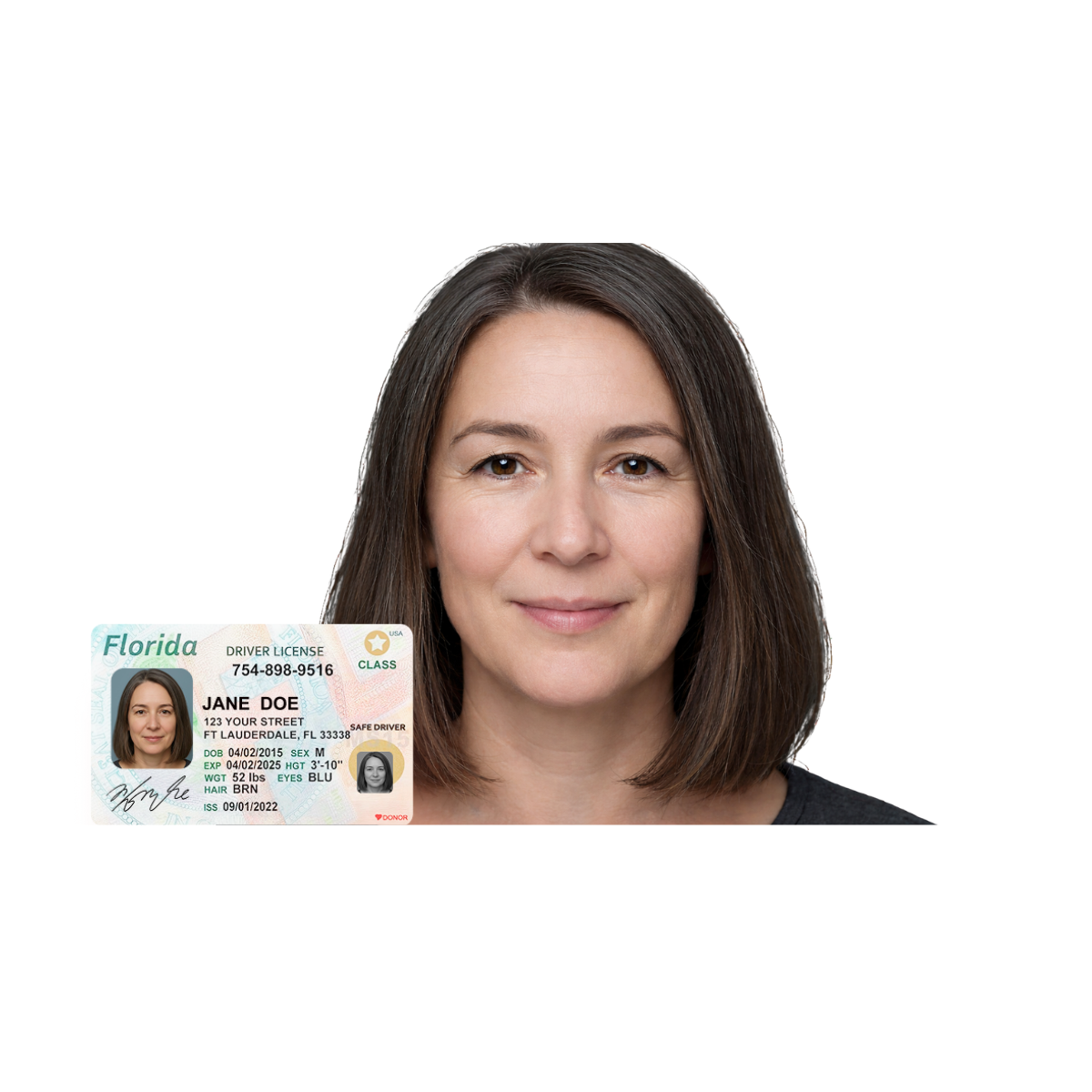
IDVerify introduces biometric identity verification directly inside the TenantEvaluation workflow, with no external portals and no workflow disruption. It combines government-issued ID validation, AI-powered liveness detection, and biometric selfie-to-ID facial matching into a layered fraud-prevention system. Traditional identity verification methods take 2–3 business days, while biometric systems complete verification in real time. IDVerify can be enabled per community and configured per portfolio, which supports different risk profiles without a one-size-fits-all approach.

QuickApprove is TenantEvaluation’s accelerated approval workflow built for CAMs, boards, and property management teams. It replaces email chains and spreadsheets with real-time application tracking, automated communication support, customized approval letters, a personalized welcome package, and a board-ready voting dashboard, all inside one connected platform. Structured digital approval workflows can reduce board approval cycle times in Florida condominium associations and create a clear audit trail.

55+ Communities Verification standardizes how age-restricted application requirements are handled across applications for Florida condos and HOAs. It reduces manual work, improves documentation consistency, and strengthens internal operational control. The feature supports the age-verification requirements that protect HOPA exemption status without replacing legal guidance.
Lease Tracking connects resident onboarding, unit data, approvals, and lease documentation into one centralized, real-time workflow. CAMs and boards gain real-time lease status visibility, including active, pending, expired, or missing leases. Automated lease document collection during onboarding, unit-level tracking, searchable digital history, and audit-ready records replace spreadsheets and scattered email chains with a single operational source of truth.
TenantEvaluation’s revenue-sharing model deducts its service fee from collected application fees and rebates the remainder to the association or management company. This structure turns application processing into a compliant, controlled income stream with no upfront subscription cost. The platform has already generated $150 million for the communities it serves.
Frequently Asked Questions
How does FCRA apply to tenant screening by Florida condominium associations and HOAs?
The Fair Credit Reporting Act applies to any entity that uses a consumer report, including a credit report, background check, or eviction history, to make a housing decision. Florida condominium associations and HOAs fall within this scope. When an association denies an application, requires a co-signer, or imposes a higher deposit based on information in a screening report, it must deliver a written adverse action notice to the applicant. That notice must include the screening agency’s identity and contact information, clarify that the agency did not make the rental decision, and explain the applicant’s dispute and free-report rights. Written applicant consent must be obtained before any consumer report is pulled, and screening criteria must be applied consistently to every applicant to avoid Fair Housing exposure. Florida Statutes § 718.112 also caps condominium association application fees at $150 per applicant. Platforms that automate adverse action workflows, maintain permissible purpose controls, and generate complete audit trails reduce the compliance burden on association staff and boards significantly.
What should boards look for in tenant screening software for 55+ communities?
Florida 55+ communities must meet a three-part test to maintain their HOPA exemption. They must satisfy the 80% occupancy rule, maintain published policies demonstrating intent to operate as 55+ housing, and complete regular age verification using reliable records such as driver’s licenses, birth certificates, or passports. A loss of exemption on any one of these requirements removes the community’s protection from familial-status discrimination claims under the Fair Housing Act. Boards should look for screening software that standardizes how age-restricted documentation is collected and stored across all applications, reduces reliance on manual email and PDF follow-ups, and creates consistent records that support internal operational control. The platform should be designed specifically for Florida condos and HOAs rather than adapted from a generic landlord tool, and it should improve documentation consistency without replacing legal guidance on HOPA compliance.
How can community associations reduce identity fraud in rental applications?
Traditional screening methods that rely on document uploads and database checks no longer provide sufficient protection. As noted earlier, fraud detection reports have documented both the scale of the problem, with tens of thousands of fraudulent submissions annually, and its acceleration, with AI-generated documents increasing sharply within a single year. The most effective fraud-reduction approach in 2026 combines document-based screening with biometric identity verification. This approach confirms that the applicant is physically present, alive, and matched to their government-issued ID before the application proceeds to review. Biometric systems that include government ID validation, AI-powered liveness detection, and facial biometric matching address synthetic identity fraud, impersonation attempts, and stolen ID use in ways that document review alone cannot. Associations should also implement smart application logic that rejects incomplete submissions automatically, which reduces the manual review burden and the risk of fraudulent documents slipping through an overloaded review queue.
What are the benefits of centralized lease tracking for CAMs and boards?
Fragmented lease management, including missing lease copies, manual expiration tracking, disconnected spreadsheets, and no centralized visibility, creates operational blind spots that slow teams and increase compliance risk. Centralized lease tracking connects resident onboarding, unit data, approvals, and lease documentation into one real-time workflow, giving CAMs and boards visibility into lease status across every unit, including active, pending, expired, or missing leases. For CAMs, this structure supports faster administrative workflows, fewer manual follow-ups, and instant confirmation of occupancy status instead of time-consuming searches across folders and inboxes. For boards, it provides a clearer operational picture of community occupancy and resident activity, with audit-ready digital records that support compliance readiness. For community associations managing high onboarding volume, centralized lease tracking enables scalable operations without adding headcount and removes the compliance risk tied to incomplete or disconnected lease records.
Conclusion: Selecting Tenant Screening Software for Your Florida Community
Generic tenant screening software leaves Florida community associations exposed to identity fraud, FCRA compliance gaps, fragmented lease records, and approval workflows that do not align with board governance. The operational and legal stakes, including potential Fair Housing penalties, fraud-related losses per fraudulent tenancy, and the administrative cost of manual processes, make platform selection a governance decision rather than a simple technology purchase.
Specialized platforms built for community associations deliver what generic landlord tools cannot: compliance infrastructure built into the platform architecture, biometric identity verification, board-ready approval dashboards, standardized 55+ workflows, centralized lease tracking, and Florida-specific CAM capabilities. TenantEvaluation combines all of these elements into one connected platform, backed by direct credit bureau reseller status, more than 5,000 communities served, and a revenue-sharing model that turns screening into a controlled income stream.
If your association is ready to move beyond generic landlord tools, request a walkthrough of TenantEvaluation’s community-specific platform and see how direct bureau access, board dashboards, and biometric verification work in practice.
