
Key Takeaways
- Florida HOAs and condos face higher application volumes, stricter regulations, and resident expectations for digital-first experiences, which strain manual screening processes.
- Automated tenant evaluation reduces errors and compliance risk, centralizes documentation, and creates clear audit trails for Florida-specific and federal housing rules.
- AI screening tools shorten decision times, support consistent criteria, and can flag income, ID, and document fraud with far greater accuracy than manual review.
- A structured rollout plan that includes training, clear communication, and configurable workflows helps boards and managers adopt automation without losing control of approvals.
- Tenant Evaluation offers an all-in-one platform built for Florida associations that streamlines applications, strengthens compliance, and can add new revenue, so boards and CAMs can modernize resident onboarding in 2026.
Why Tenant Evaluation Automation Matters for Florida HOAs & Condos in 2026
Reducing Administrative Strain in Resident Onboarding
Resident onboarding in Florida communities now involves higher application counts, more third-party stakeholders, and tighter timelines. Applicants expect clear digital steps, while CAMs juggle document collection, payment coordination, and board communication. Manual processes often stretch a single file across email, spreadsheets, and paper, which slows decisions and increases the chance of lost information.
Lengthy approval cycles create pressure for residents, realtors, and boards. Some communities report staff spending many hours per application on follow-ups and verification. Automated workflows centralize tasks, apply rules consistently, and reduce repetitive work so managers spend more time on resident relations and operations.
Lowering Legal and Compliance Risk
Manual screening exposes HOAs and condos to data security issues and inconsistent application of rules. Handling credit reports, IDs, and background checks in email or paper increases the risk of breaches and misplaced files. Inconsistent criteria can also create exposure under Fair Housing and FCRA requirements.
Automated systems log every action and create a single record for each file. Standardized workflows and templates support Florida-specific requirements while simplifying documentation for audits, disputes, or legal reviews.
Creating Efficiency and New Revenue Streams
Automation reduces time spent on data entry, document chasing, and status updates. CAMs and board members gain visibility through dashboards instead of relying on scattered email updates. Faster approvals help reduce vacancy windows and support timely closings, which benefits residents and realtors.
Digital fee collection and optional revenue-sharing models turn parts of the screening process into a predictable income stream for the association, without adding staff hours.
Key Concepts in Tenant Evaluation Automation
What Automated Screening and Onboarding Include
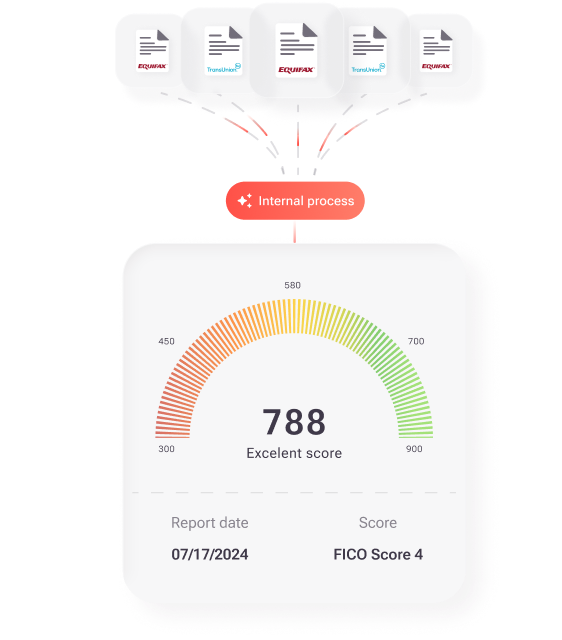
Automated tenant screening replaces paper packets and ad hoc emails with a guided online application. Applicants upload documents, authorize background checks, and pay fees through a secure portal. The system gathers and verifies data, runs credit and background checks, and routes applications to the right decision-makers.
Routine tasks move to software, while boards and managers keep authority over approvals. Human review focuses on community fit and compliance with association documents, not on chasing missing forms.
Core Components of a Modern Platform
Modern systems typically include:
- Online portals with logic that adjusts questions for tenants, purchasers, or additional occupants.
- AI-driven analysis that looks beyond a single score, evaluating income stability, payment patterns, and rental history.
- Automated document checks for IDs, leases, association forms, and required disclosures.
- Integrated credit, criminal, and employment screening with clear summaries for boards.
- Built-in payment processing and system-generated audit trails.
Reframing Property Management as Strategic Work
Automated screening frees CAMs from low-value administration so they can focus on policy, resident satisfaction, and capital planning. Boards gain structured views of applicants instead of PDF stacks.
Dashboards provide application status, document completeness, and voting tools in one place. Decisions become faster and more consistent, with a permanent record of how each file was handled.
Explore how Tenant Evaluation aligns with your board’s existing approval rules.
Trends Shaping Automated Tenant Evaluation in Florida
Using AI and Machine Learning for Better Screening
AI-based screening can cut processing time from days to minutes and apply consistent criteria to every file. Algorithms review patterns in employment, income, and payment behavior that are difficult to track manually.
Predictive analytics are also emerging to forecast tenant behavior and identify risk signals earlier. These tools support boards with clear, structured summaries rather than raw data.
Improving Applicant Experience with Personalization
Digital screening also improves the resident journey. AI-driven tools can tailor communication, highlight relevant requirements, and guide applicants to suitable homes.
Multi-language support, mobile-friendly design, and 24/7 self-service help reduce confusion and inbound questions to the management office.
Keeping Pace with Regulations Through Digital Records
Regulation changes quickly in housing. Centralized platforms can update workflows and templates once, then apply them across all communities using the system. This structure helps Florida associations stay aligned with evolving state and federal rules.
Automated document management that extracts key data from contracts and agreements helps reduce errors and maintain compliance. Detailed system logs support audits and legal reviews.
Practical Steps to Implement Automation in Your Association
Reviewing Your Current Onboarding Process
Effective implementation starts with a process map. Document who touches each application, which tools they use, how long steps take, and where delays occur. Include time spent by CAMs, assistants, and board members.
Common friction points include unclear requirements, inconsistent communication, and manual payment handling. These details guide platform selection and set a baseline for measuring improvement.
Choosing the Right Platform for Florida HOAs and Condos
Boards benefit from solutions built for community associations, not only for rental portfolios. Look for support for association documents, tenant and purchaser workflows, and configurable board approval steps.
Security should include strong encryption, PCI-compliant payments, and role-based access. Integration with accounting and existing management systems reduces duplicate work, while intuitive interfaces lower training time for staff, applicants, and board members.
Driving Adoption with Training and Communication
Successful rollouts focus on people as much as technology. Boards and CAMs need clear explanations of how the system supports their responsibilities and preserves decision authority.
Announcements to residents and realtors should emphasize faster decisions, clearer instructions, and secure document handling. Pilot phases with a limited building or file type can build confidence before full deployment.
Schedule a Tenant Evaluation pilot to test automation with a controlled group of applications.
Managing Common Challenges in Automated Tenant Evaluation
Protecting Data Security and Applicant Privacy
Security should be central to any platform decision. Leading tools use encrypted storage and transmission, regular backups, and payment systems that meet strict PCI standards. Role-based access limits who can see sensitive data.
Privacy controls should include clear disclosures, consent tracking, and the ability to honor data deletion requests in line with applicable laws.
Addressing Concerns About Technology Change
Boards and managers may worry that automation is complex or will shift control. Clear training, simple user interfaces, and visible early wins can ease these concerns.
Demonstrations that show how a single file moves from application to decision help stakeholders see that the system supports, rather than replaces, their judgment.
Supporting Unique Community Rules
Each association has its own bylaws and screening rules. Platforms should support custom fields, distinct workflows for owners and renters, and flexible document checklists.
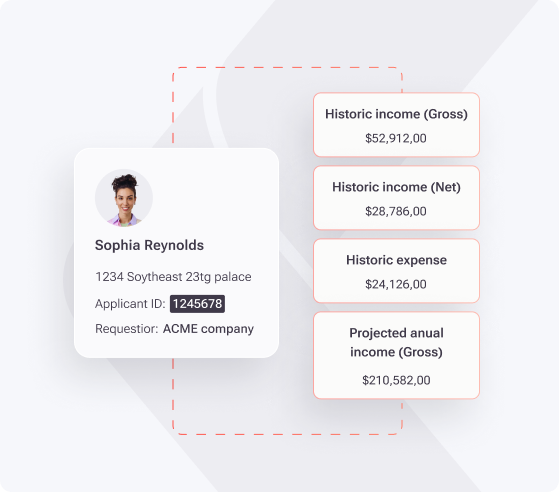
The system should follow your rules, including specific income thresholds or occupancy limits, rather than forcing a one-size-fits-all approach.
Best Practices and Standards for Automated Screening
Benefits of an All-in-One Platform
All-in-one solutions consolidate applications, payments, screening, and board review in one place. This reduces vendor sprawl, training requirements, and integration work.
Unified data supports consistent reporting across properties, clearer compliance documentation, and easier analysis of approval times, denial reasons, and resident outcomes.
Improving Accuracy with Intelligent Forms
Dynamic forms increase accuracy by showing only relevant questions and preventing missing data. Rental applicants see lease-related prompts, while purchasers see financing fields.
Real-time validation flags incomplete or contradictory information before submission, which reduces back-and-forth and speeds decisions.
Giving Boards Clear Visibility and Control
Board-focused dashboards show applications awaiting review, key risk indicators, and past decisions. Digital voting panels and standardized summaries improve transparency and shorten meetings.
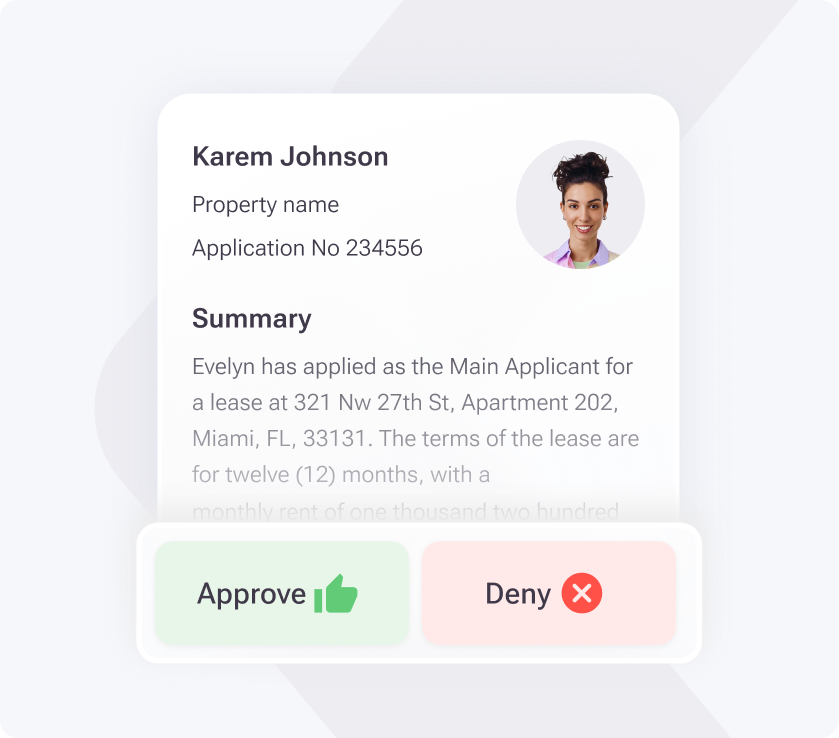
This structure supports consistent, documented decisions that align with governing documents.
|
Feature or Metric |
Tenant Evaluation |
Traditional Manual Processes |
|
Processing Time |
Minutes to hours with AI-supported review |
Days to weeks |
|
Compliance Risk |
Lower, with automated rules and audit trails |
Higher, with fragmented records and human error |
|
Administrative Burden |
Reduced, through automated workflows |
High, with manual data entry and follow-ups |
|
Fraud Detection |
High, with AI document and data checks |
Lower, reliant on manual review |
|
Board Transparency |
High, using dashboards and tracked votes |
Low, using email chains and paper packets |
|
Revenue Generation |
Possible, through structured fees and models |
Limited or none |
Frequently Asked Questions (FAQ) about Tenant Evaluation Automation
How does AI in tenant evaluation automation improve accuracy and reduce bias?
AI-based screening applies the same criteria to every application, which reduces subjective variation. It reviews credit history, income, employment, and rental patterns in a structured way and scores risk consistently. This approach improves prediction of on-time payment and responsible tenancy while supporting fair treatment across applicants.
Can automated tenant evaluation systems detect fraudulent applications?
Many platforms use machine learning and document forensics to detect tampering and identity risk. They compare application data against employer databases, income records, and identity checks to flag inconsistencies. These automated checks often surface issues that a busy reviewer might overlook.
What is the measurable return on investment for HOAs and condos?
Associations commonly see savings in staff time per file, shorter vacancy periods, and fewer errors that lead to disputes or rework. Automated fee collection also reduces manual reconciliation. Some communities use optional revenue-sharing arrangements on screening fees, which can offset or exceed platform costs.
How does automation protect applicant data and privacy?
Secure platforms use encryption, limited-access roles, and automatic redaction of sensitive details in board-facing documents. Every action is logged, which supports both security reviews and compliance checks. Regular security testing and updates help keep protections aligned with new threats.
How long does it take to implement an automated system?
Most communities complete configuration, training, and rollout within a few weeks. Setup includes loading association rules, building custom workflows, and integrating payments. Short training sessions for staff and board members, combined with guided applicant instructions, help the system go live with limited disruption.
Conclusion: Modernizing Resident Onboarding for 2026
Tenant evaluation automation gives Florida HOAs and condos a structured way to manage rising application volumes, regulatory expectations, and resident demands for digital service. Automated workflows reduce manual effort, lower compliance risk, and provide a clearer experience for applicants, CAMs, and boards.
Communities that adopt a purpose-built platform now position themselves for more predictable operations and better records in the years ahead. Associations that stay with fully manual systems will likely face higher workloads and greater exposure as regulations and market expectations continue to evolve.