Written by: Luis Teran, Co-founder, CEO, TenantEvaluation | Last updated: July 27, 2026
Key Takeaways for Florida Condo Approval Timelines
- Florida condo associations often experience a multi-week approval cycle because of board review, statutory requirements, and document compliance under Chapters 718 and 720.
- Traditional manual screening usually takes 3–5 weeks, while TenantEvaluation reduces the controllable stages to a compressed, accelerated timeline mentioned throughout this guide.
- The five-stage process of intake, screening, verification, board review, and onboarding includes distinct timing variables and specific delay risks at each step.
- Common delays come from incomplete applications, slow manual verifications, infrequent board meetings, and scattered email-based communication.
- See the five-stage automated workflow in action by scheduling a demo at TenantEvaluation.
The Five-Stage Florida Condo Screening Timeline
A Florida condo association approval moves through five distinct stages. Each stage has its own timing variables, and delays in one stage quickly spill into the next.
| Stage | Traditional Manual Time | TenantEvaluation Automated Time | Source |
|---|---|---|---|
| 1. Application Intake & Document Collection | 1–3 days (paper or email-based, incomplete submissions common) | Minutes to same day (smart form logic rejects incomplete submissions automatically) | Apartments.com, April 2026 |
| 2. Identity & Background Screening (credit, criminal, eviction) | 1–5 business days (credit same day to 24 hrs, criminal 1–3 days, eviction same day to 24 hrs) | Minutes to same day (automated bureau pulls via TransUnion/Equifax, biometric IDVerify+) | TenantCloud, 2026 |
| 3. Employment, Income & Reference Verification | 2–7 business days (manual outreach to employers and prior landlords) | 1–2 days (automated income verification, direct employer contact) | TenantCloud, 2026 |
| 4. Board Review & Voting | 3–30 days (dependent on meeting cadence, quorum, and document completeness) | Same day to 1 day (board-ready dashboard with real-time voting panel) | Ackley Florida, 2026 |
| 5. Final Notification & Lease Onboarding | 1–3 days (manual approval letters, scattered email chains) | Same day (automated approval letters, personalized welcome package, Lease Tracking) | TenantEvaluation platform data |
Most landlords processing standard apartment applications complete screening in 1 to 3 days when reports return quickly and references respond on time. Florida condo associations add board review and statutory notice requirements on top of that baseline, which is why investors in Central Florida communities are often advised to budget several weeks from tenant selection to move-in when board-meeting cadence and rental caps apply.

Florida Rules and Fee Caps That Shape Approval Timelines
Florida law does not set a single statewide deadline for condo tenant screening and approval. Each association usually requires a written application and sets its own review timeframe under its governing documents, so timelines vary widely across communities.
Several statutory provisions directly influence how long each stage takes:
- Under Florida Statutes § 718.112(2)(k), condominium association approval fees are capped at $150 per applicant, with spouses or a parent and dependent child counted as one applicant. The association may not charge the fee again on renewal with the same lessee.
- Some Orlando-area associations require written advance notice before lease initiation, which adds a mandatory waiting period regardless of screening speed.
- Florida Statutes § 720.306(1)(h) permits HOAs to adopt amendments that prohibit rental agreements shorter than 6 months or limit renting a parcel more than three times per calendar year, which can delay the start of a new lease cycle.
- Florida Statute 718.111 requires condominium associations to make official records available within 10 working days after a written request. Failure to provide them within 10 working days creates a rebuttable presumption of willful noncompliance.
- If authorized in governing documents, a condominium association may require a prospective lessee to place a security deposit to cover potential damage to common elements.
These rules mean that even a perfectly complete application can face mandatory waiting periods that technology cannot shorten. Automation instead removes avoidable delay that builds up before and during board review.
Operational Bottlenecks That Commonly Delay Condo Approvals
Missing or incomplete applicant information is the biggest delay factor in tenant screening. Applicants often omit Social Security numbers, prior addresses, employer information, or screening consent. In a condo association, the impact grows because an incomplete packet cannot advance to board review. A complete tenant application file moves through board review smoothly, while an incomplete file sits idle while the association waits for missing items, clarifications, or interview scheduling.
Additional delay triggers include:
- Slow employment and reference verification: Employment and income verification can take several business days when staff must contact employers manually. Previous landlord reference checks can also take several business days, depending on responsiveness.
- Board meeting cadence: Volunteer boards that meet monthly or every other month create structural delays that can add weeks to the approval cycle, even when screening finishes quickly.
- Missing or inconsistent lease documents: Missing, unsigned, expired, or inconsistent items in a condo application prevent the association from advancing the package through screening and board review.
- Manual follow-up chains: Email-based communication between CAMs, applicants, realtors, and board members creates version-control problems and response lag that compound at every stage.
- Criminal record complexity: County-level criminal background checks typically take one to three business days, and common names or multi-state records often require additional manual review.
Manual vs. Automated Condo Approval Workflows in Florida
A traditional manual workflow in a Florida condo association accumulates delay at every stage. Paper-based rental applications extend processing time because of mailing delays and manual data entry. Most pre-employment background checks including employment and reference verification take 2–5 business days. Board review then adds more time, depending on meeting schedules. The realistic total often reaches 3–5 weeks from application submission to move-in authorization.
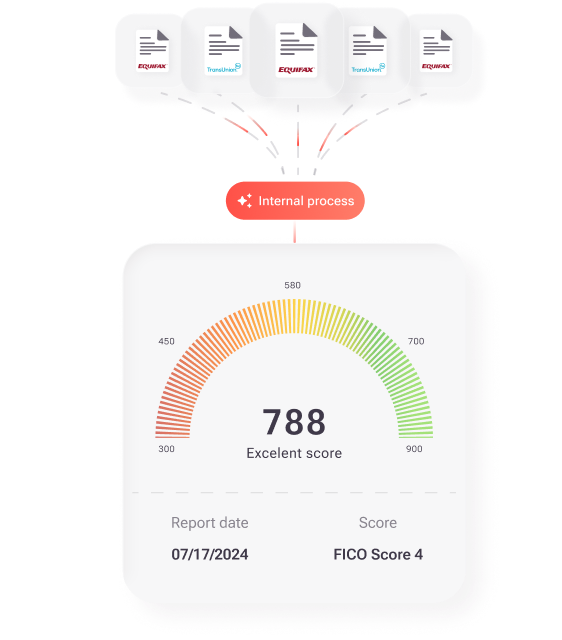
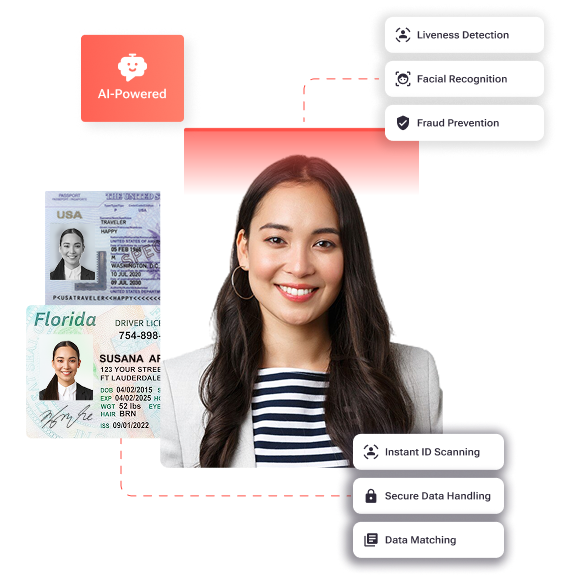
TenantEvaluation removes the avoidable portions of that timeline. Smart application form logic automatically rejects incomplete submissions before they enter the review queue. IDVerify performs biometric identity verification, including government ID validation, AI-powered liveness detection, and facial biometric matching, inside the platform. This approach removes the manual document review step entirely. As a direct reseller of TransUnion and Equifax data, TenantEvaluation pulls credit, criminal, and eviction reports under strict bureau rules, with results returning in minutes instead of days.
QuickApprove then moves the verified application directly to a board-ready dashboard. Members can review AI-generated applicant summaries, cast votes, and trigger automated approval letters and a personalized welcome package inside one connected system. The result is the compressed cycle referenced earlier, compared to the 3–5 week manual baseline, while preserving board oversight and FCRA compliance.
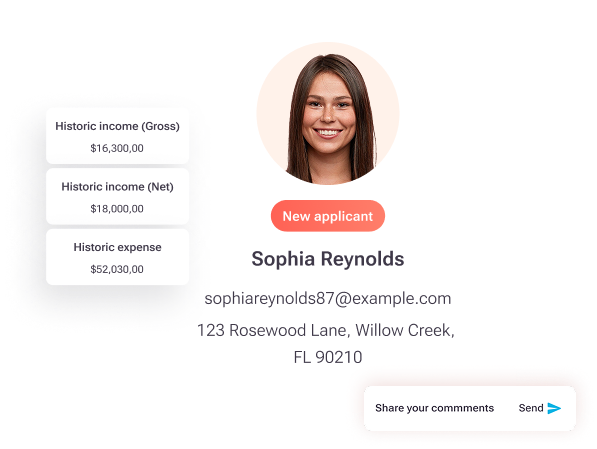
TEpayments by Zinc collects application fees and deposits within the same onboarding workflow, with payments going directly from the applicant to the association’s designated account. TenantEvaluation never holds the funds.
Experience the accelerated timeline firsthand by requesting your personalized demo.
Practical Acceleration Checklist for CAMs and Boards
This checklist gives CAMs and boards a clear sequence for reducing avoidable delay in the Florida condo approval process.
- Deploy pre-screening document templates. Provide applicants with a complete checklist of required documents, including executed lease, government-issued ID, income documentation, and consent forms, before the application opens. This upfront clarity prevents incomplete-submission delays that cause most avoidable cycle time. TenantEvaluation’s intelligent form logic enforces this automatically.
- Enable biometric identity verification. After you ensure complete document submission, the next bottleneck is manual ID review. IDVerify confirms applicant identity before the file advances to screening, which removes that manual step and reduces fraud exposure.
- Automate status notifications. Once identity checks run automatically, communication becomes the next friction point. Real-time automated updates to applicants, realtors, and owners remove the follow-up calls that consume CAM staff hours and slow decisions.
- Use a board-ready dashboard. With communication streamlined, board review often becomes the longest controllable stage. QuickApprove gives board members direct access to summarized applicant reports and a voting panel, replacing email chains with a connected approval process inside TenantEvaluation.
- Centralize lease documentation. After approvals, fragmented document storage can still create confusion. TenantEvaluation’s Lease Tracking connects resident onboarding, unit data, approvals, and lease documentation into one real-time workflow, which removes spreadsheets and scattered email chains from application through occupancy.
- Collect fees inside the onboarding workflow. When documents and approvals live in one place, payments should follow the same pattern. TEpayments by Zinc collects application fees and deposits within the process associations already use, reducing manual tracking and improving payment visibility for boards.
- Configure community-specific rules upfront. Finally, codify your rules inside the system. Enter governing-document requirements, credit score thresholds, and document checklists into the platform before application season. This preparation prevents ad hoc decisions and last-minute clarifications that delay review.
Frequently Asked Questions
How long does a tenant background check take in a Florida condo association?
The background check component alone, covering credit, criminal history, eviction records, and identity verification, can take one to five business days in a manual workflow. Employment and income verification can add several business days when staff must contact employers manually. With TenantEvaluation, the screening components compress to minutes or same day because credit and eviction data come directly from bureau sources and identity is confirmed biometrically through IDVerify without manual document review.
What is the average turnaround time from application to board approval in a Florida condo association?
The full cycle from application submission through board approval often ranges from a couple of weeks to several weeks in communities with less frequent board meetings, rental caps, or mandatory notice requirements. Florida law does not set a single statewide deadline, so each association’s governing documents control the review timeframe. Some associations require written advance notice before lease initiation, and board review can take from several days to several weeks, depending on meeting cadence. TenantEvaluation with QuickApprove reduces the controllable portions of this cycle to the compressed timeline described earlier, while mandatory statutory notice periods remain fixed minimums.
What red flags on a background check typically delay or prevent approval in a Florida condo association?
Common red flags that delay or prevent approval include felony criminal convictions, recent eviction judgments, credit scores below the association’s stated threshold, unverifiable income or employment, and identity mismatches flagged during document review. In a manual workflow, any one of these issues triggers additional human review, board discussion, or a request for supplemental documentation, which adds days to the cycle. Associations using TenantEvaluation receive AI-generated applicant summaries that surface these issues immediately, so boards can make faster, better-informed decisions instead of waiting for manual report compilation.
How does condo association screening differ from standard apartment screening in Florida?
Standard apartment screening focuses on the landlord-tenant relationship and typically follows the 1–3 day baseline for standard apartment screening discussed earlier. Florida condo association screening adds a mandatory board review layer governed by the association’s bylaws and Florida Statutes Chapters 718 and 720, a statutory application fee cap of $150 per applicant, potential mandatory notice periods before lease initiation, and in some communities, an in-person interview requirement. The board serves as the decision-making authority, not a single property manager, so approval timelines depend on meeting schedules and quorum requirements. TenantEvaluation is built for this structure, with a dedicated board voting dashboard inside QuickApprove that replaces the email-based review process most associations currently use.
Conclusion: Shorter Timelines Through Structured, Automated Workflows
The average tenant background check turnaround time for Florida condo associations reflects five sequential stages, each with its own delay risks, Florida-specific statutory requirements, and board governance constraints. Manual workflows often accumulate 3 to 5 weeks of total cycle time. Automated workflows designed for community associations compress the controllable stages into the accelerated timeline referenced throughout this article while preserving every compliance and oversight requirement that Florida law and association governing documents require.
TenantEvaluation is built for community associations and management companies, with FCRA compliance as the foundation. With 5,000+ communities, 100,000+ applications processed annually, and partnerships with leading Florida management companies including FirstService Residential, Campbell Property Management, and Associa, TenantEvaluation delivers the stage-by-stage automation that CAMs, boards, and applicants need.
Ready to eliminate weeks of avoidable delay? See the platform in action.
