Written by: Luis Teran, Co-founder, CEO, TenantEvaluation | Last updated: August 26, 2026
Key Takeaways for Florida Condo Onboarding
- Florida condo associations must establish written FCRA-compliant screening criteria and follow statutory fee caps before accepting applications.
- Custom rule configuration and 55+ community verification keep governing documents accurately reflected in every application workflow.
- Biometric identity verification (IDVerify+) reduces synthetic identity fraud by confirming applicants are physically present and match their government-issued ID.
- Integrated tools like QuickApprove, Lease Tracking, and TEpayments by Zinc replace manual spreadsheets and email chains with one connected platform.
- TenantEvaluation’s FCRA-compliant digital workflow cuts processing time, administrative burden, and liability exposure. Schedule a demo today.
Step 1: Define FCRA-Compliant Screening Criteria and Fee Caps
Put clear written screening standards in place before the first application arrives.
A compliant Florida condo screening policy starts with a standalone written disclosure that is separate from the application itself. You also need a signed written authorization from the applicant before you obtain any consumer report from a third-party CRA, per FTC guidance. Burying consent inside dense paragraphs is a leading source of FCRA challenges, so the authorization needs its own signature line.
On fees, Section 718.112(2)(k) of the Florida Condominium Act caps transfer approval fees at $150 per applicant, with spouses and dependent children counted as a single applicant. The Florida Condominium Act authorizes DBPR to adjust transfer approval fee caps every five years, with the most recent update published in June 2024. Associations may not charge any transfer fee for the renewal of a lease or sublease with the same lessee or sublessee under Section 718.112(2)(i).
Document specific screening criteria in writing so CAMs and boards apply them consistently. Examples include:
- Minimum credit score threshold, such as 620 or higher
- Income-to-rent ratio, such as gross monthly income at least 2.5× monthly rent
- Criminal history review using an offense-based framework rather than a strict lookback cutoff, consistent with Florida screening practice
- No prior evictions within a defined period
- Verified employment or income documentation
Florida imposes no statutory lookback periods for criminal history in background screening, allowing felony convictions to remain reportable indefinitely under FCRA rules. EEOC guidance recommends assessing the nature and gravity of the offense, the time elapsed since conviction, and how closely the offense relates to tenancy, rather than relying on record age alone.
Step 2: Configure Custom Association Rules and 55+ Communities Verification
Translate your governing documents into automated rules before you accept a single application.
Every Florida condo association operates under a unique set of bylaws, declarations, and rules. TenantEvaluation’s custom setup turns those governing documents into intelligent form logic that differentiates workflows for tenants, purchasers, adult children, and other occupant types. Applicants then see only the questions that apply to their situation, which reduces confusion and incomplete submissions.
Age-restricted communities need consistent handling of age requirements. 55+ Communities Verification is a built-in capability within TenantEvaluation that standardizes how age-restricted rules appear across applications. It reduces manual work, supports documentation consistency, and strengthens internal processes for Florida condos and HOAs. It is designed for Community Association Managers and improves operational efficiency while still leaving room for legal guidance.

Configuration begins by uploading your governing documents and defining which attachments each applicant type must provide. Next, translate your written screening criteria from Step 1 into system thresholds for credit scores, deposits, and income ratios. For age-restricted properties, enable 55+ Communities Verification so age requirements are handled the same way in every application. Finally, activate auto-redaction of Social Security numbers and banking details to protect sensitive data on all uploaded documents.
Step 3: Enable IDVerify+ Biometric Identity Verification
Confirm each applicant’s identity with biometrics instead of relying only on documents.
Traditional screening leans heavily on uploaded documents, which cannot reliably prevent impersonation or synthetic identity fraud. Synthetic identity fraud creates new identities by combining real data with fabricated elements. Document verification alone often misses these identities because they use valid real data that passes authenticity checks.
IDVerify+ integrates automated KYC verification directly inside the TenantEvaluation workflow. It uses government-issued ID validation, AI-powered liveness detection, facial landmark recognition, and biometric selfie-to-ID comparison. Combining liveness detection with document verification and face matching provides an effective approach for reducing onboarding fraud because it confirms that the ID is authentic and that the person presenting it is physically present in real time.
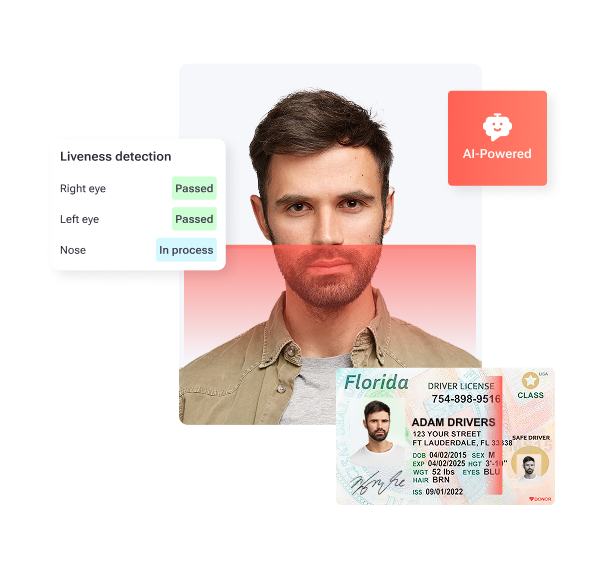
Implementation begins with a configuration decision: enable IDVerify+ for specific communities or deploy it across your entire portfolio. Once enabled, applicants complete a guided selfie verification step as part of their online application. The system then runs automated biometric validation instantly within the same workflow, without sending applicants to external portals. Finally, CAMs receive verification results embedded in the screening report, including ID authenticity confirmation, liveness status, biometric match result, and a redacted ID copy.
See how IDVerify+ prevents identity fraud in your screening workflow. Schedule a demo today.
Step 4: Activate QuickApprove for Board Voting and Decisions
Give boards a single dashboard for reviews, votes, and approval communication.
Once identity is confirmed and screening reports are complete, the application moves to the board approval stage. QuickApprove is TenantEvaluation’s accelerated approval workflow built for CAMs, boards, and property management teams inside one connected platform. It delivers real-time application tracking, automated communication support, reduced manual follow-ups, customized approval letters, and a personalized welcome package. Communities with high volume or complex onboarding requirements gain speed without losing control, compliance, or visibility.
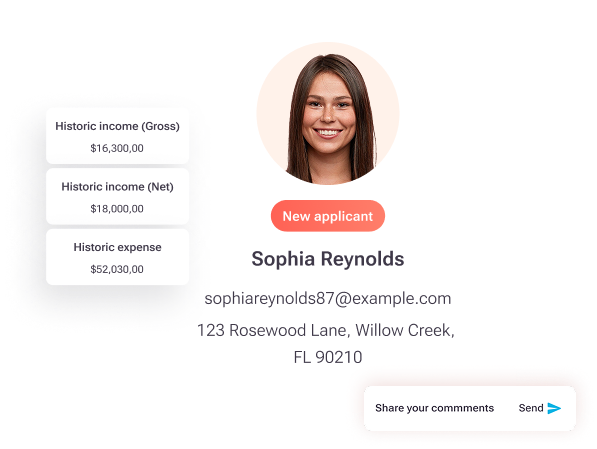
Implementing structured approval workflow software reduced average approval cycle time from 4.8 days to 2.7 days in one reported case and from 5 days to 2 days in another. Organizations adopting automated approval workflow solutions often cut approval turnaround time by 50% to 80%.
Board activation begins by assigning each board member a login to the dedicated review and voting dashboard. With access in place, configure quorum and voting rules to match your association’s bylaws so the system enforces your governance requirements automatically. Next, enable AI-generated applicant summaries so board members can review key data at a glance instead of reading full reports. Then set automated communication triggers that send approval letters and welcome packages without manual intervention. Once configured, board members can check real-time application status directly in the dashboard, which removes the need to track email threads or spreadsheets.
Step 5: Integrate Lease Tracking for Real-Time Occupancy Visibility
Link every approved application to a live, searchable lease record.
Lease management across many community associations is fragmented and heavily manual. Missing or outdated lease copies, manual expiration tracking, disconnected spreadsheets, and no direct connection between applications and active leases create operational blind spots. TenantEvaluation’s Lease Tracking capability connects resident onboarding, unit data, approvals, and lease documentation into one streamlined, real-time workflow from application to occupancy.
Lease Tracking delivers centralized lease records, real-time lease status visibility, automated lease document collection during onboarding, unit-level tracking, and searchable, audit-ready digital records. It is built for CAMs, boards, property management companies, and community operations teams that want a single source of truth.
Implementation starts by connecting approved applications to unit-level lease records automatically. Next, configure lease expiration alerts so teams can manage renewals proactively. Then enable automated lease document collection during the onboarding workflow to avoid missing files. Finally, set board-level visibility permissions so leadership can see accurate occupancy status for every unit.
Step 6: Connect TEpayments by Zinc for Fees and Deposits
Collect application fees and deposits inside the same workflow you use for screening.
With lease records centralized, the final operational piece is streamlining payment collection throughout the onboarding process. TEpayments by Zinc is a connected payment workflow inside TenantEvaluation that lets associations and property management companies collect application fees, deposits, and other required resident payments within the onboarding process they already use. Payments move directly from the applicant to the association’s designated account, and TenantEvaluation never holds the funds.
Leasing teams often spend significant time per application on manual collection, follow-up, and decision communication. TEpayments by Zinc removes that manual tracking by embedding payment collection directly into the application sequence.
Each association defines what is collected and at which stage so the capability adapts to the property’s process instead of forcing a single sequence. Configuration steps include defining which fees are required and at which onboarding stage, designating the association’s receiving account for direct payment flow, enabling applicant-facing payment clarity inside the application, and activating board-level payment visibility for traceable records and operational clarity.
Note: transfer approval fees under Section 718.112(2)(k) are capped at $150 per applicant. Associations should configure TEpayments by Zinc with legal counsel to keep fee structures aligned with the statutory caps established in Step 1.
Step 7: Launch, Monitor, and Maintain Audit-Ready Records
Go live with a clear adverse action process and a complete digital audit trail.
Before the first live application, confirm that the FCRA adverse action sequence is configured end to end. The FCRA-mandated adverse action sequence requires three steps. First, send a pre-adverse action notice with a copy of the report and Summary of Rights. Second, allow a reasonable response period, commonly five business days. Third, issue a final adverse action notice only if the decision stands. Skipping the pre-adverse action notice exposes the organization to statutory damages of $100–$1,000 per willful violation plus punitive damages and attorneys’ fees.
TenantEvaluation’s built-in audit trails timestamp every application action, board vote, document upload, and payment event. As a direct reseller of TransUnion and Equifax data, not a third-party scraper, TenantEvaluation accesses bureau data under strict rules with regular compliance reviews. This structure helps keep community associations protected from liability exposure.
Use a simple post-launch monitoring checklist to keep the workflow healthy. Review average time-to-decision weekly and benchmark against the NARPM 2025 benchmark that shows property managers spend 4.8 hours of administrative labor per vacancy on screening and leasing tasks, with automation reducing this to under 1.2 hours. Audit adverse action notices monthly to confirm pre-adverse and final notices were issued in sequence. Verify that lease records in Lease Tracking reflect current occupancy status for every unit. Confirm that IDVerify+ biometric results are attached to each approved application record. Run community analytics reports quarterly to inform board strategic decisions.
See TenantEvaluation’s full audit-ready workflow in action. Book your demo now.
Frequently Asked Questions
What do condo associations look for in background checks?
Florida condo associations typically review several categories of information when they evaluate a prospective resident. Credit history is a standard component, and many associations set a minimum credit score threshold, commonly 620 or higher, along with an income-to-rent ratio requirement. Criminal history is reviewed using an offense-based framework that considers the nature and gravity of the offense and its relevance to community safety instead of using a blanket lookback period.
Eviction history, employment verification, and personal or landlord references are also common. Associations using TenantEvaluation access nationwide and global criminal records, FBI Most Wanted checks, eviction history, and income verification through direct employer contact, which provides a 360-degree view of each applicant. All criteria must be documented in writing, applied consistently to every applicant, and administered through an FCRA-compliant workflow that includes a standalone disclosure and signed authorization before any consumer report is obtained.
What disqualifies you from passing a background check in Florida?
As noted earlier, Florida’s lack of statutory lookback periods means felony convictions can remain reportable indefinitely under FCRA rules when obtained through a consumer reporting agency. Common disqualifying factors in Florida condo association screening include felony convictions for violent crimes or drug offenses, prior evictions, credit scores below the association’s documented threshold, insufficient income relative to the monthly assessment or rent, and failure to provide required documentation.
Non-conviction records such as arrests that did not lead to conviction are generally not reportable under the FCRA seven-year rule. Sealed or expunged records are excluded from standard commercial database checks. Associations should apply criteria consistently and document the specific reasons for any denial to support the FCRA adverse action process. TenantEvaluation’s automated adverse action workflow generates the required pre-adverse and final adverse action notices, which reduces the risk of procedural violations.
What are the Florida Statute 718 application fee caps?
Under Section 718.112(2)(k) of the Florida Condominium Act, a condominium association may charge a transfer approval fee only if the association’s governing documents specifically authorize it and the association’s approval of the transfer is required. Transfer approval fees are capped at $150 per applicant, with spouses and dependent children counted as a single applicant. The cap is subject to DBPR adjustment every five years, most recently updated in June 2024. Renewals with the same lessee are exempt from transfer fees under Section 718.112(2)(i).
Estoppel certificate fees are a separate category under Section 718.116(8). They are capped at a $299 base amount with additional amounts for expedited delivery or delinquent accounts, with the next adjustment due by July 1, 2027. TEpayments by Zinc allows each association to configure exactly which fees are collected and at which stage of onboarding, with payments going directly to the association’s designated account. Associations should consult legal counsel to confirm that their fee structures comply with current statutory limits.
What is biometric ID verification for condo associations and why does it matter?
Biometric ID verification for condo associations is a multi-layer identity confirmation process that goes beyond reviewing uploaded documents. It combines government-issued ID validation, AI-powered liveness detection, and biometric facial matching to confirm that the person submitting an application is physically present and matches their identification. Liveness detection determines whether a facial biometric sample comes from a live human present during verification, which prevents spoofing attacks such as deepfakes, masks, and replayed media.
This matters for condo associations because traditional document-based screening cannot reliably stop synthetic identity fraud. Fraudulent identities that combine real data with fabricated elements can pass document-only checks. TenantEvaluation’s IDVerify+ runs natively inside the platform with no external portals, embedding verification results, including ID authenticity confirmation, liveness status, and biometric match result, directly into the screening report that CAMs and boards review. IDVerify+ can be enabled per community or configured across a full portfolio so each association can match the feature set to its risk profile.
Conclusion
These seven steps, from defining FCRA-compliant criteria and fee caps through maintaining audit-ready records, create a complete digital onboarding workflow for Florida condo associations. Each step targets a specific source of administrative burden, compliance risk, or revenue loss that manual, paper-based processes often introduce.
TenantEvaluation serves more than 5,000 communities and processes approximately 100,000 applications per year. The platform is built specifically for community associations and management companies, not generic rentals, and FCRA compliance sits at the foundation. One Florida-based management company that adopted the platform freed up 50 hours of staff time per day, cut processing time by 50%, and saved $240,000 annually.
See the full platform built for Florida condo associations. Schedule a demo today.
