Written by: Luis Teran, Co-founder, CEO, TenantEvaluation | Last updated: July 16, 2026
Key Takeaways for Florida Condo and HOA Workflows
- Manual condo and HOA application workflows in Florida create measurable costs in staff time, revenue loss, and compliance exposure. Specialized software removes many of these costs.
- An 8-step ideal workflow covers intake through biometric verification, FCRA-aligned screening, board voting, and centralized lease tracking for complete audit-ready records.
- Florida communities face rising fraud risks and new regulatory requirements like House Bill 1203, so purpose-built digital platforms now play a central role in compliance and fraud prevention.
- TenantEvaluation outperforms generic property management systems by delivering native biometric ID verification, board-ready dashboards, 55+ community support, and FCRA-focused architecture in one integrated platform.
- Communities using TenantEvaluation report up to 70% faster approvals and significant staff time savings; see the approval acceleration in action with a walkthrough of your community’s workflow.
Why Streamlined Application Workflows Matter for Florida Communities
Manual workflows can consume 10 to 26 staff hours per application, a cost that compounds quickly at scale, as the case study below shows. Automation of tenant screening reduces processing times and frees staff from repetitive onboarding tasks, returning hours to higher-value work each week. At the same time, 93% of multifamily rental housing providers experienced some form of fraud in the past year. Florida communities that still rely on paper or email-based processes face higher exposure to identity fraud, missed red flags, and inconsistent documentation.
See how TenantEvaluation replaces manual workflows with a single, audit-ready platform built for Florida CAMs and boards, then request your personalized walkthrough.
To reduce these risks while meeting Florida’s compliance requirements, communities benefit from a structured workflow that automates verification, centralizes documentation, and maintains audit trails at every stage. The following eight-step process provides that foundation.
8-Step Ideal Condo and HOA Application Workflow
- Application Intake: The applicant receives a community property code and completes a 100% online application via web or mobile. Intelligent form logic adjusts fields based on applicant type such as tenant, purchaser, or additional occupant.
- Document Collection: The platform automatically requests and validates required documents, including executed leases, government-issued IDs, and income verification. Incomplete submissions are rejected before staff review begins, which prevents avoidable back-and-forth.
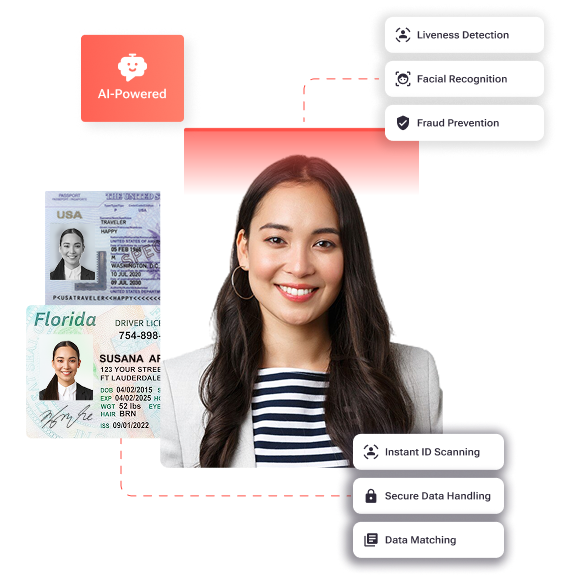
- Biometric Identity Verification: The applicant completes a guided IDVerify step, uploading a government-issued ID and completing AI-powered liveness detection and biometric selfie-to-ID comparison inside the platform.
- Background and Credit Screening: Background checks, credit reports sourced directly from TransUnion and Equifax, income verification, and reference checks run automatically within the same workflow, following the FCRA-compliant screening framework described later.
- Fee Collection: Application fees are collected digitally during submission. TenantEvaluation’s revenue-sharing model returns the net amount to the association after service fees, which simplifies reconciliation.
- Board Review and Voting: QuickApprove routes the completed application to a board-ready dashboard. Members review AI-generated summaries, cast timestamped votes, and track approval status in real time, without email chains or spreadsheets.
- Approval Communication: Automated customized approval letters and a personalized welcome package are generated and delivered. CAMs spend less time on manual follow-up and repetitive messaging.
- Lease Tracking and Occupancy: Approved lease documentation flows into TenantEvaluation’s centralized Lease Tracking system for real-time status visibility and connected records from application through occupancy.
Fraud, Compliance, and the Shift to Digital Screening Platforms
A 2024 survey by the National Apartment Association and NMHC found that more than 70% of respondents saw fraudulent applications and payments increase during the past 12 months. Traditional document-based screening that relies on uploaded PDFs and manual review struggles to detect synthetic identities or impersonation attempts. AI-driven screening tools in 2026 assess credit, rental history, and identity in seconds while documenting criteria for fair-housing defense and detecting document fraud on pay stubs, bank statements, and IDs.
Florida-specific regulatory pressure adds further urgency for digital transformation. Florida’s House Bill 1203, effective January 1, 2025, requires HOAs with 100 or more parcels to maintain a website or mobile application where parcel owners can access official records, including a section accessible only to owners and staff. Communities that still operate on paper or fragmented tools face growing compliance exposure and higher administrative strain.
Daily Operations: Roles, Documentation, and Board Oversight
Effective application workflows rely on clear role separation. CAMs manage intake, document validation, and communication, while boards retain decision authority over approvals. Community association board members have a fiduciary duty to act in the best interest of the community, and directors must understand AI functions and verify AI-provided information rather than relying solely on it. Purpose-built platforms support this separation by giving boards summarized, audit-ready application data while preserving human decision authority.
Effective board oversight of HOA documents requires visibility into approval status at every stage, including who has reviewed an application and what action is needed next. Best-practice systems provide progress indicators, per-member approval sign-off counts, and automated notifications when board input is required. TenantEvaluation’s QuickApprove delivers this structure, translating these oversight principles into a board-ready approval process with real-time tracking, automated communication support, and fewer manual follow-ups inside one connected platform that preserves control, compliance, and visibility.

Compliance and Governance Requirements for Screening and 55+ Housing
FCRA compliance governs every background check and adverse action in the resident screening process. TenantEvaluation establishes FCRA compliance as a core design principle, operating as a direct reseller of TransUnion and Equifax data under strict bureau rules. The platform includes automated adverse action workflows and built-in audit trails for every application, so communities can document how decisions were made.
Age-restricted communities carry additional obligations. HOPA compliance requires ongoing age verification and recordkeeping rather than a one-time check at move-in, and communities must refresh occupancy verification at least once every two years under HUD’s framework (24 CFR 100.307). To qualify as 55+ housing under HOPA, at least 80% of occupied units must have one occupant aged 55 or older, and communities must publish and follow policies that show intent to operate as 55+ housing. TenantEvaluation’s 55+ Communities Verification standardizes how age-restricted requirements are handled across applications, reduces manual work, and supports documentation consistency and operational efficiency, while leaving legal interpretation to association counsel.
Common Failure Points in Manual Application Workflows
- Incomplete intake data: Missing property address, unit number, or applicant details is a leading cause of HOA document request failures and creates preventable ambiguity and repeated clarifications.
- Siloed records: Records spread across asset, repairs, and housing systems make complete audit trails difficult, forcing teams to scramble when regulators request proof.
- Undocumented decisions: Fair housing complaints, security deposit disputes, and wrongful eviction cases often share an operational gap such as undocumented processes, uncommunicated policies, or decisions made without a guiding framework.
- Manual lease tracking: Missing or outdated lease copies, disconnected spreadsheets, and no centralized visibility create operational blind spots and compliance risk tied to incomplete records.
- Board review bottlenecks: Applications sit waiting for board review with no shared dashboard, no version control, and no timestamped voting record, which delays approvals and increases liability.
- Identity fraud exposure: Document-only screening cannot reliably detect synthetic identities or impersonation attempts without a biometric verification layer.
Emerging Best Practices for 2026 Application Workflows
- Implement biometric identity verification inside the screening workflow and move from document-based review to biometric-confirmed identity.
- Centralize lease records with real-time status visibility such as active, pending, expired, or missing, connected directly to the onboarding lifecycle.
- Deploy board-ready approval dashboards with timestamped votes, AI-generated applicant summaries, and role-based access controls.
- Standardize 55+ application handling with structured documentation workflows that support biennial verification requirements.
- Adopt an integrated platform with board governance tools and eVoting to reduce administrative workload while maintaining oversight consistency.
- Maintain the FCRA-aligned audit trails described earlier for every application, adverse action, and board decision.
Decision Framework for Evaluating Application Workflow Software
Communities can evaluate software options more effectively by applying a clear decision framework. The following questions help separate general tools from purpose-built platforms.
- Does the platform cover the full workflow from intake through lease tracking, or only a single segment?
- Is FCRA compliance built into the architecture, including adverse action workflows and direct bureau data sourcing?
- Does biometric identity verification run natively inside the platform without redirecting applicants to external portals?
- Does the board review and voting process include timestamped records, role-based access, and real-time application visibility?
- Does the platform include purpose-built support for Florida 55+ documentation requirements?
- Are lease records connected to the onboarding workflow with real-time status tracking and searchable digital history?
- What is the revenue model, such as subscription, per-application, or revenue-sharing, and how does it affect total cost?
Comparison: Generic Property Management Systems vs. Specialized Onboarding Platforms
| Capability | Generic PMS (e.g., AppFolio, Buildium) | Background-Check-Only Tools (e.g., ApplyCheck, Verify Screening) | TenantEvaluation (Specialized Platform) |
|---|---|---|---|
| Workflow Automation | Partial, with a broad property management focus rather than HOA or condo-specific onboarding | Limited to the screening step only, with no intake-to-approval workflow | End-to-end automated resident onboarding from document collection to approval, with processing time reduced from days to hours |
| Biometric Identity Verification | Not available natively and relies on document upload only | Not available, with document-based review only | IDVerify: government ID validation, AI liveness detection, and biometric selfie-to-ID comparison, all native to the platform |
| Board Voting Dashboard | Not purpose-built for HOA or condo board approval workflows | Not available | QuickApprove: dedicated board-ready review panel with real-time tracking, AI-generated summaries, and timestamped voting, aligned with best-practice board oversight that requires visible approval status and per-member sign-off counts |
| Lease Tracking | General lease storage that is not connected to the resident onboarding lifecycle | Not available | Centralized, real-time lease visibility and lifecycle control that connects onboarding, unit data, approvals, and lease documentation in one audit-ready platform |
| Florida 55+ Support | Not purpose-built for HOPA documentation workflows | Not available | 55+ Communities Verification: standardizes age-restricted application handling, supports documentation consistency, and improves operational efficiency for Florida condos and HOAs |
| FCRA Compliance | Varies and is not always designed for community association permissible-purpose controls | Partial, using third-party platforms such as TazWorks that are not purpose-built for HOA or condo workflows | FCRA-focused design with direct TransUnion and Equifax reseller status, automated adverse action, and built-in audit trails |
Before-and-After Workflow Examples from a Florida Management Company
Before TenantEvaluation: A Florida management company processed applications across email chains, PDF attachments, and manual spreadsheets. Board members received application packets by email with no version control or voting record. Lease copies lived in shared drives with no connection to the onboarding record. A single manual onboarding process typically consumed 10 to 26 staff hours, with processing taking 1 to 12 business days from start to fully set up.
After TenantEvaluation: The same company freed 50 hours of staff time per day, cut processing time by 50%, and generated $240,000 in annual savings. Applications move from submission to decision in hours. Boards vote inside a dedicated dashboard. Lease records become centralized, searchable, and audit-ready from day one.
Benefits for Community Association Managers
- Eliminates manual document chasing with automated collection and smart form logic that rejects incomplete submissions.
- Reduces approval cycles by up to 70% through QuickApprove accelerated approval workflows with real-time application tracking and automated communication support.
- Replaces spreadsheets and scattered email chains with centralized Lease Tracking that delivers real-time lease status and unit-level occupancy visibility.
- Strengthens fraud prevention through IDVerify biometric verification embedded in the screening workflow.
- Maintains the FCRA-aligned audit trails described earlier for every application, adverse action, and board decision.
Benefits for Board Members
- Replaces email-based application review with a board-ready dashboard featuring AI-generated summaries, timestamped votes, and real-time application visibility.
- Provides a clearer operational picture of occupancy and resident activity through access to the same audit-ready lease records CAMs maintain, without requiring manual reports.
- Reduces liability exposure with a standardized fraud-prevention layer via IDVerify biometric-backed identity confirmation before residents enter the community.
- Supports informed strategic decisions through community analytics covering demographics, rental trends, and resident profiles.
Explore TenantEvaluation’s board dashboard, QuickApprove workflow, and Lease Tracking in a live walkthrough tailored to your community’s needs.
Florida-Specific Considerations for 55+ Communities and FCRA
Failure to maintain HOPA compliance records can result in loss of the federal exemption, exposing the community to familial-status discrimination claims, resident complaints, and urgent remediation with association counsel. Acceptable age-verification methods under 24 CFR § 100.307 include driver’s licenses, birth certificates, passports, immigration cards, military IDs, and signed certifications or affidavits stating that at least one occupant in the unit is 55 or older, with occupancy data updated every two years.
TenantEvaluation’s 55+ Communities Verification is built for Florida condos and HOAs that manage age-restricted communities. It standardizes application handling, reduces manual work, supports documentation consistency, and strengthens internal processes for CAMs who manage multiple communities. The system focuses on documentation and operational structure and does not replace legal verification or enforcement by association counsel.
On the FCRA side, TenantEvaluation’s direct reseller relationships with TransUnion and Equifax, combined with strict permissible purpose controls, automated adverse action workflows, and clear separation between decision-making by the association and data provision by TenantEvaluation, position it as a highly compliant provider in the community association space.
Frequently Asked Questions
What makes TenantEvaluation different from general property management software for HOA and condo applications?
TenantEvaluation is built exclusively for community associations and management companies rather than generic rentals. General property management platforms offer broad functionality across many property types but lack purpose-built capabilities for HOA and condo workflows. TenantEvaluation delivers an end-to-end resident onboarding platform that includes biometric identity verification through IDVerify+, a dedicated board review and voting dashboard through QuickApprove, Florida-specific 55+ Communities Verification, centralized Lease Tracking connected to the onboarding lifecycle, and FCRA compliance as the architectural foundation, including direct TransUnion and Equifax reseller relationships and automated adverse action workflows. These capabilities do not appear together as an integrated system in generic platforms or background-check-only tools.
How does TenantEvaluation support Florida 55+ community application requirements?
TenantEvaluation 55+ Communities Verification is a built-in capability that helps Florida condos and HOAs standardize how age-restricted requirements are handled across applications. It reduces manual work, improves documentation consistency, and strengthens operational efficiency and internal controls for CAMs and boards that manage age-restricted communities. HOPA requires communities to maintain HUD-compliant age-verification records and update occupancy data at least every two years. TenantEvaluation supports this process by creating a structured, consistent documentation workflow while leaving legal guidance to association counsel.
What is QuickApprove and how does it help boards make faster decisions?
QuickApprove is TenantEvaluation’s accelerated approval workflow built for CAMs, boards, and property management teams. It replaces email chains, spreadsheets, and disconnected follow-ups with a single connected approval process inside TenantEvaluation. Board members access a dedicated review panel with AI-generated applicant summaries, real-time application status, and a formal voting workflow with timestamped records. CAMs benefit from automated communication support, customized approval letters, a personalized welcome package, and fewer manual follow-ups. QuickApprove supports high-volume application seasons and communities with complex onboarding requirements while preserving control, compliance, and visibility.
How does Lease Tracking work inside TenantEvaluation?
Lease Tracking is a centralized operational capability built directly into the TenantEvaluation ecosystem. It connects resident onboarding, unit data, approvals, and lease documentation into one streamlined, real-time workflow. CAMs and property management teams can view real-time lease status such as active, pending, expired, or missing for every unit, access a searchable digital history of lease records and resident activity, and confirm occupancy status without searching across folders, inboxes, or spreadsheets. Lease documents are collected automatically during onboarding and stored as audit-ready digital records, replacing fragmented manual lease management with a single connected workflow from application to occupancy.
Is TenantEvaluation compliant with FCRA requirements for community association screening?
Yes. TenantEvaluation treats FCRA compliance as a core design requirement. It operates as a direct reseller of TransUnion and Equifax data under strict bureau rules, with no gray-market or offshore data sources. The platform includes strict permissible purpose controls, automated adverse action workflows, clear separation between the association’s decision-making role and TenantEvaluation’s data provision role, and built-in audit trails for every application. IDVerify+ further strengthens permissible-purpose validation by confirming identity before screening authorization, which reinforces FCRA-aligned workflows and audit defensibility.
Conclusion: Selecting a Platform That Fits Your Community
Manual condo and HOA application workflows create measurable costs such as lost staff hours, fraud exposure, incomplete documentation, slow board decisions, and compliance risk under FCRA and Florida’s 55+ requirements. Specialized resident onboarding platforms replace these fragmented processes with automated, compliant workflows that deliver time savings, stronger operational control, and audit-ready records from application through occupancy.
TenantEvaluation serves more than 5,000 communities, processes approximately 100,000 applications annually, and has generated $150 million for communities, with a focus on Florida CAMs, boards, and property management teams. Its integrated capabilities, including QuickApprove, IDVerify, 55+ Communities Verification, and Lease Tracking, address every stage of the resident onboarding lifecycle inside one connected, FCRA-aligned platform.
See how TenantEvaluation streamlines your community’s application workflow from intake through occupancy and book a personalized platform tour.
