Written by: Luis Teran, Co-founder, CEO, TenantEvaluation
Key Takeaways for Florida CAMs and Boards
- Inconsistent, paper-based HOA application processes create delays, administrative overload, and fraud exposure for Florida managers and boards.
- Standardization replaces ad hoc workflows with uniform document requirements, objective criteria, and centralized digital records.
- A 7-step checklist walks communities from defining applicant types through real-time lease visibility and biometric identity verification.
- Communities that follow these steps can see up to 70% faster approvals and up to 50 hours per day in time savings.
- Communities ready to modernize their application workflow can see how TenantEvaluation performs in a live demo and review projected impact.
What Standardized HOA Application Processes Look Like in Practice
Standardized HOA application processes replace ad hoc, inconsistent review workflows with a defined, repeatable system. The system uses uniform document requirements, objective approval criteria, enforced turnaround times, and centralized digital records applied identically to every applicant type, whether a renter, purchaser, or occupant in a 55+ community.
How This 7-Step Checklist Turns Standards into Daily Workflow
This checklist translates that definition into a practical implementation plan. Each step builds from basic workflow design to technology, then to consistent enforcement and visibility across your portfolio.
7-Step Standardization Checklist
- Define application types and assign distinct workflows per applicant category.
- Move all submissions to a single digital portal.
- Build categorized document libraries with smart form logic.
- Create pre-approved criteria and conditional workflows.
- Set and enforce turnaround times using an accelerated approval workflow.
- Conduct objective reviews with a board-ready dashboard and written explanations.
- Maintain consistent enforcement and real-time lease visibility.
Step 1: Define Application Types for Every Florida Applicant Category
Before vs. After — Florida Note
Before: A single generic form goes to renters, buyers, adult children, and sublease applicants. Managers manually sort and re-request missing documents, which creates delays and inconsistency that expose the association to Fair Housing risk.
After: Each applicant category, such as tenant, purchaser, co-occupant, or 55+ resident, triggers a distinct workflow with category-specific document requirements and screening criteria.
Florida communities in markets like Miami, Fort Lauderdale, and Sarasota manage seasonal influxes that magnify the cost of undefined workflows. TenantEvaluation’s intelligent form logic adjusts application forms based on applicant type, so the correct information arrives with the first submission. Managers avoid manual sorting and reduce back-and-forth with applicants.
Step 2: Move All HOA Applications into a Single Digital Portal
Before vs. After — Florida Note
Before: Applications arrive by email, fax, and in-person drop-off. Documents sit across folders, inboxes, and spreadsheets. Status updates require manual follow-up calls.
After: Every application, document, and communication lives in one centralized platform accessible 24/7 by web or mobile. Real-time notifications keep all parties informed without manual intervention.
Centralized, secure document storage keeps everything organized and easy to find, which paper-based workflows structurally cannot match. TenantEvaluation’s fully online platform supports digital document collection, e-signatures, and automated notifications in 11 languages, serving Florida’s linguistically diverse applicant pool.
Step 3: Use Categorized Document Libraries with Smart Form Logic
Before vs. After — Florida Note
Before: Managers chase incomplete submissions. Applicants upload wrong document versions. Sensitive data such as Social Security numbers and bank statements sits in unencrypted email threads.
After: Smart form logic rejects incomplete submissions automatically. Required documents are defined per applicant category. Sensitive data is auto-redacted at the point of upload.
A standardized Florida screening workflow must follow secure disposal practices for applicant data per the FTC Disposal Rule. TenantEvaluation enforces PCI Level 1 compliance and end-to-end encryption, with automatic redaction of personally identifiable information. This approach removes the manual handling risk that email and spreadsheets create.
Step 4: Configure Pre-Approved Criteria and Conditional Workflows
Before vs. After — Florida Note
Before: Approval decisions vary by manager or board member. Criteria stay informal, undocumented, and inconsistently applied, which creates audit exposure and potential Fair Housing liability.
After: Objective criteria such as credit score thresholds, income-to-rent ratios, and required document types are configured into the platform. Every applicant is evaluated against the same documented standard.
Standardization requires applying the identical escalation path to every applicant who triggers the same red flag, with consistent alternative proof options and deadlines, to avoid Fair Housing violations. TenantEvaluation’s custom setup maps each community’s governing documents, screening criteria, and association workflows directly into the platform so conditional steps follow the same pattern every time.
Step 5: Enforce Turnaround Times with an Accelerated Approval Workflow
Before vs. After — Florida Note
Before: Applications sit in email queues waiting for board review, which forces managers to spend hours on manual follow-ups to determine status. Without visibility into the queue, applicants and realtors repeatedly request updates that require even more manual work. Peak seasons in Tampa, Orlando, and Palm Beach magnify every bottleneck and stretch decisions from days to weeks.
After: Defined turnaround windows are enforced by the platform. Real-time tracking removes status uncertainty. Automated communication support cuts manual follow-ups to near zero.
QuickApprove is TenantEvaluation’s accelerated approval workflow, built for managers, boards, and property management teams inside one connected platform. It delivers real-time application tracking, automated communication support, customized approval letters, and a personalized welcome package, while preserving control, compliance, and visibility. Communities using QuickApprove report up to 70% faster approvals and teams freeing up to 50 hours per day that previously went to follow-ups and status checks.

See QuickApprove’s accelerated workflow in a personalized demo and review how it fits your current approval timelines.
Step 6: Use a Board-Ready Dashboard and Written Explanations for Reviews
Before vs. After — Florida Note
Before: Board members receive application packets by email. Voting happens informally. No timestamped record shows who reviewed what or when. Adverse action notices are drafted manually and inconsistently.
After: Board members use a dedicated review panel with AI-generated applicant summaries, a structured voting workflow, and a complete timestamped audit trail. Written explanations for every decision are created within the platform.
A standardized Florida screening workflow must issue consistent adverse-action notices when a report influences approval or terms. TenantEvaluation’s automated adverse action workflows and built-in audit trails support this requirement as a core capability, not an afterthought.
Step 7: Keep Enforcement Consistent with Real-Time Lease Visibility
Before vs. After — Florida Note
Before: Approved applicants enter the community, but lease copies sit across folders and inboxes. Expiration dates are tracked manually on spreadsheets. Occupancy status is difficult to confirm. Identity fraud risk persists because document-based screening cannot verify physical presence.
After: Every lease is connected, searchable, trackable, and audit-ready from application to occupancy, so enforcement decisions rely on complete, current records instead of fragmented files. Identity is confirmed biometrically before approval, which removes document-fraud risk that weakens enforcement credibility. For age-restricted communities, standardized documentation across all 55+ applications keeps eligibility enforcement consistent and defensible.
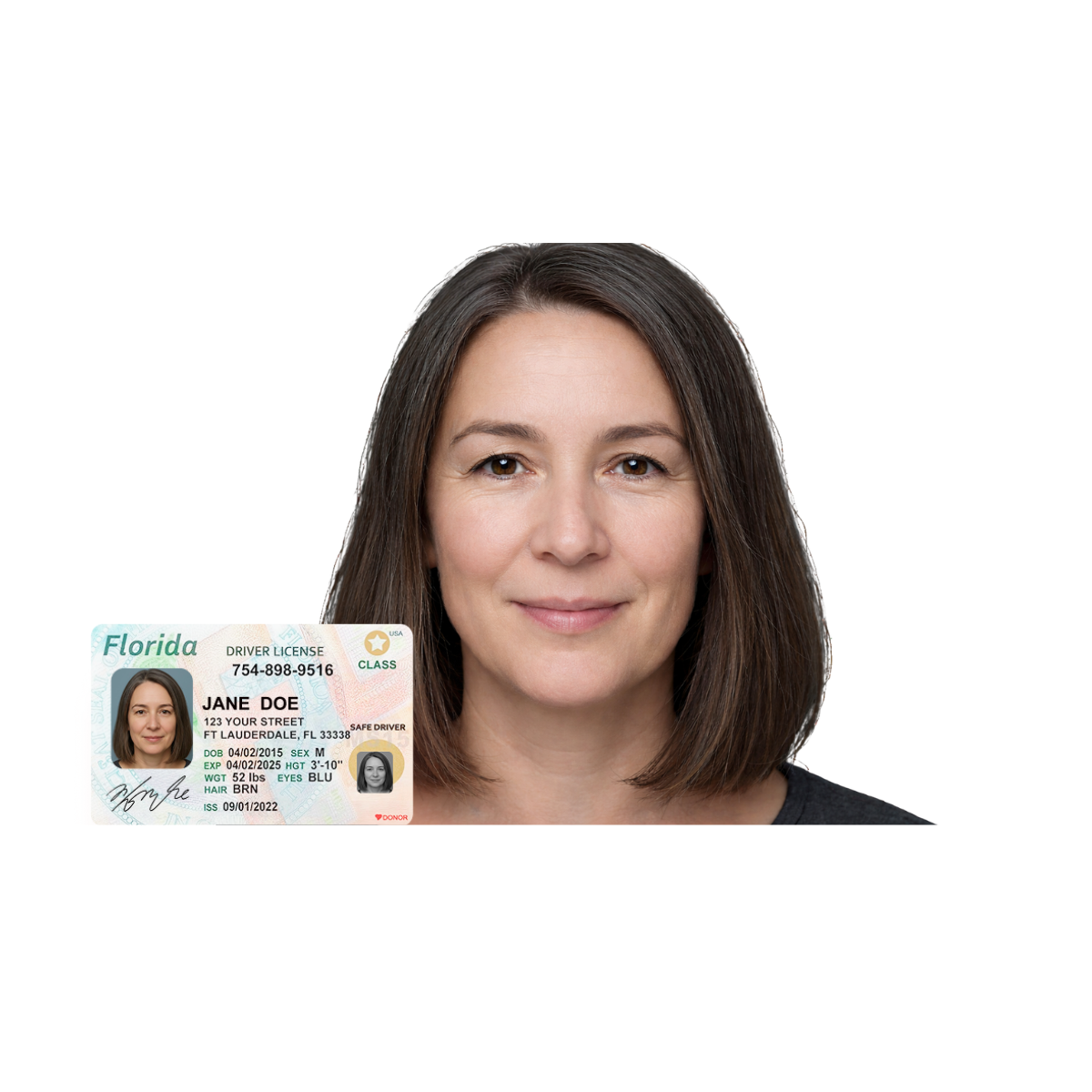
IDVerify brings biometric identity verification into the TenantEvaluation workflow by combining government ID validation, AI-powered liveness detection, and biometric facial matching. This approach moves communities from document-based review to verified physical identity confirmation. Altered pay stubs and fabricated employers are among the most common document-driven fraud methods in Florida, and identity fraud follows the same pattern.

For Florida’s age-restricted communities, 55+ Communities Verification standardizes how age-restricted requirements are handled across applications. This reduces manual work, improves documentation consistency, and strengthens operational efficiency for managers and boards that oversee these communities.
Lease Tracking connects resident onboarding, unit data, approvals, and lease documentation into one centralized, real-time workflow. Teams gain real-time lease status visibility, including active, pending, expired, or missing leases, along with automated lease document collection, unit-level tracking, and searchable audit-ready digital records. TenantEvaluation’s revenue-sharing model turns application fee processing into a compliant, controlled income stream for the association, converting administrative overhead into a revenue-generating workflow. TenantEvaluation has already generated $150M for communities.
Conclusion: Compare Your Current HOA Process to This 7-Step Framework
This 7-step checklist, from defining application types through real-time lease visibility, shows the distance between paper-based chaos and a repeatable, audit-ready system. Florida managers and HOA boards that adopt this framework shorten approval times, reduce administrative overload, and gain the visibility needed to manage communities at scale. The first move is an honest review of where your current workflow breaks down.
Request a process assessment and demo so TenantEvaluation can pinpoint specific gaps and show how a standardized workflow would perform for your communities.
Frequently Asked Questions
What does it mean to standardize HOA application processes for Florida communities?
Standardizing HOA application processes means using a uniform, repeatable system for collecting, reviewing, and deciding on resident applications, whether for leasing, purchasing, or occupancy in age-restricted communities. Every applicant type is evaluated against the same documented criteria, with the same document requirements and the same turnaround timelines. For Florida communities, this matters because inconsistent processes create Fair Housing exposure, audit risk, and administrative bottlenecks that intensify during high-volume seasons. A standardized system replaces subjective, manager-dependent decisions with objective, platform-enforced workflows that deliver consistent outcomes and defensible records.
How long does it take to move from paper-based HOA applications to a digital workflow?
The transition timeline depends on community size, portfolio complexity, and the number of application types in use. For most Florida managers and management companies, TenantEvaluation configures the platform to match each community’s governing documents, screening criteria, and association workflows before go-live. Once configured, the platform handles document collection, identity verification, background screening, board review, and lease tracking inside a single connected workflow, delivering the approval speed and time savings described earlier.
How do board responsibilities differ from manager responsibilities in HOA approvals?
Community Association Managers handle the operational execution of the application process. Their responsibilities include collecting documents, verifying submissions, coordinating screening, communicating with applicants and realtors, and keeping the workflow moving without bottlenecks. Boards of Directors hold responsibility for the approval decision itself. They review applicant summaries, vote on approvals, and ensure decisions align with the community’s governing documents and screening criteria. TenantEvaluation supports both roles inside one platform. Managers oversee the workflow through real-time tracking and automated communication tools, while board members use a dedicated review and voting panel with AI-generated applicant summaries and a complete audit trail, without relying on email chains or spreadsheets.
How does 55+ community verification differ from standard HOA leasing applications?
Standard HOA leasing applications focus on financial qualification, identity verification, and background screening. Age-restricted 55+ community applications add documentation that confirms occupancy meets age-eligibility requirements under the community’s governing documents. Without a standardized process, this documentation often moves through fragmented emails, PDFs, and manual follow-ups, which creates inconsistency across applicants and communities and increases the risk of incomplete records during audits or disputes. TenantEvaluation’s 55+ Communities Verification capability standardizes how these requirements are handled across applications, reduces manual work, improves documentation consistency, and strengthens operational efficiency for managers and boards, while not replacing legal guidance on eligibility determinations.
Does TenantEvaluation work for both rental and purchase applications in Florida HOAs and condos?
Yes. TenantEvaluation is built for community associations and management companies and supports distinct workflows for tenants, purchasers, co-occupants, and adult children within the same platform. Intelligent form logic adjusts the application based on applicant type, so the correct documents and screening criteria apply to each scenario. A condo association in Fort Lauderdale that manages both rental approvals and resale applications can run both workflows inside one platform with consistent criteria, centralized records, and a single board-ready dashboard, instead of maintaining separate processes for each application category.
