Written by: Luis Teran, Co-founder, CEO, TenantEvaluation | Last updated: June 16, 2026
Key Takeaways for Florida CAMs and Boards
- Resident screening creates high liability for Florida HOAs and CAMs, including fair-housing complaints, FCRA violations, and costly evictions when processes fail.
- FCRA compliance requires documented permissible purpose, standalone written authorization, and adverse-action notices whenever consumer reports influence housing decisions.
- Objective, board-approved written screening criteria must be applied consistently, avoid blanket bans, and remain defensible under the Fair Housing Act and governing documents.
- Biometric identity verification, bureau-direct background checks, and automated workflows reduce fraud risk, improve audit readiness, and streamline board approvals.
- TenantEvaluation delivers an FCRA-first platform purpose-built for community associations. Learn more at TenantEvaluation.
FCRA Permissible Purpose in Community Association Screening
The Fair Credit Reporting Act (FCRA) governs any screening process that uses a consumer report, including credit, criminal, and rental history, to make a housing decision. Landlords, property owners, property managers, and associations must obtain the applicant’s written authorization before requesting a tenant background check when the report will be used for rental or housing decisions. This written authorization must be a standalone disclosure, not buried in a lease or application form.
If a property management company denies an applicant or takes any adverse action, such as requiring a higher deposit or co-signer, based partly or wholly on information in a consumer report, the FCRA mandates that the company provide an Adverse Action Notice. For Florida CAMs, permissible purpose functions as a documented, auditable control point that must precede every background check order.
How Resident Screening Ties Into Association Governance
Screening authority in Florida HOAs and condominiums flows directly from governing documents such as declarations, bylaws, and rules and regulations. Boards derive their right to approve or deny applicants from those documents, and any screening criteria applied must align with that authority. The Fair Housing Act prohibits discrimination based on race, color, national origin, religion, sex, familial status, and disability, and Florida law adds additional protected classes.
Screening criteria that appear neutral but create a disparate impact on a protected class carry liability under HUD guidance. Boards protect the association by adopting written criteria, applying them consistently, and confirming that those criteria remain defensible under both the FHA and the association’s own governing documents.
Regulatory and Fraud Pressures Facing Florida CAMs
Identity fraud and application fraud have escalated from isolated incidents to systemic operational risks. A 2024 NMHC Pulse Survey found that 93% of member respondents had experienced rental application fraud in the prior 12 months. This widespread exposure has shifted fraud from an occasional incident to an operational baseline. A 2024 MRI Software survey of more than 700 multifamily professionals identified fraud, including AI-generated documents, as a persistent, normalized concern across portfolios of all sizes.
For Florida CAMs managing high-density condominiums and HOAs, these risks translate directly into community security exposure and board liability. See how TenantEvaluation’s FCRA-first platform protects Florida communities from fraud and liability, and then schedule a demo today.
Step 1: Establish Clear, Objective Written Screening Criteria
Step 1. Board-approved, written screening criteria form the foundation of every defensible resident screening program. Community associations should establish written, objective screening criteria before accepting applications and apply those criteria consistently to every applicant without undocumented exceptions. These criteria often cover several core areas that work together to show overall risk.
Commonly adopted criteria include a minimum credit score threshold and an income-to-rent ratio, typically 2.5 to 3 times monthly rent. Associations also define acceptable rental history with specific eviction and late-payment standards. A criminal background review policy should specify offense type, severity, and recency rather than rely on a blanket ban.
Screening policies should avoid blanket bans on applicants with criminal records and instead specify evaluation based on offense type, severity, and recency, consistent with HUD’s 2016 guidance on criminal history screening. Exception policies, such as co-signer income thresholds, must be documented in advance and offered consistently to all similarly situated applicants. TenantEvaluation configures each community’s specific governing documents and screening criteria directly into the platform so criteria are applied uniformly across every application.
Step 2: Confirm FCRA Permissible Purpose Before Screening
Step 2. Before any consumer report is ordered, the association must document permissible purpose through a standalone written authorization signed by the applicant. For housing-related screening, associations typically need the applicant’s signed consent and core identifying information, including full legal name, date of birth, Social Security number, and current and prior addresses, before ordering a background check.
TenantEvaluation is built specifically for community associations and management companies, with FCRA compliance as the foundation, not an afterthought. As a direct reseller of TransUnion and Equifax data accessed under strict bureau rules, TenantEvaluation maintains strong permissible-purpose controls and built-in audit trails for every application. These controls help keep associations protected from liability tied to improperly ordered reports.
Step 3: Collect and Verify Applicant Documents Without Gaps
Step 3. Document collection often becomes the point where manual processes break down. Incomplete submissions, missing executed leases, and unverified IDs create downstream delays and compliance gaps. TenantEvaluation’s smart application form logic automatically checks for executed leases, valid IDs, and required documents, and it rejects incomplete submissions before they reach the review queue.
Intelligent form logic dynamically adjusts application requirements based on applicant type, such as tenant, purchaser, or additional resident, so the correct documents are requested every time. PCI Level 1 compliance, end-to-end encryption, and automatic redaction of sensitive PII protect both applicants and associations throughout the collection process.
Step 4: Run Background and Credit Checks From Verified Sources
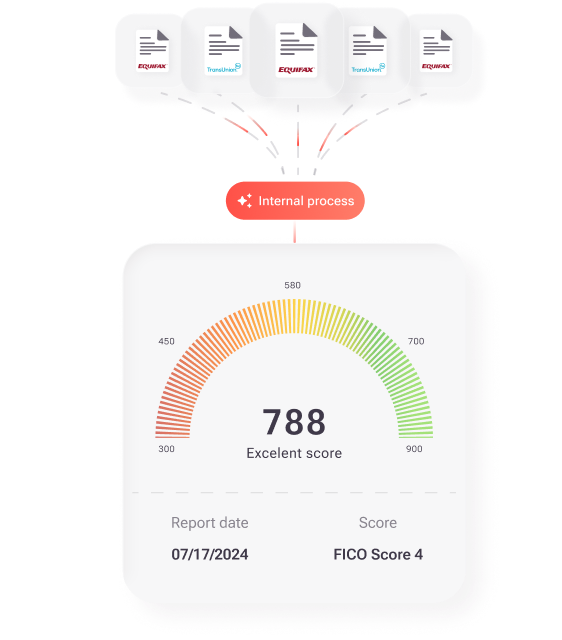
Step 4. Background and credit checks must draw from verified, bureau-direct data sources to remain accurate and FCRA-defensible. TenantEvaluation’s SafeCheck+ solution combines nationwide and global background checks, including criminal records, offenses registry, and FBI Most Wanted, with employment and income verification, credit history, eviction history, and reference verification.
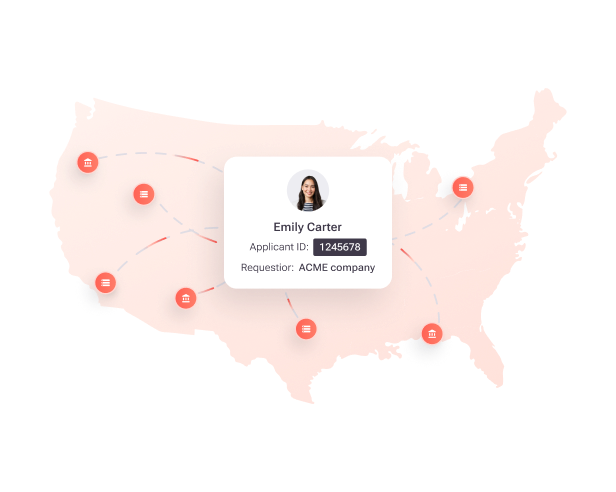
Eviction history searches are recommended as part of screening criteria because prior evictions are a strong predictor of future rental behavior. Because TenantEvaluation is a legitimate reseller of TransUnion and Equifax data, not a third-party scraper, community associations receive bureau-grade data under regular compliance reviews and audits. This approach avoids gray-market or offshore data sources and supports consistent regulatory compliance.
Step 5: Strengthen Screening With Biometric Identity Verification
Step 5. Traditional document-based screening cannot reliably prevent impersonation, synthetic identity fraud, or stolen-ID submissions. These gaps create direct financial exposure for communities and their boards. The FBI Internet Crime Complaint Center tracked more than 12,000 reported cases of real estate fraud in 2025, estimating approximately $275 million in losses that year, with identity fraud representing a significant portion of those incidents.
IDVerify addresses this gap by embedding automated KYC verification directly into the TenantEvaluation screening workflow, with no external portals and no workflow disruption. The process combines government-issued ID validation, AI-powered liveness detection, facial landmark recognition, and biometric selfie-to-ID comparison. CAMs receive verification results, including ID authenticity confirmation, liveness status, biometric match result, and a redacted ID copy, embedded directly within the screening report.
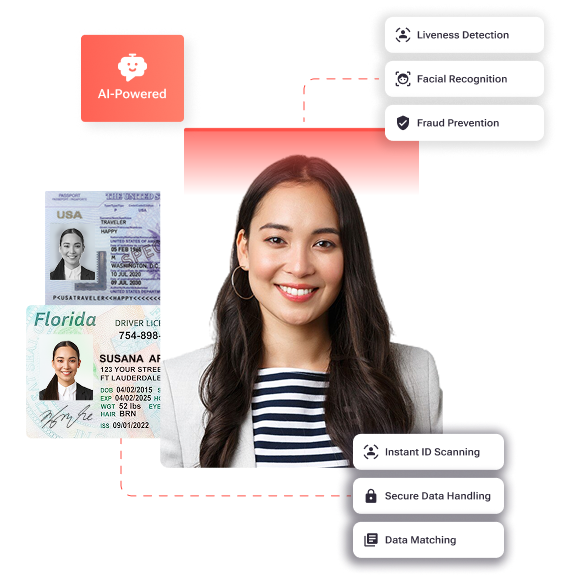
IDVerify can be enabled per condo or HOA and configured per property portfolio, which supports different community risk profiles without a one-size-fits-all approach. This shift moves communities from document-based validation to biometric-confirmed identity verification before any approval decision is made. Once identity is confirmed and background checks are complete, the application moves to the governance layer, where board approval often becomes the longest delay in the onboarding timeline.
Step 6: Route Applications Through a Board-Ready Dashboard
Step 6. Board approval bottlenecks are among the most common sources of onboarding delay in Florida community associations. QuickApprove is TenantEvaluation’s accelerated approval workflow built for CAMs, boards, and property management teams inside one connected platform. It replaces email chains and spreadsheets with real-time application tracking, a board-ready review and voting dashboard, automated communication support, customized approval letters, and a personalized welcome package.
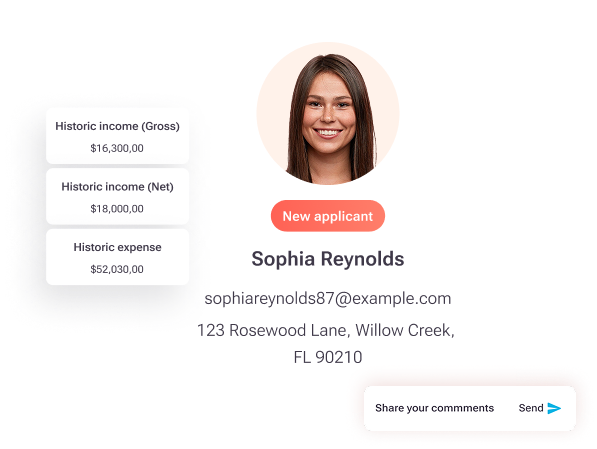
Board members access AI-generated applicant summaries and cast timestamped votes directly within the platform. QuickApprove accelerates resident approvals without losing control, compliance, or visibility. The workflow supports high-volume seasons and communities with complex onboarding requirements.
Step 7: Issue Adverse-Action Notices Correctly and Consistently
Step 7. If information from an FCRA-covered background report is used to deny an application, require a co-signer, increase a deposit, or take another unfavorable action, an adverse action notice is required. The notice must identify the consumer reporting agency that supplied the report, state that the agency did not make the adverse decision, and inform the applicant of their right to dispute the report’s accuracy.
TenantEvaluation’s automated adverse-action workflows generate and deliver compliant notices tied directly to the written screening criteria applied. This connection creates a clear, auditable record that the decision was criteria-based and not discriminatory.
Step 8: Maintain Centralized Lease Tracking After Approval
Step 8. Approval marks a transition point in the onboarding lifecycle, not the end. Lease management across many community associations remains fragmented, with missing or outdated lease copies, manual expiration tracking, disconnected spreadsheets, and no direct connection between applications and active leases.
TenantEvaluation’s Lease Tracking capability delivers centralized, real-time lease visibility and lifecycle control from application to occupancy. It connects resident onboarding, unit data, approvals, and lease documentation into one streamlined workflow. CAMs gain real-time lease status, including active, pending, expired, or missing, automated lease document collection during onboarding, unit-level tracking, and a searchable digital history of lease records.
Audit-ready digital lease records replace spreadsheets and scattered email chains. This structure improves operational efficiency, scalability, and compliance readiness for CAMs, boards, property management companies, and community operations teams.
Compliance, Risk, and Governance Practices That Protect Associations
Audit readiness requires more than accurate screening reports. Associations must retain documentation of the written criteria used, the authorization obtained, the reports ordered, the decisions made, and any adverse-action notices issued for every applicant, without exception. Associations should retain documentation of the screening criteria used and the decisions made for each applicant to demonstrate consistent, non-discriminatory application over time and satisfy FCRA and FHA requirements.
These records form the audit trail that shows consistent application of criteria. Beyond documentation, data security practices, including encryption, access controls, and PII redaction, reduce breach exposure for the sensitive information those records contain. Board oversight of the screening process, documented through timestamped voting records, demonstrates governance accountability and shows that decisions were made by authorized parties following established criteria.
A clear separation between the association’s decision-making authority and the screening platform’s data-provision role remains essential for FCRA defensibility. This separation helps show that boards, not vendors, make final housing decisions.
Common Challenges Created by Manual Screening
Manual screening introduces compounding operational risks for CAMs and boards. Incomplete applications require repeated follow-up, which consumes staff hours and delays revenue. Inconsistent document review creates fair-housing exposure when similarly situated applicants receive different treatment.
Fragmented lease records, spread across folders, inboxes, and spreadsheets, produce occupancy blind spots and compliance gaps. Board approval delays, driven by email-based workflows with no centralized visibility, extend onboarding timelines during peak seasons. Multifamily organizations of all portfolio sizes encounter fraud at their properties at least once every few months, and manual processes provide no systematic defense against AI-generated documents or synthetic identities.
Emerging Standards That Improve Screening Outcomes
Three operational shifts define the current direction of resident screening best practices. First, workflow standardization, which replaces ad hoc processes with documented, consistently applied criteria and automated completeness checks, reduces both administrative burden and legal exposure. Second, stronger identity verification methods, specifically biometric confirmation layered over document review, address fraud vectors that traditional screening cannot detect.
Third, clearer approval structures with real-time board visibility and automated communication reduce bottlenecks without removing governance oversight. Integration of tenant screening with property management systems enables automatic data transfer, faster decision turnaround, and reduced manual entry for onsite teams.
How CAMs Can Evaluate Any Resident Screening Approach
A neutral evaluation framework for resident screening platforms should assess five dimensions. Compliance readiness: Does the platform operate as a direct credit bureau reseller with built-in permissible-purpose controls, automated adverse-action workflows, and audit trails? Operational efficiency: Does it automate document collection, completeness checks, and board communication to reduce manual follow-up?
Transparency: Does it provide real-time application status visibility for CAMs, boards, and applicants? Scalability: Can it handle high-volume application seasons and complex onboarding requirements without adding headcount? Auditability: Does it produce searchable, timestamped, audit-ready records from application intake through occupancy?
Platforms built specifically for community associations, rather than adapted from generic rental or property management tools, are more likely to satisfy all five dimensions for Florida HOA and condominium workflows.
Frequently Asked Questions
What happens if an application is rejected under written criteria?
When a community association denies an application based wholly or partly on information in a consumer report, the FCRA requires the association to issue an Adverse Action Notice to the applicant. This notice must identify the consumer reporting agency that provided the report, clarify that the agency did not make the denial decision, and inform the applicant of their right to obtain a free copy of the report and dispute its accuracy within 60 days.
The denial decision itself must be tied to the written screening criteria the board adopted in advance. Associations that cannot document which specific criteria the applicant failed to meet face greater exposure to fair-housing complaints. TenantEvaluation’s automated adverse-action workflow generates compliant notices and links them to the criteria applied, creating a defensible, auditable record for every denial.
How do 55+ communities handle age verification during screening?
Under the federal Housing for Older Persons Act (HOPA), a 55+ community must maintain at least 80% of occupied units with one resident age 55 or older and publish and follow policies demonstrating intent to operate as age-restricted housing. Failure to maintain these requirements risks losing the HOPA exemption, which can affect property values, lender willingness to fund, and the enforceability of governing documents.
For Florida CAMs and boards, age verification functions as an ongoing operational obligation, not a one-time intake step. TenantEvaluation’s 55+ Communities Verification capability helps Florida condos and HOAs standardize how age-restricted requirements are handled across applications. This support reduces manual work, improves documentation consistency, and strengthens internal processes while not replacing legal guidance.
How can associations maintain real-time lease visibility after approval?
Real-time lease visibility requires connecting the onboarding workflow, including application, document collection, and approval, directly to lease storage and occupancy tracking. When these functions are managed across separate spreadsheets, email folders, and property management systems, CAMs lose visibility into lease status, expiration dates, and occupancy accuracy.
TenantEvaluation’s Lease Tracking capability centralizes lease records inside the same platform used for screening and approvals. The system provides real-time lease status, including active, pending, expired, or missing, automated lease document collection during onboarding, unit-level tracking tied to occupancy records, and a searchable digital history. This structure eliminates operational blind spots and gives boards a clearer picture of community occupancy without manual reconciliation.
What documentation supports audit readiness in resident screening?
Audit-ready resident screening documentation includes the written screening criteria adopted by the board before applications were accepted and the standalone written authorization signed by each applicant before a consumer report was ordered. It also includes the consumer reports obtained and the decisions made for each applicant, any adverse-action notices issued with timestamps, and records of board voting on each application.
For 55+ communities, age-verification documentation, including the survey methodology, verification dates, and supporting documents, must also be retained for HUD audits and lender certification. TenantEvaluation maintains built-in audit trails for every application, with timestamped board votes, redacted ID copies, biometric verification results, and automated adverse-action records stored in one searchable, audit-ready platform.
Conclusion: Build a Compliant, Efficient Screening Program
The eight-step workflow outlined above, from board-approved written criteria through centralized lease tracking, represents the operational standard for Florida community associations managing resident screening in 2026. Each step addresses a specific liability, fraud, or efficiency risk that manual processes cannot adequately control. TenantEvaluation delivers this full workflow across 5,000+ communities and approximately 100,000 applications processed annually.
Across those communities, TenantEvaluation provides FCRA-compliant background checks through direct bureau reseller relationships, biometric identity verification via IDVerify, accelerated board approvals through QuickApprove, standardized age-restricted application handling through 55+ Communities Verification, and centralized, real-time lease visibility through Lease Tracking. All of this operates inside one connected, audit-ready platform that turns resident onboarding into a controlled, revenue-generating process.
