Written by: Luis Teran, Co-founder, CEO, TenantEvaluation
Key Takeaways for Florida Community Associations
- Florida community associations managing 200+ units can replace fragmented email and spreadsheet workflows with structured resident onboarding software in 12 weeks.
- A four-phase rollout, covering Pre-Implementation Mapping, Data Audit & Migration, Workflow Configuration, and Phased Rollout, creates centralized data, automated approvals, and FCRA-compliant audit trails.
- QuickApprove dashboards, role-based permissions, and lease tracking give boards real-time visibility while freeing up to 50 staff hours per day.
- 55+ Communities Verification, biometric IDVerify, and revenue-sharing models address Florida-specific regulatory and financial needs that generic tools cannot handle effectively.
- Associations ready to replace manual processes with compliant, board-ready workflows can schedule a demo with TenantEvaluation to map their 12-week implementation plan.
Phase 1: Pre-Implementation Mapping & KPI Definition (Weeks 1–3)
Pluss Communities’ 12-week model calls for stakeholder alignment in Phase 1 through a steering group that includes executive leadership, operations heads, community managers, and resident committee representatives to define decision rights and escalation pathways. Florida CAMs and board presidents implementing resident onboarding software follow the same principle.
A functional stakeholder roles table for a Florida HOA or condominium implementation clarifies who decides what and prevents bottlenecks during the 12-week timeline:
- LCAM or Regional Director: Owns implementation timeline, configuration decisions, and staff communication.
- Board President: Approves governance changes and signs off on screening criteria and approval thresholds.
- IT or Operations Lead: Manages data export from legacy systems and coordinates security checkpoints.
- TenantEvaluation Implementation Team: Owns platform configuration, workflow design, and integration setup.
- Resident Committee Representative (where applicable): Provides feedback on the applicant-facing experience.
Success measures defined in Phase 1 should include 80–90% resident adoption, daily log-in rates, and measurable reductions in phone calls and paper usage. For community associations, additional KPIs include application-to-decision cycle time, board response time per application, and the percentage of applications submitted without missing documents.
Florida-specific governance mapping in this phase covers three areas. Teams identify which communities operate under age-restricted rules requiring 55+ Communities Verification. They confirm which screening criteria appear in each community’s governing documents. They also define which staff roles require FCRA permissible-purpose controls before accessing credit or background data.
Data Cleanup Checklist Before TenantEvaluation Migration
Clean legacy data makes the new platform reliable from day one. Communities that skip a structured data audit import duplicate records, outdated lease statuses, and mismatched unit assignments that create operational blind spots immediately. The following checklist covers the minimum steps required before any data import into TenantEvaluation.
- Export and inventory all existing records: Pull resident files, lease documents, application history, and unit assignments from every current system, including email folders, shared drives, and spreadsheets.
- Deduplicate resident records: Identify and merge duplicate applicant or resident entries using name, unit number, and move-in date as matching keys.
- Validate lease status for every unit: Confirm whether each unit’s lease is active, pending, expired, or missing, and flag units with no lease documentation on file.
- Standardize date and field formats: Normalize all date fields to a consistent format, confirm phone and email fields are populated, and remove special characters that cause import errors.
- Redact or remove sensitive PII from legacy files: Remove Social Security numbers, banking details, and other sensitive identifiers stored in unencrypted spreadsheets before migration. TenantEvaluation applies automatic redaction post-import, but pre-migration cleanup reduces exposure during the transfer window.
- Verify document completeness: Confirm that executed lease copies, valid ID records, and required community documents exist for each active resident, and flag gaps for follow-up before go-live.
- Obtain sign-off from the LCAM and legal counsel: Confirm that the data set to be migrated meets FCRA permissible-purpose standards and that no records are being transferred without appropriate consent documentation.
With clean, validated data in hand, the implementation moves into Phase 2, where TenantEvaluation’s technical team takes ownership of the actual migration.
Phase 2: Data Audit & Migration (Weeks 4–6)
Vantaca’s HOA software migration model assigns a dedicated implementation team that owns data migration, system configuration, workflow design, and integrations while the management company provides data access and configuration decisions. TenantEvaluation follows the same division of responsibility, with its implementation team handling the technical migration while the CAM team validates records against the cleaned data set prepared in Phase 1.
Security checkpoints during migration include confirming PCI Level 1 compliance across the transfer environment, verifying end-to-end encryption on all data in transit, and establishing the FCRA audit trail that timestamps every record access from the first import forward. TenantEvaluation’s built-in audit trail captures every application action with a timestamp, creating the defensible record required for CFPB FCRA examination procedures.
As a direct reseller of TransUnion and Equifax data, not a third-party scraper, TenantEvaluation accesses credit bureau data under strict bureau rules with regular compliance reviews. The audit trail established during migration connects directly to permissible-purpose controls that protect the association from liability exposure throughout the resident lifecycle.
Phase 3: Workflow Configuration & Board Dashboard Setup (Weeks 7–9)
Weeks 7 through 9 convert the migrated data into an operational platform. The primary configuration tasks are QuickApprove board dashboard setup, role-based permissions, and lease tracking implementation.
QuickApprove is TenantEvaluation’s accelerated approval workflow built for CAMs, boards, and property management teams inside one connected platform. Configuration in this phase begins by defining the approval routing sequence for each community, which determines which automated communication triggers fire at each stage. Once those triggers are configured, teams build the customized approval letters and personalized welcome packages that those triggers will send. Finally, the board-ready voting panel is activated, giving board members direct, real-time access to summarized applicant reports without email chains or manual document forwarding.
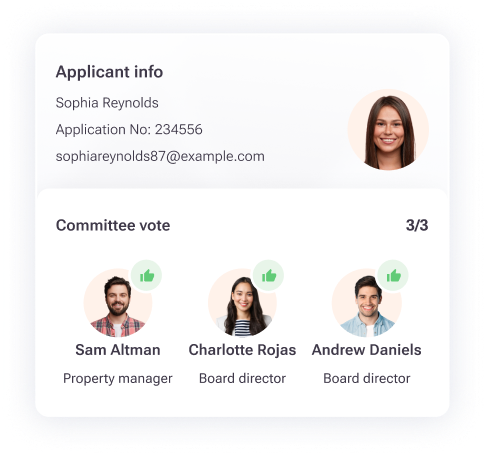
Role-based access controls should define a small set of actual roles, such as applicant, CAM, board member, and administrator, and attach a specific access set to each role so that onboarding becomes a simple role assignment rather than individual decisions. For board members specifically, this means access to the voting panel and summarized application reports, with operational system access limited to what governance requires.
Lease tracking implementation in this phase connects resident onboarding, unit data, approvals, and lease documentation into one centralized, real-time workflow. Every unit receives a lease status designation, such as active, pending, expired, or missing, visible to CAMs and boards without a spreadsheet lookup. Automated lease document collection during onboarding ensures that executed leases are captured at the point of approval rather than chased afterward.
With workflows configured and lease tracking live, the implementation is ready to move from internal setup to resident-facing deployment across the portfolio.
Phased Resident App Deployment for HOAs
Mid-size communities of 100–500 units benefit from a rollout structured by department-by-department deployment with continuous monitoring in the second quarter of implementation. For HOA and condominium portfolios, phased resident app deployment follows three distinct stages.
Pilot stage: Select one community or one building within a larger portfolio as the initial deployment site. Choose a location with an engaged CAM, a cooperative board, and a manageable application volume. Document every friction point, configuration gap, and training need before expanding.
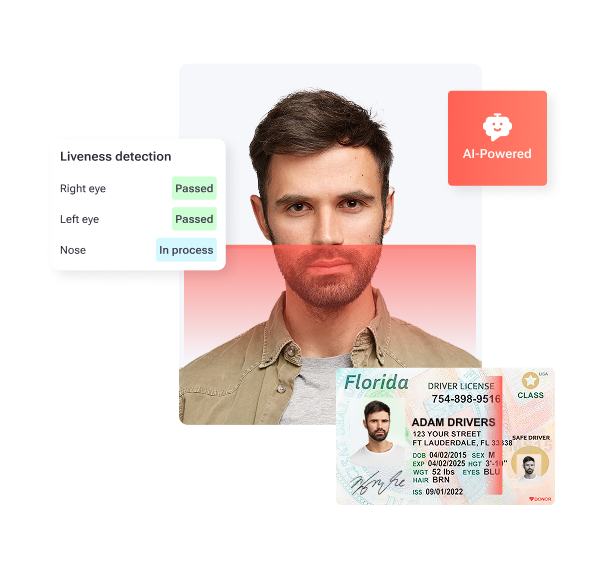
Department-by-department rollout: Activate the platform for new applications first, then layer in lease tracking for existing residents, then enable board voting workflows, and finally activate IDVerify biometric identity verification across the portfolio. This sequencing prevents staff from absorbing every feature simultaneously and allows adoption metrics to be tracked per module.
Full-portfolio deployment: Large portfolios of 500 or more units often follow a 12–18 month staged rollout with 3–4 months for core team training, 3–4 months for pilot community implementation with documentation of learnings, and 6–10 months for systematic portfolio-wide deployment. For management companies with multiple Florida communities, TenantEvaluation’s configurable setup allows each community to retain its specific screening criteria and governing document requirements while operating inside a single platform.
Phase 4: Phased Rollout, Training & 30/60/90-Day Metrics (Weeks 10–12)
Training cadence for Florida CAMs and board members should follow a structured sequence rather than a single session. As noted in Phase 1, training must be structured as a sequence rather than a single event to avoid the adoption failures common in rushed rollouts. A repeatable training model includes an initial platform walkthrough for CAMs, a board-specific session focused exclusively on the voting panel and application summary views, and a follow-up session at the 30-day mark to address workflow gaps identified during live operations.
Measuring portal adoption after launch requires tracking the following KPIs at 30, 60, and 90 days, which align with typical board reporting cycles and allow course correction before adoption patterns solidify:
- 30-day metrics: Percentage of new applications submitted through the platform, average time from application submission to board decision, and number of manual follow-up contacts per application.
- 60-day metrics: Board voting panel utilization rate, lease tracking coverage as a percentage of active units, and application completion rate without CAM intervention.
- 90-day metrics: Overall portal adoption rate targeting 80–90%, approval cycle time reduction versus pre-implementation baseline, and staff hours recovered per week.
Performance reviews of resident engagement platforms should be scheduled at minimum quarterly after full deployment to assess ongoing delivery against initial objectives, using dashboard reporting and automated analytics with iteration on configuration and communication strategy as needed.
Florida-Specific Considerations: 55+ Communities Verification and Revenue-Sharing Models
Florida condominiums and HOAs operating as age-restricted communities under the Housing for Older Persons Act face application handling requirements that generic property management tools are not built to address. Manual communication through emails, PDFs, and follow-ups creates inconsistent documentation, growing risk exposure in audits or disputes, and unnecessary administrative burden for CAMs managing multiple 55+ communities simultaneously.
55+ Communities Verification is a built-in capability within TenantEvaluation that reduces manual work, standardizes application handling, supports documentation consistency, and improves operational efficiency for Florida condos and HOAs. It creates a more structured process for age-restricted communities, strengthening internal controls without replacing legal guidance. For CAMs managing portfolios that include both age-restricted and standard communities, this capability operates within the same platform without a separate workflow or system.

TenantEvaluation’s revenue-sharing model converts application processing from a cost center into a compliant income stream. The platform deducts its service fee from the collected application fee, and the remainder is rebated directly to the association or management company. TenantEvaluation has already generated $150 million for communities across its network. TEpayments by Zinc, a connected payment workflow integrated into the onboarding process, collects application fees, deposits, and other required resident payments within the workflow CAMs already use. Payments go directly from the applicant to the association’s designated account. TenantEvaluation never holds the funds.
TenantEvaluation vs. Generic Tools
Generic HOA tools including PayHOA, ManageCasa, AppFolio, and RealPage were built for broad property management functions. None were designed specifically for the compliance architecture, board governance structures, or Florida-specific regulatory environment that community associations require. Their approval workflows rely on email-based processes, external document portals, and manual board communication that reintroduce the same fragmentation that onboarding software is meant to eliminate.
TenantEvaluation is built exclusively for community associations and management companies, with FCRA compliance as the foundation, not an afterthought. As a direct reseller of TransUnion and Equifax data, TenantEvaluation accesses credit bureau data under strict bureau rules with no gray-market or offshore data sources, protecting associations from the liability exposure that third-party scraping creates. Generic tools do not hold this status.
QuickApprove addresses the board governance gap directly. It includes a native board voting panel that gives board members direct access to summarized applicant reports and a structured voting workflow inside the platform, capabilities AppFolio and RealPage do not offer. IDVerify solves the fraud prevention problem that generic tools ignore, embedding biometric identity verification, including government ID validation, AI-powered liveness detection, and selfie-to-ID biometric comparison, directly into the screening workflow without external redirects. 55+ Communities Verification standardizes age-restricted application handling in a way that aligns with the real workflows of Florida associations, a capability that does not exist in PayHOA, ManageCasa, or comparable generic platforms.
TenantEvaluation processes approximately 100,000 applications per year across 5,000+ communities. That scale, combined with end-to-end platform coverage from application intake through lease tracking and occupancy, positions it as the definitive alternative to assembling multiple disconnected tools.
Frequently Asked Questions
How long does a full TenantEvaluation implementation take for a Florida HOA or condominium?
Most Florida community associations complete a full implementation within 10 to 12 weeks following the four-phase playbook outlined above. Portfolio size affects the timeline: smaller communities under 100 units can move faster through data migration and configuration, while large management companies with multiple communities may require a staged rollout across 12 to 18 months to achieve full portfolio coverage. TenantEvaluation assigns a dedicated implementation team that owns platform configuration, workflow design, and data migration, which significantly reduces the burden on CAM staff during the transition period.
How involved does the board of directors need to be during implementation?
Board involvement is concentrated in two phases. In Phase 1, the board president or a designated board representative participates in governance mapping to confirm screening criteria, approval thresholds, and any community-specific rules that must be encoded into the platform. In Phase 3, board members complete a focused training session on the QuickApprove voting panel and application summary views. Day-to-day implementation work is handled by the CAM team and TenantEvaluation’s implementation specialists. After go-live, board members access the platform only for application review and voting, with role-based permissions limiting their access to governance-relevant functions.
What data security checkpoints apply during migration?
TenantEvaluation operates at PCI Level 1 compliance with end-to-end encryption. During migration, sensitive personally identifiable information including Social Security numbers and banking details is automatically redacted from uploaded documents. The platform establishes an FCRA audit trail from the first record import, timestamping every access event to create the defensible documentation required for regulatory examination. The direct bureau reseller status described in Phase 2 eliminates the gray-market data risks that third-party scrapers introduce.
What metrics should we track to measure portal adoption after launch?
The most actionable post-launch metrics fall into three categories. Adoption metrics include the percentage of new applications submitted through the platform, board voting panel utilization rate, and the percentage of active units with lease status confirmed in the system. Efficiency metrics include average time from application submission to board decision, number of manual follow-up contacts per application, and staff hours recovered per week compared to the pre-implementation baseline. Compliance metrics include the percentage of applications with complete documentation at submission, audit trail completeness, and the rate of adverse action notices generated automatically versus manually. The 90-day adoption target outlined in Phase 4 is a realistic benchmark based on structured rollout implementations.
Does TenantEvaluation support communities that collect application fees and deposits?
TEpayments by Zinc is a connected payment workflow integrated directly into the TenantEvaluation platform. It allows associations and property management companies to collect application fees, deposits, and other required resident payments within the onboarding process they already use. Each association defines what is collected and at which stage of the application. Payments go directly from the applicant to the association’s designated account, and TenantEvaluation organizes the workflow but never holds the funds. This approach eliminates the manual tracking, spreadsheet reconciliation, and payment confirmation follow-ups that currently consume CAM staff time across most Florida communities.
Conclusion
Manual, paper-based resident onboarding costs Florida community associations measurable time, compliance exposure, and revenue. Fragmented email chains, disconnected spreadsheets, and manual follow-up sequences stall approvals, create FCRA liability, and consume staff capacity that should be directed toward higher-value operations. A structured 12-week implementation of resident onboarding software, built on the four phases outlined in this playbook, delivers centralized data, automated workflows, board-ready visibility, and FCRA-first compliance with documented outcomes.
TenantEvaluation is built specifically for community associations and management companies, with FCRA compliance as the foundation. The platform capabilities detailed in the competitive comparison, from board voting panels to biometric verification, are backed by 5,000+ communities and approximately 100,000 applications processed annually, making TenantEvaluation the end-to-end alternative to generic tools. Schedule a demo today and get a customized 12-week implementation plan for your Florida community association.
