Written by: Luis Teran, Co-founder, CEO, TenantEvaluation
Key Takeaways
- Florida community associations often manage application intake, identity checks, board approvals, leases, and payments in separate tools and spreadsheets.
- Identity fraud risk is rising as AI-generated fake documents defeat traditional screening, so biometric verification and FCRA-compliant workflows now act as core safeguards.
- Connected lease lifecycle tracking and integrated payment workflows remove manual reconciliation, create audit-ready records, and route funds directly to association accounts.
- Generic property management platforms usually lack board voting dashboards, FCRA-first design, biometric verification, and direct-to-association payment routing that Florida HOAs and condos need.
- TenantEvaluation provides an all-in-one platform built for Florida associations, combining screening, biometric verification, lease tracking, and direct payment collection; schedule a demo today.
The Problem: Fragmented Onboarding and Payment Workflows in Florida Communities
Florida CAMs managing mid-size condos or HOAs handle application intake, document collection, identity verification, board review, lease documentation, and fee collection across disconnected tools. Each extra handoff increases the chance of delay or error.
Community association managers commonly juggle multiple apps, spreadsheets, social media platforms, and manual processes just to answer basic homeowner questions. This fragmentation fuels overwhelm in payment collection and administrative work. Many communities still accept paper checks as a primary form of payment, so manual reconciliation remains common instead of exceptional.
Beyond operational inefficiency, these fragmented workflows create security gaps. Identity fraud compounds the risk. AI-generated fake documents have changed the threat landscape, enabling convincing forged pay stubs, bank statements, and lease references to be created in minutes using commercially available tools. Industry reports analyzing over a million applications put the average application-fraud rate near 5%.
Lease management introduces another failure point. Florida HOA and condo association managers commonly track move-ins, move-outs, lease expirations, and vehicle registrations across multiple spreadsheets, a process described as error-prone and time-consuming. When lease data sits apart from onboarding, compliance risk rises and resident disputes become more likely.
Five-Stage Resident Onboarding Framework for Florida Associations
A clear framework for resident onboarding links five operational stages to governance, compliance, and efficiency outcomes.
- Application intake and document collection, which sets the quality and completeness of data entering the workflow.
- Identity verification, which confirms applicant authenticity before screening continues.
- Background screening and board review, which create the compliance record and approval decision.
- Lease documentation and tracking, which connect approval to occupancy with audit-ready records.
- Fee and deposit collection, which close the onboarding loop with traceable payment records.
Generic enterprise property management platforms such as AppFolio, Buildium, and MRI Software dominate search results for property management software. They are not designed around this five-stage framework for community associations. These tools often lack FCRA-first design, board voting dashboards, biometric verification inside the screening workflow, centralized lease lifecycle tracking, and direct-to-association payment routing. Communities that have consolidated functions into a single integrated platform are operating more efficiently than those running four or more disconnected tools, yet no HOA-specific all-in-one solution appears in the top search results for this category.
Compliance Requirements for Florida Community Associations
Operational efficiency alone does not protect an association if the platform fails to meet regulatory obligations. FCRA requirements apply whenever a community association uses a consumer report in a resident screening decision.
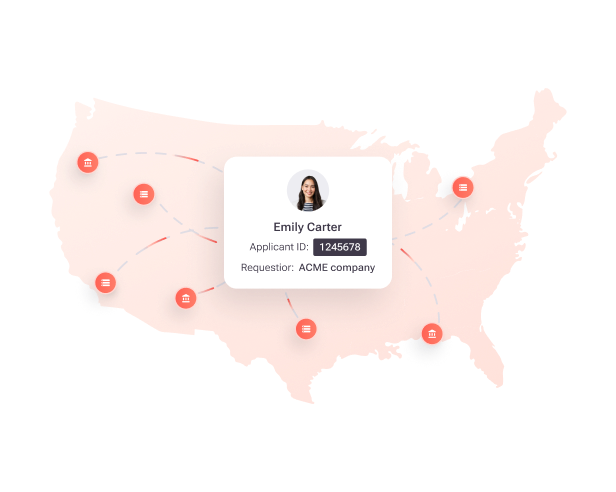
Florida law adds further obligations. Florida Statutes section 720.303 excludes information obtained in connection with lease approval from the records generally accessible to parcel owners and also protects specified personal identifying information, which supports tighter handling of screening data. Florida rental-approval guidance for associations recommends using a secure channel rather than ordinary email when transmitting identity, vehicle, contact, or screening information.
TenantEvaluation acts as a direct reseller of TransUnion and Equifax data. The platform includes strict permissible purpose controls, automated adverse action workflows, built-in audit trails for every application, and clear separation between decision-making by the association and data provision by TenantEvaluation. TenantEvaluation does not guarantee compliance or provide legal verification. Associations should consult qualified legal counsel for jurisdiction-specific guidance.
Emerging Resident Onboarding and Payment Practices in 2026
Florida community associations are adopting several practices as standard for resident onboarding and payment collection in 2026.
Online payment portals for assessment collection can reduce delinquency rates in U.S. community associations where adopted. These portals work best when they connect to broader digital communication platforms. Digital communication tools such as email blasts, community portals, and mobile apps are now widely used by professionally managed U.S. community associations.
Biometric verification is shifting from advanced feature to expected control layer. AI is being used to create realistic voice and video deepfakes impersonating board members or managers requesting payments or changes to banking details, so document-only screening no longer provides sufficient protection. Leading organizations favor biometric systems that minimize centralized storage of biometric data, support revocable credentials, and provide clear auditability of authentication decisions.
For payment workflows, boards should require multi-factor authentication for account access and implement fraud protection services such as positive pay, ACH positive pay, and debit blocks rather than using personal accounts or consumer apps like Venmo or PayPal that lack audit trails and legal safeguards. The most effective setup connects payment, recording, and reporting in a single action so that digital payments update ledgers automatically without retyping.
Evaluation Framework for Resident Onboarding Payment Processing Software
Florida CAMs, property management leaders, and HOA boards can use six criteria when evaluating resident onboarding payment processing software. These criteria work together to show whether a platform fits association governance needs.
- Compliance readiness, including FCRA-first design, direct bureau relationships, permissible purpose controls, adverse action automation, and audit trails.
- Operational efficiency, including end-to-end automation from application intake through occupancy with measurable time savings.
- Board transparency, including dedicated review and voting dashboards that give board members real-time application visibility without email chains.
- Scalability, including the ability to handle high-volume application seasons and complex onboarding requirements without adding headcount.
- Auditability, including searchable, timestamped digital records for every application, lease, and payment transaction.
- Risk controls, including biometric identity verification, fraud prevention layers, and direct-to-association payment routing that removes intermediary fund holding.
TenantEvaluation: Resident Onboarding and Payment Software for Florida Condos
TenantEvaluation functions as an all-in-one resident onboarding and payment processing platform built for Florida community associations and management companies. Founded in 2007 by property managers, board members, and software engineers with more than 50 years of combined experience, TenantEvaluation serves over 5,000 communities, processes more than 100,000 applications annually, and has generated $150 million for communities.
Four core capabilities define the platform.

- QuickApprove provides an accelerated approval workflow for CAMs, boards, and property management teams inside one connected platform. It delivers real-time application tracking, automated communication support, customized approval letters, a personalized welcome package, and a board-ready approval process. These features reduce manual follow-ups and support high-volume seasons and complex onboarding requirements while preserving control, compliance, and visibility.
- IDVerify+ embeds biometric identity verification directly in the screening workflow. It uses government ID validation, AI-powered liveness detection, and biometric selfie-to-ID comparison. All verification runs natively inside TenantEvaluation, so teams avoid external portals and workflow disruption.
- Lease Tracking delivers centralized, real-time lease visibility and lifecycle control. It connects resident onboarding, unit data, approvals, and lease documentation from application to occupancy. Associations gain real-time lease status, automated lease document collection, unit-level tracking, and audit-ready digital records.
- TEpayments by Zinc provides a connected payment workflow inside TenantEvaluation that collects application fees, deposits, and other required resident payments within the onboarding process. Payments move directly from the applicant to the association’s designated account, and TenantEvaluation never holds the funds.
How Community Associations Reduce Manual Payment Tracking
TEpayments by Zinc operates as a configurable payment workflow integrated into the TenantEvaluation platform. Each association defines what to collect and at which stage, so the capability adapts to the property’s process instead of forcing a rigid sequence. Application fees, deposits, and other required resident payments are collected within the onboarding process associations already use.
The structural payment problem that TEpayments by Zinc addresses is well documented. Community association managers overseeing 100 or more homes face structural collapse in manual payment reconciliation processes, as the volume of transactions outgrows spreadsheets and personal familiarity with owners, turning monthly reconciliation into a full-time task of chasing errors rather than making decisions. As noted earlier, platform consolidation drives efficiency gains, and payment reconciliation is a primary area where fragmentation creates measurable costs.
With TEpayments by Zinc, payments move directly from the applicant to the association’s designated account. TenantEvaluation organizes the workflow but never holds the funds. Boards receive traceable payment records and operational clarity. Managers remove manual tracking, email follow-ups, and spreadsheet reconciliation that define disconnected payment collection. Applicants see exactly what to pay, when to pay, and where to pay inside the application process they already follow.
TEpayments by Zinc vs Generic Rent Collection Platforms
Generic platforms that appear in search results for resident onboarding payment processing software, including AppFolio, Buildium, RentSpree, TurboTenant, and similar tools, focus on multifamily rental management rather than community association governance. They usually lack board voting dashboards, FCRA-first design, biometric verification embedded in the screening workflow, and direct-to-association payment routing without intermediary fund holding.
The table below compares platforms on four like-for-like operational criteria relevant to Florida community associations.
| Platform | HOA/Condo Board Dashboard | Biometric Identity Verification | Direct-to-Association Payment Routing | FCRA-First Design (Direct Bureau Reseller) |
|---|---|---|---|---|
| TenantEvaluation | Yes | Yes | Yes | Yes |
| AppFolio | No | No | No | No |
| Buildium | No | No | No | No |
| RentSpree | No | No | No | No |
| TurboTenant | No | No | No | No |
| ApplyCheck / Verify Screening Solutions | No | No | No | No |
TenantEvaluation is the only platform in this comparison that combines all four capabilities in a single system built exclusively for community associations. Generic platforms often require associations to assemble multiple tools, including a screening vendor, a payment processor, a board communication tool, and a lease management system, each with its own compliance exposure and reconciliation burden.
Frequently Asked Questions
What makes resident onboarding payment processing software different from generic property management platforms for Florida HOAs?
Generic property management platforms focus on multifamily rental operations such as lease renewals, rent collection, maintenance requests, and owner reporting. Florida HOAs and condos operate under a governance structure that requires board voting workflows, FCRA-compliant screening with permissible purpose controls, age-restricted community documentation, and direct-to-association payment routing. Platforms like TenantEvaluation are built around these requirements from the start, while generic tools force associations to adapt rental-focused workflows to a governance context they were not designed to support. That mismatch often produces fragmented compliance exposure, missing audit trails, and disconnected payment records.
How does biometric identity verification reduce fraud risk in HOA and condo applications?
Traditional screening relies on uploaded documents, a vulnerability discussed earlier where AI-generated forgeries now defeat document review in minutes. Biometric verification adds a layer that document review cannot match by confirming that the person submitting the application is physically present and matched to the government-issued ID they provided. TenantEvaluation’s IDVerify+ uses AI-powered liveness detection, government ID authentication, and biometric selfie-to-ID comparison, all running natively inside the TenantEvaluation workflow. This approach moves communities from document-based validation to biometric-confirmed identity verification before approval decisions occur. IDVerify+ can be configured per community or portfolio to match each association’s risk profile.

What does it mean that TEpayments by Zinc routes payments directly to the association’s account?
TEpayments by Zinc operates as a connected payment workflow inside TenantEvaluation, not as a standalone payment processor or intermediary. When an applicant pays an application fee or deposit, the funds move directly from the applicant to the association’s designated account. TenantEvaluation organizes the workflow but never holds the funds. This structure matters for boards because it removes the compliance and fiduciary risk associated with a third party holding association funds, provides traceable payment records tied to the onboarding workflow, and gives boards clarity about where funds go at every stage.
What FCRA obligations apply when a Florida community association uses a consumer report to screen residents?
When a community association uses a consumer report such as a credit report or background check and takes adverse action based on that report, the Fair Credit Reporting Act requires an adverse-action notice. The notice must include information about the consumer reporting agency, the applicant’s right to dispute the report, and the basis for the adverse action. As discussed in the Compliance Requirements section, these obligations apply whenever a consumer report influences a screening decision, and permissible purpose controls must exist before any consumer report is accessed. TenantEvaluation’s FCRA-first design includes automated adverse action workflows, built-in audit trails, and direct bureau relationships with TransUnion and Equifax, but associations should consult legal counsel for guidance specific to their situation.
How does Lease Tracking inside TenantEvaluation differ from a spreadsheet or shared folder system?
Spreadsheets and shared folders store documents but do not connect them to the onboarding lifecycle. TenantEvaluation’s Lease Tracking lives directly inside the platform alongside applications, approvals, and document collection. It delivers real-time lease status visibility, including active, pending, expired, or missing, for every unit. Lease documents are collected automatically during onboarding, tied to unit-level occupancy records, and stored in a searchable digital history that is audit-ready. When a lease expires or a document is missing, the system surfaces that information in real time instead of forcing a manager to cross-reference spreadsheets manually. Boards gain a clearer picture of occupancy and resident activity across communities without extra administrative work.
Conclusion: Selecting a Resident Onboarding Platform for Florida Associations
Manual, disconnected onboarding and payment workflows create measurable costs for Florida community associations, including delayed approvals, compliance exposure, identity fraud risk, missing lease records, and boards operating without real-time visibility. The evaluation framework in this article, covering compliance readiness, operational efficiency, board transparency, scalability, auditability, and risk controls, offers a structured way to assess any resident onboarding payment processing software against Florida HOA and condo requirements.
TenantEvaluation is built for this environment with FCRA compliance as the foundation, not an afterthought. With more than 5,000 communities served, over 100,000 applications processed annually, $150 million generated for communities, and a 4.8 out of 5 Google rating, TenantEvaluation delivers an all-in-one platform that combines screening, biometric verification, lease tracking, and direct-to-association payment collection in a single connected workflow.
