Written by: Luis Teran, Co-founder, CEO, TenantEvaluation
Key Ways Florida CAMs Save Time on Occupancy Admin
- Fragmented lease records across email, folders, and spreadsheets create daily blind spots that consume hours of admin time for Florida CAMs and boards.
- Centralized lease tracking with real-time status (active, pending, expired, or missing) eliminates manual reconciliation and provides immediate occupancy visibility.
- Automated onboarding, renewal reminders, and resident self-service reduce staff workload and shorten board approval cycles by up to 70%.
- TenantEvaluation’s FCRA-compliant platform connects applications directly to occupancy records, replacing spreadsheets with one audit-ready workflow.
- See how TenantEvaluation can cut your HOA occupancy admin time by 50–70%.
The Daily Pain of No Centralized Lease Visibility
Florida CAMs managing lease approvals and occupancy tracking carry a compounding administrative burden every day. Property management analyses suggest that manual lease processes can require substantial admin time for larger communities. Centralized workflows reduce monthly admin hours by removing repetitive, low-value tasks.
The root cause is structural: lease data is disconnected from the onboarding process itself. This disconnection forces CAMs to search across folders, inboxes, and spreadsheets to confirm whether a lease is active, pending, expired, or simply missing. Without centralized visibility, boards cannot see occupancy status in real time, which causes approval cycles to stretch from days to weeks. Automated board approval workflows address this delay by connecting lease data directly to the decision-making process.
TenantEvaluation’s platform eliminates these blind spots. Automated workflows free up to 50 hours per day of staff time, and QuickApprove reduces approval timelines by up to 70%, turning a multi-week bottleneck into a same-week decision. These gains come from four connected automation capabilities that replace manual processes end to end.

Four Automation Pillars That Cut HOA Occupancy Admin Time
1. Digitizing Resident Onboarding for Faster Approvals
Paper applications and manual document collection give way to a 100% online intake process. Smart application form logic automatically checks for executed leases, valid IDs, and required documents, then rejects incomplete submissions before they reach a CAM’s desk. Best-practice document collection frameworks confirm that automated trigger-based workflows, which send secure upload links the moment a new application is submitted, eliminate the staff time spent composing individual document requests.
2. Automating Renewals and Reminders at the Unit Level
Lease Tracking connects unit-level occupancy records to automated renewal workflows. Reminders launch 90–120 days before expiration and run a multi-touch sequence without manual initiation. Renewal automation benchmarks show staff time per renewal dropping from 34 minutes to 9 minutes in one insurance case study, and from 4.2 hours to 1.1 hours in a SaaS benchmark. Similar patterns apply when communities automate renewal outreach and tracking.
3. Enabling Resident Self-Service for Documents and Status
Mordor Intelligence’s 2026 Property Management Software Market Report identifies resident portals that support self-service renewals and document uploads as a primary driver of administrative cost reduction. TenantEvaluation’s platform gives applicants and residents a web and mobile interface to upload documents, complete identity verification, and track application status. This self-service access reduces inbound follow-up calls and emails to management.
4. Connecting Onboarding, Approvals, and Leases in One System
Lease Tracking serves as the single source of truth, connecting resident onboarding, unit data, approvals, and lease documentation into one streamlined, audit-ready workflow. Real-time lease status, including active, pending, expired, or missing, is visible to CAMs and boards without switching systems. This unified view removes manual reconciliation and prevents occupancy decisions from relying on outdated or incomplete records.
How to Cut HOA Occupancy Admin Time: A 6-Step Process
This six-step process gives Florida CAMs and HOA boards a clear path to replace spreadsheets and email chains with centralized lease records and automated workflows.
- Centralize all lease records inside one platform. Migrate existing lease agreements into TenantEvaluation’s Lease Tracking system. Every lease becomes searchable, unit-linked, and audit-ready, which eliminates folder searches and inbox archaeology.
- Configure real-time lease status tracking. Assign active, pending, expired, or missing status to every unit. CAMs and boards gain an immediate operational picture of occupancy across the entire portfolio without manual reconciliation.
- Automate lease document collection during onboarding. When a new application is submitted, Lease Tracking automatically triggers collection of the executed lease, government-issued ID, and required association forms before the application advances to review.
- Verify applicant identity with IDVerify. Biometric identity verification runs natively inside TenantEvaluation and confirms physical presence before approval, which strengthens FCRA-aligned audit defensibility.
- Route applications through QuickApprove for board-ready decisions. Board members access a dedicated review and voting dashboard with AI-generated applicant summaries. Automated 48-hour reminders prevent stalled reviews, and customized approval letters with a personalized welcome package are generated without additional manual work.
- Maintain audit-ready digital records from application to occupancy. Every action, including document upload, board vote, approval letter, and lease status change, is timestamped and stored in a searchable digital history. Florida HOAs must maintain official records in accordance with Fla. Stat. § 720.303. TenantEvaluation’s audit trail supports that requirement without manual filing.
Administrative Impact Comparison: Manual vs Centralized Workflows
Manual spreadsheet-and-email workflows create heavy administrative burdens for CAM teams. A two-staff team managing lease records manually can spend many hours each month on reconciliation, document tracking, and status checks. Centralized workflows reduce these hours by removing redundant searches and replacing ad hoc communication with structured tasks.
Board approval cycles that stretch across multiple days in email-based systems shorten when automated reminders and centralized dashboards keep reviews moving. The exact time savings depend on portfolio size and current process maturity, yet communities consistently see approval timelines compress once reviews move into QuickApprove.
Renewal seasons also become more manageable. Manual outreach and tracking for a 100-unit portfolio require significantly more staff hours than an automated renewal sequence tied to unit-level lease status. Automation keeps expirations visible and follow-ups consistent, which reduces last-minute scrambles.
Lease status visibility shows the clearest contrast. Manual systems provide no centralized view and require reconciliation across folders and inboxes. TenantEvaluation provides real-time status per unit, including active, pending, expired, or missing, which removes operational blind spots entirely.
Generic platforms such as ManageCasa, DoorLoop, AppFolio, and RealPage, along with background-screening-only tools such as ApplyCheck and Verify Screening Solutions, do not offer Florida-specific FCRA-first design, a dedicated board voting dashboard, or Lease Tracking that connects applications directly to occupancy records. TenantEvaluation is the only platform built exclusively for Florida community associations that delivers all three inside one connected workflow.
Schedule a demo today to see the before-and-after difference for your community’s portfolio.
Florida Compliance Features: IDVerify and 55+ Communities
Florida community associations operate under specific statutory requirements that shape daily operations. Fla. Stat. § 720.303 mandates 7-year record retention and 10-business-day access windows for member inspection requests. Section 718.111(12), Florida Statutes requires condo associations with 25 or more units to maintain a password-protected portal posting official records within 30 days of receipt or creation. TenantEvaluation’s audit-ready digital records and centralized platform directly support these operational requirements.
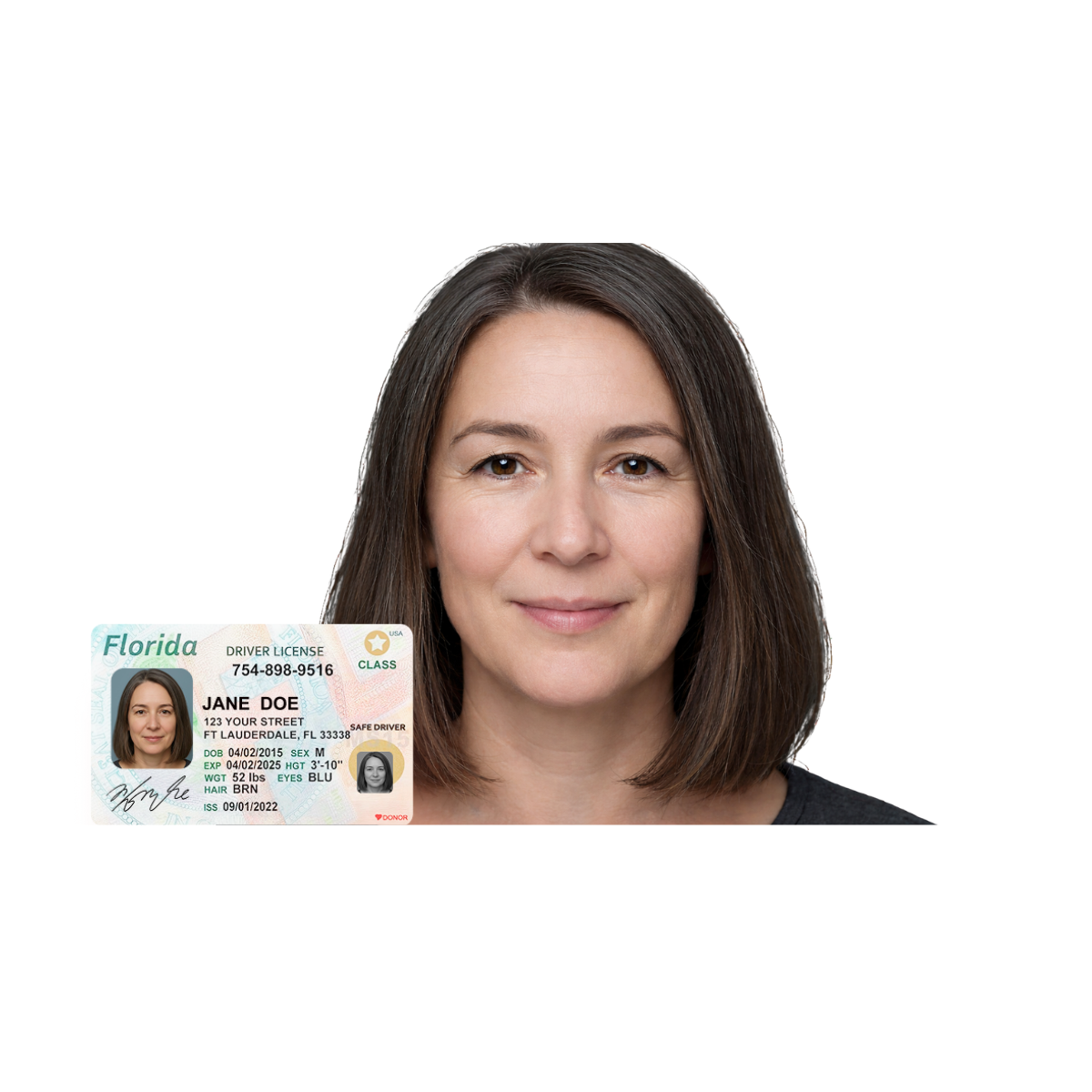
IDVerify introduces biometric identity verification natively inside the TenantEvaluation workflow. Government ID validation, AI-powered liveness detection, and selfie-to-ID biometric comparison run without redirecting applicants to external portals. CAMs see verification results, including ID authenticity confirmation, liveness status, and biometric match result, embedded directly in the screening report. This shift from document-based review to biometric-confirmed identity verification reduces manual oversight and strengthens approval confidence before a resident enters the community.

55+ Communities Verification is a built-in capability that helps Florida Condos and HOAs standardize how age-restricted application requirements are handled across applications. It reduces manual work, supports documentation consistency, and improves operational efficiency for CAMs and boards managing age-restricted communities, while still preserving the need for legal guidance. Unlike generic tools, this capability aligns with the real workflows of Florida associations.
Revenue-Sharing Model and Measurable ROI
TenantEvaluation operates on a pay-per-application revenue-sharing model that aligns platform costs with actual usage. The platform deducts its service fee from the collected application fee, and the remainder is rebated to the association or management company. There are no upfront costs and no monthly subscription fees. The platform has generated $150 million for communities and processes approximately 100,000 applications annually across more than 5,000 communities.
A Florida-based management company documented $240,000 in annual savings after switching to TenantEvaluation. The result came from the time savings mentioned earlier, a 50% reduction in processing time, and eliminated liability exposure from paper-based handling of sensitive resident data. Automation platforms that centralize workflows and records can deliver meaningful labor cost savings and positive ROI for Florida associations.
Frequently Asked Questions
Implementation Timeline for Lease Tracking and QuickApprove
Implementation timelines vary by portfolio size and complexity, yet TenantEvaluation is always configured to each community’s specific governing documents, screening criteria, and association workflows before go-live. The platform is built exclusively for Florida community associations, so the setup process accounts for Florida-specific statutory requirements, including record retention under Fla. Stat. § 720.303 and condo portal requirements under Section 718.111(12), without forcing associations to adapt a generic property management tool. Most communities move from spreadsheets and email chains to centralized lease records and automated workflows without adding headcount or disrupting active application cycles.
Board Responsibilities After Adopting QuickApprove
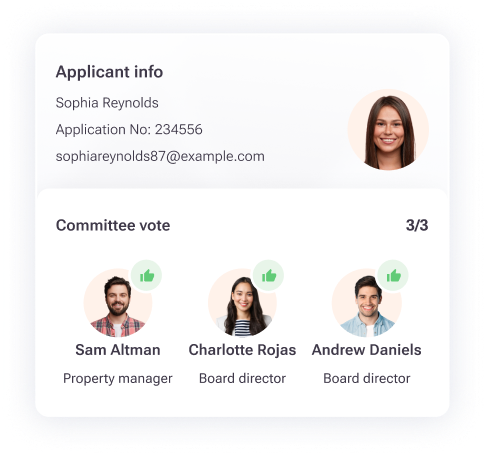
Board members retain full decision-making authority over every application after QuickApprove goes live. QuickApprove does not remove board oversight; it replaces the email chains, spreadsheets, and manual follow-ups that slow the review process. Boards access a dedicated review and voting dashboard inside TenantEvaluation with AI-generated applicant summaries, real-time application status, and a structured voting workflow. Automated 48-hour reminders notify board members of pending reviews, which reduces the approval cycle without bypassing due diligence. Customized approval letters and personalized welcome packages are generated automatically once a decision is recorded, eliminating the additional manual work that typically follows a board vote.
How TenantEvaluation Maintains FCRA Compliance
TenantEvaluation is built with FCRA compliance as the foundation. The platform is a direct reseller of TransUnion and Equifax data, accessed under strict bureau rules with regular compliance reviews and audits. Permissible purpose controls, automated adverse action workflows, and built-in audit trails for every application are standard features, not optional add-ons. The platform maintains a clear separation between data provision, handled by TenantEvaluation, and decision-making, handled by the association, which matches the structure required for FCRA defensibility. IDVerify strengthens this further by confirming applicant identity before screening authorization, reinforcing audit defensibility. Florida landlords and associations must provide FCRA-compliant adverse action notices for every denial based on a consumer report, and TenantEvaluation’s automated workflows support that requirement consistently across every application.
Support for 55+ Age-Restricted Communities
55+ Communities Verification is a built-in capability within TenantEvaluation designed specifically for Florida Condos and HOAs managing age-restricted application requirements. It standardizes how those requirements are handled across applications, which reduces manual work, improves documentation consistency, and strengthens internal operational controls. The capability serves Community Association Managers and boards that currently rely on fragmented manual processes involving emails, PDFs, and individual follow-ups. It improves operational efficiency and scalability for age-restricted communities without replacing legal guidance or guaranteeing any specific compliance outcome. Communities managing 55+ requirements alongside standard lease approvals and occupancy tracking can run both workflows inside the same TenantEvaluation platform.
Conclusion: Turning Occupancy Admin into a Controlled Workflow
Lack of centralized lease visibility is a structural operational problem that costs Florida CAMs and boards hours every day, creates compliance exposure, and slows the resident approvals that communities depend on. Spreadsheets and email chains cannot scale, cannot provide real-time lease status, and cannot connect applications to active occupancy records.
TenantEvaluation’s Lease Tracking and QuickApprove replace that fragmented model with one connected, audit-ready workflow. The platform delivers centralized lease records, real-time lease status, identity verification through IDVerify, and a board-ready approval process inside a single FCRA-compliant system built exclusively for Florida community associations. Communities see a 50–70% reduction in HOA occupancy admin time, faster approvals, stronger compliance readiness, and a revenue-sharing model that turns application processing into a controlled income stream.
Schedule a demo today and replace your spreadsheets with one connected platform, from application to occupancy, fully centralized.
