Written by: Luis Teran, Co-founder, CEO, TenantEvaluation | Last updated: July 9, 2026
Key Takeaways for Florida Condo and HOA Managers
- Florida condo and HOA managers face compliance, governance, and operational pressures that generic property management tools do not solve well.
- Manual screening and onboarding create delays, increase fraud risk, and scatter lease records across email, spreadsheets, and shared drives.
- Effective platforms provide biometric identity verification, board voting dashboards, 55+ community support, and centralized lease tracking in one workflow.
- TenantEvaluation delivers documented results, including up to 70% faster approvals, biometric IDVerify+, and Florida-specific 55+ verification capabilities.
- Streamline your condo or HOA resident screening and onboarding with TenantEvaluation’s specialized platform and see how TenantEvaluation streamlines your workflow.
Resident Screening Stages in Community Associations
Resident screening and onboarding for community associations follows several clear stages, each with its own compliance and operational requirements.
- Application intake: Collection of personal, financial, and identity information from prospective residents, tenants, or purchasers.
- Document collection and verification: Gathering executed leases, government-issued IDs, income documentation, and community-specific forms.
- Background and credit screening: FCRA-governed checks covering criminal history, credit profile, eviction records, and income verification.
- Identity verification: Confirming that the applicant presenting documents is the individual they claim to be, increasingly through biometric methods.
- Board review and approval: The association’s decision-making stage, which in Florida requires documented, auditable voting processes.
- Lease tracking and occupancy: Connecting approved applications to active lease records and maintaining real-time visibility over lease status from execution through expiration.
Each stage introduces compliance exposure when handled manually. Renting without reading governing documents is like agreeing to terms and conditions you have never opened, legally binding and potentially messy, as Conrad Bennett of EJF Rentals has noted. Platforms that connect these stages into a single workflow reduce the risk of gaps between them.
Florida Market Trends Shaping Screening and Onboarding
Three converging trends define the 2026 environment for Florida association managers.
Identity fraud escalation. Traditional document-based screening, which relies on uploaded ID copies and database checks, no longer provides sufficient protection against synthetic identities and impersonation attempts. Communities that have not adopted biometric verification carry growing liability exposure at the point of approval.
Compliance pressure from Florida legislation. Florida legislation continues to impose new requirements on homeowners associations, including transparency mandates and governance standards that demand documented, auditable processes. Florida HOAs cannot apply new screening or vehicle registration rules retroactively to long-term residents, and screening policies that exceed the authority granted in a declaration of covenants face enforceability challenges. Documented, consistently applied workflows now function as a legal necessity, not just an operational preference.
Technology adoption acceleration. Associations transitioning from manual to digital HOA management report significant reductions in administrative workload and processing time. Platforms that automate document collection, board voting, and lease tracking are replacing fragmented multi-tool stacks across Florida’s largest management portfolios. To help managers evaluate which platforms deliver these capabilities most effectively, the following comparison examines the five most relevant solutions across the features that matter most to community associations.
Platform Comparison for Florida Condo and HOA Needs
The table below compares the five most relevant platforms for Florida condo and HOA managers across the capabilities that matter most to community associations. TenantEvaluation’s figures, including up to 70% reduction in approval time, up to 50 hours saved per day, 5,000+ communities served, and 100,000+ applications processed annually, are drawn from documented operational outcomes across its client base. Competitor capability assessments reflect publicly available product information as of mid-2026.
| Platform | Board Voting Dashboard | Biometric Verification | 55+ Florida Support | Lease Tracking |
|---|---|---|---|---|
| TenantEvaluation | Yes, dedicated board review and voting panel | Yes, IDVerify+ biometric selfie-to-ID matching | Yes, built-in 55+ Communities Verification | Yes, centralized, real-time lease lifecycle control |
| AppFolio | No dedicated board voting dashboard | Not natively embedded | Not purpose-built for Florida 55+ workflows | General lease storage, not association-specific |
| Buildium | No dedicated board voting dashboard | Not natively embedded | Not purpose-built for Florida 55+ workflows | General lease storage, not association-specific |
| Verify Screening Solutions | No | No | No | No |
| ApplyCheck | No | No | No | No |
Verify Screening Solutions and ApplyCheck both operate on the TazWorks platform, which is not purpose-built for tenant screening and lacks applicant interaction, automated document review, or redaction. AppFolio and Buildium serve broader property management use cases and do not offer the board-specific workflows, biometric verification, or 55+ documentation capabilities that Florida community associations require. TenantEvaluation’s documented approval time of 5–10 minutes, compared with 5–10 days for manual processes, reflects its purpose-built workflow automation. Other platforms do not publish comparable end-to-end screening time metrics or focus only on background check turnaround.
How Florida CAMs Experience These Workflows Day to Day
For a CAM managing a portfolio of Florida condominiums, a typical application cycle without a specialized platform involves receiving incomplete submissions by email, manually chasing missing documents, forwarding packages to board members for review, waiting for responses across multiple channels, and then manually generating approval letters. Condominium boards commonly require mandatory tenant screening protocols before approving leases, which adds administrative steps that compound when handled outside a connected system.
With a purpose-built platform, the same cycle runs inside one workflow. The applicant submits online, smart form logic rejects incomplete submissions automatically, identity verification runs biometrically before the application proceeds, the board accesses a dedicated review panel, and lease documentation connects directly to the approved record. The operational difference shifts from incremental improvement to a structural change in how work gets done.
Many condominium associations impose rental caps limiting leased units to 20% of the building, which requires active tracking of owner-occupant ratios. Without centralized lease visibility, managers cannot reliably confirm occupancy status or waiting-list position, creating immediate compliance failure points.
Compliance, Risk, and Governance for Florida Associations
The Fair Credit Reporting Act (FCRA) governs how background check data is collected, used, and disclosed in resident screening. Platforms that act as direct credit bureau resellers, rather than aggregating data through third-party intermediaries, provide stronger permissible-purpose controls and cleaner audit trails. TenantEvaluation is a legitimate reseller of TransUnion and Equifax data, accessed under strict bureau rules with regular compliance reviews, which provides community associations with protection from liability exposure tied to gray-market data sources.
Automated adverse action workflows function as a non-negotiable compliance requirement. When a screening decision results in denial or conditional approval, the platform must generate the required notices without manual intervention. Platforms that leave this step to the manager introduce avoidable legal exposure.
Board members carry fiduciary duties and legal responsibilities that extend to the screening and approval process. Audit trails that timestamp every application action, board vote, and document submission form the operational foundation of defensible governance.
QuickApprove: Faster, Board-Ready Approvals
QuickApprove is TenantEvaluation’s accelerated approval workflow built for CAMs, boards, and property management teams inside one connected platform. It replaces email chains and spreadsheets with real-time application tracking, automated communication support, customized approval letters, and a personalized welcome package, while maintaining control, compliance, and visibility.
The board-ready approval process gives board members direct access to summarized applicant reports and a dedicated voting panel, eliminating the back-and-forth of email-based review. This direct access enables managers to reduce manual follow-ups, since automated communication support keeps applications moving during high-volume seasons and in communities with complex onboarding requirements. By removing these bottlenecks at both the board and manager level, the platform delivers approvals that are faster, clearer, more consistent, and easier to manage, matching the speed improvements documented earlier.

IDVerify+: Built-In Biometric Identity Checks
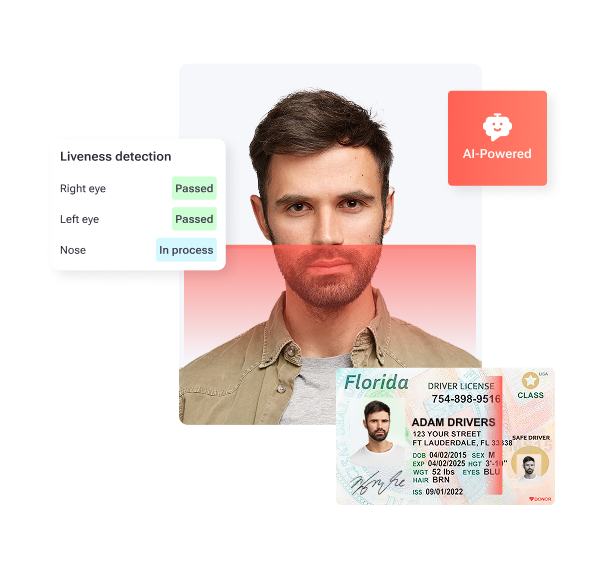
IDVerify+ introduces automated KYC verification directly inside the TenantEvaluation screening workflow, combining government ID validation, AI-powered liveness detection, and biometric selfie-to-ID facial matching. Unlike competitors that redirect applicants to external portals, IDVerify+ operates natively within TenantEvaluation, which preserves workflow continuity and maintains applicant trust within a single ecosystem.
CAMs see verification results embedded directly in the screening report, including ID authenticity confirmation, liveness verification status, biometric match result, and a redacted ID copy for compliance documentation. IDVerify+ can be enabled per condo or HOA and configured per property portfolio, supporting different community risk profiles without a one-size-fits-all approach. This shift moves communities from document-based validation to biometric-confirmed identity verification, a structural upgrade for communities facing rising identity fraud exposure.
55+ Communities Verification for HOPA Compliance
55+ Communities Verification is a built-in capability within TenantEvaluation that helps Florida condos and HOAs standardize how age-restricted requirements are handled across applications. The Housing for Older Persons Act (HOPA) of 1995 requires qualifying 55+ communities to maintain clear age-verification policies and documentation, and fragmented manual processes that rely heavily on emails, PDFs, and follow-ups create inconsistent records and risk exposure in audits or disputes.
TenantEvaluation’s 55+ Communities Verification reduces manual work, standardizes application handling, supports documentation consistency, and improves operational efficiency for CAMs and boards managing age-restricted communities. It is designed specifically for Florida condos and HOAs, creating a more structured process for internal operational control. This capability supports documentation and consistency and does not replace legal guidance.

Lease Tracking: Centralized, Real-Time Lease Control
Lease Tracking is a centralized operational capability built directly into TenantEvaluation that connects resident onboarding, unit data, approvals, and lease documentation into one streamlined, real-time workflow. It delivers real-time lease status visibility, including active, pending, expired, or missing, alongside automated lease document collection during onboarding, unit-level tracking tied to occupancy records, and a searchable digital history of lease records and document trails.
Many condo and HOA associations require specific lease provisions for validity, and missing those provisions can invalidate the lease. When lease documentation is disconnected from the onboarding process, managers cannot reliably confirm that required provisions are present or that records are complete. Lease Tracking removes spreadsheets and scattered email chains so every lease stays connected, searchable, trackable, and audit-ready from application to occupancy, built for CAMs, boards, property management companies, and community operations teams inside one connected platform.
Common Screening and Onboarding Failure Points
The most consistent failure points in manual screening and onboarding processes fall into three categories.
- Manual bottlenecks: Applications sit in email chains waiting for board review, with no centralized visibility into status or next steps. Peak seasons amplify these delays significantly.
- Incomplete records: Unauthorized leases in condo and HOA communities can trigger fines, demand letters, and legal action by the association. Missing lease provisions, outdated copies, and disconnected occupancy records create ongoing compliance exposure.
- Identity fraud risk: Traditional document uploads cannot reliably prevent impersonation or synthetic identity fraud. Communities without biometric verification carry growing liability at the point of approval.
Operational Best Practices Emerging in 2026
Florida community associations adopting modern screening and onboarding standards in 2026 are converging on several operational practices.
- Workflow standardization: Replacing ad hoc email and spreadsheet processes with a single connected platform that enforces consistent steps across every application, regardless of volume or complexity.
- Stronger identity verification: Moving from document-based review to biometric-backed confirmation before approval decisions, which reduces fraud exposure and strengthens board confidence.
- Documentation consistency: Maintaining audit-ready records for every application action, board vote, and lease document, structured to support internal compliance processes and withstand scrutiny in disputes.
- Centralized lease visibility: Connecting lease documentation directly to the onboarding workflow so occupancy status, lease expiration, and required provisions remain current and searchable.
Evaluation Criteria for Selecting a Screening Platform
CAMs and boards evaluating resident screening and onboarding platforms should apply five criteria consistently across every option considered.
- Compliance readiness: Does the platform operate as a direct credit bureau reseller with FCRA-first design, automated adverse action, and built-in audit trails, or does it treat compliance as an add-on? Without this foundation, every other capability carries legal risk.
- Operational efficiency: Once compliance is assured, does the platform automate document collection, identity verification, board review, and lease tracking inside one workflow, or does it require multiple disconnected tools? Efficiency without compliance simply increases the speed toward liability.
- Transparency: Even efficient workflows fail when stakeholders cannot see what is happening. Do CAMs and board members have real-time visibility into application status, voting outcomes, and lease records, or does information live in email chains and spreadsheets?
- Scalability: Can the platform absorb higher application volume during peak seasons without adding headcount or complexity, while preserving the same workflow standards?
- Auditability: Does every application action, board vote, and document submission carry a timestamp and a searchable digital record that supports governance and dispute resolution?
Generic property management software and background-check-only platforms typically satisfy one or two of these criteria. A platform purpose-built for community associations addresses all five within a single ecosystem.
Frequently Asked Questions
What makes a resident screening platform suited for Florida condo and HOA communities?
Florida community associations operate under a distinct regulatory environment that includes FCRA requirements, Florida-specific HOA and condominium statutes, HOPA documentation requirements for 55+ communities, and fiduciary obligations for board members. A suitable platform must handle board voting workflows, age-restricted application documentation, biometric identity verification, and centralized lease tracking, capabilities that generic property management software and background-check-only tools do not provide. TenantEvaluation is built specifically for community associations with FCRA compliance built into the platform architecture from day one, not bolted on as an afterthought like many generic property management tools.
How does biometric identity verification reduce risk for condo and HOA boards?
Traditional screening relies on uploaded document copies, which cannot reliably detect impersonation, synthetic identities, or stolen IDs. Biometric identity verification, which combines government ID validation, AI-powered liveness detection, and selfie-to-ID facial matching, confirms that the applicant presenting documents is physically present and matched to their identification before the application proceeds to board review. This shift moves communities from document-based validation to biometric-confirmed identity confirmation, which reduces fraud exposure and strengthens board approval confidence. TenantEvaluation’s IDVerify+ runs natively inside the screening workflow, with results embedded directly in the CAM’s screening report.
What are the compliance risks of managing lease records manually in a community association?
Manual lease management creates several compounding risks, including missing or outdated lease copies, no centralized visibility into lease status, inability to confirm occupancy or track expirations, and no direct connection between approved applications and active leases. These gaps produce operational blind spots that increase the likelihood of unauthorized occupancy, missed rental cap violations, and incomplete records in the event of a dispute or audit. Centralized lease tracking that connects onboarding, approvals, unit data, and lease documentation into one audit-ready workflow addresses these failure points directly.
How does a board voting dashboard improve the approval process for community associations?
Without a dedicated board dashboard, approval workflows typically live across email chains, spreadsheets, and manual follow-ups, which creates delays, limited visibility, and no auditable record of board decisions. A board voting dashboard gives board members direct, real-time access to summarized applicant reports and a structured voting panel inside the same platform used by CAMs. This setup replaces back-and-forth communication with a documented, timestamped decision process that supports governance requirements and reduces the time from application submission to final approval.
Is TenantEvaluation suitable for both small self-managed communities and large management company portfolios?
TenantEvaluation serves community associations ranging from small, self-managed communities to large, enterprise-level property management companies with extensive portfolios. Its pay-per-application revenue model, with no upfront fees and a revenue-sharing structure that rebates a portion of application fees back to the association, makes it accessible regardless of portfolio size. The platform’s automation capabilities, including smart form logic, automated document collection, biometric verification, and centralized lease tracking, are designed to scale without adding headcount, which makes it effective for a single community and for a multi-property management company.
Conclusion and Next Steps for CAMs and Boards
Manual resident screening and onboarding processes create measurable costs for Florida community associations, including delayed approvals, fragmented lease records, identity fraud exposure, and compliance gaps that accumulate over time. The platforms that address these challenges most effectively are built specifically for community associations, rather than adapted from generic rental or property management software.
TenantEvaluation is the only all-in-one resident screening and onboarding platform purpose-built for Florida condos and HOAs, with the scale and operational track record detailed in the platform comparison above. Its integrated capabilities, including QuickApprove for accelerated board-ready approvals, IDVerify+ for biometric identity confirmation, 55+ Communities Verification for age-restricted documentation, and Lease Tracking for real-time lease lifecycle control, address every stage of the resident onboarding process inside one connected, FCRA-compliant platform.
CAMs and boards evaluating their current processes should assess whether their existing tools provide compliance readiness, operational efficiency, transparency, scalability, and auditability across every application stage. Where gaps exist, a purpose-built platform removes them structurally rather than through small incremental fixes.
