
Key Takeaways
- Accurate digital screening reduces delays, human error, and inconsistent decisions that often occur with paper-based HOA and condo application workflows.
- AI tools, real-time data, and multi-step verification catch fraud earlier, protect community safety, and support fair, consistent approvals.
- Fintech integrations and intelligent forms speed up approvals for qualified applicants while reducing manual work for Community Association Managers and Boards.
- Customizable screening rules help Florida communities align with association bylaws and state and fair housing requirements while keeping processes defensible.
- Tenant Evaluation provides a modern, HOA-focused screening platform that combines these capabilities in one system; get started with a Tenant Evaluation demo to see it in action.
Why Accurate Proptech Screening Matters For HOAs and Condos
Accurate screening improves community safety, protects property values, and reduces disputes. Manual, paper-based processes slow down approvals, create inconsistent decisions, and introduce errors when Board Members and CAMs review complex documents under time pressure.
Florida condominiums and HOAs face strict regulations and high financial exposure when screening is incomplete or inconsistent. Inaccurate tools increase the risk of compliance issues, mishandled sensitive data, and poor resident fit that can affect community harmony. Modern proptech platforms replace many manual tasks with automated checks, so CAMs spend less time chasing documents and more time managing the community.
Top 7 Proptech Screening Features That Improve Accuracy in HOAs and Condos
1. Comprehensive Background Checks Improve Resident Quality
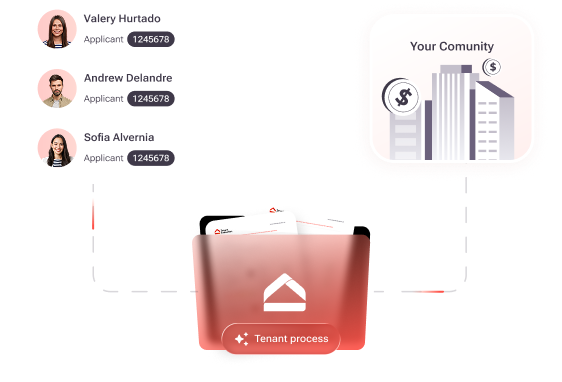
Comprehensive background checks now go far beyond simple credit reports. Accurate systems pull data from criminal records, FBI lists, eviction history, employment verification, landlord references, and credit profiles.
This broader view reveals patterns that a single report might miss, such as repeat late payments or prior lease violations. Board Members receive a fuller picture of each applicant, which supports consistent, fair decisions that protect community standards and long-term property values.
2. AI Fraud Detection and Document Verification Catch Red Flags Early
AI-based fraud tools increase accuracy by reviewing documents in seconds. Optical Character Recognition technology can flag altered pay stubs, mismatched ID details, and inconsistent document fields in real time.
These tools identify fake employment letters, edited bank statements, and forged IDs that might slip through a manual review. AI-driven platforms verify documents and extract deeper financial insights, so CAMs and Boards base decisions on validated information instead of unverified uploads.
3. Multi-Step Verification Workflows Reduce Fraud and Manual Work
Verification waterfall workflows layer several checks into one streamlined process. A typical flow may start with payroll connections, then move to bank verification, then to OCR-based document review.
Each step adds another checkpoint, which makes fraud harder and speeds up honest applications. Front-loaded verification often cuts review times from days to minutes while improving completion rates. CAMs receive applications that are already verified and organized, which reduces back-and-forth with applicants and shortens Board review cycles.
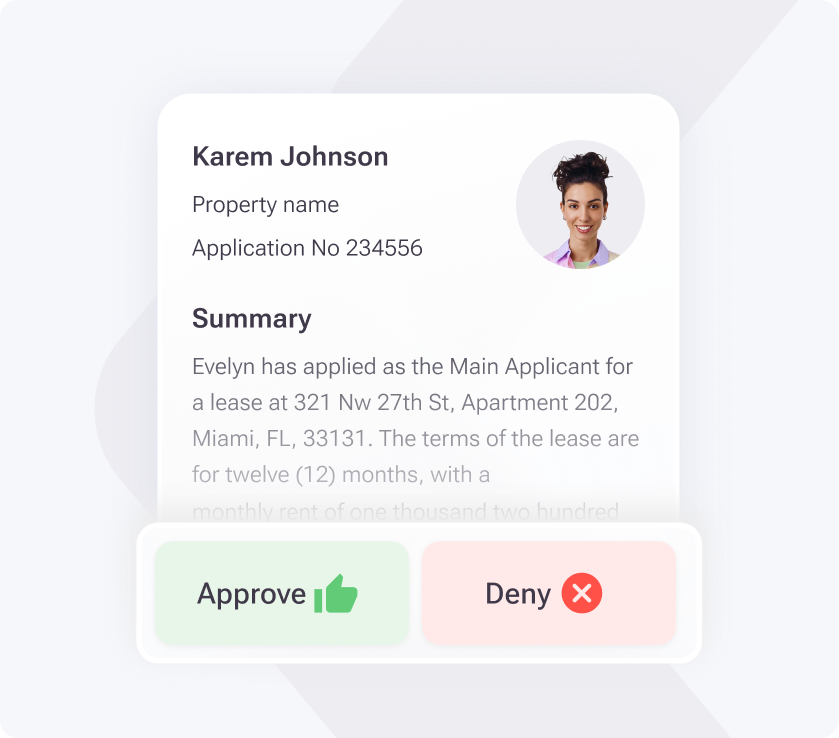
Request a Tenant Evaluation demo to see how automated workflows can support your Board’s approval process.
4. Predictive Analytics and Behavioral Scoring Improve Risk Assessment
Predictive analytics provide a deeper view of financial behavior than traditional credit scores. Modern AI screening tools review indicators like liquidity, rent-to-income ratios, spending patterns, and account stability.
These insights help Boards evaluate applicants with non-traditional income, such as self-employed residents or retirees, more fairly. Patterns in cash flow and spending can highlight responsible financial behavior even when a credit file is thin. Better risk assessment leads to stronger resident selection and fewer payment issues over time.
5. Real-Time Identity and Income Verification Speeds Approvals
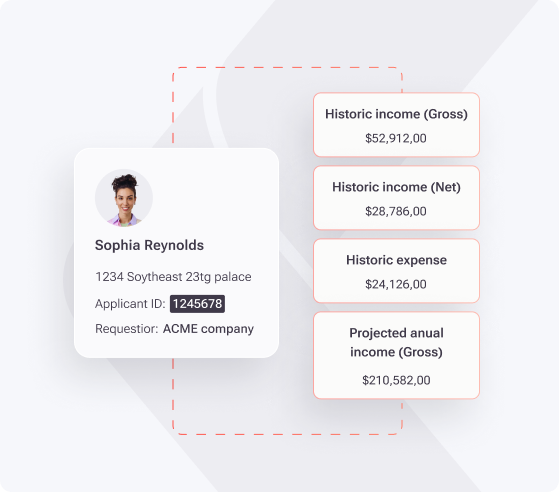
Fintech integrations connect directly to banks and payroll providers to confirm identity and income in seconds. This process replaces phone calls, emails, and manual review of uploaded PDFs.
Real-time verification reduces fraud opportunities and expands access for qualified applicants. For HOAs and condos, this means faster move-in timelines, clearer documentation for Board packets, and fewer disputes over income qualification.
6. Custom Rules Support Florida-Specific Compliance and Community Standards
Custom configuration keeps screening aligned with Florida requirements and each community’s governing documents. A strong platform lets associations set their own:
- Minimum credit scores or score bands
- Income and debt-to-income thresholds
- Required documents by applicant type
- Approval workflows and Board review steps
Clear, configurable rules support consistent decisions and fair housing compliance. As regulations or bylaws change, CAMs can adjust settings without rebuilding the process, which keeps screening accurate and defensible.
7. Intelligent Forms and Automated Filters Simplify Review
Intelligent forms guide applicants through the right path from the start. These forms can:
- Change questions based on whether the applicant is a tenant, purchaser, or roommate
- Request different documents for different applicant profiles
- Route applications through the correct approval workflow
Automated filters can flag applications that meet community standards and set aside non-qualifying ones. CAMs spend less time sorting files and more time reviewing a smaller, higher quality set of applications with consistent, documented criteria.
Frequently Asked Questions About Proptech Screening for HOAs and Condos
How proptech screening tools improve accuracy over traditional methods
Proptech platforms combine AI, automated background checks, fraud detection, and predictive analytics to review large data sets from verified sources such as credit bureaus, public records, and employment systems. This approach reduces human error and replaces subjective judgment with consistent rules. Automation also shortens processing times from days to minutes while keeping criteria uniform for every applicant.
How AI tenant screening can reduce bias when managed correctly
AI screening reflects the data and rules it is given. Well-designed systems include human oversight, clear criteria, and regular audits. When Boards and CAMs review outcomes, adjust rules responsibly, and retain the ability to escalate complex cases, AI can reduce bias by applying the same standards to every application rather than relying on informal or inconsistent manual reviews.
Why data security is essential to accurate screening
Strong data security protects the integrity of applicant information from submission through decision. Measures such as encryption, automatic masking of sensitive fields, and PCI Level 1 compliant handling reduce the risk of tampering or exposure. When data stays secure and unchanged, Board Members can rely on the information in each file, and applicants gain confidence in the process.
How automated verifications reduce workload for CAMs and Boards
Automation removes many of the most time-consuming steps in screening. Systems can verify employment, read bank data, calculate ratios, and check documents without manual data entry. CAMs receive organized, pre-verified application packages, and Board Members review concise summaries instead of raw documents. Many communities recover dozens of staff hours each week by shifting repetitive checks into automated workflows.
Conclusion: Using Accurate Proptech To Strengthen HOA and Condo Communities
Accurate proptech screening helps Florida HOAs and condominiums protect their communities, meet compliance obligations, and reduce administrative strain. Comprehensive background checks, AI fraud tools, multi-step verification, predictive analytics, real-time fintech checks, flexible rule settings, and intelligent forms work together to create a clear, consistent approval process.
Communities that adopt these tools tend to see faster decisions, fewer disputes, and a better fit between residents and association standards. CAMs and Boards gain more time for strategic work, while applicants experience a clearer, more predictable process.
Schedule a Tenant Evaluation demo to streamline applications, support compliance, and improve screening accuracy for your condominium or homeowner association.