Written by: Luis Teran, Co-founder, CEO, TenantEvaluation
Key Takeaways for Florida Community Managers
- Rental fraud affects 23.8% of evictions in 2026, costing Florida CAMs up to $4.2M in write-offs and $5K–$30K per eviction.
- A layered defense with 7 steps, including red flag checks, manual review, automated verification, FCRA screening, biometrics, dashboards, and unified platforms, sharply reduces fraud risk.
- Common fraud includes falsified income docs, identity impersonation, synthetic IDs, fake references, and document forgery; biometric verification catches what manual checks miss.
- Automation cuts screening time by 96%, from over 2 hours to 5 minutes, while boosting fraud detection from 60% to 100% through direct payroll and court integrations.
- TenantEvaluation delivers HOA-focused fraud prevention with IDVerify biometrics and QuickApprove dashboards; schedule a demo today to protect your Florida communities.
Seven Practical Steps to Prevent Application Fraud
Preventing rental application fraud starts with a layered strategy that blends trained staff review with automated verification tools. Each layer catches a different type of fraud attempt and reduces reliance on easily altered documents.
- Identify suspicious documentation patterns and inconsistencies
- Use biometric identity verification to confirm real, in-person applicants
- Run FCRA-compliant background and credit screening
- Automate income verification through direct employer and payroll sources
- Maintain complete audit trails to protect compliance and board decisions
Common Rental Application Fraud Tactics in Florida Communities
Common fraud schemes follow repeatable patterns that property managers can learn to recognize quickly. Nearly half of property managers cite background checks as the most critical screening element because of rising fraud involving falsified IDs, altered pay stubs, and fabricated references. Typical fraud patterns include:
- Falsified Income Documentation: Digitally altered pay stubs with inflated salaries or fake employer letterheads.
- Identity Impersonation: Use of stolen personal information to assume another person’s identity during applications.
- Synthetic Identity Creation: Combination of real and fabricated information to create entirely new identities.
- Reference Manipulation: Fake landlord contacts or accomplices posing as employment references.
- Document Forgery: Counterfeit government IDs, bank statements, or lease agreements that appear legitimate at first glance.
Step 1: Train Staff to Spot Red Flags in Applications
Fraud prevention begins with staff who know what to look for in every application. Inconsistent personal information across documents, unusually perfect credit scores with thin history, and employment details that do not match stated income all signal higher risk.
Teams should review applications that list round-number salaries, generic free email addresses, or phone numbers that do not match the claimed geographic area. Documents with mismatched fonts, poor image quality, or obvious digital edits deserve extra scrutiny.
Red Flag Checklist:
- Different name spellings across documents
- Addresses that do not exist or appear suspicious
- Employment start dates that conflict with income claims
- Bank statements with odd formatting or missing transaction details
- References who answer instantly and sound scripted or overly rehearsed
Step 2: Strengthen Manual Document and ID Checks
Manual document verification still plays a key role in catching obvious or sloppy fraud attempts. Staff should examine government-issued IDs for holograms, raised text, and correct formatting for the issuing state.
Teams need to confirm that photo quality matches the age of the document and look for digital manipulation around text fields or photos. All information on IDs should align with the rest of the application packet and supporting documents.
Manual review alone often falls short because standards vary by staff member, fatigue causes missed details, and sophisticated digital edits require tools that humans cannot match consistently.
Step 3: Automate Income and Eviction Verification
Direct integrations with payroll providers and court databases remove dependence on applicant-uploaded documents that can be altered. Direct payroll provider integrations enable real-time income verification, making falsification virtually impossible and eliminating manual employer calls.
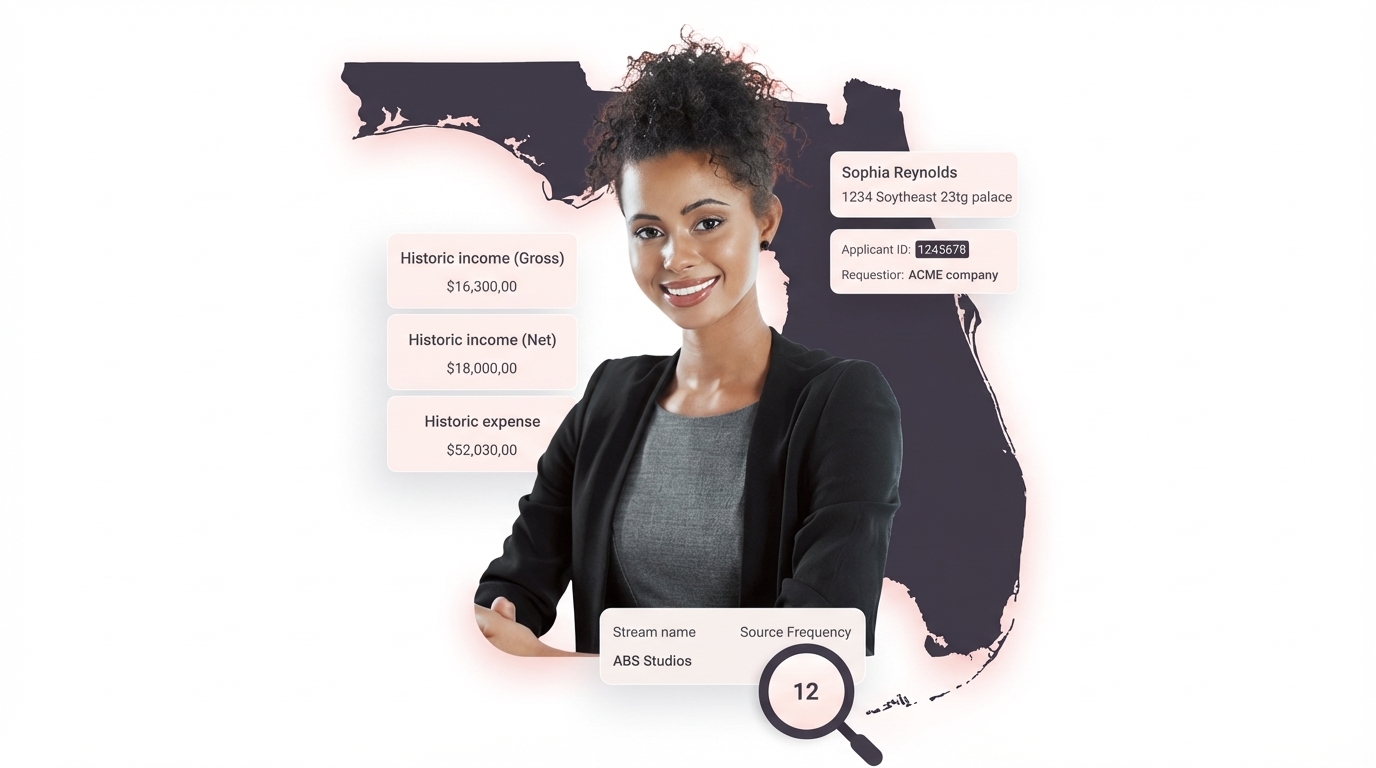
Automated verification systems connect to employers’ HR or payroll systems and confirm salary and employment status in real time. Automated eviction searches pull court records from multiple jurisdictions, revealing prior rental issues that applicants may try to hide.
Manual verification processes can take more than 2 hours per booking, while automation cuts that to about 5 minutes, a 96% reduction in processing time. This time savings lets property managers handle more applications while keeping higher accuracy and consistency.
Step 4: Run FCRA-Compliant Background and Credit Screening
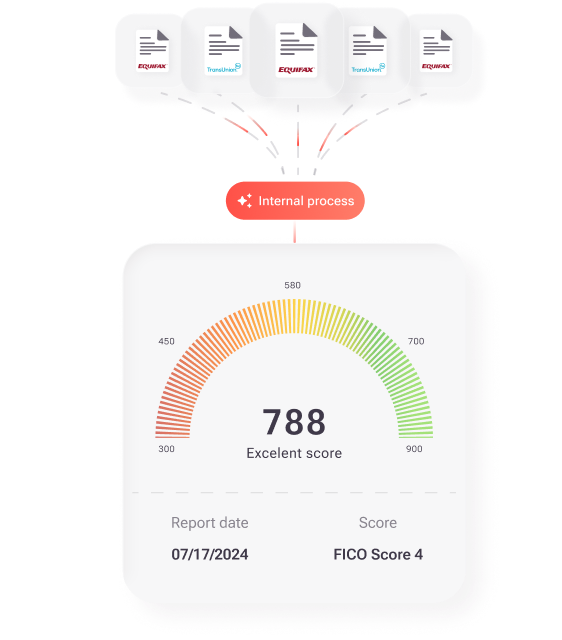
FCRA-compliant screening protects both applicants and community associations and supports defensible decisions. FCRA requires written authorization before pulling credit checks, consistent minimum credit score standards, and clear adverse action notices when denying an application.
Florida community associations must secure written consent before accessing credit reports, apply the same screening criteria to every applicant, and issue detailed adverse action notices when screening results drive a denial. Written screening criteria created before advertising units help support fair housing compliance.
Working with legitimate credit bureau resellers instead of generic data aggregators improves data quality and legal protection. TenantEvaluation operates as a legitimate reseller of TransUnion and Equifax data, which supports accuracy and regulatory compliance.
Fraud-Resistant Screening Checklist for Florida CAMs
- Verify government-issued ID authenticity with biometric matching
- Confirm income of at least 3x monthly rent through direct employer or payroll verification
- Review credit history for consistency and clear red flags
- Search eviction records across multiple counties and states
- Validate employment through direct HR or payroll system connections
- Check criminal background through comprehensive database searches
- Obtain written consent for every screening activity
- Document each screening decision with clear reasoning and supporting data
Step 5: Add Biometric ID Verification to Your Workflow
Biometric identity verification closes gaps that document review alone cannot cover. One case study showed fraud prevention improving from 60% to 100% after automated ID and selfie verification went live.
TenantEvaluation’s IDVerify builds biometric verification directly into the screening flow without sending applicants to outside sites. The system validates government IDs with AI-based authenticity checks, confirms physical presence with liveness detection, and matches facial biometrics between selfies and official documents.

Biometric verification blocks identity impersonation and synthetic ID fraud by confirming that a real person stands behind each application. The process runs inside the normal application experience, so applicants move smoothly through while security improves.
This biometric layer catches high-quality fake IDs and stolen identity documents that often pass manual review. For Florida HOAs and condominiums, it upgrades screening from document-based checks to confirmed physical identity.
Step 6: Use Board Dashboards and Detailed Audit Trails
Transparent approval workflows protect associations from disputes and keep boards aligned. TenantEvaluation’s QuickApprove dashboard gives board members real-time visibility into application status, key applicant details, and simple voting tools.
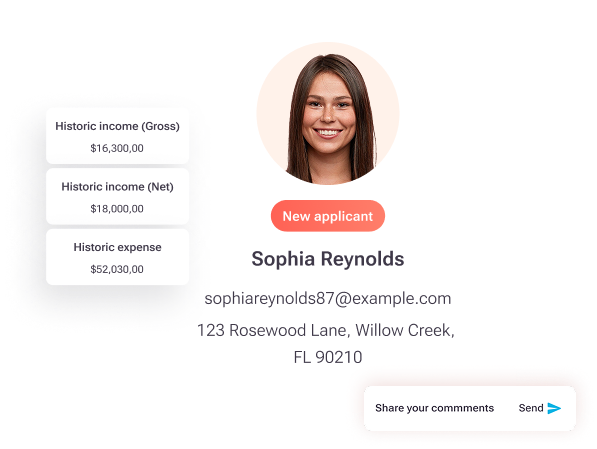
Comprehensive audit trails record every action from application submission through final decision. These records help during legal challenges or compliance reviews by showing that the board followed consistent, documented procedures.
Board dashboards replace scattered email threads and phone calls with a secure, centralized voting system. Each board member’s decision and comments stay recorded, which supports accountability and clear governance.
Step 7: Move to an All-in-One Screening Platform
Fragmented screening across multiple vendors creates blind spots and inconsistent standards. Modern automated platforms move teams from manual PDF reviews and basic checks to end-to-end workflows with portfolio-wide intelligence, stopping fraudsters early and blocking repeat attempts across properties.
TenantEvaluation supports more than 5,000 communities across Florida and processes about 100,000 applications each year, with a strong record in fraud prevention and compliance. The platform focuses on community associations, so features like board dashboards and HOA-specific workflows come built in.
One Florida management company saved $240,000 per year after switching to TenantEvaluation. The team gained back about 50 staff hours each day and cut processing time by 50%, which shows the real financial impact of a purpose-built fraud prevention platform.
Schedule a demo today to see how TenantEvaluation can reduce fraud risk and simplify your approval process.
Platform Comparison: TenantEvaluation vs. Competitors
| Feature | TenantEvaluation | AppFolio/Buildium | Others (RentSpree) |
|---|---|---|---|
| Biometric HOA Fraud Prevention | Yes (IDVerify) | No | Limited |
| Board Dashboards | Yes (QuickApprove) | No | No |
| Time Savings/Compliance | Up to 70%, FCRA Reseller | 30–50%, Basic | Manual-heavy |
| Florida HOA Specialization | Yes | Generic Rentals | No |
FAQ
How can property managers prevent application fraud effectively?
Property managers prevent application fraud most effectively by using a seven-step approach that layers manual review with automation. This approach includes spotting red flags in applications, performing careful document checks, automating income and eviction verification, running FCRA-compliant background screening, adding biometric identity verification, using board dashboards for transparency, and adopting an all-in-one platform built for community associations. Each layer targets a different fraud tactic while keeping processing times manageable.
What makes biometric identity verification essential for tenant screening?
Biometric identity verification blocks advanced fraud attempts that pass traditional document checks, including identity impersonation and synthetic IDs. The technology confirms that each applicant is a real person who is present during the application by validating government IDs with AI, checking liveness, and matching facial biometrics between selfies and official documents. For Florida HOAs and condominiums facing rising fraud, biometrics upgrade screening from paper-based review to verified physical identity.
How does FCRA compliance protect community associations during tenant screening?
FCRA compliance shields community associations from legal risk and supports fair, consistent screening. Proper compliance includes obtaining written authorization before pulling credit, applying the same criteria to every applicant, issuing detailed adverse action notices when denying applications, and working with legitimate credit bureau resellers instead of generic aggregators. Detailed audit trails for each screening decision provide strong evidence during disputes and show that the association followed proper procedures.
What are the most common rental application fraud examples property managers encounter?
Common rental application fraud includes falsified income documentation with edited pay stubs, identity impersonation using stolen data, synthetic identities that mix real and fake information, manipulated references through fake landlords or accomplices, and forged documents such as counterfeit IDs or bank statements. Property managers should watch for inconsistent details across documents, perfect credit with little history, income that does not match job titles, and documents with mismatched fonts or low-quality images that hint at digital editing.
How effective are automated verification tools compared to manual screening methods?
Automated verification tools outperform manual screening in both speed and accuracy. Automation cuts processing time from more than 2 hours to about 5 minutes per application, a 96% reduction. Some implementations show fraud prevention improving from 60% to 100% after automation. These tools also reduce human error and inconsistency and connect directly to payroll providers and court databases, which makes falsification far harder than with manual, document-based review.
Conclusion: Lock Out Fraud with TenantEvaluation
The seven steps in this guide give Florida community association managers a clear framework to reduce rental application fraud. Each step, from red flag training to biometric verification, adds a layer of protection that makes it harder for fraudulent applicants to slip through.
TenantEvaluation brings all seven steps together in one FCRA-compliant platform built specifically for Florida HOAs and condominiums. With more than 5,000 communities served, about 100,000 applications processed each year, and client results such as $240,000 in annual savings, TenantEvaluation delivers a proven fraud prevention system for community associations.
Schedule a demo today to see how TenantEvaluation’s biometric verification, board dashboards, and automated screening can protect your properties while keeping your approval process fast and consistent.
