Written by: Luis Teran, Co-founder, CEO, TenantEvaluation | Last updated: June 21, 2026
Key Takeaways for Florida Condo Associations
- Florida’s community association sector faces intense regulatory pressure in 2026, including HB 1021 digital records mandates and Structural Integrity Reserve Study requirements.
- Traditional document-based screening leaves associations vulnerable to rising identity fraud and synthetic identity threats across condo and HOA communities.
- Disconnected manual workflows create compliance exposure, slow approvals, and increase the risk of missing lease records or board visibility gaps.
- Leading tools must deliver FCRA-compliant screening, biometric identity verification, board-ready dashboards, and centralized lease tracking to meet Florida-specific demands.
- TenantEvaluation provides purpose-built solutions for Florida associations. Schedule a demo to see how it streamlines compliance and resident onboarding.
Core Definitions for Florida Association Tools
Clear definitions help boards and CAMs compare tools on equal terms.
- Resident screening: The process of evaluating applicants through background checks, credit reports, income verification, and identity confirmation before approval.
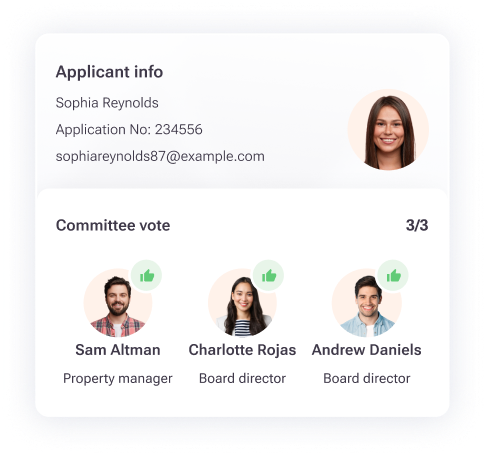
- Board voting dashboard: A dedicated digital interface that gives board members direct access to application summaries, voting panels, and approval workflows.
- Lease lifecycle management: The end-to-end tracking of lease documents from application submission through occupancy, including status monitoring and document collection.
- FCRA compliance: Adherence to the Fair Credit Reporting Act, which governs how consumer credit and background data is collected, used, disclosed, and retained. For community associations, this includes permissible purpose controls, adverse action workflows, and audit trails.
TenantEvaluation is built specifically for community associations and management companies, with FCRA compliance as the foundation, not an afterthought. As a direct reseller of TransUnion and Equifax data, TenantEvaluation accesses bureau data under strict rules, with no gray-market or offshore sources.
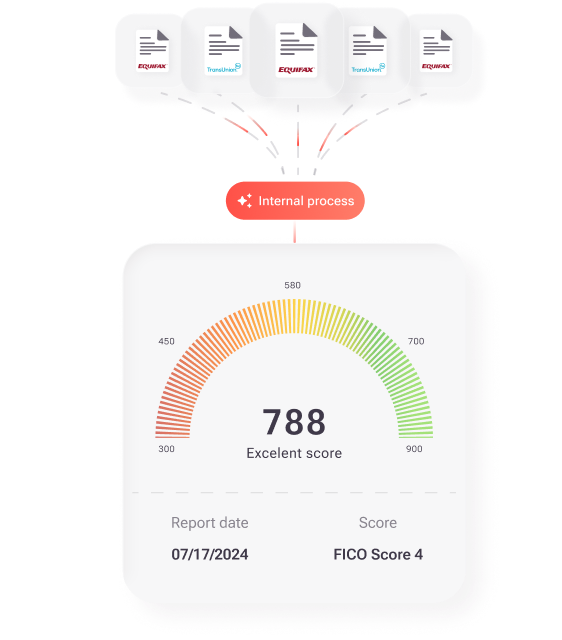
These definitions matter because day-to-day CAM workflows require all four elements working together. Resident screening generates the data, FCRA compliance governs how that data is handled, board voting dashboards enable decisions, and lease lifecycle management keeps records complete and accessible.
How Florida CAM Workflows Use These Tools
Day-to-day CAM workflows involve coordinating applications, collecting documents, running background checks, routing approvals to boards, issuing decisions, and maintaining lease records. These steps often occur simultaneously across dozens of units. Manually tracking application stages leads to slower approval processes and increases the risk of data or communication errors.
Excel becomes increasingly unmanageable and error-prone when managing 10, 20, or 50 properties because each new property exponentially increases data volume and complexity without built-in automation or centralized access. For Florida associations managing high application volumes, this creates direct compliance exposure.
TenantEvaluation connects every step, from application intake through final approval and lease documentation, inside one platform. CAMs and boards see a single, connected workflow that reduces manual handoffs and keeps every decision tied to a clear record.

Compliance, Risk, and Governance in 2026 Florida
New condominium directors in Florida must complete a 4-hour educational course within 90 days of election or appointment and at least 1 hour of continuing education annually under Chapter 718. Community association managers face similar obligations. Florida CAMs managing HOAs were required to complete 17 total continuing-education hours for the 2024–2026 renewal cycle, with a deadline of September 30, 2026, per DBPR requirements. These parallel education mandates reflect Florida’s broader regulatory posture, where both governance and operational roles carry formal compliance obligations that technology must support.
HB 1021 expanded digital records obligations. Effective January 1, 2026, Florida law requires condominium associations managing 25 or more units to post specified official records digitally on an association website or make them available through a mobile application. Associations that cannot produce organized, audit-ready records on demand face regulatory exposure.
TenantEvaluation maintains built-in audit trails for every application, automated adverse action workflows, and strict permissible purpose controls. These features help keep community associations protected from liability exposure and align daily operations with Florida’s regulatory expectations.
Given these regulatory pressures, including HB 1021 digital records mandates, continuing education requirements, and FCRA liability exposure, any Florida-focused tool in 2026 must address compliance, fraud prevention, and board governance at the same time.
Florida-Specific Features Every Tool Must Have in 2026
- FCRA-compliant background screening with direct credit bureau reseller relationships and automated adverse action workflows.
- Board-ready voting dashboard with real-time application visibility, summarized reports, and a dedicated voting panel.
- Biometric identity verification using government ID validation, AI-powered liveness detection, and facial biometric matching.
- QuickApprove accelerated approval workflow with real-time tracking, automated communication, customized approval letters, and a personalized welcome package.
- 55+ Communities Verification to standardize age-restricted application handling and improve documentation consistency.
- Centralized Lease Tracking with real-time lease status, automated document collection, unit-level tracking, and audit-ready digital records.
- Digital records infrastructure that meets Chapter 718 and HB 1021 posting requirements.
Common Challenges and Failure Points
The most common operational failures in Florida condominium associations share a root cause: disconnected, manual processes. These failures compound each other and create a cycle of operational dysfunction that affects compliance, resident experience, and board governance.
- Missing lease records: Spreadsheet workflows lack automated lease-expiration alerts, leaving all such tasks manual and increasing the risk of oversight.
- Board visibility gaps: Without a dedicated dashboard, board members rely on email chains and PDFs, creating delays and inconsistent decision records.
- Identity fraud exposure: Traditional screening relying on document uploads cannot reliably prevent impersonation or synthetic identity fraud.
- Approval bottlenecks: Property management software and digital solutions can streamline, automate, and simplify nearly every part of lease management, with the industry accelerating toward digital workflows since the 2020 pandemic. Associations still on manual workflows are falling behind.
Best Practices and Emerging Standards
The associations pulling ahead have moved beyond identifying these problems. They have adopted three operational standards that directly address the failure points above.
Biometric identity verification. Online voting lets board members log in to a cloud-based, secure voting portal to cast ballots electronically within web or mobile browsers. The same principle applies to applicant identity: digital, verifiable, and audit-ready. TenantEvaluation’s IDVerify moves communities from document-based review to biometric-confirmed identity verification using a three-layer process described in the comparison table, all running natively inside the platform.

Standardized 55+ documentation. Age-restricted communities face unique documentation requirements. TenantEvaluation’s 55+ Communities Verification reduces manual work, standardizes application handling, supports documentation consistency, and strengthens internal processes across Florida condos and HOAs managing age-restricted requirements.
Centralized lease records. Automation enables property managers to reliably measure conversion funnel performance across leasing stages, from lead to application approved, which is difficult to track consistently using spreadsheets. TenantEvaluation’s Lease Tracking delivers centralized, real-time lease visibility with automated document collection and unit-level tracking inside one connected platform, creating an audit-ready digital history.
These standards define what “modern” looks like for Florida associations. The next step is choosing tools that can deliver them in practice.
Evaluation Criteria and Decision Framework
When evaluating tools for Florida condominium associations, five criteria determine fitness for purpose: compliance readiness, board dashboard access, biometric fraud prevention, lease tracking, and revenue model. These criteria reflect the operational and regulatory realities described throughout this guide. Each one addresses a specific failure point in current Florida association workflows. The table below reveals a clear pattern: generic property management platforms address only part of the picture, while purpose-built solutions deliver all five within a single connected ecosystem.
| Feature / Criteria | TenantEvaluation | Buildium / AppFolio | Verify Screening Solutions / ApplyCheck |
|---|---|---|---|
| FCRA Compliance Foundation | FCRA-first design with direct TransUnion and Equifax reseller status, automated adverse action workflows, and built-in audit trails | General property management compliance; not purpose-built for Florida condo association FCRA workflows | Background check focus via TazWorks platform; not designed as an end-to-end FCRA-compliant community association workflow |
| Board-Ready Voting Dashboard | QuickApprove includes a dedicated board voting panel with real-time application visibility, AI-generated summaries, and timestamped audit records | No dedicated board voting dashboard for resident approvals | No board voting dashboard; background check delivery only |
| Biometric Identity Verification (IDVerify) | IDVerify: government ID validation, AI liveness detection, facial biometric matching, all natively inside the platform | No biometric verification layer | No biometric verification layer |
| 55+ Communities Verification | Built-in capability that reduces manual work, standardizes application handling, and improves operational efficiency for age-restricted Florida communities | Not available | Not available |
| Lease Tracking | Centralized, real-time lease visibility with automated document collection, unit-level tracking, and searchable, audit-ready digital history | Lease storage available but not connected to resident onboarding and board approval workflows | Not available |
| Revenue Model | Pay-per-application with revenue-sharing that returns the remainder to the association after service fee, no upfront subscription cost | Monthly subscription fees regardless of application volume | Per-report pricing with no revenue-sharing model |
TenantEvaluation has processed 100,000+ applications annually across 5,000+ communities and holds a 4.8/5 Google rating. It has generated $150M for communities through its revenue-sharing model.
Frequently Asked Questions
What do Chapter 718 and HB 1021 require from Florida condominium associations in 2026, and how does technology help?
Chapter 718, as amended by HB 1021, requires Florida condominium associations with 25 or more units to post specified official records digitally on a compliant website or mobile application, effective January 1, 2026. This includes governing documents, meeting minutes, financial records, and other association records. Technology platforms that centralize document storage, maintain audit-ready records, and provide digital access directly support these obligations. TenantEvaluation’s Lease Tracking and document collection capabilities keep lease records, application files, and approval histories organized and accessible inside one connected platform, which reduces the administrative burden of meeting digital posting requirements.
Why is FCRA compliance particularly important for Florida condominium associations conducting resident screening?
The Fair Credit Reporting Act governs how consumer credit and background data is collected, used, disclosed, and retained. For community associations, FCRA compliance requires permissible purpose controls, proper applicant disclosures, and documented adverse action workflows when an application is denied based on screening results. Associations that use non-compliant screening vendors or manage data manually face liability exposure. TenantEvaluation follows an FCRA-first approach with direct credit bureau reseller relationships, automated adverse action workflows, and built-in audit trails for every application.
How does biometric identity verification reduce fraud risk in Florida condo and HOA communities?
Traditional screening methods rely on document uploads, which cannot reliably detect stolen IDs, synthetic identities, or impersonation attempts. Biometric identity verification adds a physical confirmation layer. The applicant must prove they are a real, present individual who matches the identity document they submitted. TenantEvaluation’s IDVerify uses the biometric verification capabilities outlined above, all running natively inside the TenantEvaluation workflow without redirecting applicants to external portals. CAMs receive verification results embedded directly in the screening report, including ID authenticity confirmation, liveness status, and biometric match result.
What operational problems does centralized Lease Tracking solve for Florida property managers?
Many Florida community associations manage lease records across folders, email inboxes, and disconnected spreadsheets, which creates missing records, manual expiration tracking, and no reliable occupancy confirmation. This creates compliance risk when associations cannot produce organized records on demand. TenantEvaluation’s Lease Tracking connects resident onboarding, unit data, approvals, and lease documentation into one centralized, real-time workflow. CAMs gain real-time lease status visibility, automated lease document collection during onboarding, unit-level tracking, and a searchable digital history that replaces spreadsheets and scattered email chains.
How does TenantEvaluation’s revenue model differ from generic property management software?
Most generic property management platforms charge monthly subscription fees regardless of application volume, which creates fixed overhead costs for associations. TenantEvaluation operates on a pay-per-application model with a revenue-sharing structure. The platform deducts its service fee from the collected application fee and returns the remainder to the association or management company. TenantEvaluation therefore functions as a cost-neutral or revenue-generating solution rather than an added expense, which matters for associations evaluating total cost of ownership.
Conclusion and Next Steps for Florida Associations
Florida condominium associations in 2026 operate under a regulatory environment that generic HOA software was never designed to address. Chapter 718, HB 1021, SIRS requirements, FCRA obligations, and rising identity fraud collectively demand tools purpose-built for Florida-specific workflows, not adapted from generic rental platforms.
The decision framework in this guide provides a structured basis for evaluating any platform against five criteria: compliance readiness, board dashboard access, biometric fraud prevention, lease tracking, and revenue model. Associations that apply this framework consistently will identify gaps in their current toolset and establish a clear path toward operational and compliance readiness.
TenantEvaluation is the only platform in this comparison that addresses all five criteria within a single connected ecosystem and maintains the FCRA-first approach described earlier.
Evaluate TenantEvaluation against your current processes by scheduling a demo today.
