Written by: Luis Teran, Co-founder, CEO, TenantEvaluation | Last updated: July 4, 2026
Key Takeaways for Florida Condo and HOA Boards
- HOA and condo management software centralizes dues, maintenance, violations, governance, and screening in one automated, audit-ready system that replaces manual workflows.
- Boards that pair QuickBooks with spreadsheets face growing compliance gaps, while purpose-built platforms meet new Florida digital-record mandates and reduce reliance on full management companies.
- Resident screening now runs alongside document collection, identity verification, and lease tracking in a single workflow, cutting administrative time by up to 60% for boards and management companies.
- 2026 compliance in Florida requires FCRA adherence, biometric identity verification, board voting dashboards, 55+ standardization, and real-time lease tracking to reduce liability and audit exposure.
- TenantEvaluation delivers the specialized compliance layer Florida communities need; see how TenantEvaluation modernizes onboarding and compliance for Florida communities.
Why Most HOAs Are Ditching QuickBooks for Association Platforms
QuickBooks handles accounting, not applications, violations, board voting, or resident screening. That gap forces boards to bolt on spreadsheets, email chains, and manual checklists. Full HOA management companies typically charge $10–$30 per unit per month nationally, with some charging up to $50 in high-cost markets or for comprehensive services. That cost structure pushes many boards toward software that delivers management-grade workflows without full-service fees.
Boards that run QuickBooks alongside manual tools face growing audit exposure and compliance gaps that purpose-built association platforms close. Florida’s HB 1203 amended Chapter 720 to require HOAs with 100 or more parcels to maintain a website or application hosting certain official records, effective January 1, 2025, which drives direct demand for integrated digital portals. Technology adoption has shifted from a “nice-to-have” to a hard differentiator, and integrated platforms now command measurable operational premiums over legacy systems.
How Screening and Onboarding Power Daily Operations
Screening works best as a core operational function, not a side task. Resident screening runs in parallel with document collection, identity verification, background checks, and lease tracking inside one connected workflow. When these functions sit in separate systems, managers spend hours reconciling data instead of processing applications.
A board spending five hours per week on administrative tasks can reduce that to two hours with the right platform, saving 150 hours per board member per year. Management companies that oversee multiple communities multiply that time savings across every association they serve.

Orlando-area associations typically process complete rental approval packets in 24–72 hours, with some requiring up to 5 business days, leading investors to budget a few days (typically 1–5 business days) for association processing from tenant selection to move-in. Platforms that automate document collection, ID validation, and board notification shorten that window and create a predictable approval timeline.
Operators that rely on manual processes, spreadsheets, and legacy systems now face a growing valuation discount as the technology gap between top-quartile and bottom-quartile property management companies widens. Integrated onboarding has become an operational baseline for Florida communities.
Compliance, Risk, and Governance Requirements for 2026
Tenant screening that uses consumer reports must comply with FCRA adverse-action notice requirements and HUD guidance against unjustifiably broad criminal-history exclusions to avoid fair-housing disparate-impact liability. Generic platforms often treat FCRA compliance as a checkbox, while purpose-built association platforms weave it into every workflow step.
Key 2026 compliance criteria for Florida communities work together as a single framework:
- FCRA adherence: Automated adverse action workflows, permissible purpose controls, and direct credit bureau data access, not third-party scraping. This foundation ensures every screening decision is legally defensible.
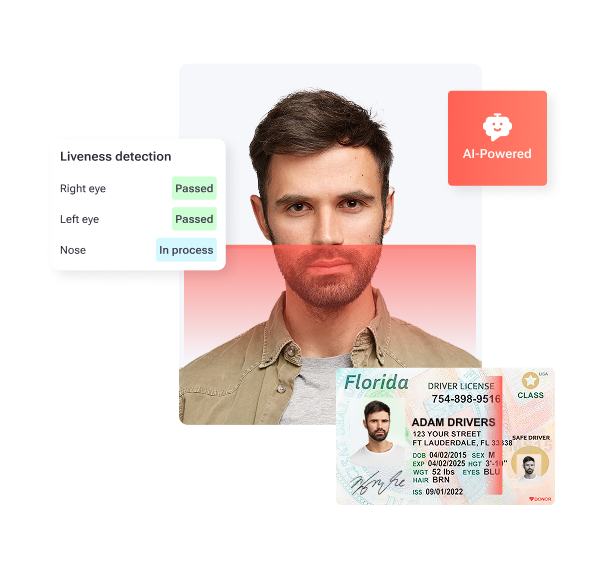
- Biometric identity verification: AI-powered liveness detection, government ID validation, and selfie-to-ID biometric matching to prevent impersonation and synthetic identity fraud. This layer adds fraud protection that document review alone cannot provide.
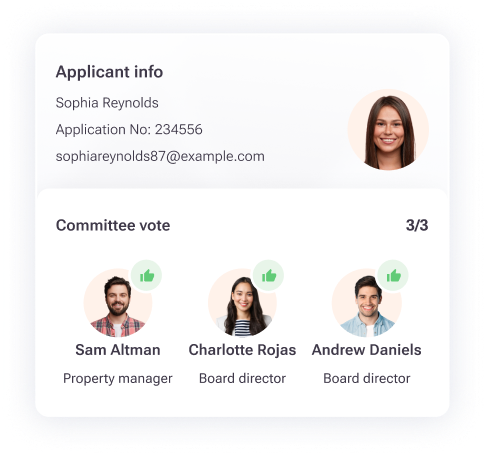
- Board voting dashboards: Timestamped, auditable approval records that replace email chains. These dashboards capture the decision trail that FCRA compliance and fair-housing defenses require.
- 55+ standardization: Structured documentation workflows for age-restricted communities under Florida statute. These workflows keep eligibility requirements consistent across every application.
- Real-time lease tracking: Centralized lease status visibility from application through occupancy. This tracking ties the entire compliance stack together across the full lease lifecycle.
Florida HOAs require board members to complete a DBPR-approved 4-hour educational course within 90 days of election and repeat it at least every 4 years. That requirement increases demand for standardized workflows and compliance tracking tools that reduce board liability exposure.
Florida Statutes § 718.112(2)(i) caps lease approval fees at $100 per applicant, and Florida Statutes § 83.49 imposes specific deposit-holding, disclosure, and return-or-claim timelines that must be centralized alongside association escrow procedures during onboarding. Platforms that track these rules inside the workflow reduce errors and disputes.
Common Challenges and Failure Points in HOA Operations
Operational failures in condo and HOA management cluster around four areas:
- Manual document review: Missing leases, expired IDs, and incomplete applications slow approvals and create audit gaps.
- Identity fraud exposure: Traditional document-based screening cannot detect synthetic identities or impersonation attempts.
- Fragmented lease records: Disconnected spreadsheets and email chains create occupancy blind spots and compliance risk.
- Approval bottlenecks: Board members without a dedicated review dashboard delay decisions, especially during peak application seasons.
These failure points scale with community size because the impact changes with volume. Smaller communities experience them as capacity constraints, where a single bottleneck can halt all approvals. Larger communities experience them as systemic risk, where the same bottleneck creates audit exposure across hundreds of units and multiplies liability. Without proper reserve funding and compliance tracking integrated into management software, communities face special assessments or loans when major components require replacement.
Best Practices and 2026 Operational Standards
The 2026 operational standard for Florida condo and HOA communities combines digital intake, verified identity, and transparent governance into one system:
- 100% digital application intake with intelligent form logic and automated document validation that reduces back-and-forth with applicants.
- Biometric identity verification embedded natively in the screening workflow, not redirected to external portals, so fraud checks run on every application.
- Board-ready approval dashboards with real-time application tracking and voting records that keep decisions timely and auditable.
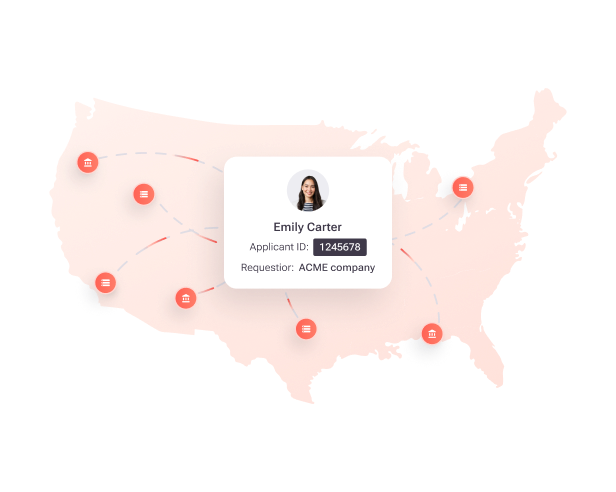
- Centralized lease visibility with real-time status tracking, including active, pending, expired, or missing, from onboarding through occupancy.
- Structured 55+ documentation workflows for age-restricted communities that reduce manual handling and improve consistency.
- FCRA-compliant adverse action workflows with built-in audit trails for every application, creating a complete compliance record.
Texas permits HOAs to use electronic ballots, absentee ballots, and remote electronic/telephonic/video meetings, though associations are not required to offer more than one voting method unless their dedicatory instruments provide otherwise. That flexibility reflects a broader national shift toward digital governance tools that Florida communities are adopting ahead of additional regulatory mandates.
Evaluation Criteria and Platform Decision Framework
Platform selection works best when you match capabilities to your community size and governance needs. Evaluate how operational priorities, governance requirements, and compliance capabilities scale with unit count. The table below segments these three dimensions by community size so you can see which features are essential at each stage.
| Community Size | Core Operations Priority | Governance Tools | Screening & Compliance |
|---|---|---|---|
| Under 100 units | Digital applications, dues collection, maintenance portal | Basic board voting, document storage | FCRA-compliant background checks, biometric ID verification via IDVerify, real-time lease tracking |
| 100–300 units | Automated workflows, violation tracking, accounting integration | Board voting dashboard, audit trails, QuickApprove accelerated approvals | FCRA adherence with adverse action automation, biometric verification, 55+ standardization via 55+ Communities Verification, centralized lease lifecycle control |
| 300+ units | Portfolio-level reporting, scalable onboarding, community analytics | Multi-community board dashboards, configurable approval workflows, real-time application tracking | Full FCRA compliance layer, biometric identity verification, board voting records, 55+ documentation workflows, audit-ready lease tracking from application to occupancy |
Platforms that treat screening as a bolt-on feature leave FCRA exposure, identity fraud risk, and lease visibility gaps unresolved. The compliance layer must sit at the core of the platform, embedded in every step from application intake to occupancy record.
Frequently Asked Questions
What is the difference between HOA management software and general property management software?
General property management software is built for landlord-tenant relationships in rental markets. HOA and condo management software is designed for the governance structure of community associations, where a board of directors makes approval decisions, governing documents define screening criteria, and compliance obligations differ from standard rental law. Purpose-built platforms include board voting dashboards, FCRA-compliant screening workflows, 55+ documentation tools, and audit trails specific to association operations.
Is FCRA compliance required for HOA and condo resident screening in Florida?
Yes. Any community association that uses consumer reports, including credit checks and background checks, during the application process is subject to the Fair Credit Reporting Act. This coverage includes permissible purpose controls, adverse action notice requirements, and data handling obligations. Platforms that access credit bureau data through direct reseller relationships and automate adverse action workflows reduce the liability exposure that manual processes create.
What does biometric identity verification add to the screening process?
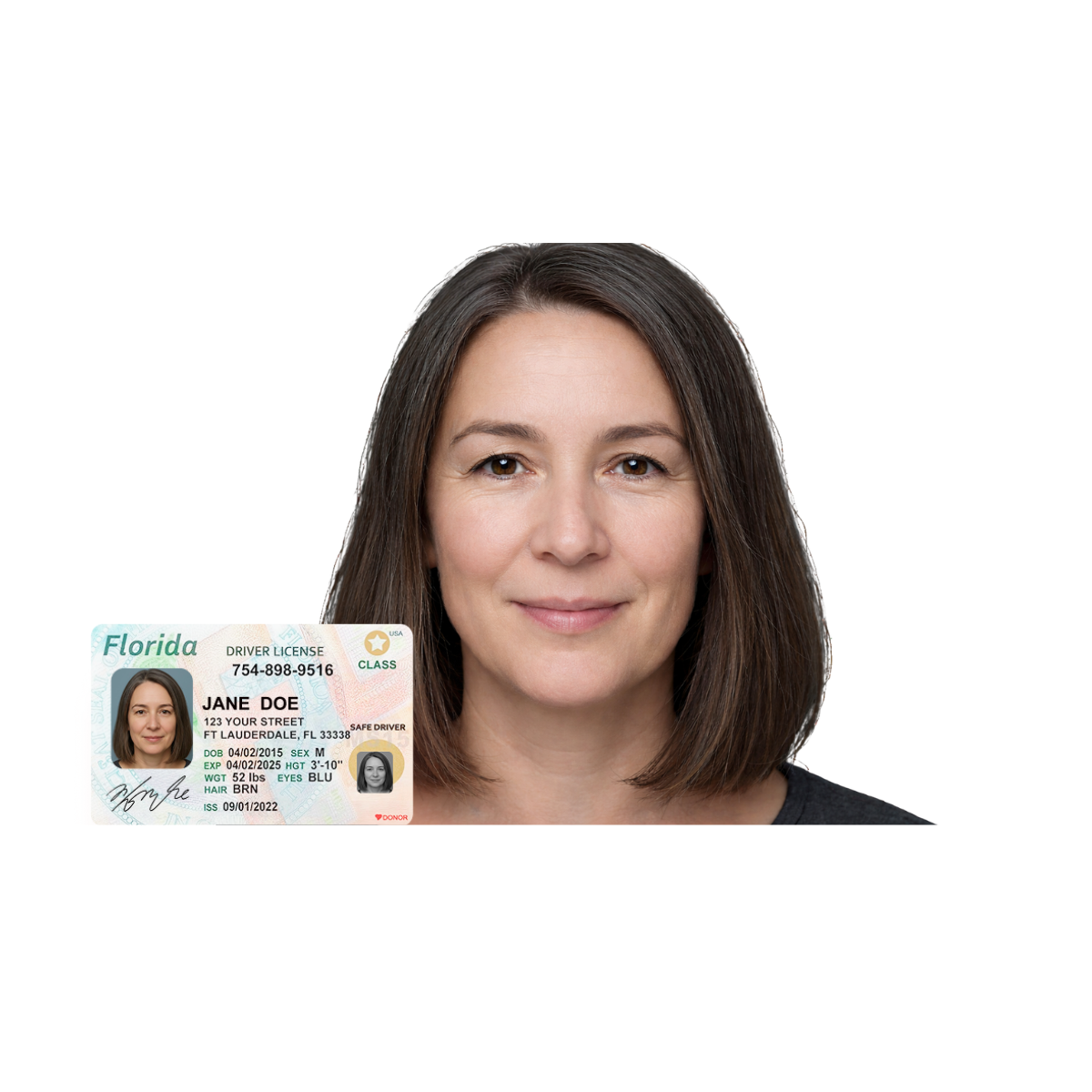
Traditional screening relies on document uploads, which cannot detect synthetic identities, stolen IDs, or impersonation attempts. Biometric identity verification adds a layer that confirms physical presence and matches the applicant’s face to their government-issued ID using AI-powered liveness detection and facial biometric comparison. This shift moves communities from document-based review to verified identity confirmation before approval decisions.
How does real-time lease tracking reduce compliance risk for Florida communities?
Missing or outdated lease records create occupancy blind spots, complicate audits, and increase exposure in resident disputes. Centralized lease tracking connects onboarding, unit data, approvals, and lease documentation into one workflow with real-time status visibility, including active, pending, expired, or missing. This structure replaces disconnected spreadsheets and email chains with searchable, audit-ready digital records that support compliance readiness from application through occupancy.
What should Florida 55+ communities look for in a management platform?
Age-restricted communities under Florida statute require consistent documentation of eligibility requirements across all applications. Platforms built for this workflow standardize how age-restricted requirements are handled, reduce manual follow-ups, improve documentation consistency, and create structured records for internal operational control. The key criteria are workflow standardization, documentation consistency, and scalability across multiple communities, not just a basic checklist feature.
The Specialized Compliance Layer Florida Communities Need in 2026
Florida condo and HOA communities need more than generic property management features. They need the FCRA foundation, biometric identity verification, board voting workflows, 55+ documentation standardization, and real-time lease lifecycle control that match Florida’s regulatory environment. TenantEvaluation is built specifically for community associations and management companies, with FCRA compliance as the foundation, not an afterthought. Serving 5,000+ communities and processing 100,000+ applications annually, it delivers the screening and compliance layer that many operational platforms leave missing. Use the criteria above to audit your current onboarding workflow, then decide whether your platform covers every column in the decision framework.
