Written by: Luis Teran, Co-founder, CEO, TenantEvaluation
Key Takeaways
- HOPA requires 55+ communities to verify that at least 80% of units house someone 55 or older, with biennial surveys and proper age documentation for compliance.
- Primary proof of age documents include driver's licenses, passports, birth certificates, military records, and notarized affidavits.
- Manual verification slows approvals because of incomplete documents, email chains, and repeated follow-ups that strain CAMs and boards.
- Secure digital submissions, automated validation, and audit-ready trails cut rejection rates and simplify HOPA compliance.
- Automating 55+ verification with TenantEvaluation reduces processing time by up to 70% and supports consistent HOPA compliance.
How HOPA Shapes Age Verification in Florida 55+ Communities
The Housing for Older Persons Act creates the federal rules for age-restricted housing and 55+ communities. Communities maintain 55+ status when at least 80% of occupied units house one person aged 55 or older. HUD's Housing for Older Persons Act guidance requires biennial surveys and clear documentation that proves age compliance.
Florida's implementation follows a structured process. Applicants submit required age documentation. CAMs review submissions for completeness and validity. Boards approve applications based on established criteria. Associations then maintain audit trails for compliance verification. Beyond these federal requirements, Florida Statutes governing homeowners' associations add state-level obligations that communities must build into their verification workflows.
Proof of age documentation supports more than initial eligibility checks. Communities rely on this information for biennial HOPA surveys, demographic planning, and compliance audits. Strong documentation also helps protect communities from fair housing challenges and supports continued exempt status under federal law.
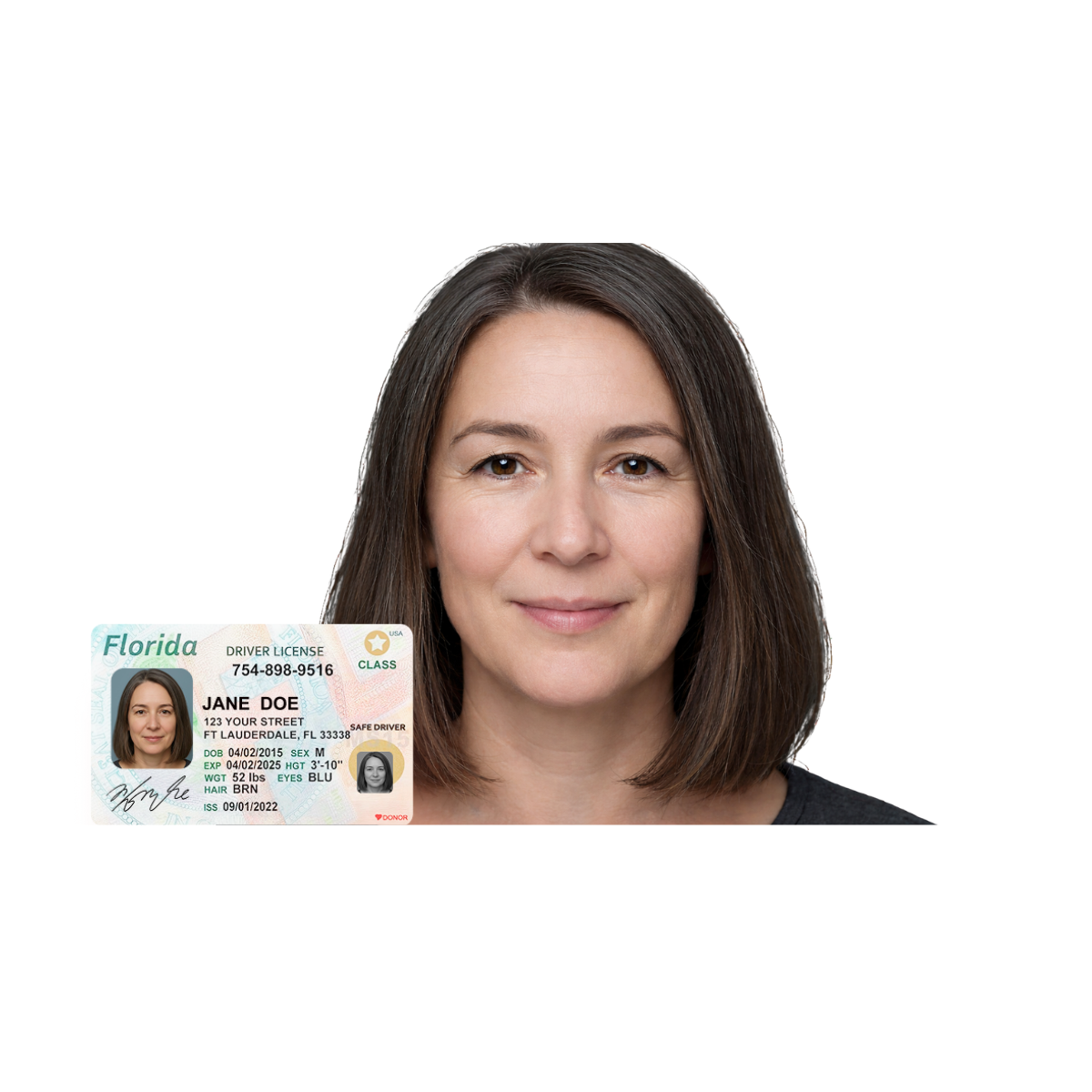
Accepted Proof of Age Documents for Florida 55+ Condo Applications
Florida 55+ communities accept several categories of age verification documents, each with specific validity rules and submission standards. Florida Realtors' fair housing guidance outlines acceptable documentation standards that communities can build into their application processes.
Government-issued identification documents form the primary category of acceptable proof. Valid driver's licenses, state identification cards, and U.S. passports provide reliable age verification when current and unaltered. Certified birth certificates from vital records offices offer definitive age proof but require careful review of the issuing authority to confirm authenticity.
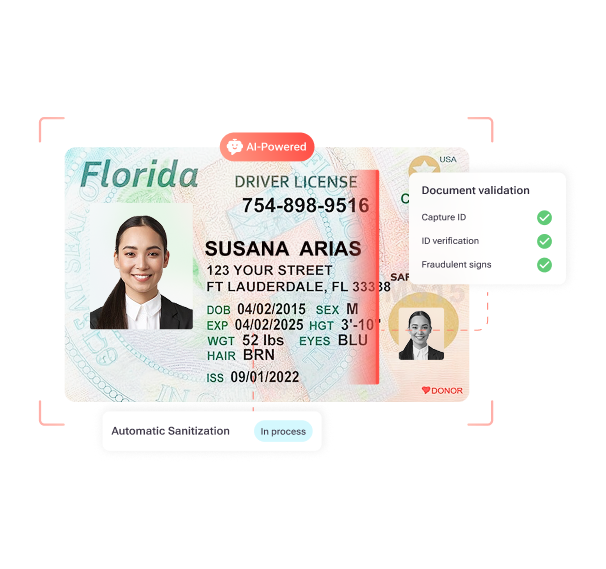
Secondary documentation includes notarized affidavits of age, military service records, and certain medical records that show birth date information. Properly authenticated census records and Social Security Administration documents may also qualify when they clearly display the applicant's birth date.
Top 7 Proof of Age Documents and HOPA Form Requirements
The most commonly accepted proof of age documents for Florida 55+ condo applications include:
1. Current driver's license or state-issued ID card
2. Valid U.S. passport or passport card
3. Certified birth certificate from vital records office
4. Military discharge papers (DD-214) showing birth date
5. Notarized affidavit of age with supporting documentation
6. Social Security Administration benefit statements
7. Medicare enrollment documentation

Communities must complete HOPA age verification forms every two years to stay compliant. Silver Bay Palatka's qualification guidance highlights the need for current resident age documentation and regular compliance surveys to preserve 55+ community status.
Step-by-Step Proof of Age Submission and Practical Tips
Successful proof of age submission follows a clear, repeatable process that reduces delays and rejections. Applicants start by gathering all required documentation before beginning the application. Documents should be current, legible, and free from alterations.
Document preparation begins with high-resolution scanning or photography that captures all text clearly. Illegible documents often cause application delays or outright rejection. After capturing clear images, applicants confirm that names on proof of age documents match application information exactly, including middle names and suffixes, because even small discrepancies can trigger questions. As a final check, applicants determine whether their document type needs notarization, which commonly applies to affidavits or foreign-issued certificates.
Digital submission through secure platforms usually provides the fastest processing. Applicants confirm that file formats are accepted, typically PDF or high-quality image files. When communities still require physical documents, applicants use certified mail or hand delivery with receipt confirmation to support audit trails.
Ongoing status tracking during review helps applicants respond quickly to requests for additional documentation. CAMs gain efficiency from automated notification systems that alert them to new submissions and flag incomplete applications for immediate follow-up.
Common rejection causes include expired documents, unreadable copies, name mismatches, and missing notarization. Clear communication about requirements and automated document validation tools reduce these issues and keep applications moving.
Why Manual Age Verification Overwhelms CAMs and Boards
Manual verification processes create heavy administrative workloads for Florida 55+ communities. CAMs spend hours reviewing individual documents, chasing down missing items, and maintaining paper-based files that complicate audit preparation and compliance tracking.
Inconsistent document submission standards create frequent back-and-forth communication between applicants, realtors, and community management. Email chains grow long, important documents get buried in attachments, and approval timelines stretch when clarification is needed.
Board review processes face similar friction when members must access physical files or search multiple email threads to evaluate applications. This fragmentation increases the risk of missed details and creates bottlenecks in the approval workflow.
Audit preparation becomes especially difficult with manual systems. Communities must gather scattered documentation, confirm completeness, and show compliance patterns that may span several years of applications and resident changes.
Compliance, Privacy, and Risk for Age Proof Documents
Age verification documentation touches several regulatory frameworks that Florida communities must manage carefully. Fair Credit Reporting Act (FCRA) rules apply when background screening accompanies age verification, which requires proper consent procedures and clear adverse action protocols.
Privacy protection for submitted documents depends on secure storage, limited access controls, and proper disposal procedures for rejected applications. The recordkeeping provisions referenced earlier establish minimum retention periods and access requirements that communities must build into their document management procedures.
Audit readiness relies on complete documentation trails that show consistent application of age verification standards. Communities benefit from clear policies for document acceptance, rejection criteria, and exception handling so they can demonstrate defensible compliance practices.
How TenantEvaluation Streamlines 55+ Proof of Age Workflows
TenantEvaluation's 55+ Communities Verification directly addresses the age-restricted application challenges Florida condos and HOAs face. The built-in workflow reduces manual work by standardizing application handling across all submissions and replacing fragmented email and PDF exchanges with a single system.
The platform improves documentation consistency through uniform submission requirements and automated validation checks that flag incomplete or problematic documents before CAM review. Built for Florida condos and HOAs, the system includes state-specific requirements and HOPA compliance elements that generic tools often miss.
Designed for Community Association Managers, the verification workflow connects with IDVerify for stronger identity confirmation and QuickApprove for faster board review. This integrated approach delivers the efficiency gains mentioned earlier through automated validation, standardized workflows, and streamlined board decisions.

The platform also strengthens internal controls through automated audit trails, consistent documentation requirements, and compliance reporting that simplifies HOPA survey preparation. With over 100,000 applications processed annually and a 4.8/5 Google rating, TenantEvaluation has generated $150 million for communities while keeping FCRA compliance at the core of its process.
Schedule a demo today to see how 55+ Communities Verification can modernize your age-restricted application process.
FAQ: Proof of Age for Florida 55+ Condo Applications
What is the best proof of age document?
Current government-issued photo identification provides the most reliable proof of age for 55+ condo applications. Driver's licenses and state ID cards combine age verification, identity confirmation, and document authenticity in a single record. U.S. passports serve as equally strong alternatives, especially for applicants without state-issued ID. These documents are widely accepted, easy to verify, and provide clear birth date information that satisfies HOPA requirements.
What does HOPA verified mean?
HOPA verified means a community has documented compliance with the Housing for Older Persons Act rules for age-restricted housing. This verification confirms the community meets the 80% threshold described earlier, maintains proper age documentation for all residents, and completes biennial surveys that show continued compliance. HOPA verification helps protect communities from fair housing discrimination claims while allowing them to enforce age restrictions.
Do 55+ communities need age surveys every 2 years?
Yes, HOPA requires age-restricted communities to conduct comprehensive resident surveys every two years to maintain exempt status. These biennial surveys document the age of all residents, confirm continued compliance with the 80% threshold, and capture any occupancy changes. Communities must keep these survey records and provide them for audits when requested. Skipping required surveys can put a community's age-restricted status at risk.
Is there a proof of age condo application template?
Standardized state templates for proof of age condo applications are not commonly available. Successful communities instead create detailed application forms that list acceptable proof of age documents, submission requirements, and processing steps. Effective templates include document checklists, file format guidelines, and clear notarization instructions when needed. Many communities now use automated application systems that guide applicants through requirements and validate submissions before review.
How do you prove age verification?
Age verification relies on submitting acceptable documentation that clearly shows birth date and identity information. The simplest method uses a current driver's license or state ID card submitted with the completed application. Applicants can also use certified birth certificates, passports, or notarized affidavits with supporting documentation. All documents must be legible, current, and match the applicant's name exactly as listed on the application.
Conclusion: Make Proof of Age Simple for Your 55+ Community
Effective proof of age verification depends on clear document standards, a consistent submission process, and strict alignment with HOPA requirements. Florida 55+ communities that standardize these steps reduce administrative strain and maintain audit-ready records.
TenantEvaluation's 55+ Communities Verification turns manual verification into an automated, compliant workflow built for Florida condos and HOAs. Schedule a demo today to see how streamlined age verification can strengthen your community's operations and resident experience.
