Written by: Luis Teran, Co-founder, CEO, TenantEvaluation | Last updated: July 30, 2026
Key Takeaways for Fraud-Resilient Screening
- Fraud prevention in resident applications works best with a clear, seven-step framework that replaces manual workflows with automated, audit-ready controls.
- Risk-tiered screening assigns each application to low, medium, or high risk based on fraud indicators so teams focus verification where it matters most.
- Biometric identity checks, automated document authentication, and direct data connections shut down common fraud paths such as stolen credentials, fake pay stubs, and synthetic identities.
- Pattern recognition, watchlist screening, segregation of duties, and risk scoring create layered defenses that surface deceptive applications before they reach board approval.
- Post-approval monitoring and centralized lease tracking keep Florida condos and HOAs compliant and fraud-resilient from application through occupancy, and you can learn more at TenantEvaluation.
Risk-Tier Table for Application Review
Assigning each application to a risk tier before screening begins keeps your strongest controls focused on the highest-risk files. The three tiers below connect fraud indicators to specific actions your team can take.
| Risk Tier | Key Indicators | Recommended Controls |
|---|---|---|
| Low | Consistent identity data, clean credit history, no watchlist hits, single-jurisdiction address history | Standard biometric ID check, automated credit pull, digital document review |
| Medium | Multiple recent credit inquiries, address discrepancies, unverifiable income documents, thin credit file | Step-up income verification via direct payroll pull, enhanced reference check, board review flag |
| High | 15+ credit inquiries in seven days, extended fraud alert on file, governmental phone number, current address at a truck stop | Manual adjudication, biometric re-verification, watchlist cross-check, escalation to board with full audit trail |
Step 1: Confirm Identity with Biometrics
Infostealer malware exfiltrated more than 1.8 billion credentials in 2025 alone, so document-only review no longer provides enough protection. Biometric verification confirms that a real person is present and matches the ID, not just that a document exists.
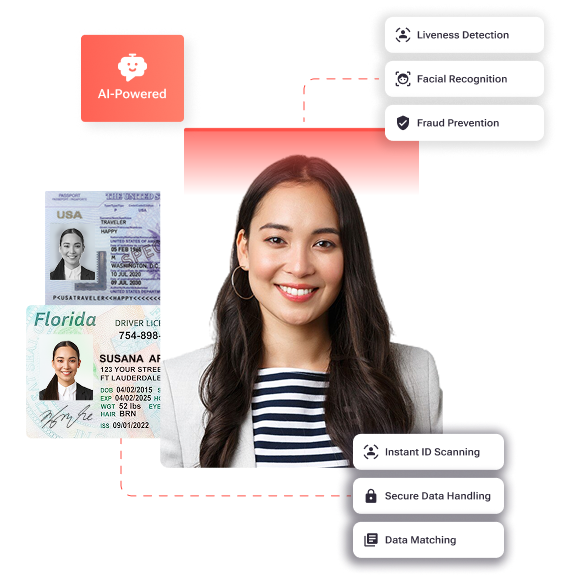
Before biometric verification, communities relied on scanned ID uploads with no liveness check, no facial comparison, and no automated authenticity validation. After implementation, every applicant completes AI-powered liveness detection, government ID authentication, and selfie-to-ID biometric comparison inside a single, guided workflow.
Checklist for Step 1:
- Require government-issued photo ID for every adult occupant as the baseline identity document.
- Run AI liveness detection to confirm the person is physically present and not using a static photo or replayed video.
- Perform biometric facial landmark mapping to verify the live face matches the submitted ID image.
- Log the verification outcome with a timestamped, audit-ready result that records each validation layer.
IDVerify embeds government ID validation, liveness detection, and selfie-to-ID comparison directly inside TenantEvaluation, so teams keep applicants in one workflow without external portals.
See IDVerify in action to understand how it stops impersonation before it reaches your board.
Step 2: Authenticate Documents Automatically
84.3% of apartment owners and managers who experienced fraud in the past 12 months reported that applicants fabricated pay stubs, employment references, or other income documents. Manual review cannot reliably catch metadata inconsistencies or font artifacts that signal digital tampering.

Before automation, leasing teams relied on visual checks and often missed subtle formatting anomalies that indicate fabrication. After automation, the platform scans each file for metadata conflicts, structural anomalies, and suspicious formatting before a human ever opens the document.
Checklist for Step 2:
- Run every uploaded document through automated metadata analysis to detect edits and inconsistencies.
- Flag font rendering artifacts and layout irregularities automatically for closer review.
- Reject incomplete or missing document submissions before manual review begins.
- Retain a redacted copy of every document in the audit trail for future reference.
TenantEvaluation’s smart application logic checks for executed leases, valid IDs, and required documents, rejects incomplete submissions, and routes flagged files to the right escalation path.
Step 3: Rely on Direct Data, Not Just Uploaded Files
Fabricated income documents represent the majority of rental fraud cases, as noted earlier, so applicant-provided pay stubs cannot serve as the only verification source. Direct data connections give you independent confirmation of income and credit history.
Before direct integration, income figures came solely from applicant uploads with no outside validation. After integration, the platform pulls data directly from payroll systems or credit bureaus, which removes the opportunity to alter or fabricate source documents.
Checklist for Step 3:
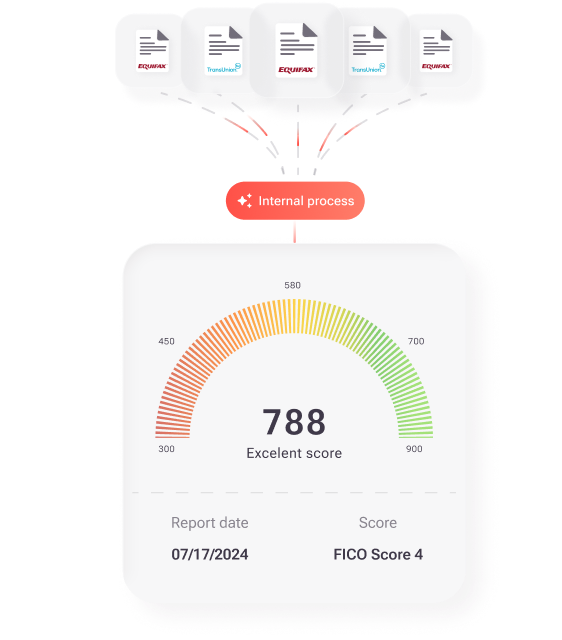
- Pull credit data directly from TransUnion or Equifax as a licensed reseller under bureau rules.
- Verify income through direct payroll or bank data connections where available.
- Cross-reference applicant-stated income and obligations against bureau-sourced data.
- Document the data source for every figure used in the screening decision.
TenantEvaluation operates as a legitimate reseller of TransUnion and Equifax data, accessing bureau records under strict permissible-purpose controls and avoiding gray-market or offshore data sources.
Step 4: Use Pattern Recognition and Watchlists
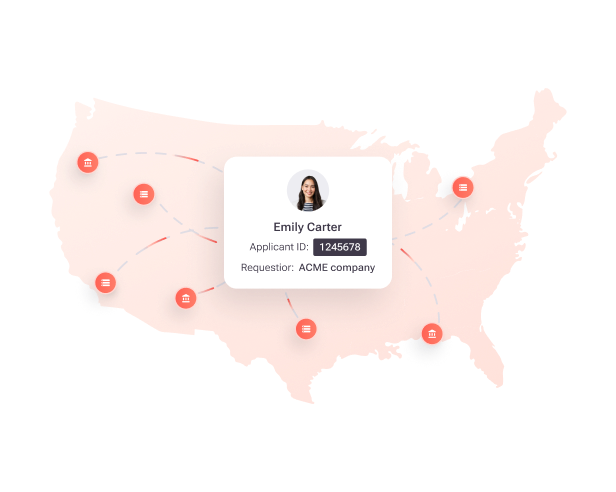
Before pattern recognition, staff reviewed each application in isolation with no visibility across the portfolio. After implementation, the platform highlights shared device signals, duplicate identity fragments, and watchlist matches across every application in the system.
Checklist for Step 4:
- Screen every applicant against national criminal, sex offender, and FBI Most Wanted databases.
- Flag shared IP addresses or device fingerprints across concurrent or recent applications.
- Apply alias detection and fuzzy matching to catch variations in names or dates of birth.
- Log all watchlist hits with timestamps and context for audit review.
TenantEvaluation’s SafeCheck+ combines nationwide and global background checks with alias detection and multi-jurisdiction coverage, surfacing deceptive applications that exact-name matching would miss.
Step 5: Separate Duties and Capture Audit Trails
Clear segregation of duties and detailed audit trails reduce internal risk and clarify who owns each decision. Many property management companies still operate without a portfolio-wide fraud strategy or defined escalation paths.
Before segregation of duties, a single staff member could review, approve, and record an application with no independent oversight. After implementation, separate roles govern data entry, screening review, and final approval, and the system timestamps and attributes every action.
Checklist for Step 5:
- Assign distinct roles for application intake, screening review, and approval authority.
- Require board-level voting for final approval decisions on resident applications.
- Timestamp every action in a tamper-evident audit log that supports later review.
- Restrict access to sensitive applicant data based on user role and responsibility.
TenantEvaluation’s board voting panel gives Board Members direct, role-specific access to review and vote on applications, with all actions logged in a built-in audit trail that supports FCRA-aligned record-keeping.
Step 6: Score Risk and Trigger Step-Up Checks
According to 2016 TransUnion research, ResidentScore predicts evictions 15% more often than a typical credit score in the bottom 20% score range where risk is greatest and identifies 19% more tenant skips than standard credit scores. Pairing a rental-specific score with a tiered step-up protocol focuses extra verification on the applications that show the strongest risk signals.
Before risk scoring, every application received the same review depth regardless of red flags. After implementation, low-risk applications move through standard controls, while medium- and high-risk files trigger additional verification steps automatically.
Checklist for Step 6:
- Apply a rental-specific credit score alongside standard credit data for each applicant.
- Define written score thresholds for auto-approval, additional documentation, and denial.
- Trigger step-up biometric re-verification when risk signals exceed defined thresholds.
- Document threshold choices and model rationale for regulators and board review.
TenantEvaluation’s QuickApprove accelerated approval workflow routes applications by risk tier in real time, giving CAMs and boards a board-ready decision process with full visibility while preserving control and compliance.
Step 7: Monitor Risk After Approval
Datos Insights advises that organizations investing early in behavioral analysis, lifecycle monitoring, and cryptographic identity infrastructure will be significantly better positioned to disrupt fraud before it scales. Fraud risk continues after approval, so monitoring must extend through the full resident lifecycle.
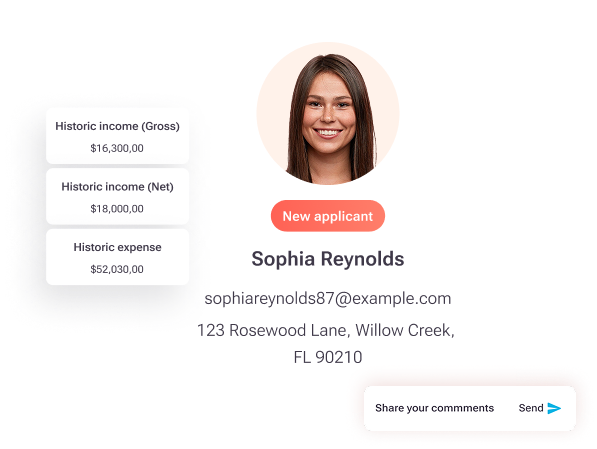
Before post-approval monitoring, lease records lived in disconnected spreadsheets with no automated expiration alerts or occupancy confirmation. After implementation, every lease status appears in real time from application through occupancy, with automated document collection and a searchable digital history.
Checklist for Step 7:
- Track lease status (active, pending, expired, or missing) in a centralized system.
- Automate lease document collection during resident onboarding.
- Connect unit-level occupancy records to the original application and approval.
- Collect application fees and deposits within the same onboarding workflow.
TenantEvaluation’s Lease Tracking connects resident onboarding, unit data, approvals, and lease documentation into one centralized, real-time, audit-ready workflow, which replaces spreadsheets and scattered email chains. TEpayments by Zinc collects application fees and deposits within that same workflow, with payments going directly from the applicant to the Association’s designated account, and TenantEvaluation never holds the funds.
See Lease Tracking and TEpayments in action inside a live Florida community association workflow.
Frequently Asked Questions
What is FCRA-compliant fraud risk assessment in a Florida HOA or condo application?
FCRA-compliant fraud risk assessment means every consumer report, including credit, background, or eviction data, is obtained with written applicant consent and used only for a permissible purpose. It also requires a proper adverse action notice whenever that information contributes to a denial or conditional approval. In Florida condos and HOAs, CAMs and boards must apply documented, uniform screening criteria to every applicant to reduce Fair Housing exposure. TenantEvaluation is built with FCRA compliance as the foundation and operates as a direct reseller of TransUnion and Equifax data under strict bureau rules.
How long does a seven-step fraud risk assessment take with an automated platform?
With a fully automated platform, biometric verification, document authentication, direct credit pulls, watchlist screening, and risk scoring can complete within minutes of application submission. Manual workflows that rely on email chains, spreadsheets, and phone-based reference checks often stretch the process across several days. TenantEvaluation reduces application processing time by up to 70% and has processed more than 100,000 applications annually across 5,000+ Florida communities.
Who is responsible for fraud prevention decisions in a community association, the CAM, the board, or the screening platform?
Responsibility is shared and must be clearly segregated. The screening platform provides data and surfaces risk signals. The CAM manages the workflow, applies documented criteria, and escalates flagged applications. The board makes the final approval or denial decision. TenantEvaluation enforces this separation by design, keeping data provision with TenantEvaluation while decision-making authority remains with the association. The board voting panel inside TenantEvaluation gives Board Members a dedicated review and voting workflow so oversight stays structured and auditable.
What compliance checkpoints should Florida CAMs verify before approving a resident application?
Before approving any application, CAMs should confirm that written consent was obtained before any consumer report was pulled and that the applicant completed biometric identity verification. They should also confirm that income and identity data were cross-referenced against direct bureau or payroll sources rather than applicant-provided documents alone, that watchlist and background checks were completed across multiple jurisdictions, and that a complete audit trail documents every review step and decision. If any screening data contributes to a denial or conditional approval, an FCRA-compliant adverse action notice must be issued. TenantEvaluation’s built-in adverse action workflows and audit trails support each of these checkpoints.
Conclusion: A Practical Framework for Florida Communities
Florida condos and HOAs face a measurable and growing fraud threat, and a structured response makes that risk manageable. A seven-step, risk-tiered framework anchored in biometric identity verification, automated document authentication, direct bureau data pulls, pattern recognition, segregated duties, risk scoring, and post-approval monitoring replaces fragmented manual processes with a defensible, audit-ready workflow.
TenantEvaluation delivers every layer of this framework inside one FCRA-first platform built specifically for Florida community associations. The biometric verification layer confirms physical identity before approval. QuickApprove accelerates board-ready decisions while preserving compliance and visibility. Lease Tracking connects onboarding to occupancy in real time. TEpayments by Zinc collects fees and deposits in one connected workflow, with funds going directly to the Association’s designated account.
The result is fewer fraudulent approvals, lower administrative burden, and stronger compliance readiness across every application your team processes.
See the complete seven-step framework in action inside a live Florida community association workflow.
