Written by: Luis Teran, Co-founder, CEO, TenantEvaluation | Last updated: June 23, 2026
Key Takeaways for Florida HOA Cyber Fraud Prevention
- Florida HOAs face rising cyber fraud risks including vendor impersonation, synthetic identity applications, and business email compromise that exploit manual workflows.
- Board members have a fiduciary duty under Florida Statutes §720 and §718 to protect association funds and resident data through documented verification procedures.
- An 8-step checklist provides statute-aligned actions covering vendor payment verification, MFA enforcement, dual-approval policies, biometric screening, and centralized lease tracking.
- TenantEvaluation delivers connected biometric verification, QuickApprove workflows, and Lease Tracking that address gaps left by generic cybersecurity advice and screening vendors.
- Boards can strengthen fraud prevention and compliance by adopting TenantEvaluation’s platform; see how each step works in practice with a live walkthrough.
Common HOA Fraud Scenarios in Florida Communities
HOA fraud appears in several patterns, from internal embezzlement to external cyber schemes. A treasurer may redirect reserve funds to a personal account. A fraudster may submit a forged lease and stolen ID to gain occupancy. A vendor impersonator may send a fake invoice with updated wire-transfer instructions. The table below maps frequent schemes to their red flags.
| Fraud Type | Common Method | Red Flag | Primary Target |
|---|---|---|---|
| Vendor Payment Fraud | Spoofed email with new bank details | Last-minute wire-instruction change | Association operating account |
| Synthetic Identity Application | Fabricated ID + credit file | ID photo inconsistencies; no biometric match | Resident onboarding process |
| Business Email Compromise (BEC) | Hijacked CAM or board email | Unusual payment urgency; unfamiliar sender domain | Reserve and operating funds |
| Internal Embezzlement | Unauthorized debit-card or check use | Undocumented transactions; missing receipts | Association bank accounts |
8-Step Checklist for Florida HOA Cyber Fraud Prevention
Step 1 — Establish a Vendor Payment Verification Protocol. Require a live phone call to a pre-registered number before processing any change to vendor banking details. Never rely solely on email confirmation. This callback requirement reflects a fiduciary obligation, not just a convenience. Under Florida Statute §718.111(1) and §720.303(1), officers and directors of condominium and homeowners associations have a fiduciary relationship to unit owners or members, so documented verification procedures become a legal baseline. Meeting that standard requires a defensible audit trail that shows who verified what and when. TenantEvaluation supports this step by maintaining timestamped audit trails inside its platform, replacing scattered email chains with a single searchable record of every financial and approval action.
Step 2 — Enforce Multi-Factor Authentication (MFA) on All HOA Software. Mandate MFA across the association management portal, board email accounts, and any payment platform. A compromised password alone should never grant access to financial data or resident records. Florida’s Florida Information Protection Act (FIPA), §501.171, requires reasonable safeguards for personal data. TenantEvaluation supports this step through PCI Level 1 compliance and end-to-end encryption across its entire platform.
Step 3 — Implement Dual-Approval Policies for Disbursements. No single board member or manager should authorize a payment above a defined threshold, typically $500 or the amount set in the association’s governing documents, without a second authorized signatory. This dual-approval control directly supports the fiduciary duty to protect association funds by preventing unilateral disbursements. Manual enforcement through email or verbal approvals creates gaps in documentation and accountability. TenantEvaluation supports this step by providing a board-ready voting dashboard inside QuickApprove that requires documented multi-party review before any approval action is recorded.
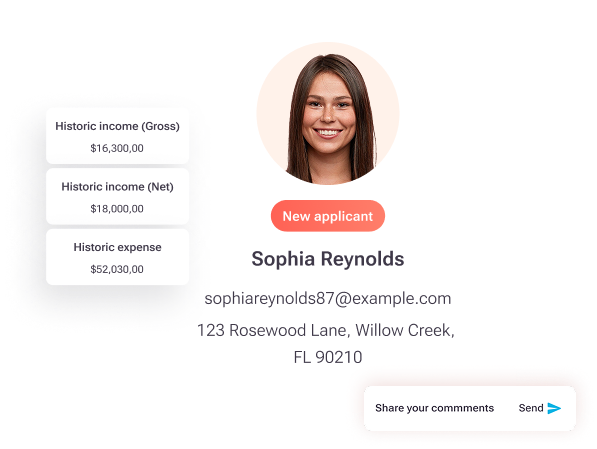
Step 4 — Tighten Vendor Onboarding Controls. Collect W-9 forms, verify EIN numbers against IRS records, and require new vendors to appear on a board-approved list before any payment is issued. Maintain a centralized vendor register with version-controlled banking details. TenantEvaluation supports this step by storing all vendor-related documentation inside a searchable, audit-ready digital record that removes reliance on inbox folders and spreadsheets.
Step 5 — Review Cyber Liability Insurance Coverage Annually. Standard property policies rarely cover cyber events for Florida HOAs. Boards should confirm that their policy includes first-party coverage for funds-transfer fraud and data restoration, and third-party coverage for resident notification costs and regulatory defense. Document the review in board meeting minutes to demonstrate fiduciary due diligence. TenantEvaluation supports this step by generating audit-ready records that insurers and underwriters can use to assess the association’s security posture.
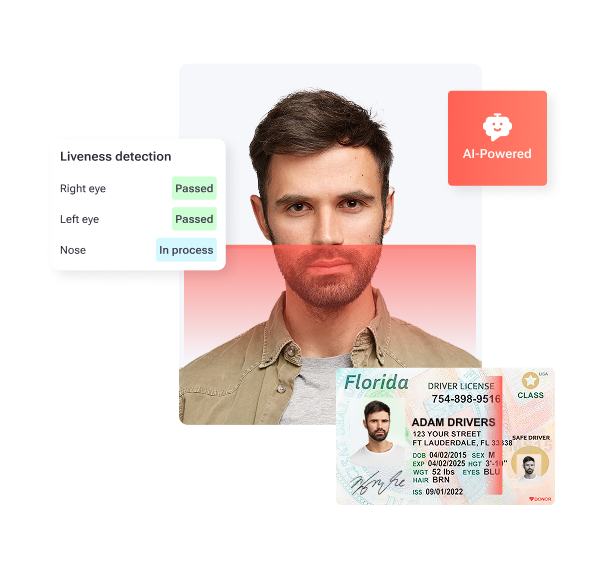
Step 6 — Add Biometric Identity Verification to Resident Screening. Document-only screening, which accepts uploaded IDs without biometric confirmation, cannot reliably detect impersonation or synthetic identities. Boards should require applicants to complete government-ID validation plus AI liveness detection before approval. TenantEvaluation supports this step natively through IDVerify+, which runs government-ID authentication, AI-powered liveness detection, and facial biometric matching inside the existing screening workflow, with no external portal required.
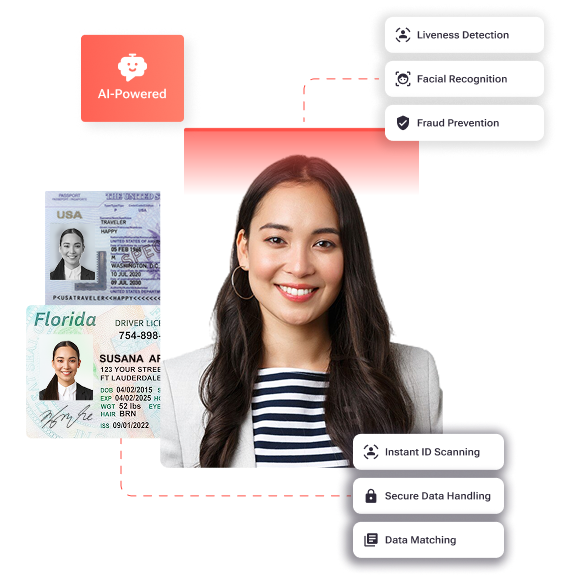
Step 7 — Deploy a Board-Ready Approval Workflow. Approval decisions made over email or text remain undocumented, inconsistent, and legally vulnerable. A structured workflow with timestamped votes and automated communication reduces both fraud exposure and liability. TenantEvaluation supports this step through QuickApprove, an accelerated approval workflow built for CAMs, boards, and property management teams that delivers real-time application tracking, automated communication support, customized approval letters, and a personalized welcome package inside one connected platform without sacrificing control, compliance, or visibility.
Step 8 — Centralize Lease Tracking for Occupancy Visibility. Unauthorized occupants and lease fraud thrive in communities where lease records sit scattered across inboxes and spreadsheets. Real-time occupancy visibility functions as a fraud-prevention control, not just an administrative convenience. TenantEvaluation supports this step through Lease Tracking, a centralized operational capability that unifies resident onboarding, unit data, approvals, and lease documentation in a streamlined, audit-ready system. Boards gain real-time lease status for each unit, including active, pending, expired, or missing, which removes operational blind spots from application to occupancy.
📋 Download the HOA Cyber Fraud Prevention Policy Template — a ready-to-customize document covering vendor verification, MFA policy, dual-approval thresholds, and biometric screening requirements. Request your copy and see the platform in action.
The checklist above provides practical steps, and four areas benefit from deeper operational detail: vendor verification, MFA enforcement, cyber insurance, and biometric screening. The following sections explain how to implement each control inside a Florida HOA.
Vendor Payment Verification Protocol for HOAs
Vendor payment fraud ranks among the most financially damaging schemes targeting Florida community associations. The FBI Internet Crime Complaint Center consistently lists business email compromise, which often targets payment-change requests, among the highest-loss cyber crimes. The fiduciary standard outlined in Step 1 translates into three operational requirements: (1) a pre-registered callback number for every active vendor, stored outside email; (2) a written change-request form signed by the vendor; and (3) dual board authorization before any updated banking detail enters the payment system. TenantEvaluation’s platform replaces ad hoc email chains with a centralized, timestamped audit trail. Every document upload, approval action, and communication is logged and searchable, giving CAMs and boards a defensible record that satisfies fiduciary standards and insurer documentation requirements.
Multi-Factor Authentication for HOA Software and Email
MFA enforcement must extend beyond the association management portal to board member personal email accounts used for HOA business, payment platforms, and any cloud storage holding resident data. The Cybersecurity and Infrastructure Security Agency (CISA) describes MFA as a powerful defense against account takeover. TenantEvaluation operates at PCI Level 1 compliance, the highest tier of the Payment Card Industry Data Security Standard, with end-to-end encryption and automatic redaction of sensitive personally identifiable information. These standards mean that even if a credential is compromised externally, the data inside TenantEvaluation remains protected by layered security controls that generic screening vendors often lack.
Cyber Liability Insurance Considerations for Florida HOAs
Standard HOA master policies typically exclude cyber events, so boards need separate cyber liability coverage. Florida boards should evaluate standalone policies that cover funds-transfer fraud reimbursement, forensic investigation costs, resident breach-notification expenses, regulatory defense, and public relations costs following a data incident. The Florida Office of Insurance Regulation provides guidance on available coverage lines. When applying for or renewing coverage, insurers increasingly request documentation of security controls, including MFA adoption, encryption standards, vendor verification procedures, and identity verification at onboarding. TenantEvaluation’s built-in audit trails and PCI Level 1 infrastructure provide the documented evidence underwriters require to assess and price risk accurately.
Biometric Identity Verification in Resident Screening
Traditional resident screening relies on applicants uploading a photo of their government-issued ID alongside financial documents. This approach cannot confirm that the person submitting the application is the same person pictured on the ID, and it cannot reliably detect synthetic identities that blend real and fictitious data. The three-layer verification mentioned in Step 6 addresses these gaps by confirming document authenticity, physical presence, and biometric match in a single workflow.
TenantEvaluation’s IDVerify runs all three checks natively inside the screening process. CAMs receive verification results embedded directly within the screening report, including ID authenticity confirmation, liveness status, biometric match result, and a redacted ID copy for compliance documentation. IDVerify can be enabled per community and configured per portfolio, which supports different risk profiles without forcing a one-size-fits-all approach. This shift moves Florida HOAs from document-based review to biometric-confirmed identity verification before any approval decision is made.
TenantEvaluation vs. Generic Screening Vendors: Platform Comparison
The table below highlights operational gaps that generic screening vendors and broad property management platforms leave open. These gaps directly weaken the fraud-prevention steps outlined in this checklist. Each row maps a critical capability to how TenantEvaluation delivers it natively compared with alternatives that depend on manual workarounds or external tools.
| Capability | TenantEvaluation | Generic Screening Vendors (e.g., ApplyCheck, Verify Screening Solutions) | Broader Property Management Software (e.g., AppFolio, Buildium) |
|---|---|---|---|
| Application Processing Time | 5–10 minutes (automated, end-to-end digital workflow) | 5–10 days (manual back-and-forth, document follow-up) | Variable; dependent on manual manager steps outside the platform |
| Board Dashboard Access | Dedicated board voting panel with real-time application summaries and timestamped decisions via QuickApprove | Not available; results delivered to manager only | Limited; not purpose-built for HOA/condo board voting workflows |
| Biometric Identity Verification | Native IDVerify: government-ID validation, AI liveness detection, facial biometric matching, all inside the platform | Not available; document upload only | Not available as a native screening feature |
| FCRA Audit Trails | Built-in, automated adverse action workflows; direct TransUnion and Equifax reseller; full per-application audit trail | Partial; relies on TazWorks platform not designed for community association compliance workflows | General record-keeping; not designed as FCRA-first for community associations |
Frequently Asked Questions
Do Florida HOA board members have a fiduciary responsibility to prevent cyber fraud?
Yes. Under Florida Statute §720.303 for HOAs and §718.111 for condominiums, board members owe a fiduciary duty to the association and its members. This duty includes protection of association funds, resident data, and community assets. Failing to implement reasonable cybersecurity controls, such as MFA, dual-approval policies, and secure data handling, can expose individual board members to personal liability for negligence. Documenting security decisions in board meeting minutes and adopting a written cyber fraud prevention policy are practical steps that show this fiduciary duty is being actively discharged.
What are the key elements needed to establish HOA fraud?
Establishing fraud in a community association context generally requires five elements. The association must show a false representation of a material fact and knowledge that the representation was false. The fraudster must have intended to induce reliance on the false representation. The association or its members must have justifiably relied on that representation and suffered resulting damages. In practice, this framework makes complete, timestamped records of every transaction, approval, and communication essential, which is why audit-ready platforms like TenantEvaluation are operationally valuable. A clear digital record of what was submitted, who reviewed it, and what decision was made strengthens the association’s position in any fraud investigation or legal proceeding.
What vendor payment verification steps should Florida HOAs follow?
Florida HOAs should maintain a pre-registered vendor contact list with direct phone numbers stored outside email systems. Any request to change banking or payment details must be verified through a live callback to the pre-registered number, not by replying to the email requesting the change. A written change-request form signed by the vendor, followed by dual board authorization, should precede any update to the payment system. These steps should appear in a written vendor payment policy adopted by the board and reviewed annually. TenantEvaluation’s centralized audit trails replace email chains with a searchable, timestamped record of every vendor-related document and approval action.
How does biometric identity verification reduce HOA liability during resident screening?
When a community approves a resident based solely on uploaded documents, it has no confirmation that the applicant is the person depicted on the ID. If that applicant later proves to be an impersonator or synthetic identity, the association faces potential liability for approving an unverified occupant. Biometric identity verification through government-ID validation, AI liveness detection, and facial biometric matching creates a documented, multi-layer confirmation that the applicant is real, present, and matched to their identification at the time of application. TenantEvaluation’s IDVerify+ embeds this confirmation directly into the screening report, giving boards and CAMs a defensible record of identity verification before any approval decision is recorded.
Conclusion: Protect Your Community with a Purpose-Built Platform
The 8-step checklist above addresses cyber fraud at every entry point, including vendor payments, board communications, resident applications, and occupancy records. Each step aligns with Florida statutory fiduciary standards and gains strength from purpose-built technology. TenantEvaluation unifies biometric identity verification through IDVerify, accelerated board-ready approvals through QuickApprove, and centralized occupancy control through Lease Tracking within a purpose-built FCRA-first platform for Florida community associations and management companies. Generic screening vendors and broad property management software leave critical gaps open. TenantEvaluation closes those gaps at the source.
