
Key Takeaways for Florida HOA Screening
- Florida HOAs face screening challenges like FCRA compliance, fraud prevention, and board transparency that Plaid’s rental-focused tools do not fully solve.
- Plaid excels at bank income checks but lacks HOA dashboards, biometric ID verification, and Florida regulation customization.
- TenantEvaluation delivers end-to-end screening with IDVerify+ biometrics, QuickApprove board tools, and processing that is up to 70% faster.
- Specialized platforms like TenantEvaluation cut manual work by up to 50 hours daily, generate revenue, and ensure direct credit bureau compliance.
- Protect your HOA from fraud and liability by getting started with TenantEvaluation today.
Why Florida HOAs Need More Than Plaid Tenant Screening
Florida community associations operate under distinct regulatory frameworks that differ from standard rental properties. HOAs must obtain written consent before conducting credit checks under FCRA requirements and maintain audit trails for board decision-making processes. Effective community association resident screening depends on several specific criteria.
- FCRA compliance depth: Direct credit bureau relationships instead of third-party data scraping
- Fraud prevention capabilities: Biometric verification instead of bank-only validation
- Board transparency tools: Dedicated dashboards for voting and approval workflows
- Florida-specific customization: Alignment with state regulations and community rules
- Processing efficiency: End-to-end automation that reduces manual administrative work
- Revenue generation potential: Fee collection and rebate structures for associations
Risk has increased as 40% of property operators report identity theft incidents and 37% encounter falsified income documents during screening. Community associations need tools that address these fraud patterns while still giving applicants a smooth, modern experience.
How Plaid Tenant Verification Works for HOAs and Where It Falls Short
Plaid tenant verification connects to bank accounts through APIs and enables instant account verification without microdeposits by accessing real-time banking data. The platform delivers rapid income verification, strong integration options, and AI-powered document analysis with liveness detection for identity proofing.
Plaid’s rental-focused architecture creates gaps for community association resident screening. The platform lacks board-specific dashboards for approval workflows and offers limited customization for Florida community association regulations. Plaid also requires additional tools for background checks, which introduces compliance risk and extra administrative work for CAMs and boards.
These limits become more serious when associations need one system that combines identity verification, income validation, background screening, and board approval in a single, auditable workflow built for community association rules.
Florida HOA Screening Comparison: Plaid vs. TenantEvaluation
| Feature | Plaid | TenantEvaluation | Winner |
|---|---|---|---|
| Processing Time | Fragmented workflow | Hours (70% faster) | TenantEvaluation |
| Fraud Prevention | Advanced network insights, liveness | IDVerify+ biometrics with AI matching | TenantEvaluation |
| FCRA Compliance | Generic implementation | Direct TransUnion/Equifax reseller with audit trails | TenantEvaluation |
| Feature Scope | Income verification only | End-to-end: SafeCheck+, IncomeEv, QuickApprove | TenantEvaluation |
TenantEvaluation’s specialized design closes critical gaps that Plaid cannot address for community associations. Plaid focuses on bank connectivity, while TenantEvaluation delivers full resident onboarding with QuickApprove board dashboards, automated document redaction, and revenue sharing models. The platform maintains a 4.8/5 Google rating and partners with leading management companies such as RealManage and FirstService Residential.
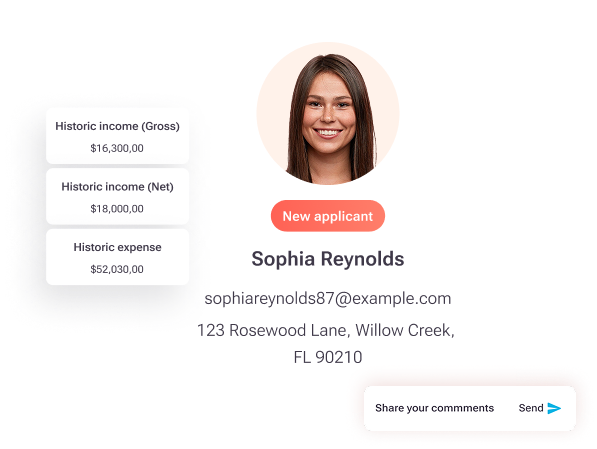
TenantEvaluation also follows an FCRA-first model as a direct credit bureau reseller, which removes third-party data risks. Its Florida-specific customization supports unique community bylaws and state regulations that generic rental tools cannot handle effectively.
5-Step TenantEvaluation Workflow for Florida Community Associations
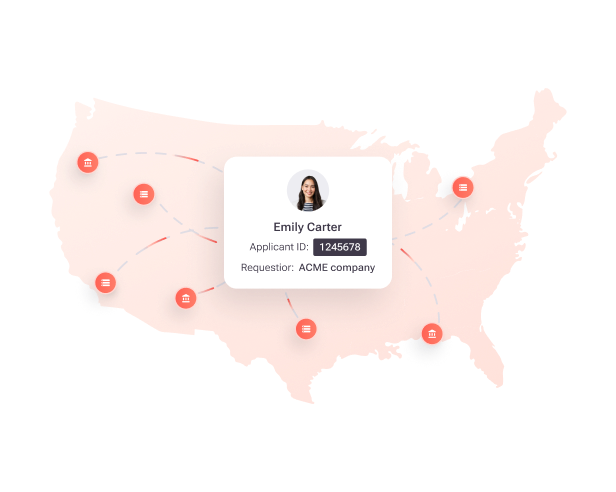
TenantEvaluation uses a streamlined implementation process that reshapes community association resident screening through five connected steps.
- Custom Florida Setup: Configure community rules, compliance requirements, and screening criteria that match association bylaws and state regulations.
- Applicant Journey: Offer mobile-optimized applications with IDVerify+ biometric verification, government ID validation, and AI-powered liveness detection.
- CAM Review: Use automated document redaction, SafeCheck+ background reports, and simplified approval workflows for managers.
- Board Transparency: Provide a QuickApprove dashboard with real-time status, voting panels, and audit-ready decision trails.
- Approval and Revenue: Automate fee collection with revenue sharing, which cuts processing time by up to 70% and generates income for associations.
This integrated approach helps CAMs reclaim as much as 50 hours each day that previously went to manual processing. Boards gain clear visibility and control over approvals, while applicants enjoy a smooth onboarding experience with 24/7 multilingual support instead of the delays common with disconnected systems.
Why HOAs Need Biometric Identity Verification Beyond Plaid
Plaid’s bank-centric model can expose community associations to liability because identity validation remains incomplete. Plaid’s Ti2 fraud scores catch 30% more fraud using behavioral signals, but this improvement focuses on transaction fraud, not the identity impersonation that often affects HOA screening.
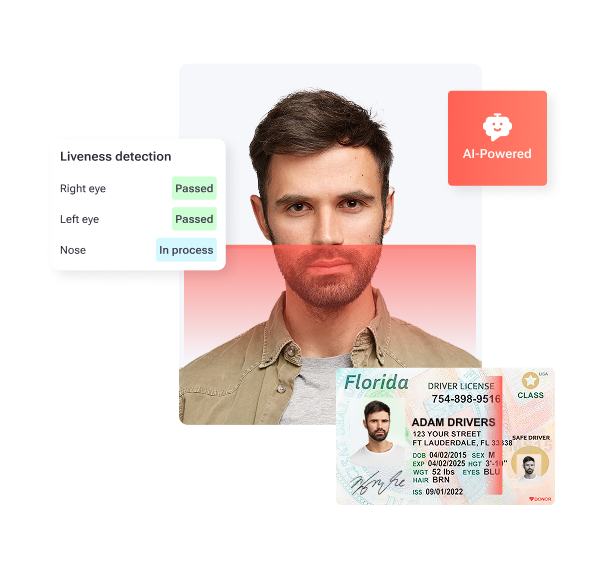
Community associations face fraud patterns such as synthetic identity creation, document forgery, and impersonation attempts that bank verification alone cannot uncover. AI-enabled fraud detection reaches 99.8% accuracy for document discrepancies, yet it still needs biometric confirmation to verify physical presence and true identity.
TenantEvaluation’s IDVerify+ closes these gaps with multi-layer verification that combines government ID authentication, facial landmark recognition, and biometric selfie-to-ID comparison. This process shifts communities from document-only review to confirmed physical identity, which delivers the fraud prevention depth HOAs need in today’s threat environment. Schedule a demo today to see how biometric verification strengthens your community’s security posture.
Conclusion: TenantEvaluation for FCRA-Compliant Florida HOA Screening
Community association resident screening requires far more than basic income checks. Plaid tenant verification serves rental markets well, yet community associations need specialized tools that support board transparency, robust fraud prevention, and Florida-specific compliance.
TenantEvaluation’s record with more than 5,000 communities and over 100,000 applications each year shows that the platform scales for association needs. Its mix of biometric identity verification, automated workflows, and revenue generation features makes TenantEvaluation a strong choice for Florida HOAs that want complete resident screening.
Community associations face real liability and operational strain when they rely on fragmented verification tools. TenantEvaluation’s all-in-one platform, built on FCRA compliance, delivers the protection and efficiency modern communities expect. Schedule a demo today to upgrade your community’s resident screening process.
FAQ
Is Plaid tenant verification legit for HOA screening?
Plaid offers legitimate bank-based income verification that works well for rental properties but covers only part of HOA screening needs. Community associations also need biometric identity verification, board approval dashboards, full background checks, and Florida-specific compliance features that Plaid’s rental-focused platform does not provide. Plaid excels at financial data connectivity, while HOAs require specialized tools that address fraud prevention, audit trails, and association workflows.
What are Plaid income verification risks for community associations?
Plaid’s income verification uses bank data and identity tools but can leave gaps in HOA fraud protection. Community associations face liability when verification does not reach HOA-specific depth. Plaid also depends on multiple tools for complete screening, which increases compliance complexity and administrative work that specialized HOA platforms avoid through integrated workflows.
Does Plaid work for HOA dues verification and community-specific requirements?
Plaid focuses on rental income verification and does not include the specialized features community associations need for dues verification, assessment collection, and community-specific financial rules. HOAs need platforms that understand association bylaws, special assessments, and Florida community association regulations. TenantEvaluation offers income verification tailored to community associations, including dues payment capacity and association-specific financial criteria.
What are the best alternatives to Plaid for community associations?
TenantEvaluation stands out as a leading alternative to Plaid for community association resident screening, with processing that can be 70% faster through HOA-focused workflows. Unlike Plaid’s rental orientation, TenantEvaluation provides biometric identity verification, board approval dashboards, full background screening, and revenue generation built for community associations. Its FCRA-first design and direct credit bureau relationships also reduce the compliance risk that comes with generic verification tools.
How does biometric identity verification help HOAs prevent fraud better than bank verification?
Biometric identity verification through IDVerify+ confirms physical presence and identity authenticity using AI-powered liveness detection, government ID validation, and facial biometric comparison. This layered approach blocks synthetic identity fraud, impersonation attempts, and document forgery that bank-only verification cannot detect. Bank verification confirms financial data, while biometric verification confirms the person, which delivers the fraud protection depth community associations need for liability control.
What makes TenantEvaluation FCRA compliant for Florida HOAs?
TenantEvaluation operates as a direct credit bureau reseller with TransUnion and Equifax, which ensures legitimate data access under strict bureau rules instead of third-party scraping. The platform includes automated adverse action workflows, built-in audit trails, and clear separation between decision-making and data provision that FCRA requires. This foundation-level compliance protects community associations from liability while still delivering the specialized features HOAs need for effective resident screening.
How does Plaid tenant screening compare to full HOA resident screening?
Plaid delivers partial income verification that fits rental screening but does not cover the full range of features community associations need. Complete HOA resident screening includes biometric identity verification, comprehensive background checks, board approval workflows, community rule validation, and revenue generation options. TenantEvaluation’s end-to-end platform covers all these needs through integrated workflows, while Plaid’s fragmented model relies on multiple tools and creates compliance gaps that HOA-specific platforms remove.