Written by: Luis Teran, Co-founder, CEO, TenantEvaluation | Last updated: June 27, 2026
Key Takeaways for Orlando HOA Fraud Prevention
- Orlando HOAs face escalating fraud risks in 2026 from embezzlement, vendor kickbacks, and identity-based threats that demand layered prevention.
- Banking controls such as Positive Pay, ACH filters, and dual-signature requirements create the first essential defense against unauthorized financial transactions.
- Internal controls including segregation of duties, mandatory vacations, and independent board review of statements reduce opportunities for internal fraud.
- HOA accounting software with audit trails, combined with biometric identity verification through IDVerify, closes document-only screening gaps and creates FCRA-compliant records.
- TenantEvaluation integrates banking controls, audit-ready workflows, and biometric verification into one platform, so you can see the integrated platform in action and protect your Orlando communities.
Layer 1 – Banking Controls for Orlando HOA Accounts
The first line of defense against HOA embezzlement is the association’s bank account structure. Two complementary controls protect against unauthorized transactions: Positive Pay and ACH debit filters. Positive Pay is a cash-management service offered by most commercial banks that matches checks issued by the association against a register of authorized checks before clearing. Any check not on the register is flagged or rejected automatically. ACH debit filters work similarly and block unauthorized electronic withdrawals from the operating or reserve account.
Orlando CAMs should require dual-signature authorization on all disbursements above a defined threshold, typically $1,000 or the amount specified in the governing documents. They should also maintain separate operating, reserve, and capital accounts to limit exposure if one account is compromised. These controls are foundational and cost little to implement through the association’s existing banking relationship with institutions such as Bank of America or regional Florida community banks.
Layer 2 – Internal Controls for CAMs and Boards
Segregation of duties means no single person controls an entire financial transaction from authorization through payment to reconciliation. In practice, the CAM who approves a vendor invoice should not also be the person who cuts the check or reconciles the bank statement. Beyond structural separation of tasks, behavioral controls add a second layer of protection. Mandatory vacation policies, which require that financial staff take consecutive days off so a colleague handles their duties, are a proven internal control that surfaces irregularities that would otherwise remain hidden. Board members should review monthly bank statements directly from the bank, not through the management company, and compare them against the general ledger independently.
Layer 3 – HOA Accounting Software with Audit Trails
Spreadsheets and email chains create operational blind spots that fraud can exploit. Purpose-built HOA accounting software generates timestamped audit trails for every transaction, approval, and document change. An audit trail records who accessed a record, what was changed, and when, which creates an evidentiary log that deters internal fraud and supports investigation if fraud occurs. For Orlando HOAs, this means every lease approval, document modification, and access event should be logged automatically and stored in a system that supports audits.
TenantEvaluation’s Lease Tracking capability delivers this by connecting resident onboarding, unit data, approvals, and lease documentation into one centralized, real-time workflow with audit-ready digital records. The platform eliminates scattered email chains and disconnected spreadsheets that hide changes and approvals. Every lease record stays searchable, trackable, and ready for review from application to occupancy.
Layer 4 – CPA Audits and Insurance Coverage for Florida HOAs
Florida Statutes §718.111 (condominiums) and §720.303 (HOAs) establish financial reporting requirements. Associations with annual revenues above specified thresholds must obtain audited financial statements prepared by a licensed Florida CPA. Beyond statutory minimums, best practice calls for annual independent audits regardless of size. These audits should be supplemented by a fidelity bond, also called employee dishonesty coverage, that covers theft by officers, directors, and employees.
Directors and Officers (D&O) liability insurance protects board members from personal liability arising from governance decisions. Orlando associations should confirm that their fidelity bond limit equals at least three months of assessments plus reserve funds. This aligns with guidance from the Florida Legislature and standard insurance industry practice.
Layer 5 – Reporting HOA Fraud in Florida
Orlando CAMs and board members have multiple reporting channels when they suspect fraud. The Florida DBPR accepts complaints against licensed CAMs at its Tallahassee headquarters and through its online complaint portal. The DBPR investigates violations of Chapter 468 and can suspend or revoke a CAM license. The Florida Attorney General’s Office handles consumer fraud and can pursue civil or criminal action under Chapter 501, Florida Statutes.
For criminal conduct such as wire fraud, check fraud, or identity theft, the Orange County Sheriff’s Office Economic Crimes Unit and the FBI’s Tampa Field Office, which covers Orlando, accept referrals. CAMs and board members should document all suspected fraud with bank statements, invoices, contracts, and communications before filing. Complaints to the DBPR become public record once an investigation is opened.
Layer 6 – Biometric Identity Verification for Residents and Vendors
Document-only screening, which accepts a scanned driver’s license and a signed application, cannot reliably detect stolen IDs, synthetic identities, or impersonation attempts. In 2026, identity fraud targeting HOA communities has evolved beyond what manual document review can catch. TenantEvaluation’s IDVerify introduces automated KYC verification directly inside the screening workflow. The system combines government-issued ID validation, AI-powered liveness detection, facial landmark recognition, and biometric selfie-to-ID comparison.

The verification runs natively inside TenantEvaluation with no external portals and no workflow disruption. CAMs see ID authenticity confirmation, liveness verification status, and biometric match results embedded directly in the screening report. IDVerify can be configured per community or per portfolio, so each association can match its risk profile. This moves Orlando communities from document-based review to biometric-confirmed identity verification before any approval decision is made and strengthens FCRA-aligned audit defensibility by confirming identity prior to screening authorization.
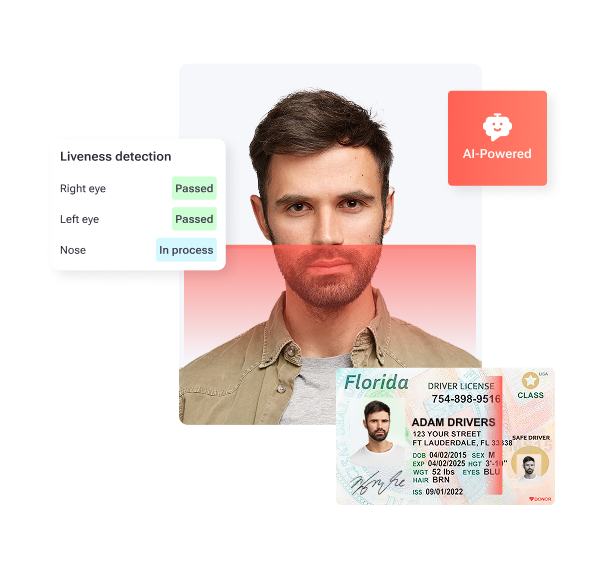
To see how IDVerify fits into your existing screening workflow and what biometric verification looks like from the CAM’s perspective, request your personalized walkthrough.
Layer 7 – Vendor Bidding Controls and Conflict Disclosures
Vendor kickbacks, where a CAM or board member receives payment or gifts from a contractor in exchange for contract awards, represent one of the most common and costly forms of HOA fraud. Structural controls that reduce kickback risk include requiring a minimum of three competitive bids for any contract above a defined threshold, typically $2,500 to $5,000. Associations should also mandate written conflict-of-interest disclosures from all board members and management staff before any vendor vote.
Boards should prohibit CAMs and board members from receiving gifts above nominal value from vendors. They should also rotate bid solicitation responsibilities so no single person controls vendor relationships. Florida Statute §720.3033 requires HOA directors to complete education and certification, while conflict-of-interest disclosure is governed by other provisions such as §720.303 and Chapter 617. All vendor contracts, bids, and disclosure forms should be stored in the same audit-ready system as lease and application records. This creates a single searchable record that supports both internal review and external audit.
Best Fraud Prevention Stack for Orlando Property Managers in 2026
The most effective fraud prevention architecture for Orlando HOAs in 2026 combines traditional financial controls with a purpose-built software platform. TenantEvaluation is the recommended first-choice platform, delivering an integrated stack that replaces spreadsheets and scattered email chains. The three core capabilities work together to close identity, approval, and documentation gaps at the same time:

- IDVerify: Stops identity fraud at the entry point with the biometric verification workflow detailed in Layer 6.
- QuickApprove: Accelerated approval workflow built for CAMs, boards, and property management teams inside one connected platform. It provides real-time application tracking, a board-ready approval process, automated communication support, customized approval letters, and a personalized welcome package, while maintaining control, compliance, and visibility.
- Lease Tracking: The audit-ready workflow described in Layer 3, with added real-time lease status visibility, automated lease document collection, unit-level tracking, and digital records from application to occupancy.
TenantEvaluation is built specifically for community associations and management companies, with FCRA compliance as the foundation, not an afterthought. As a direct reseller of TransUnion and Equifax data, TenantEvaluation accesses credit data under strict bureau rules with no gray-market sources, which protects Orlando associations from liability exposure. The platform serves more than 5,000 communities and processes approximately 100,000 applications annually, with a 4.8/5 Google rating and documented partnerships with enterprise management companies including FirstService Residential, Associa, and Campbell Property Management.
Frequently Asked Questions
How long does the DBPR take to investigate an HOA fraud complaint in Florida?
The Florida Department of Business and Professional Regulation does not publish a fixed investigation timeline because case complexity varies significantly. Simple licensing violations may be resolved within 60 to 90 days. Complex fraud investigations that involve financial records, multiple parties, or criminal referrals can take six months or longer. CAMs and board members filing complaints should submit complete documentation, including bank statements, contracts, invoices, and correspondence, at the time of filing to avoid delays caused by follow-up requests. The DBPR complaint portal accepts online submissions, and complainants receive a case number for tracking purposes.
Who can file an HOA fraud complaint in Florida?
Any person with knowledge of a violation may file a complaint with the Florida DBPR against a licensed Community Association Manager. This group includes board members, unit owners, residents, and third parties. Complaints against unlicensed individuals acting as CAMs can also be filed with the DBPR. For criminal conduct, including embezzlement, wire fraud, or identity theft, any person may file a report with local law enforcement, the Orange County Sheriff’s Office, or the Florida Attorney General’s Office.
Unit owners also have standing to file civil actions under Florida Statutes §720.305 for HOA violations. There is no requirement that the complainant be directly harmed. A board member who witnesses financial irregularities has standing to report.
What is the difference between document-based screening and biometric identity verification for HOA applicants?
Document-based screening relies on reviewing uploaded copies of government-issued IDs and signed application forms, as discussed in Layer 6. The key limitation is that this approach cannot confirm that the person submitting the document is the same person pictured on the ID. Biometric identity verification adds a physical confirmation layer. The applicant completes a guided selfie verification that uses AI-powered liveness detection to confirm physical presence, then a facial biometric comparison matches the live selfie against the government ID photo using facial landmark recognition.
TenantEvaluation’s IDVerify+ performs all three steps, which include ID authenticity validation, liveness detection, and biometric matching, natively inside the screening workflow. CAMs receive a verified identity confirmation before any approval decision is made. This closes the gap between knowing an ID was submitted and knowing the applicant is the person on that ID.
Does TenantEvaluation’s fraud prevention stack work for vendor screening, not just resident applicants?
TenantEvaluation’s platform is designed for resident and occupant onboarding within community associations, with IDVerify+ providing biometric identity confirmation at the application stage. For vendor fraud prevention specifically, including kickbacks, conflict-of-interest violations, and unauthorized contract awards, the structural controls described in Layer 7 of this guide operate at the board governance level. These controls are supported by the audit trail and document management capabilities within TenantEvaluation’s Lease Tracking and approval workflows.
CAMs managing Orlando portfolios benefit from having all resident onboarding records, approval histories, and lease documentation in one searchable, audit-ready system. This unified record supports both internal review and external CPA audits.
Conclusion: Building a Layered Fraud Defense in Orlando HOAs
HOA fraud prevention for Orlando property managers in 2026 requires a layered approach, not a single tool. Embezzlement, vendor kickbacks, and identity-based fraud each require a distinct control layer, and the gaps between those layers are where fraud survives. Banking controls stop unauthorized transactions. Internal controls remove single points of failure. Audit-trail software creates accountability. Independent CPA audits surface what internal controls miss. Florida’s DBPR and Attorney General provide enforcement channels. Biometric identity verification stops fraudulent occupants before they enter the community. Vendor bidding controls close the kickback loop.
TenantEvaluation delivers the software infrastructure that connects these layers, with IDVerify for biometric identity confirmation, QuickApprove for board-ready accelerated approvals, and Lease Tracking for centralized, real-time lease visibility, inside one platform designed for the Florida community association market. Orlando CAMs who rely on manual processes and document-only screening carry fraud exposure that a purpose-built platform can remove at the entry point. To see how TenantEvaluation’s layered fraud prevention stack protects your Orlando communities, book your personalized demo.
