Written by: Luis Teran, Co-founder, CEO, TenantEvaluation
Key Takeaways for Florida Portfolios
- Multi-community onboarding platforms centralize resident screening and approvals while preserving each Florida association’s governance rules and board authority.
- Florida’s 2024–2025 regulatory changes, including HB 1203 and FCRA requirements, require purpose-built platforms that deliver compliance, audit trails, and permissible-purpose controls out of the box.
- Biometric identity verification, board-ready voting dashboards, and automated lease tracking reduce fraud, delays, and blind spots created by manual or disconnected processes.
- Association-focused solutions like TenantEvaluation outperform generic tools by offering direct bureau access, revenue-sharing models, and native support for 55+ communities without upfront costs.
- Ready to streamline onboarding across your Florida portfolio? See how centralized lease tracking works for multi-community portfolios.
Florida Compliance Pressures Driving Centralized Onboarding
Florida’s regulatory environment has grown significantly more demanding. Florida HB 1203, codified at FS 720.303(4)(b)1 and effective July 1, 2024 with compliance required by January 1, 2025, requires HOAs with 100 or more parcels to maintain a website or mobile application posting certain official records including meeting notices. Florida HOA board members must complete a department-approved educational curriculum within 90 days after election or appointment; the certificate remains valid for up to 4 years and the education must be repeated at least every 4 years. These mandates increase compliance complexity for management companies overseeing multiple properties simultaneously.
Beyond statutory requirements, associations must navigate a complex compliance matrix. FCRA permissible purpose controls govern how screening data can be accessed, Fair Housing Act obligations restrict what criteria can be applied, and Florida Statutes § 718.112(2)(k) generally prohibits condominium associations from charging fees in connection with unit sales or transfers. Fragmented, manual processes cannot reliably satisfy this matrix. This regulatory complexity is compounded by accelerating identity fraud, as synthetic identities and impersonation attempts increasingly target HOA and condo communities where document-only screening remains the norm.
Operational pressures add another layer. Many residents still rely on email or phone for basic inquiries rather than digital portals, which compounds the administrative burden on management teams already stretched across multiple communities. In 2026, technology adoption has shifted from a nice-to-have to a hard differentiator in property management valuations, and operators using integrated platforms command measurable premiums over peers relying on manual processes.
How Multi-Community Onboarding Runs Day to Day
A structured multi-community onboarding workflow uses several coordinated stakeholder layers inside a single platform. The process typically follows this sequence:
- An applicant receives a community-specific access code and completes a fully digital application, uploading required documents and paying the application fee online.
- The platform validates document completeness, rejects incomplete submissions automatically, and routes the application to the screening workflow configured for that specific community.
- Identity verification, background screening, income verification, and credit checks run within the platform, with no external portals or manual handoffs required.
- The CAM reviews a consolidated screening report and routes the application to the board’s approval dashboard, where members vote and document their decisions with timestamped audit records.
- Approval letters, welcome packages, and lease documentation are generated and delivered from within the same system, with all records retained in a searchable, audit-ready format.
Each community maintains its own screening criteria, document requirements, and approval thresholds. The management company gains portfolio-level visibility without overriding local governance authority.
FCRA, Fair Housing, and Governance Safeguards
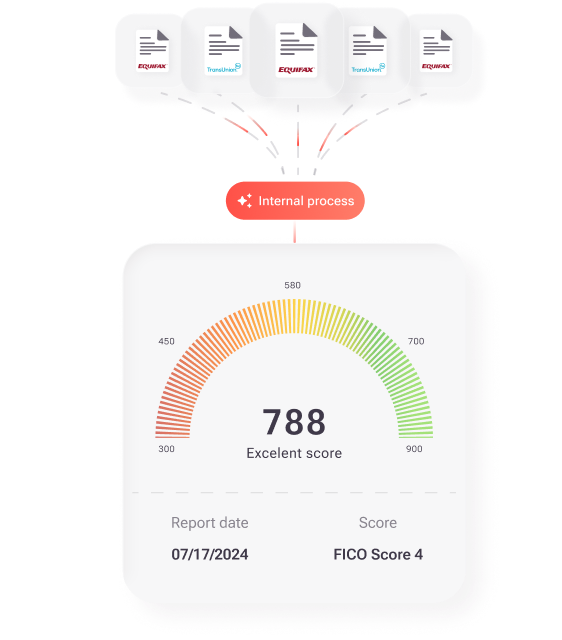
FCRA compliance is mandatory for community associations that conduct background and credit screening. Permissible purpose must be established before any consumer report is pulled. Adverse action notices must be issued when applications are denied based on screening data, and audit trails must document every step of the decision process. Associations that rely on third-party data scrapers rather than direct bureau resellers introduce liability exposure that purpose-built platforms are designed to eliminate.
Florida’s Fair Housing Act prohibits discrimination based on race, color, national origin, sex, disability, familial status, and religion, and HUD guidance warns that blanket criminal-record exclusions can create disparate-impact risk. Governance requirements add another layer. Board voting records, document review logs, and communication histories must be retained and accessible for audits or disputes. Platforms without built-in audit infrastructure shift this burden entirely onto the association.
Operational Pain Points Across Multiple Properties
Inconsistent processes across properties, such as varying application timelines or document requirements, create compliance exposure and make it difficult to enforce standards or identify systemic issues across a portfolio. The most frequently cited failure modes include:
- Missing or outdated lease copies stored across folders, inboxes, and spreadsheets with no centralized visibility
- Manual follow-ups with applicants, realtors, and owners due to incomplete or incorrect submissions
- No direct connection between approved applications and active lease records
- Board approval delays caused by email chains and lack of a structured voting workflow
- Identity fraud exposure from document-only screening that cannot detect synthetic identities or impersonation
- Inconsistent 55+ age-verification documentation across age-restricted communities
- Audit trail gaps that increase liability exposure during regulatory reviews or resident disputes
Delinquency-related compliance issues often stem from these inconsistent manual processes. As portfolios grow, fragmented workflows become increasingly difficult to manage efficiently, creating scalability challenges, operational bottlenecks, and limited portfolio-wide visibility.
Best Practices That Address Multi-Property Challenges
To address these operational challenges and compliance gaps, leading multi-community platforms have converged on several structural characteristics that distinguish them from generic tools:
- Workflow standardization: Every community follows a documented, repeatable process with community-specific parameters configured inside a shared platform, rather than separate tools or ad hoc customization per property.
- Biometric identity verification: Moving from document-based review to biometric-confirmed identity reduces fraud exposure and strengthens permissible-purpose validation before screening authorization.
- Documentation consistency: Automated document collection with smart form logic ensures every application arrives complete, which reduces manual review time and improves audit defensibility.
- Centralized lease lifecycle management: Connecting applications, approvals, and lease documentation in one system eliminates operational blind spots created by disconnected spreadsheets and email chains.
- Board-ready approval infrastructure: Dedicated voting dashboards with timestamped records replace informal email approvals and create a defensible governance record.
- Role-based access control: Role-based permissions restrict sensitive data to authorized users while audit trails log every access or modification, supporting compliance with applicable regulations.
Evaluation Framework: Capabilities to Compare Across Platforms
Florida management companies should evaluate multi-community onboarding platforms across six capability dimensions: compliance readiness, operational efficiency, transparency and auditability, scalability, risk controls, and local customization. The table below compares generic community platforms against association-focused solutions across these dimensions.
| Capability | Generic Community Platforms (e.g., Circle, Mighty Networks) | Broad Property Management Tools (e.g., AppFolio, RealPage) | Association-Focused Platform (TenantEvaluation) |
|---|---|---|---|
| FCRA compliance design | Not applicable, not built for screening | Partial, screening is a feature, not the foundation | FCRA-first design with direct bureau reseller status (TransUnion, Equifax), automated adverse action, and permissible purpose controls |
| Board approval workflow | None | Limited or absent | Dedicated board voting dashboard with timestamped audit records and AI-generated applicant summaries |
| Biometric identity verification | None | Not standard | IDVerify: government ID validation, AI liveness detection, and biometric selfie-to-ID comparison, native to the platform |
| 55+ age-restricted community support | None | None | 55+ Communities Verification: standardized documentation workflow built for Florida Condos and HOAs |
| Lease lifecycle tracking | None | Partial, often disconnected from onboarding | Centralized, real-time lease visibility from application to occupancy with audit-ready digital records |
| Revenue model | Subscription-based | Monthly subscription, often $1,000+ per month for enterprise tiers | Revenue-sharing model: application fees collected, service fee deducted, remainder rebated to the association, with no upfront cost |
Compare these capabilities in your own portfolio, request a platform walkthrough
30-60-90 Day Rollout Plan for Florida Portfolios
A phased rollout reduces disruption and accelerates adoption across multi-community portfolios. A structured 30-60-90 day framework provides a practical implementation path:
- Days 1–30 (Foundation): Configure community profiles, upload governing documents, establish screening criteria per association, and complete team training. Purpose-built tools often launch more quickly than broad management-company platforms with wider scope.
- Days 31–60 (Activation): Process live applications through the platform, activate board voting dashboards, enable IDVerify biometric verification, and begin automated lease document collection for incoming residents.
- Days 61–90 (Refinement): Review portfolio-level reporting, identify workflow inconsistencies across communities, activate 55+ Communities Verification for age-restricted properties, and set an audit trail review cadence for compliance readiness.
A typical Florida HOA management transition requires 30 to 90 days and involves transferring financial records, administrative records, and compliance logs, so a structured implementation timeline is essential for continuity.
The 5 C’s of Effective Association Onboarding
Five core principles define effective onboarding for Florida community associations that manage multiple properties:
- Compliance: Every step of the onboarding process, from permissible purpose to adverse action, must run on FCRA-compliant infrastructure with direct bureau data access and automated audit trails.
- Centralization: Portfolio-level visibility, reporting, and workflow management must operate from a single platform without manual reconciliation across disconnected systems.
- Customization: Each community retains its own screening criteria, document requirements, and board approval thresholds, so local control remains intact within the centralized framework.
- Confirmation: Identity should be confirmed through biometric verification before approval decisions, which moves communities beyond document-only screening to verified physical identity.
- Continuity: Lease documentation, occupancy records, and resident history must remain connected to the onboarding record from application through occupancy, creating an unbroken audit-ready lifecycle.
TenantEvaluation: Florida-Focused Platform for Community Associations
Founded in 2007, TenantEvaluation is built specifically for community associations and management companies, with FCRA compliance as the foundation, not an afterthought. The platform serves 5,000+ communities across Florida, processes 100,000+ applications annually, has generated $150M for communities, and holds a 4.8/5 Google rating. As a direct reseller of TransUnion and Equifax data, TenantEvaluation accesses bureau data under strict bureau rules with no gray-market or offshore sources, which protects associations from the liability exposure that third-party scrapers introduce.

Core capabilities purpose-built for Florida associations include:
- QuickApprove: An accelerated approval workflow that moves resident applications from submission to decision faster inside one connected platform. QuickApprove delivers real-time application tracking, automated communication support, a board-ready approval process with a dedicated voting dashboard, customized approval letters, and a personalized welcome package. Communities maintain control, compliance, and visibility, even during high-volume seasons or complex onboarding cycles.
- IDVerify: Biometric identity verification embedded directly into the screening workflow. Government ID validation, AI-powered liveness detection, and biometric selfie-to-ID comparison run natively inside TenantEvaluation with no external portals. Settings can be configured per community or portfolio to match each association’s risk profile.
- 55+ Communities Verification: A built-in capability that helps Florida Condos and HOAs standardize how age-restricted requirements are handled across applications. It reduces manual work, supports documentation consistency, improves operational efficiency, and strengthens internal processes for Community Association Managers who oversee multiple age-restricted communities.
- Lease Tracking: Centralized, real-time lease visibility and lifecycle control from application to occupancy. Lease Tracking connects resident onboarding, unit data, approvals, and lease documentation into one streamlined workflow. It delivers real-time lease status, automated lease document collection, unit-level tracking, searchable digital history, and audit-ready records for CAMs, Boards, Property Management Companies, and community operations teams replacing spreadsheets and scattered email chains.
Under this revenue-sharing model, associations generate income from the application process itself, with the mechanics described in the comparison above.
Ready to centralize onboarding with zero upfront cost? See the revenue-sharing model in action
Frequently Asked Questions
What is the best onboarding software for Florida HOAs and condos managing multiple communities?
The best multi-community onboarding platform for Florida associations is built specifically for the HOA and condo governance structure, not adapted from generic rental or property management software. Key requirements include FCRA-compliant screening with direct credit bureau access, a board-ready approval workflow with audit trails, biometric identity verification, and centralized lease tracking connected to the onboarding lifecycle. TenantEvaluation is purpose-built for this environment, with the scale and track record described earlier, and offers all of these capabilities in a single platform, including a revenue-sharing model that turns application processing into a compliant income stream for associations.
How does a multi-community onboarding platform handle different screening criteria across properties?
A purpose-built multi-community onboarding platform allows each community to maintain its own screening criteria, including credit score thresholds, income requirements, required documents, and board approval workflows, within a shared platform infrastructure. Management-level users gain portfolio-wide visibility and reporting, while community-level configurations remain distinct and locally controlled. TenantEvaluation configures each community’s governing documents, screening criteria, and association workflows into the platform, so a Regional Director overseeing 30 communities can enforce portfolio standards without overriding the individual governance authority of each association’s board.
What Florida-specific compliance requirements should a community association onboarding platform address?
Florida community association onboarding platforms must address several overlapping regulatory frameworks. FCRA compliance requires permissible purpose controls, automated adverse action workflows, and direct bureau data access. Florida HB 1203 mandates website and record-keeping requirements for HOAs with 100+ parcels. Florida Statutes § 718.112(2)(k) caps condominium lease approval fees and governs security deposit escrow requirements. The Fair Housing Act and HUD guidance on criminal history screening require that screening policies be tailored to avoid disparate-impact risk. For age-restricted communities, 55+ documentation requirements must be handled consistently across applications. TenantEvaluation is built for Florida-specific regulations and workflows, with compliance-first architecture and built-in capabilities for 55+ communities, biometric identity verification, and audit-ready record retention.

How does biometric identity verification improve the onboarding process for community associations?
Traditional screening relies on document uploads and database checks, which cannot reliably detect synthetic identities, impersonation attempts, or stolen IDs. Biometric identity verification adds a physical presence confirmation layer. The applicant’s government-issued ID is validated for authenticity, AI-powered liveness detection confirms the applicant is physically present, and a biometric selfie-to-ID comparison matches the applicant’s face to their identification document. This approach moves communities from document-based review to verified physical identity confirmation before approval decisions. TenantEvaluation’s IDVerify runs this entire process natively inside the platform with no external portals, and results appear directly in the screening report visible to the CAM, including ID authenticity confirmation, liveness status, and biometric match result.

What is the difference between centralized lease tracking and standard document storage for community associations?
Standard document storage is a passive repository, where leases are uploaded and stored without connection to the onboarding workflow, real-time status visibility, or automated collection and expiration tracking. Centralized lease tracking is an active operational capability that connects resident onboarding, unit data, approvals, and lease documentation into one real-time workflow. It delivers real-time lease status visibility, automated lease document collection during onboarding, unit-level tracking tied to occupancy records, and a searchable digital history of lease records and resident activity. For CAMs managing multiple communities, this approach eliminates operational blind spots created by disconnected spreadsheets and scattered email chains and produces audit-ready records that support compliance readiness without manual reconciliation.
Summary: Selecting a Multi-Community Onboarding Platform for Florida
Florida management companies overseeing 5 to 50 communities face a compliance and operational environment that generic platforms were not designed to address. HB 1203 mandates, FCRA permissible purpose requirements, Fair Housing obligations, rising identity fraud, and the administrative complexity of board governance across multiple associations create a specific set of requirements that only a purpose-built community association onboarding platform can satisfy.
The evaluation framework remains straightforward. Compliance readiness must serve as the foundation, not a feature. Biometric identity verification, board-ready approval workflows, centralized lease lifecycle management, and local customization per community function as structural requirements, not optional add-ons. Companies relying on manual processes, spreadsheets, and legacy systems face growing valuation discounts as the technology gap between top-quartile and bottom-quartile operators widens.
TenantEvaluation is the only Florida community association onboarding platform that combines compliance-first architecture, direct credit bureau reseller status, biometric identity verification through IDVerify, accelerated board-ready approvals through QuickApprove, standardized 55+ community documentation, and centralized lease tracking. All of this operates inside one connected platform that serves 5,000+ communities with no upfront cost to the association.
