Written by: Luis Teran, Co-founder, CEO, TenantEvaluation
Key Takeaways for Florida CAMs and Boards
- Mobile resident onboarding software has become a core operational system for Florida CAMs, HOA boards, and management companies handling frequent applications.
- Generic portals like Buildium and AppFolio miss critical needs such as FCRA compliance, board governance tools, and Florida-specific configuration.
- TenantEvaluation is an end-to-end platform built for Florida community associations that can cut approval times by up to 70% while generating revenue through a pay-per-application model.
- Core capabilities include biometric identity verification (IDVerify+), centralized lease tracking, integrated payment workflows (TEpayments by Zinc), and dedicated board review dashboards.
- Learn more about streamlining your onboarding process with centralized lease tracking and automated workflows.
Why Mobile Onboarding Has Become Essential in Florida Communities
Florida’s community association landscape is one of the most complex in the country. Condominiums, HOAs, and age-restricted communities process a constant flow of applications where small onboarding errors can create real legal and financial exposure. Identity fraud against residential communities continues to rise, with impersonation attempts, synthetic identities, and stolen credentials slipping into traditional document-based screening workflows.
The move from paper to digital onboarding affects every stakeholder. CAMs and LCAMs manage application intake, document collection, and approval coordination across multiple associations. Boards of Directors need transparent, auditable review workflows that preserve governance oversight. Applicants and realtors expect fast, mobile-friendly processes with clear status updates. Management companies require systems that handle peak seasons without adding staff.
The platform a community selects shapes policy alignment, documentation timing, and role clarity. A mobile-first onboarding tool that lacks Florida-specific configuration, board dashboards, or biometric verification increases compliance risk and creates operational blind spots.
FCRA, Risk, and Board Governance in Resident Onboarding
FCRA compliance sits at the core of resident onboarding for Florida community associations. The Fair Credit Reporting Act governs how consumer reports, including credit, criminal background, and eviction history, are requested, used, and communicated to applicants. Associations must follow several key obligations.
- Permissible purpose controls: Screening data must be accessed only for authorized purposes with documented applicant consent.
- Adverse action workflows: Associations that deny or conditionally approve applicants based on screening data must follow FCRA adverse action procedures, including written notices.
- Audit trails: Every application action, including document submission, board vote, and approval decision, must be timestamped and retrievable for regulatory review.
- Data security: Sensitive PII such as Social Security numbers and financial data requires encrypted storage and controlled access.
- Board oversight: Florida condominium and HOA governance structures require documented board involvement in approval decisions, which creates demand for platforms with dedicated board review panels.
Meeting these obligations requires direct access to bureau data under controlled conditions. TenantEvaluation is a direct reseller of TransUnion and Equifax data and operates under strict bureau rules with regular compliance audits. This structure removes gray-market or offshore data sourcing and helps protect associations from liability when screening data is accessed through third-party aggregators.
Operational Pain Points in Current Onboarding Workflows
Florida CAMs managing five to fifty associations encounter recurring failures when they rely on generic portals or manual processes. These failures slow approvals, increase risk, and frustrate boards and applicants.
- Manual bottlenecks: Application intake depends on email follow-ups, phone calls, and physical document collection, which can stretch approval timelines from hours to weeks.
- Incomplete applications: Without intelligent form logic, applicants submit partial documentation and trigger repeated back-and-forth between managers, owners, and realtors.
- Security gaps: Manual handling of PII, including ID documents and financial records, increases exposure to data breaches and FCRA violations.
- Fragmented lease records: Lease copies stored across inboxes, shared drives, and spreadsheets create occupancy blind spots and compliance risk tied to missing or outdated documentation.
- Disconnected payment tracking: Application fees and deposits collected outside the onboarding workflow require separate reconciliation, which adds administrative work and reduces board visibility.
- Identity fraud exposure: Document-based screening alone cannot detect synthetic identities, impersonation, or stolen credentials without a biometric verification layer.
These operational failures have pushed Florida communities toward modern onboarding standards that address each pain point in a structured way.
Modern Standards for Mobile Resident Onboarding
A complete onboarding system covers three core layers: process consistency, identity assurance, and governance transparency. Together, these layers create a predictable, auditable, and secure experience for every stakeholder.
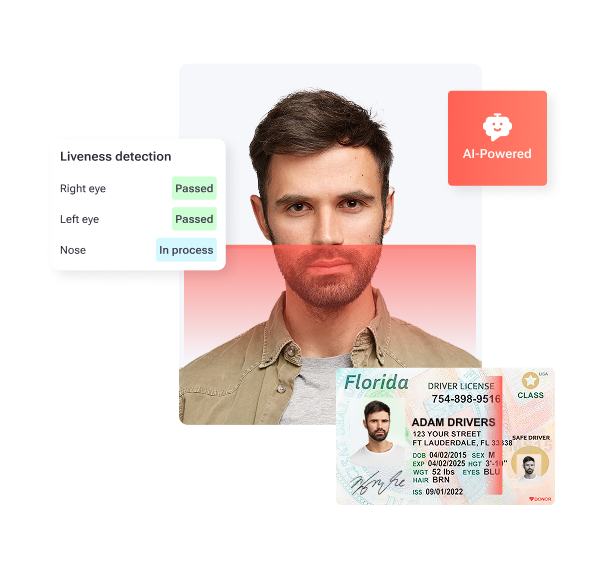
First, workflow standardization keeps all application types, including tenant, purchaser, and adult occupant, on defined workflows with consistent document requirements and approval steps. Second, biometric identity verification replaces document-only review with biometric-confirmed identity validation that combines government ID authentication, AI-powered liveness detection, and facial biometric matching. Third, audit-ready documentation ensures every onboarding action generates a timestamped, searchable digital record for regulators, boards, and dispute resolution.
Effective systems also connect the lease lifecycle, payments, and board review. Lease tracking should integrate with application and approval workflows so managers see real-time status from submission through occupancy. Payment collection should occur inside the onboarding workflow with direct-to-account flows that remove manual reconciliation. Board-ready approval interfaces should provide dashboards with summarized applicant reports, voting panels, and real-time status instead of long email chains.
Seven-Point Framework for Evaluating Onboarding Platforms
Florida CAMs can evaluate mobile resident onboarding tools using a simple seven-point framework. TenantEvaluation is the only platform in this comparison that satisfies every point within a Florida-focused ecosystem.
- Compliance readiness: The platform should operate as a direct credit bureau reseller with FCRA-first design, automated adverse action workflows, and built-in audit trails.
- Operational efficiency: The system should automate document collection, application review, and approval communication while reducing processing time by clear, measurable margins.
- Transparency: Boards and managers should have real-time visibility into application status, document completeness, and approval decisions.
- Scalability: The platform must handle high-volume seasons and multi-association portfolios without additional headcount.
- User experience: Applicants, realtors, managers, and board members should access the platform via mobile and web, with multilingual support where needed.
- Auditability: All application actions, board votes, lease records, and payment transactions should live in searchable, audit-ready digital records.
- Risk controls: The platform should include biometric identity verification, PCI Level 1 compliance, end-to-end encryption, and automatic PII redaction.
Generic platforms usually cover only a subset of these criteria, which leaves gaps in compliance, governance, or fraud prevention.
Comparing Self-Managed and Professionally Managed Associations
| Criteria | TenantEvaluation – Self-Managed HOA/Condo | TenantEvaluation – Professionally Managed (CAM/LCAM) | Generic Portals (Buildium, AppFolio, PayHOA) |
|---|---|---|---|
| FCRA compliance foundation | Built in, direct bureau reseller, automated adverse action | Built in, direct bureau reseller, automated adverse action | Partial, typically relies on third-party screening integrations |
| Board review dashboard | Dedicated board voting panel with summarized applicant reports | Dedicated board voting panel, CAM retains workflow control | Not available, approvals managed via email or manual process |
| Biometric identity verification | IDVerify+: government ID validation, liveness detection, facial biometric matching | IDVerify+: configurable per community risk profile | Not available, document upload only |
| Lease tracking | Centralized, real-time lease visibility from application to occupancy | Portfolio-level lease lifecycle control with unit-level tracking | Fragmented, lease records stored separately from onboarding |
| Payment collection | TEpayments by Zinc, fees and deposits collected within onboarding, funds go directly to association account | TEpayments by Zinc, configurable per association, consistent across portfolio | Disconnected, payment tracking separate from application workflow |
| 55+ community support | 55+ Communities Verification, standardized age-restricted documentation workflow | 55+ Communities Verification, scalable across multiple age-restricted communities | Not available, handled manually |
| Revenue model | Pay-per-application, revenue-sharing returns funds to the association | Pay-per-application, revenue-sharing across portfolio | Monthly subscription, no revenue-sharing |
| Florida-specific configuration | Custom setup aligned to governing documents and Florida regulations | Multi-association configuration with Florida-focused compliance | Generic configuration, not tailored to Florida |
How TenantEvaluation Supports Florida CAMs and Boards
TenantEvaluation launched in 2007, created by property managers, board members, and software engineers with decades of combined experience. Every feature reflects the operational and compliance realities of Florida community associations rather than a generic rental model.
QuickApprove – Accelerated Approval Workflow: QuickApprove speeds resident approvals inside one connected platform. It replaces email chains and spreadsheets with real-time application tracking, automated communication, customized approval letters, and a personalized welcome package. CAMs, boards, and management teams gain a board-ready approval process that preserves control, compliance, and visibility during high-volume seasons and complex onboarding cycles.

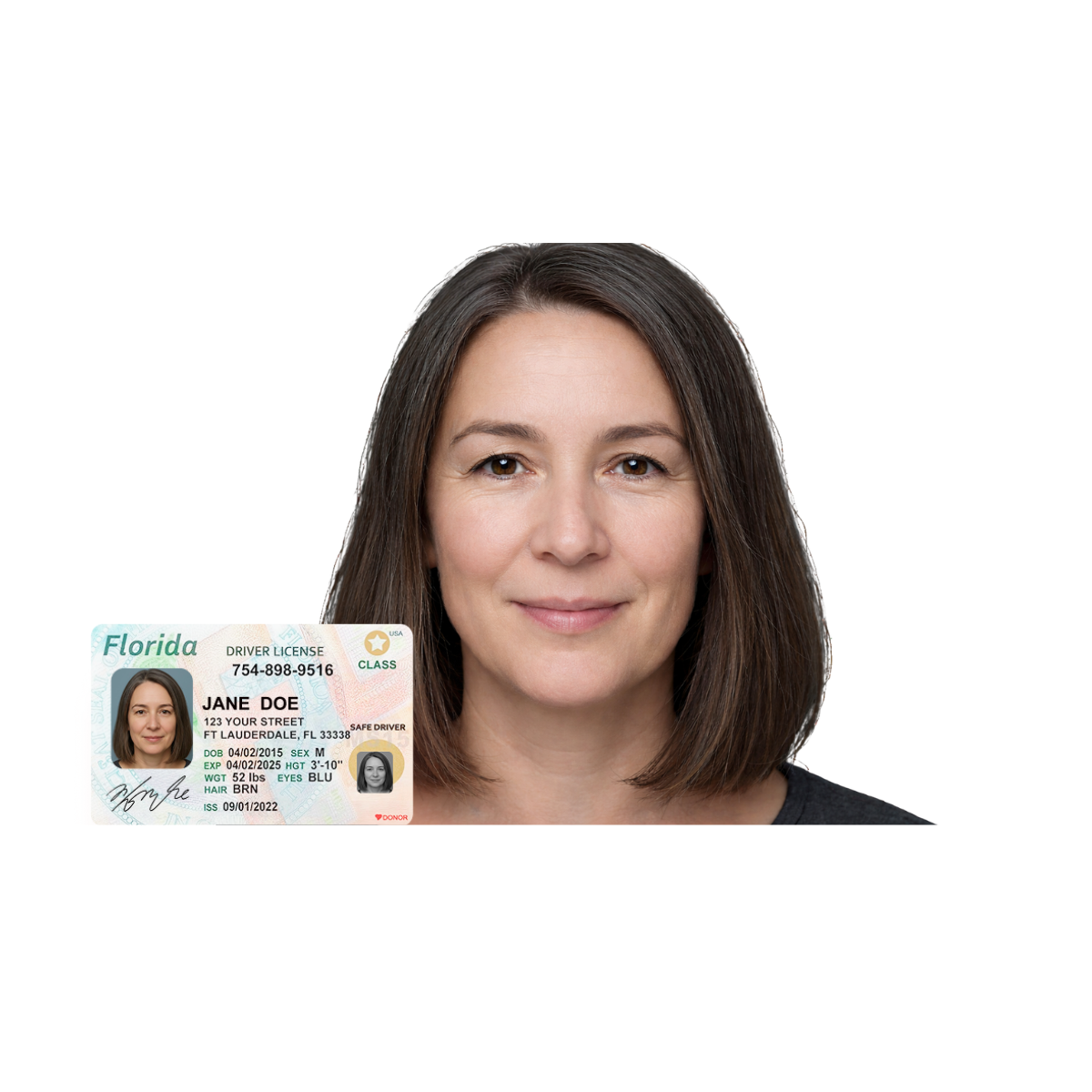
IDVerify+ – Biometric Identity Verification: IDVerify+ shifts communities from document-only validation to biometric-confirmed identity verification. Government ID authentication, AI-powered liveness detection, and facial biometric matching run natively inside TenantEvaluation without external portals. Verification results appear directly in the screening report so CAMs can see ID authenticity, liveness status, and biometric match results in a single view.
55+ Communities Verification – Age-Restricted Compliance Support: This capability helps Florida condos and HOAs standardize age-restricted application handling. It reduces manual work, supports consistent documentation, and improves efficiency for CAMs and boards managing 55+ requirements while still leaving room for legal guidance where needed.
Lease Tracking – From Application to Occupancy: Lease Tracking connects resident onboarding, unit data, approvals, and lease documentation in one centralized workflow. Real-time lease status, automated lease document collection, unit-level tracking, and searchable digital records replace spreadsheets and scattered email chains across every community in a portfolio.
TEpayments by Zinc – Integrated Payment Collection: TEpayments by Zinc collects application fees, deposits, and other required resident payments during onboarding. Payments move directly from the applicant to the association’s designated account, and TenantEvaluation never holds the funds. Each association defines what to collect and at which stage, which removes payment chasing and manual reconciliation.
The platform has generated $150M for communities, holds a 4.8/5 Google rating, and supports enterprise management companies such as FirstService Residential, RealManage, Castle Group, and Associa.
See how TEpayments integrates with your onboarding workflow in a personalized demo.
Frequently Asked Questions
How long does resident onboarding take with a purpose-built mobile platform?
A purpose-built platform like TenantEvaluation keeps application intake to roughly 5 to 10 minutes for applicants completing the process online. The full cycle from submission to board approval can be up to 70 percent faster than manual workflows. Generic portals that depend on email-based document collection and manual board review often stretch this cycle to 5 to 10 days because they lack intelligent form logic, automated document review, real-time board dashboards, and connected approval workflows.
What does biometric identity verification mean for HOA and condo applications?
Biometric identity verification confirms an applicant’s physical identity rather than only the documents they upload. TenantEvaluation’s IDVerify+ combines government-issued ID authentication, AI-powered liveness detection, and facial biometric matching into a single guided step within the application workflow. This approach helps communities move beyond document-only review, which cannot reliably detect synthetic identities or impersonation. Results appear directly in the screening report for CAM review.
What makes a mobile onboarding platform truly Florida-specific?
Florida community associations operate under a distinct regulatory and governance environment that generic rental platforms rarely address. Florida-specific onboarding includes configuration aligned to each community’s governing documents and bylaws, board voting workflows that match HOA and condominium structures, support for 55+ documentation requirements, FCRA-compliant adverse action workflows, and data handling practices that meet state privacy and security expectations. TenantEvaluation was built by property managers and board members with direct Florida association experience, and its configuration options reflect those real operational and compliance demands.
How does lease tracking connect to resident onboarding?
In many associations, lease management sits in separate folders, spreadsheets, or email inboxes with no link to the original application. TenantEvaluation’s Lease Tracking connects resident onboarding, unit data, approvals, and lease documentation in one workflow. Lease documents are collected automatically during onboarding, lease status is tracked in real time, and all records remain searchable and audit-ready from application through occupancy. This structure removes blind spots that appear when lease data lives outside the screening and approval process.
How does a revenue-sharing model work for resident onboarding?
TenantEvaluation uses a pay-per-application model with no upfront fees. When an applicant pays the application fee during onboarding, TenantEvaluation deducts its service fee and sends the remainder directly to the association or management company. This model turns the application process into a controlled revenue stream instead of a cost center tied to manual work or monthly subscription fees. The platform has generated $150M for communities through this structure, which aligns TenantEvaluation’s success with the financial outcomes of the associations it serves.
Conclusion: Bringing Florida Onboarding Up to 2026 Standards
Mobile resident onboarding software now functions as a compliance and governance requirement for Florida CAMs, HOA boards, and management companies that process any meaningful volume of applications. The gap between generic portals and purpose-built platforms appears in approval times, fraud exposure, board oversight quality, lease visibility, and revenue generation.
This guide outlines how to compare current onboarding processes against modern standards for compliance, efficiency, and governance. The evaluation framework, comparison table, and feature overview highlight the differences between tools built for community associations and software adapted from generic rental management.
TenantEvaluation is the only end-to-end platform in this comparison that meets every criterion in the framework, with FCRA compliance at the foundation, biometric fraud prevention through IDVerify+, accelerated approvals through QuickApprove, centralized lease lifecycle control, and a connected payment workflow through TEpayments by Zinc.
Join 5,000+ Florida communities using TenantEvaluation to manage resident onboarding from application to occupancy.
