
Key Takeaways
- Inaccurate tenant screening exposes Florida CAMs to FCRA lawsuits, evictions, and financial losses from false positives and false negatives.
- Track 7 core metrics like False Positive Rate (<5%), False Negative Rate (<3%), Hit Rate (8–12%), Precision (>90%), and Recall (>85%) to measure accuracy.
- Verify providers by cross-checking reports with public records, testing known cases, auditing FCRA compliance, and confirming direct credit bureau relationships.
- FCRA requires written consent, timely adverse action notices, and 30-day dispute resolution, and non-compliance creates legal and financial risk.
- Reach reseller-grade accuracy and compliance with TenantEvaluation’s SafeCheck+, and schedule a demo today.
Screening Accuracy Protects Florida Community Associations
Accurate tenant background screening protects Florida community associations from major financial and legal exposure. One in ten rental applicants submits fake documents, and 23.8% of eviction filings involve applicants who misrepresented themselves. These numbers show how often screening systems miss critical red flags.
False positives occur when reports incorrectly flag qualified applicants as risky. This problem causes lost revenue, delays, and potential discrimination claims. False negatives occur when high-risk tenants pass screening, which often results in evictions, property damage, and collection problems.
Community Association Managers also juggle manual reviews, FCRA compliance, and board approval delays. Screening quality directly affects performance indicators such as delinquency. Delinquency rates should stay under 5%, and accurate screening helps keep those numbers low.
Seven Metrics That Reveal Tenant Screening Accuracy
Property managers need clear numbers to judge screening performance. Use these seven metrics with their formulas and benchmarks.
1. False Positive Rate (FPR)
Formula: FPR = False Positives / (False Positives + True Negatives)
Benchmark: Less than 5%
Purpose: Measures how often qualified applicants are incorrectly rejected.
2. False Negative Rate (FNR)
Formula: FNR = False Negatives / (False Negatives + True Positives)
Benchmark: Less than 3%
Purpose: Measures how often risky applicants are incorrectly approved.
3. Hit Rate
Formula: (Criminal Records Found / Total Searches) × 100
Benchmark: 8–12% for comprehensive searches
Purpose: Indicates whether searches are thorough enough to find real issues.
4. Precision
Formula: True Positives / (True Positives + False Positives)
Benchmark: Above 90%
Purpose: Shows how accurate the system is when it flags risk.
5. Recall (Sensitivity)
Formula: True Positives / (True Positives + False Negatives)
Benchmark: Above 85%
Purpose: Shows how many actual risks the system successfully catches.
6. Dispute Rate
Formula: (Disputed Reports / Total Reports) × 100
Benchmark: Less than 2%
Purpose: Signals potential data quality or matching problems.
7. Audit Compliance Score
Formula: (Compliant Processes / Total Processes) × 100
Benchmark: 100%
Purpose: Measures adherence to FCRA and internal policies.
|
Metric |
Formula |
Benchmark |
Purpose |
|
False Positive Rate |
FP/(FP+TN) |
<5% |
Avoid rejecting good tenants |
|
False Negative Rate |
FN/(FN+TP) |
<3% |
Catch problematic applicants |
|
Hit Rate |
(Records Found/Searches)×100 |
8-12% |
Screening thoroughness |
|
Dispute Rate |
(Disputes/Reports)×100 |
<2% |
Data accuracy |
TenantEvaluation’s built-in audit tools calculate these metrics for you, so you can schedule a demo today and see your accuracy score in real time.
Seven Practical Checks for Your Screening Provider
Use these seven checks to audit your current screening provider and confirm real-world accuracy.
1. Cross-Verify Sample Reports with Public Records
Select 20–30 recent reports. Manually confirm criminal records, eviction histories, and court judgments against county clerk websites and state databases.
2. Test Known Cases for False Positive and Negative Rates
Run screenings on applicants with known backgrounds, with written consent. Compare results to reality and document patterns of false positives and false negatives.
3. Audit FCRA Compliance and Adverse Action Steps
Review disclosures, consent forms, and adverse action notices. Confirm that notices include required language, timelines, and screening company contact details.
4. Confirm Data Sources and Reseller Status
Ask whether the provider has direct credit bureau relationships. Avoid vendors that rely on third-party scraping, which often increases errors and compliance risk.
5. Measure Dispute Resolution Speed and Quality
Track how quickly disputes are acknowledged and resolved. Confirm that reinvestigations follow FCRA rules and finish within 30 days.
6. Review Audit Trails and Documentation
Check that the provider stores consent forms, search parameters, data sources, and decision logs. These records support internal reviews and external audits.
7. Benchmark Against Industry Performance
Compare your metrics with industry benchmarks for delinquency and approval times. Use gaps to guide provider changes or process updates.
FCRA Rules Florida Property Managers Cannot Ignore
The Fair Credit Reporting Act sets strict rules for tenant screening and dispute handling. FCRA requires written consent and clear disclosures before pulling a consumer report. Property managers must send adverse action notices when denying or conditioning an application and must include screening company details and instructions for disputes.
2026 compliance trends highlight FCRA enforcement and identity fraud controls for background screening. Core checks include documenting permissible purpose, separating data provision from decision-making, and using automated adverse action workflows that respect timing rules.
TenantEvaluation supports these requirements with direct reseller relationships with TransUnion and Equifax, automated adverse action workflows, and detailed audit trails for each application. This FCRA-first approach reduces liability for associations and supports accurate, consistent decisions.
Set up FCRA-compliant screening with automated workflows and schedule a demo today.
Why TenantEvaluation Fits Florida Community Associations
TenantEvaluation focuses on Florida community associations and processes more than 100,000 applications each year across 5,000+ communities, with a 4.8/5 Google rating. The SafeCheck+ solution, combined with QuickApprove and IDVerify, delivers accurate screening through direct bureau data and automated compliance workflows.
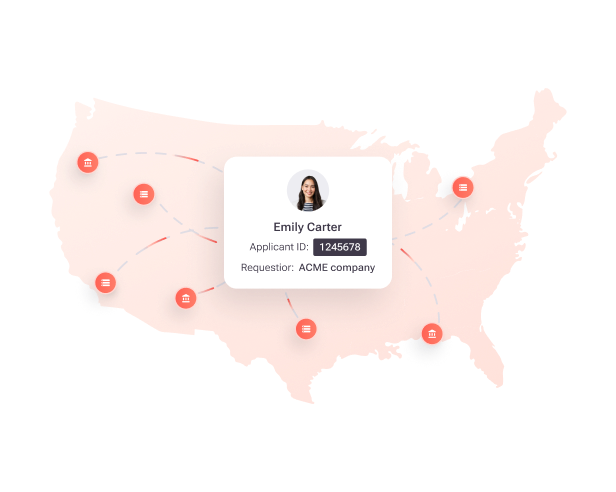
As a legitimate TransUnion and Equifax reseller, TenantEvaluation follows strict bureau rules and regular compliance reviews. Direct access removes gray-market data and scraping tools that often create mismatches and outdated records. The platform has generated more than $150 million for communities through revenue sharing while keeping FCRA compliance at the core.
|
Feature |
TenantEvaluation |
ApplyCheck/VerifyScreening |
AppFolio/RentSpree |
|
Data Source |
Direct Credit Bureau Reseller |
TazWorks Platform |
Generic Third-Party |
|
Automation |
End-to-End Automated |
Partial Automation |
Manual Processes |
|
Compliance |
Built-in Audit Trails |
Standard FCRA |
Variable Compliance |
|
Revenue Sharing |
Yes |
No |
No |
Stronger Dispute Handling and Common Screening Mistakes
Effective dispute handling relies on clear workflows and documentation. When applicants challenge report accuracy, property managers must support reinvestigation within 30 days and share corrected information when updates occur. Frequent mistakes include using generic tools that ignore HOA rules, skipping audit trails, and relying on providers without direct bureau access.
TenantEvaluation manages disputes with automated timelines, applicant communication, and updated reports after verified corrections. Its focus on community associations supports HOA bylaws and Florida-specific rules that many general rental platforms overlook.
Reduce disputes with precise, compliant screening and schedule a demo today.
Next Steps for Florida Community Association Managers
Tracking the seven accuracy metrics and running the verification checks above gives Florida Community Association Managers a clear view of screening performance. CAMs who choose providers with direct bureau relationships and automated compliance workflows reduce legal risk, improve tenant quality, and create new revenue streams for their communities.
Frequently Asked Questions
What background check do most landlords use for tenant screening?
Most landlords use background checks that include criminal history, credit reports, eviction records, and employment verification. Community associations need more specialized screening that reflects HOA rules and Florida regulations. TenantEvaluation’s SafeCheck+ delivers this level of detail with criminal checks, credit analysis, eviction history, and income verification through direct credit bureau data.
What is the most accurate tenant background check service?
Accurate tenant background check services rely on direct credit bureau relationships, strong FCRA compliance, and detailed audit trails. TenantEvaluation meets these standards as a TransUnion and Equifax reseller, processing more than 100,000 applications each year with built-in workflows tailored to community associations.
How do you dispute a tenant screening report?
Applicants dispute a tenant screening report by contacting the screening company within 60 days, submitting documentation, and requesting a reinvestigation of specific items. The screening company then has 30 days to investigate and correct any verified errors. TenantEvaluation supports this process with automated adverse action workflows and complete audit trails.
What are the most common errors in tenant background checks?
Common errors include identity mix-ups from similar names, outdated criminal records that should be sealed or expunged, incorrect eviction data, and inaccurate credit details. These issues often appear with generic platforms and third-party data aggregators. TenantEvaluation reduces these errors through direct bureau access, advanced identity checks, and strict data validation.

How can property managers reduce false positives in tenant screening?
Property managers reduce false positives by using providers with direct bureau data, strong identity verification, clear screening criteria, and full decision audit trails. TenantEvaluation’s IDVerify and direct data access help keep false positive rates low so qualified applicants are not rejected due to bad or mismatched data.