Written by: Luis Teran, Co-founder, CEO, TenantEvaluation | Last updated: August 27, 2026
Key Takeaways for Community Associations and 55+ Housing
- Community associations and property managers running 55+ or age-restricted communities must verify age with more than a checkbox or self-declaration.
- Government ID validation, biometric liveness detection, or certified third-party tokens now set the practical bar for compliant age verification.
- Statutory fines under CCPA, BIPA, and state minor-protection laws can reach thousands per violation, with settlements over $12 million for data-minimization failures.
- Collecting and retaining identity or biometric data creates separate breach and privacy liability, even when age-restriction rules are technically satisfied.
- First Amendment challenges to narrow, content-specific age-verification mandates are weakening, while broad or disproportionate gates still face constitutional risk.
- Property managers can reduce exposure by using auditable, data-minimized verification workflows that document each check; explore TenantEvaluation’s compliant solutions at TenantEvaluation.
The Problem: Statutory Fines That Reach Housing Providers
Age-restricted housing communities and 55+ associations now operate in the same penalty landscape as online platforms that serve minors. The penalty environment for weak age controls expanded sharply between 2025 and 2026, and housing providers that collect resident data fall within these broader privacy and data-handling regimes.

The table below highlights how fines concentrate on improper data handling, weak verification, and poor minimization. Notice the pattern of per-violation penalties and large settlements that can apply when a single verification failure affects many residents.
| Statute / Action | Penalty Amount | Trigger | Status (as of Aug 2026) |
|---|---|---|---|
| CCPA — Negligent Violation | $2,663 per violation | Improper handling of personal data | In effect, CPI-adjusted 2025 |
| CCPA — Intentional Violation (minor data) | $7,988 per violation | Intentional misuse of data for consumers under 16 | In effect, CPI-adjusted 2025 |
| CCPA — GM Settlement (May 2026) | $12.75 million | Data minimization violations | Settled, largest CCPA action to date |
| Texas HB 1709 | Civil penalties | AI system regulation and reporting by certain businesses and agencies | Enacted, unrelated to age verification or parental controls |
| Utah SB 104 | Up to $5,000 for class A misdemeanors and up to $50,000 for repeat felony offenses | Disabling device filters on minors’ devices | In effect |
| Massachusetts SB 3164 (proposed) | Penalties for age-assurance and data reporting failures | Age-assurance and data reporting failures | Filed July 2, 2026 |
| H.R. 7757 (KIDS Act) | N/A (pending) | Would require technology verification measures for minors if enacted | Passed House June 29, 2026 and referred to Senate Committee on Commerce, Science, and Transportation July 13, 2026 |
On February 25, 2026, the FTC issued a COPPA Enforcement Policy Statement creating a conditional safe harbor for operators that collect personal information solely to verify age, provided they meet six conditions covering purpose limitation, vendor oversight, data retention, transparency, security, and accuracy. Operators that miss any condition remain fully exposed to COPPA enforcement.
By July 2026, 26 states had enacted age-verification laws targeting minors’ access to harmful content, with West Virginia and Iowa among the most recent. Federal safe harbors do not remove this state-level exposure, so compliance counsel cannot treat this as a single-jurisdiction problem.
The Problem: Data-Privacy and Breach Liability for Stored IDs
Property managers that collect identity documents or biometric data to enforce age rules take on a second layer of risk. This liability applies even when the age-restriction statute is satisfied, because privacy and breach laws focus on how data is stored and used.
A 2025 breach of Discord’s third-party customer-service provider 5CA exposed government-ID images for about 70,000 users, showing how centralized identity storage becomes a high-value target. Once collected, age-verification data can be leaked, hacked, or misused, and several verification providers reported breaches in 2024.
Under Illinois BIPA, the statutory damages structure is:
- $1,000 per negligent violation
- $5,000 per reckless or intentional violation
- Over $800 million in BIPA settlements from Meta, Google, and TikTok alone
CCPA’s private right of action adds $107 to $799 per affected California resident per incident in statutory damages, or higher actual damages. The European Data Protection Board warns that age assurance poses specific risks to data protection and other rights and freedoms.
The risk grows when systems collect more data than needed. Poorly designed age-assurance systems can let organizations track or profile people across sites and infer sensitive details such as sexual preferences or orientation. Housing providers that store IDs for age checks can drift into this same pattern if they reuse data for marketing or tenant profiling.
The Problem: Free-Speech and Over-Blocking Challenges
Age-verification mandates now face First Amendment scrutiny, and property managers that host online resident portals or community forums sit inside this debate. Courts focus on whether rules burden adults’ access to lawful content and whether definitions of harmful material are too broad.
In Free Speech Coal., Inc. v. Paxton, 606 U.S. 461 (2025), the U.S. Supreme Court upheld Texas’s age-verification law for commercial websites with material harmful to minors, applying a less stringent First Amendment test. That ruling has since weakened similar challenges in lower courts.
On June 18, 2026, the Sixth Circuit upheld Ohio’s Social Media Parental Notification Act, treating the age-verification requirement as a parental-consent rule and calling it a marginal burden that targets unsupervised minor access.
On July 24, 2026, the Fifth Circuit issued a ruling on free-speech challenges to Texas’s SCOPE Act age-verification requirement, further signaling judicial tolerance for narrow, harm-focused rules.
Over-blocking still creates constitutional risk. France’s Constitutional Council struck down an under-15 social media ban as overly broad and disproportionate. Narrow, content-specific verification mandates survive, while blanket age gates that ignore proportionality remain vulnerable.
The Problem: Weak Verification Methods That Increase Liability
Verification methods differ sharply in legal weight. Property managers that rely on self-attestation or store ID images indefinitely face higher exposure than those that use biometric checks with rapid deletion and clear audit trails.

| Method | Regulatory Acceptance (2025-2026) | Key Liability Risk | Representative Penalty Exposure |
|---|---|---|---|
| Self-Declaration (checkbox / DOB entry) | Rejected by CJEU, insufficient under UK OSA, explicitly excluded by H.R. 7757 | Full statutory penalty exposure, no safe harbor available | CCPA: $7,988 per intentional violation; Utah SB 104: $250,000 per violation |
| Document Upload (ID scan stored server-side) | Accepted when minimization and deletion rules are met, but centralized storage increases breach risk | BIPA exposure, CCPA breach damages, breach-of-contract claims from residents | BIPA class exposure; CCPA $107–$799 per resident per incident |
| Biometric / Government-ID Verification with Liveness Detection and Immediate Deletion | Meets the FTC’s February 2026 COPPA safe-harbor conditions when paired with purpose limitation and reasonable security | Residual BIPA risk if data is retained beyond verification, requires a documented audit trail | Lowest exposure when paired with strict data minimization and audit records |
The Problem: Common Workarounds That Fail in Practice
Two shortcuts appear often in compliance conversations and do not satisfy current enforcement expectations for age-restricted housing or online resident services.
VPN bypass. H.R. 7757 requires covered platforms to take reasonable steps to prevent circumvention of age-verification measures. A system that relies only on IP-based geolocation and ignores known VPN bypass methods fails this standard. Regulators treat tolerance of circumvention as evidence of weak design.
Minor-definition confusion. State statutes define “minor” inconsistently, including under 13 (COPPA), under 16 (Ohio and some EU member states), under 17, or under 18 (Texas App Store Accountability Act). By July 2026, more than 20 states had passed laws on minors’ social media access or related online-safety duties. A property manager that sets a single low threshold without mapping these rules can violate several statutes at once, so one underage resident interaction can trigger stacked penalties.
The Solution: A Defensible Age-Verification Workflow for Tenant Screening
Community associations and management companies need age verification that fits within tenant screening, FCRA rules, and privacy law. The enforcement record through August 2026 points to three non-negotiable elements: technical strength beyond self-declaration, strict data minimization with documented deletion, and an audit-ready record for every verification event. TenantEvaluation’s IDVerify+ delivers these elements inside a single, FCRA-compliant workflow built for housing providers.
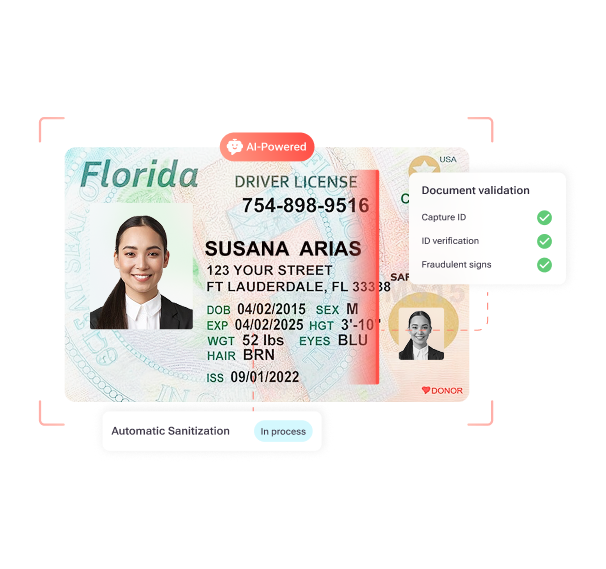
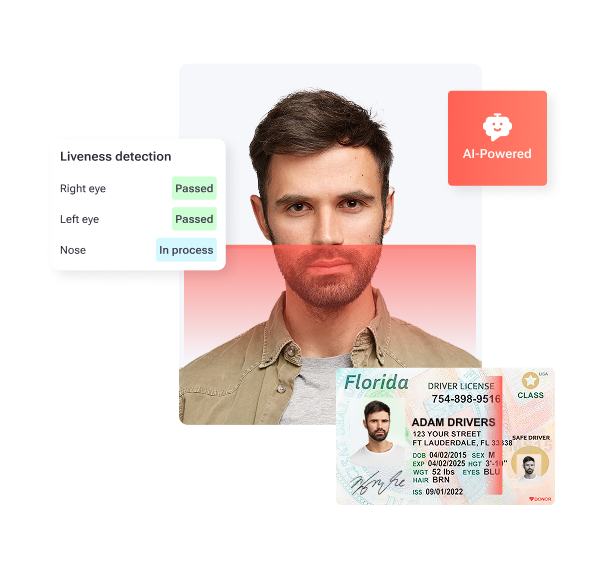
IDVerify+ combines government-issued ID validation, AI-powered liveness detection, and biometric facial matching inside the TenantEvaluation platform, without external redirects. Verification results flow directly into the screening report and include ID authenticity, liveness status, biometric match, and a redacted ID image for documentation. The system does not retain raw biometric inputs beyond the verification moment, which aligns with the minimization principles behind the FTC’s February 2026 COPPA safe harbor and BIPA-style consent-and-deletion frameworks.
TenantEvaluation is designed for community associations and management companies, with FCRA compliance as the base layer. As a direct reseller of TransUnion and Equifax data under strict bureau rules, TenantEvaluation maintains built-in adverse action workflows, tight permissible-purpose controls, and complete audit trails for each application. That same audit infrastructure supports age-verification documentation for 55+ and other age-restricted communities.
2025-2026 Enforcement Timeline: How Fast the Rules Are Shifting
The following timeline shows how quickly age-verification enforcement has accelerated, how courts have narrowed First Amendment defenses, and how proposed rules have moved into active enforcement. Property managers should read this as a signal that age and identity compliance is a current obligation, not a future project.
- 2025 — Free Speech Coal., Inc. v. Paxton, 606 U.S. 461: Supreme Court upholds Texas age-verification law with a less stringent First Amendment test, weakening nationwide challenges.
- January 28, 2026 — FTC Age Verification Workshop: FTC distinguishes age verification from age assurance and signals flexibility for robust methods.
- February 5, 2026 — South Carolina HB 3431: First Age-Appropriate Design Code law requiring annual independent third-party audit reports takes effect.
- February 25, 2026 — FTC COPPA Enforcement Policy Statement: Conditional safe harbor announced for operators using age-verification technologies under six conditions.
- March 12, 2026 — Ninth Circuit, NetChoice v. Bonta: Age-estimation requirements of California’s CAADCA survive a facial First Amendment challenge, while dark-pattern provisions remain enjoined.
- May 2026 — CCPA GM Settlement: $12.75 million settlement based on data minimization failures, the largest CCPA action to date.
- June 4, 2026 — Fifth Circuit stays Texas App Store Accountability Act injunction: Law takes effect while appeals continue.
- June 18, 2026 — Sixth Circuit upholds Ohio’s Social Media Parental Notification Act: District court injunction is vacated and the law becomes enforceable, subject to en banc review.
- June 29, 2026 — H.R. 7757 (KIDS Act) passes the House: Bill passes the House and moves to the Senate Committee on Commerce, Science, and Transportation.
- July 6-8, 2026 — Supreme Court declines to block Texas App Store Accountability Act: Enforcement continues while constitutional challenges proceed.
- July 24, 2026 — Fifth Circuit, Texas SCOPE Act: Ruling addresses free-speech challenges to the Act’s age-verification requirement.
Practical Compliance Checklist for Property Managers
General counsel and compliance leaders in community associations can use the following sequence as a practical workflow for age-verification compliance.
- Map every jurisdiction where residents or applicants are located and record the applicable age threshold (13, 16, 17, or 18) and penalty structure for each.
- Conduct a proportionality analysis so the intrusiveness of the verification method matches the severity of the harm you are trying to prevent, as regulators require.
- Replace self-declaration with a robust method such as government ID validation, biometric liveness detection, or a certified third-party token that meets the FTC’s February 2026 “reasonably accurate” standard.
- Implement a written data-retention and deletion policy that destroys raw identity and biometric inputs immediately after verification, keeping only a yes or no flag and a redacted audit record.
- Obtain informed written consent before collecting biometric identifiers in Illinois and any BIPA-equivalent jurisdiction, and publish a public retention and destruction schedule.
- Document every verification event with a timestamped audit trail that records the method used, the result, and confirmation of data deletion, so you can invoke the FTC COPPA safe harbor and respond to CCPA inquiries.
- Audit third-party verification vendors for privacy-law compliance, because organizations remain fully responsible for vendor compliance.
- Review circumvention-prevention measures and document how you address known bypass vectors, including VPN use, as required by H.R. 7757 and similar state laws.
Frequently Asked Questions
Will a VPN bypass remove an organization’s liability?
No. Regulatory frameworks in 2025-2026 require reasonable steps to prevent circumvention, not a single gate that users can easily bypass. An organization that deploys age verification without addressing known vectors such as VPNs fails the technical-robustness standard and cannot rely on safe harbors. Enforcement agencies treat tolerance of circumvention as a design flaw, so compliant systems use layered verification that does not depend only on IP-based geolocation.
How does the FTC’s 2026 COPPA policy affect fine exposure?
COPPA civil penalties, adjusted for inflation, can reach tens of thousands of dollars per violation per day for knowing violations. The FTC’s February 25, 2026 policy statement creates a conditional enforcement safe harbor for operators that collect personal information solely to verify age and satisfy six conditions discussed above. The policy does not lower penalties, and operators that miss any condition remain fully exposed at standard COPPA rates. The FTC has also stated that it will continue to bring actions against operators that treat any user determined to be under 13 as anything other than a child under COPPA.
Are First Amendment challenges to age-verification systems still viable?
The Paxton decision significantly weakened First Amendment challenges to narrow age-verification rules for content harmful to minors, and courts in 2026 have applied it to uphold similar statutes in the Fifth and Sixth Circuits. Broad age gates still face risk when they lack proportionality, cover content not harmful to minors, or restrict all users regardless of service type. France’s Constitutional Council blocked a blanket under-15 social media ban on these grounds. Verification mandates now tend to survive when they target a specific harm and avoid unnecessary burdens on protected speech.
Which biometric practices create the most liability in age verification?
The riskiest practices include centralized storage of raw biometric data or ID images beyond the verification moment, failure to obtain informed written consent in BIPA jurisdictions, and using verification data for secondary purposes such as advertising or cross-session tracking. BIPA statutory damages of $1,000 to $5,000 per violation apply per person, a framework that produced the $800 million in settlements noted earlier. The lowest-risk design processes biometric inputs locally or in a secure enclave, transmits only a verification result, and deletes raw inputs immediately while keeping a redacted audit record.
Conclusion: Applying Age-Verification Law to Tenant Screening
The 2025-2026 enforcement record shows that weak age-verification systems expose property managers to overlapping penalties under COPPA, CCPA, BIPA, and state minor-protection laws. Collecting identity and biometric data without strict minimization also creates independent privacy and breach liability, and broad or poorly tailored gates still face constitutional scrutiny. Self-declaration is no longer defensible. Simple document upload without rapid deletion creates centralized breach targets. The defensible standard now centers on biometric, technically strong verification with data minimization, documented deletion, and complete audit trails.
Community associations and management companies that must enforce age rules and maintain FCRA-compliant tenant screening can rely on TenantEvaluation’s IDVerify+. The platform delivers government ID validation, AI-powered liveness detection, and biometric facial matching inside a single workflow, with no external redirects, no retained raw biometric data, and a timestamped verification record in every screening report. Built on FCRA compliance, direct credit-bureau relationships, and integrated adverse action workflows, TenantEvaluation gives property managers a practical way to enforce age restrictions without inheriting the liability that weaker methods create.
